

What Happens in Your First Anxiety Therapy Session
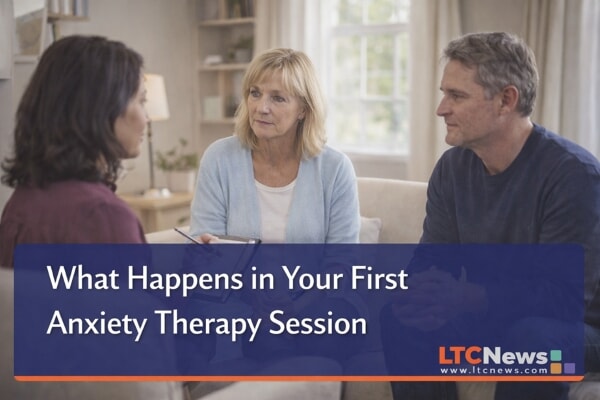

You have managed a career and raised a family. Paid bills. Survived losses. Why would you need therapy now? Plus, what happens in a therapy appointment anyhow?
For many people, the decision to seek help for anxiety comes after months of trying to manage persistent symptoms entirely on their own. The unknown nature of the first visit often feels like the biggest hurdle to overcome in the journey toward relief.
Many people, as they get older, face anxiety. It is not something to be ashamed of, either. You might have racing thoughts that keep you awake. Your chest tightens before routine appointments. Small worries spiral into worst-case scenarios. You feel on edge more often than you admit.
Anxiety intensifies during midlife and beyond. Even so, therapy is often avoided. The reasons are complex, and the consequences can follow you into later life.
Anxiety Often Increases with Age and Life Transitions
Midlife and early retirement years bring real stressors:
- Caring for aging parents
- Financial uncertainty and retirement planning
- Health changes and new diagnoses
- Adult children facing their own challenges
- Loss of identity after leaving the workforce
According to the National Institute of Mental Health (NIMH), anxiety disorders are among the most common mental health conditions in the United States.
While prevalence is often discussed in younger adults, NIMH notes that anxiety remains significant in older populations and can present differently, often through physical symptoms such as sleep disturbance or muscle tension.
Anxiety disorders are among the most common mental health conditions affecting older adults, according to the Anxiety and Depression Association of America. Research suggests that about 14% to 17% of adults age 65 and older meet the criteria for an anxiety disorder. Many experts say the true number is likely higher because symptoms are often unrecognized or mistaken for normal aging.
“You should be able to continue to enjoy your life at any age,” said Sonja Rosen, MD, chief of Cedars-Sinai’s Geriatric Program.
Anxiety is common with aging, but it’s not a normal part of aging if it’s interfering with your life. — Sonja Rosen, M.D., chief of the Geriatric Program at Cedars-Sinai.
For older adults, anxiety may not look like panic attacks. It may look like:
- Irritability
- Persistent worry about health
- Avoiding social situations
- Obsessive checking of finances or medical symptoms
- Physical complaints with no clear cause
You may assume it is “just stress.” But chronic anxiety activates the body’s stress response system repeatedly. Over time, that strain can affect sleep, cardiovascular health, immune function, and cognitive clarity.
Why Many Older Adults Avoid Therapy
Despite rising stress levels, many middle-aged and older adults do not seek professional help. Several barriers appear repeatedly in research and clinical practice.
1. Generational Stigma
Many adults grew up in families where therapy was rarely discussed. Emotional struggles were considered private or a sign of weakness.
You may think, “Other people have it worse.” Or, “I should be able to fix this myself.”
That mindset often delays care for months or even years.
2. Fear of the Unknown
For many people, the hardest part is imagining the first session.
You may wonder:
- What will I say?
- Will the therapist judge me?
- Will they understand career pressure or caregiving stress?
- What if I get emotional?
The unknown feels bigger than the anxiety itself.
3. Belief That Anxiety Is “Just Part of Aging”
Many adults assume increased worry is normal as responsibilities grow. While life stress increases, persistent anxiety that disrupts sleep, relationships, or decision-making is not something you simply have to accept.
4. Time and Financial Concerns
You may prioritize everyone else. Work deadlines. Medical appointments for a spouse. Grandchildren’s activities.
Therapy feels optional. Your mental health is not.
The Impact of Untreated Anxiety as You Age
Avoiding therapy does not make anxiety disappear. It often deepens.
Long-term anxiety in midlife can contribute to:
- Poor sleep quality
- Increased blood pressure
- Social withdrawal
- Reduced physical activity
- Cognitive strain from constant hypervigilance
Chronic stress also affects caregiving capacity. If you are supporting aging parents or a spouse, unmanaged anxiety can accelerate burnout.
Emotional health and long-term care planning are more connected than many realize. Depression and anxiety can influence financial decisions, avoidance of planning conversations, and reluctance to explore Long-Term Care Insurance or future extended care options.
If you delay both mental health support and long-term planning, you may compound stress later.
What Really Happens in Your First Anxiety Therapy Session
Many fears about therapy dissolve once you walk in. Your first session is not an interrogation. It is a structured conversation. Your first session is a safe, judgment-free chat where you set the pace and share what you feel comfortable sharing.
You typically:
- Complete brief intake paperwork covering contact details and confidentiality
- Review privacy protections under federal law
- Meet your therapist and discuss their background and approach
- Describe your current symptoms and daily impact
- Share when anxiety began and possible triggers
- Identify initial goals for treatment
It takes significant courage to speak openly about personal struggles, and the "venting" process can be both freeing and tiring. You control the pace. You decide how much to share.
Early sessions often include simple tools such as:
- Grounding exercises
- Controlled breathing techniques
- Identifying early physical warning signs
- Recognizing thought patterns that fuel worry
Even one session can bring clarity. You leave with a plan, not just emotion.
Many clients report feeling both relieved and tired afterward. Opening up requires energy. That exhaustion is normal.
Anxiety, Aging, and Long-Term Care Risk
Mental health plays a larger role in aging outcomes than many people recognize.
Persistent anxiety can lead to:
- Avoidance of preventive medical care
- Poor medication adherence
- Reduced social engagement
- Increased isolation
Isolation itself has been linked in research to poorer health outcomes in older adults. Emotional well-being supports physical resilience.
If anxiety prevents you from addressing estate planning, discussing housing transitions, or reviewing Long-Term Care Insurance options, the stress compounds. Planning early reduces uncertainty. Reducing uncertainty reduces anxiety.
Mental health support and long-term care planning are not separate conversations. They reinforce each other.
Signs It May Be Time to Seek Help
Consider speaking with a therapist if:
- Worry interferes with sleep most nights
- You avoid activities you once enjoyed
- Physical tension feels constant
- Irritability affects relationships
- You feel overwhelmed by decisions you once handled easily
Asking for help is not a weakness. It is strategic self-care.
The First Step Is Often the Hardest
Walking into a therapy office may feel uncomfortable. That discomfort often fades quickly.
Professional support shifts anxiety from a solo battle to a shared plan. Structured care replaces guesswork. Tools replace rumination.
If you are over 45, balancing career, caregiving, finances, and health concerns, anxiety can quietly accumulate. You may tell yourself you are managing fine.
But what if relief is closer than you think?
Your emotional health affects every decision you make about retirement, caregiving, and your future independence. Addressing anxiety today may strengthen your resilience tomorrow.
Before you finalize retirement plans or discuss long-term care options with your family, consider one question: Are you caring for your mental health as carefully as you plan to care for your finances?
Editor’s Note:
This article is for informational purposes only and does not replace medical advice. If you are experiencing severe anxiety, panic attacks, or thoughts of self-harm, contact a licensed health professional or call 988, the Suicide & Crisis Lifeline in the United States and Canada.