

Medication Errors in Nursing Homes: You Expect Help, Not Harm
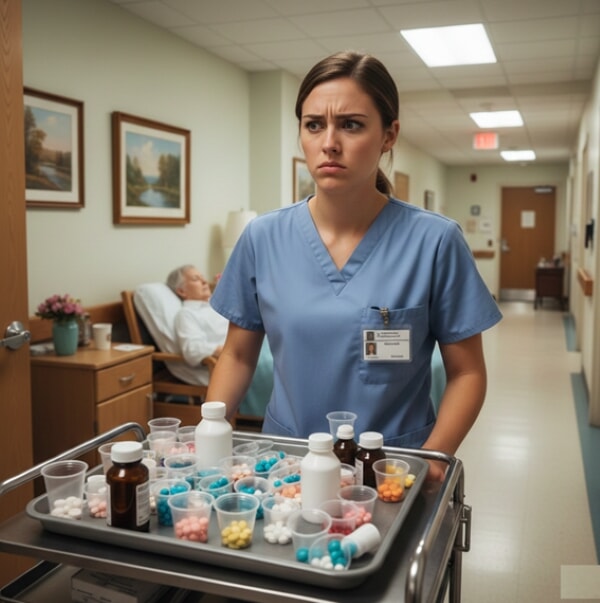

Table of Contents
- Big Concern in LTC Facilities
- Why Long-Term Care Facilities Are So Vulnerable to Medication Errors
- Medication Errors: Human Mistakes with Serious Consequences
- What Counts as a Medication Error?
- How Lawyers Investigate Medication Errors in Long-Term Care
- Building the Paper Trail: Records and Medication Logs
- Listening to People: Staff, Residents, and Families
- Working With Independent Medical Experts
- From Evidence to Accountability
- Warning Signs of Medication Problems You Should Not Ignore
- What You Can Do Right Now to Protect a Loved One
- Why Your Voice Matters
You probably assume the pills your parent or loved one receives in a nursing home, or any long-term care facility, are correct, on time, and safe. When you see a nurse rolling a medication cart down the hall, you expect help — not harm.
Yet medication errors remain among the most common and preventable causes of patient harm in the United States.
Adverse drug events (ADEs) tied to medication mistakes pose a serious public health threat across all care settings — hospitals, nursing homes, clinics, and home care included. According to the CDC, more than 1.5 million people visit U.S. emergency departments each year because of ADEs, and nearly 500,000 are hospitalized as a result.
Older adults — especially those in long-term care — face elevated risk due to the sheer number of medications they take. For your family, that risk is not hypothetical. Medication safety is a day-to-day concern that matters.
Big Concern in LTC Facilities
When an adverse drug event (ADE) happens because of a mistake — the wrong drug, wrong dose, wrong time, or wrong patient — that harm is considered preventable.
Several major studies and reviews show just how big the risk is for people living in nursing homes and skilled nursing facilities:
- The National Academies (Institute of Medicine) summarized data from two well-designed nursing home studies and estimated that between 350,000 and 1.9 million ADEs occur each year among about 1.6 million U.S. nursing home residents. The report concluded that about 40–50 percent of these events are preventable.
- A review of nursing home data reported in The American Journal of Managed Care found that medication errors affect about 16–27 percent of residents, and that in some studies up to three-quarters of residents received at least one potentially inappropriate medication, although many errors are underreported or their true impact is not fully captured.
- A 2014 U.S. Office of Inspector General (OIG) study of Medicare skilled nursing facility (SNF) stays found that 22 percent of Medicare residents experienced an adverse event, and another 11 percent experienced a “temporary harm” event during their SNF stay — a total of 32 percent of residents affected. Nearly 60 percent of these events were preventable, and 37 percent were related to medications.
| Metric | Finding | Source & Context (Current as of late 2024/2025) |
| Total Adverse Events | Approximately one-fifth (22%) of Medicare residents in SNFs experience an adverse event during their stay. | OIG Report (2014) & Subsequent Citations: This 22% rate remains the primary, established baseline used by CMS and safety experts. |
| Medication-Related Harm | More than one-third (37%) of those adverse events are directly related to medications. | OIG Finding: Medication errors are consistently the most common type of patient harm in SNF settings. |
| Preventability | The OIG determined that nearly 60% of all adverse events (including those related to medication) were preventable. | OIG Finding: This high preventability drives the intense focus on pharmacist reviews and quality measures. |
| Current Regulatory Focus (2025) | CMS has implemented new quality measures, active through 2025, specifically targeting medication safety at transitions of care. | CMS Quality Reporting Program (QRP): Measures now track whether SNFs provide a current medication list to the next setting (like a hospital) and to the patient/family upon discharge, directly addressing a common source of error. |
This is not just a U.S. problem. The World Health Organization’s Medication Without Harm initiative estimates that unsafe medication practices and errors cost around $42 billion globally each year, or roughly 1 percent of total health spending worldwide, and has called for cutting severe, avoidable medication-related harm by 50 percent.
For residents in long-term care facilities, these numbers are not abstract statistics. They reflect the reality that a single mistake with a pill cup can lead to a fall, hospitalization, or a sudden loss of independence.
Why Long-Term Care Facilities Are So Vulnerable to Medication Errors
When someone you love lives in a long-term care facility, they’re already facing the challenges of aging, chronic illness, or memory loss. A preventable medication error can turn those challenges into a crisis, leaving families worried, overwhelmed, and unsure where things went wrong.
According to Thomas W. Pleasant, a nursing home medication error lawyer in Louisville, lawyers can help you find strong evidence that will help you win your case. They can communicate with the nursing home or long-term care facility and your insurance company on your behalf. In court, your attorney can defend your interests and act as your representative. Seek the help of a malpractice attorney in your area who is familiar with the law and who can take you through the steps of the process.
Research shows that long-term care residents are at especially high risk for medication mistakes. The reasons are not usually malicious — they come from a system under pressure.
Here’s why these facilities are so vulnerable:
Polypharmacy
Many residents take five or more drugs for multiple chronic conditions. The more drugs involved, the higher the risk of interactions, side effects, or doses being missed or duplicated.
Frailty and Dementia
Residents may not be able to report symptoms accurately, question a wrong pill, or remember whether they received a dose. Many depend entirely on staff to notice when something is “off.”
Staffing Pressures and Turnover
Long-term care facilities nationwide operate with chronic staffing shortages. High turnover and heavy workloads increase the likelihood of rushed medication passes, incomplete monitoring, and documentation mistakes.
Workflow and Communication Gaps
Breakdowns can happen during shift changes, between prescribers and pharmacies, or when handwritten orders are unclear. Even small communication errors can lead to the wrong drug, dose, or timing.
These systemic pressures show up in real-world claims. A recent Nurse Professional Liability Claim Report from CNA and the Nurses Service Organization found that nearly half of closed nurse malpractice claims over the last five years involved professionals working in long-term care, assisted living, or home health. This reflects the high complexity of care and the vulnerability of the patients being served.
When you combine fragile residents, complex medication regimens, and stressed staff, errors become more likely — unless systems are strong, communication is reliable, and supervision is constant.
Medication Errors: Human Mistakes with Serious Consequences
Medication mistakes don’t occur only in nursing homes. They can happen anywhere prescriptions are written, filled, or administered — hospitals, pharmacies, clinics, and even at home. Most of these errors come from preventable human actions.
You can see problems at any point in the process:
- A prescriber orders the wrong drug, dose, or timing.
- A pharmacy dispenses incorrect medication or strength.
- A nurse or caregiver gives a dose late, skips it, or administers it the wrong way.
- No one monitors side effects, lab changes, or drug interactions that can become dangerous.
The consequences often surface in ways you can see and feel: a sudden fall after a medication change, an unexpected hospital stay due to bleeding from a blood thinner, or new confusion that begins right after a prescription is filled.
These are warning signs that should never be ignored.
What Counts as a Medication Error?
Experts define a medication error as any preventable event that may cause or lead to inappropriate medication use or harm while the drug is in the control of a health care professional, patient, or caregiver. In long-term care facilities, where residents depend on staff to manage every dose, even one small mistake can quickly become serious.
Here are the most common types of medication errors in nursing homes and assisted living communities:
- Wrong drug: A resident receives a medication meant for someone else.
- Wrong dose: Too much or too little of a prescribed drug.
- Wrong time: Doses given hours late or skipped altogether.
- Wrong route: Pills crushed when they should not be, or a drug given by the wrong method (for example, by mouth instead of a feeding tube).
- Monitoring failures: No follow-up labs or observation for high-risk drugs, including anticoagulants such as warfarin, diabetes medications like insulin, or certain heart drugs.
- Documentation gaps: Medication administration records (MARs) that do not match what actually happened.
Many of these mistakes are never reported. Some don’t cause immediate harm, but they slowly weaken a resident’s health — leading to preventable falls, internal bleeding, hospital transfers, or sudden cognitive decline. You may not see the error when it happens. You only see the consequences.
How Lawyers Investigate Medication Errors in Long-Term Care
If a serious medication error injures or kills a resident, families may turn to attorneys who focus on malpractice or nursing home negligence. These lawyers are trying to answer the same questions you may be asking yourself: What went wrong, and who is responsible?
Nursing homes and skilled nursing facilities operate under strict rules from Medicare, Medicaid, and state regulators. These detailed federal requirements govern:
- Medication management and pharmacy services
- Staffing and training expectations
- Documentation, incident reporting, and quality assurance
To prove negligence, attorneys generally must show that:
- The facility owed the resident a duty of care.
- Staff breached that duty by failing to follow acceptable standards (for example, giving the wrong dose or ignoring lab results).
- The breach directly caused harm, such as hospitalization, disability, or death.
A nursing home or any long-term care facility (or home health agency or provider) has a legal responsibility to keep its residents safe and provide proper care. It isn’t optional. Once a person is admitted to a long-term care facility, the facility is legally and professionally required to:
- Follow medical standards
- Administer medications correctly
- Monitor the resident’s condition
- Prevent avoidable harm
This duty exists because the resident cannot meet these needs alone and the facility was hired and licensed to provide that care.
So, proving negligence starts with showing the facility had an obligation to protect the resident in the first place. Only then can you show they failed to do it. You don’t need to understand these legal terms to act. You only need to recognize when something feels unsafe and seek help quickly.
Building the Paper Trail: Records and Medication Logs
The backbone of any investigation is the written record. Attorneys collect and compare:
- Medication administration records (MARs)
- Physician orders and stop orders
- Nurses’ notes and shift reports
- Pharmacy delivery logs and profiles
- Incident reports and internal quality reviews
These documents reveal what should have happened and what staff recorded as happening. Investigators then compare those records with hospital reports, lab results, and family observations. When the pieces don’t line up, patterns of error emerge.
Even a simple timeline — matching medication orders to when doses were actually given and when symptoms started — can show exactly where the process broke down.
Listening to People: Staff, Residents, and Families
Paper rarely tells the entire story. Interviews fill in what the charts can’t explain.
- Staff members may describe rushed medication passes, unclear physician orders, short staffing, or broken electronic systems. Safety groups such as the Institute for Safe Medication Practices (ISMP) note that system failures — not individual “bad actors” — are often the root cause of medication errors in long-term care.
- Family members often notice changes first: unusual sleepiness, sudden confusion, new falls, or loss of appetite shortly after a medication change.
- Other residents may report missed doses or chaotic routines at the medication cart.
Attorneys look for repeated problems across shifts, ignored complaints, or signs that facility leaders failed to address known risks.
Working With Independent Medical Experts
Independent pharmacists, geriatricians, and nurses help investigators answer crucial questions:
- Was the medication regimen appropriate for the resident’s age, diagnoses, and organ function?
- Did the facility follow professional standards for monitoring high-risk drugs?
- Would a reasonably careful clinician have acted differently?
- Is it more likely than not that the error caused the harm?
Experts don’t review only the final event. They examine:
- How medications were ordered at admission
- How doses were adjusted
- How side effects were tracked
- How the pharmacy, prescriber, and staff communicated
A preventable disaster often starts with several small failures — not a single mistake.
From Evidence to Accountability
If negligence is shown, families may pursue claims that address:
- Medical and rehabilitation expenses
- Pain and suffering
- Loss of companionship in wrongful death cases
- In some states, punitive damages are used to discourage dangerous practices
Regulators also play a role. Recent federal compliance updates for nursing facilities emphasize that strong medication safety systems are an expected standard of care, not an extra feature. When investigations and lawsuits expose failures, they can push facilities — and their corporate owners — to improve training, staffing, documentation, and oversight.
Legal action cannot undo the harm, but it can prevent the same error from happening to another resident. Investigations and lawsuits, while painful, can push facilities—and their corporate owners—to improve training, staffing, and technology.
Warning Signs of Medication Problems You Should Not Ignore
You know your loved one best. Subtle changes in behavior or physical condition can be early clues that medications are not being managed correctly. Watch for signs such as:
- New or worsening confusion, especially after a medication change
- Repeated falls or sudden unsteadiness
- Extreme sleepiness, agitation, or personality changes
- Unexplained bruising or bleeding, particularly when taking blood thinners
- New nausea, vomiting, weight loss, or loss of appetite
- Staff who seem rushed or unable to answer basic questions about medications, or who avoid showing you the medication administration record (MAR)
Advocates, including long-term care ombudsman programs, report that many residents fear retaliation if they complain. They worry that speaking up might affect how they are treated or whether they receive care on time. That is why families often need to ask questions on their behalf.
If something feels unsafe or out of place, trust that instinct. Changes in medication or monitoring should never be confusing or secretive.
What You Can Do Right Now to Protect a Loved One
You cannot stand beside the medication cart every day, but you can reduce the risk of mistakes in practical, meaningful ways:
- Keep an updated medication list. Include dosage, timing, prescriber names, and why each drug is prescribed. Bring it to care meetings and outside appointments.
- Ask how the facility monitors high-risk drugs. Medications such as blood thinners, insulin, opioids, and psychiatric drugs require extra supervision and regular follow-up.
- Request routine medication reviews. Ask the attending physician or consulting pharmacist to review your loved one’s regimen at least once or twice a year, or whenever health changes.
- Expect clear explanations. If a medication is added, stopped, or changed, ask why, what side effects to watch for, and when you will receive lab results or progress updates.
- Document concerns in writing. After serious conversations, send an email or letter to the director of nursing or administrator, so there is a formal record.
- Use advocacy resources if needed. Contact the state long-term care ombudsman or your state survey agency if you believe the facility is unsafe or retaliating against residents who raise concerns.
If a medication error results in hospitalization, permanent harm, or death, a qualified nursing home or malpractice attorney can review records and explain your options. You don’t need to decide immediately — but you do need access to the information a resident cannot gather on their own.
Why Your Voice Matters
Medication errors often look like paperwork problems until you translate them into human terms: a stroke that might have been avoided, a fall that should not have happened, a death that came far too early.
We all expect to be helped, not harmed, when we take medication. — World Health Organization former Director-General Dr. Margaret Chan.
You cannot fix every flaw in the long-term care system.
You can:
- Ask staff tough questions.
- Watch for warning signs when you visit a loved one.
- Use tools like the LTC News Caregiver Directory to make better choices.
- If a loved one has Long-Term Care Insurance, use the benefits without delay, which can help pay for quality care providers - File a Long-Term Care Insurance Claim.
- Seek legal help when harm occurs, both for accountability and to drive change.
- Plan for your future aging and long-term care before you retire. For many, adding LTC Insurance will help ensure access to your choice of quality care providers, protect assets, and ease family burden.
Your advocacy, planning, and willingness to speak up can make the difference between a routine pill cup and a preventable tragedy.
Disclaimer:
This article is for general education and information only. It does not provide legal, medical, or financial advice and should not replace consultation with a licensed attorney, physician, or other qualified professional about your specific situation.