

Senior Pedestrian Deaths Surge in Certain States, Raising Safety Alarms
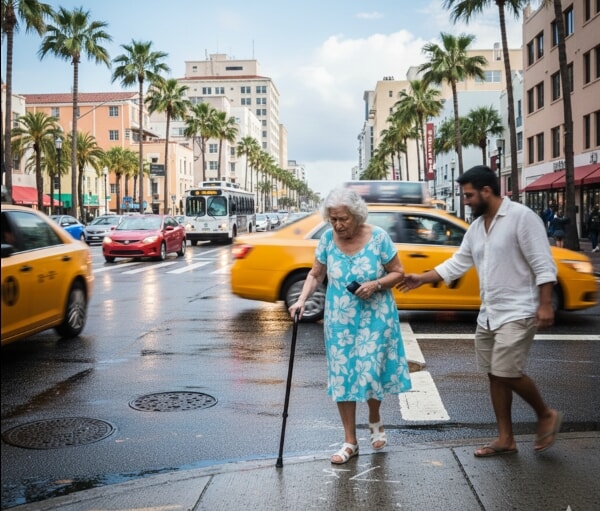

Walking should be something simple that we don't think too much about. However, for older people, this can become a problem. You step off the curb. Traffic feels faster than it used to. The light seems shorter.
Whether you're thinking about yourself or an older family member, for millions of older Americans, walking, one of the most basic activities for independence and health, has quietly become more dangerous.
A new five-year analysis of federal crash data shows that senior pedestrian deaths are not evenly spread across the country. In some states, older adults are being killed at rates far above the national average, raising urgent questions about infrastructure, driver behavior, and how communities are preparing for an aging population.
What the Study Examined
The research was conducted by H&P Law, a national personal injury law firm, using data from the U.S. Department of Transportation’s Crash Data Analysis Network (CDAN). The analysis reviewed pedestrian fatalities involving adults aged 60 and older in all 50 states from 2019 through 2023.
To allow for a fair comparison, the study calculated the average annual deaths per 100,000 senior residents in each state. This approach accounts for population size, not just raw fatality counts.
States With the Highest Senior Pedestrian Fatality Rates
The national average during the study period was 13.37 deaths per 100,000 senior citizens. Several states far exceeded that mark.
Top 10 U.S. States with Highest Senior Citizen Pedestrian Fatality Rate (2019–2023):
| State | Senior Citizen Fatalities per 100,000 Senior Citizens | Rank |
| Florida | 24.09 | 1 |
| California | 23.55 | 2 |
| Arizona | 23.27 | 3 |
| Nevada | 22.52 | 4 |
| New Jersey | 20.75 | 5 |
| Texas | 20.02 | 6 |
| South Carolina | 19.65 | 7 |
| Georgia | 19.16 | 8 |
| New Mexico | 18.94 | 9 |
| Louisiana | 18.69 | 10 |
Florida ranked highest, with a rate more than 80 percent above the national average. The state recorded 289 senior pedestrian deaths in 2023 alone, the highest annual total in the study period.
At the other end of the spectrum, Nebraska reported the lowest rate, averaging only 5.64 deaths per 100,000 seniors over the five years analyzed.
Why this matters: Rates this high suggest systemic safety issues, not isolated incidents. As more Americans age into their 60s, 70s, and 80s, these risks will likely grow without intervention.
Why Older Pedestrians Face Greater Risk
A spokesperson for H&P Law described the trend as a serious public safety warning.
The disproportionately high rates of senior pedestrian fatalities in these states are alarming and highlight a serious public safety issue. Older adults are more vulnerable in traffic environments due to slower mobility and longer recovery times from injuries. — H&P Law in a written statement.
Age-related changes can make walking near traffic more dangerous:
- Slower walking speed and reaction time
- Reduced vision or hearing
- Difficulty judging vehicle speed and distance
- Greater likelihood of severe injury from even low-speed impacts
Federal transportation data consistently show that pedestrians age 65 and older suffer higher fatality rates than younger adults when struck by vehicles, even though they often walk less.
Infrastructure and Driver Behavior Play a Role
States with high senior pedestrian death rates often share common challenges:
- Wide, high-speed roadways designed for cars, not people
- Inadequate crosswalk lighting or signal timing
- Long distances between safe crossing points
- Heavy traffic in retirement and tourism corridors
H&P Law said that states should invest in pedestrian-friendly infrastructure, improve lighting and crosswalk visibility, and implement public awareness campaigns targeting driver behavior around senior pedestrians.
Traffic enforcement and community-level education, especially in areas with large retiree populations, can significantly reduce risk.
Why This is Also a Long-Term Care Issue
Pedestrian injuries that do not result in death can still change a life permanently. Hip fractures, head injuries, and mobility loss often trigger a cascade of care needs.
A single accident can lead to:
- Extended rehabilitation
- In-home caregiving
- Assisted living or nursing home placement
Most health insurance and Medicare provide only limited coverage for long-term care beyond short-term skilled services. Many families are unprepared for the financial and caregiving consequences of a sudden injury.
Tools such as the LTC News Cost of Care Calculator can help you understand what recovery and long-term support may cost in your state. The LTC News Caregiver Directory can also help families locate vetted home care providers, rehabilitation services, and long-term care facilities by ZIP code.
What You Can Do Now

Even if you live in a lower-risk state, pedestrian safety deserves attention as you age.
Practical steps include:
- Pay attention to how older family members walk. Do they have balance issues? Do they suffer from falls?
- Choosing well-lit walking routes and controlled crossings
- Avoiding distractions such as phones or headphones near traffic
- Wearing visible clothing, especially at dawn or dusk
- Talking with local officials about pedestrian safety improvements
Planning also matters. Long-Term Care Insurance can help protect income, preserve independence, and reduce the burden on family members when you need extended care. Accidents are one of many reasons that lead to extended long-term care needs.
Most people acquire an LTC policy between the ages of 47 and 67. No matter your age, seek help from a qualified Long-Term Care Insurance specialist to provide accurate quotes from all the top insurance companies offering long-term care solutions.
A Question Worth Asking
If a short walk could change your health, finances, and independence overnight, how prepared are you and your family?