

Reviewing Assisted Living: Why Administrator Certification and Licensing Matter
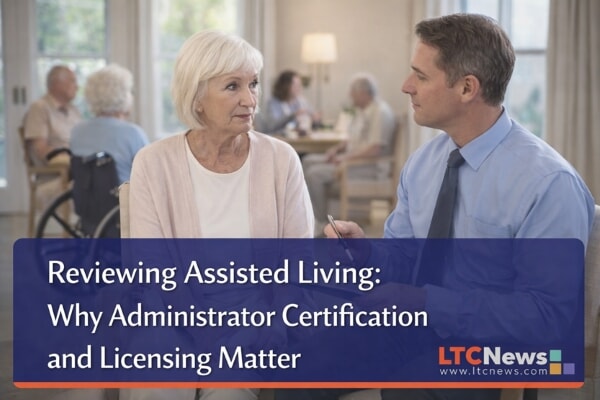

You walk into an assisted living community. The lobby feels warm. Residents are chatting. Staff members smile. When visiting a long-term care facility with your loved one, all these are good signs.
But here’s the question most families never ask: Who is running this place—and how qualified are they?
We live in an aging society, and more people than ever need help with everyday living activities or supervision due to a declining memory. Most people want to remain at home, but for many reasons, including socialization, assisted living has become a popular option.
However, understanding the quality of an assisted living facility is a top priority. If you’re helping a parent move into assisted living, or you’re considering it for yourself, the administrator’s training and certification may be among the most important factors for safety, regulatory compliance, and long-term stability.
Assisted living is not just hospitality. It is regulated long-term care. Experts say that leadership matters.
Effective leadership plays a vital role in long-term care settings by enabling the conditions for high-quality care, improved staff outcomes, and greater continuity of care. — Ivy L Bourgeault et al. in a peer-reviewed analysis of leadership in long-term care published in the Journal of Long-Term Care.
Administrator Qualifications Directly Affect Safety
When your parent moves into assisted living, they are trusting the community with:
- Medication management
- Fall prevention and emergency response
- Dementia supervision
- Nutrition and infection control
- Regulatory compliance
- Staff oversight and hiring
The administrator oversees all of it.
In many states, assisted living administrators must complete formal training and licensing. In California, for example, administrators must obtain a Residential Care Facility for the Elderly (RCFE) license through the California Department of Social Services, which requires state-approved coursework, an examination, and continuing education.
Organizations such as Assisted Living Education offer comprehensive RCFE administrator courses and continuing education programs that meet state requirements. Their curriculum typically includes resident rights, dementia care, emergency planning, medication management, and facility operations.
Requirements vary widely by state. That variability means two communities that look similar may operate under very different leadership standards behind the scenes.
What Certification and State Licensing Typically Require
While regulations differ, state-approved administrator training often includes:
- Resident rights and elder abuse prevention
- Dementia care and behavioral management
- Medication management protocols
- Emergency preparedness and disaster response
- Staffing laws and supervision standards
- State inspection compliance
Continuing education is typically required to maintain credentials.
According to the National Center for Assisted Living (NCAL), strong leadership and staff training are consistently linked to improved resident satisfaction and regulatory compliance. Without structured education, even well-meaning leadership can struggle with complex care demands and evolving regulations.
How Leadership Impacts Your Loved One’s Daily Life
You may not see the administrator daily, but their training affects everything.
Strong leadership often means:
- Lower staff turnover
- Clear medication oversight systems
- Faster response to family concerns
- Cleaner inspection histories
- More consistent dementia care practices
When assisted living fails, it is often due to poor oversight, staffing instability, or regulatory breakdowns—not décor. Strong leadership and accountability are essential to protecting residents’ safety and rights. Experts say that oversight culture begins at the top.
Growing Need for Professional Oversight
Today’s assisted living residents are older and medically more complex than in decades past. Many need help with multiple activities of daily living (ADLs), including:
- Bathing
- Dressing
- Eating
- Toileting
- Personal Hygiene
- Mobility
- Medication reminders
- Supervision due to cognitive impairment
According to the U.S. Department of Health and Human Services, about 56% of Americans turning 65 today will need long-term services and supports that meet the federal definition of long-term care during their lifetime.
The problem should not be ignored. Understanding the risks and options for quality care is essential to overall quality of life down the road. Meanwhile, family caregiving is surging, placing a burden on adult children and their families. Many families are in crisis because no discussion or planning was done before the need for extended care arrives.
Planning makes the crisis easier for the entire family. Discussion of the topic, Long-Term Care Insurance, and other financial planning should ideally be done before retirement.
But if a loved one needs extended care now, the quality of the provider should be first on your list of considerations. Professional oversight inside assisted living communities is an important consideration. You can narrow down your search with the LTC News Caregiver Directory. One question to ask, as you narrow down the options, is the quality of the staff and leadership.
Financial Reality: Quality Care Is Expensive
Assisted living is private-pay in most cases, meaning unless you have Long-Term Care Insurance, you will pay for the costs from income and assets.
According to a review of assisted living costs by the LTC News Cost of Care Survey, the national median base cost of assisted living is just over $5,000 per month. Sur-charges will add to that amount depending on the level of services you or a loved one requires. Keep in mind that this cost varies significantly by location.
It is also important to understand:
- Medicare does not cover long-term custodial care in assisted living.
- Medicare only pays for short-term skilled care following hospitalization (usually in a nursing home).
- Medicaid eligibility requires limited financial resources.
Without planning, families often make rushed decisions after a hospitalization, fall, or memory diagnosis.
When that happens, price—not leadership quality—can drive the decision. Planning provides a choice for the quality of care. Long-Term Care Insurance can help access higher-quality communities and reduce the pressure to choose solely on cost.
Knowing how extended care will be paid for before it happens gives you time to evaluate licensing, inspection records, and administrator credentials carefully.
Questions to Ask Before You Commit
If you are touring assisted living communities, add these to your checklist:
- Is the administrator licensed in this state?
- What formal certification have they completed?
- How many years of experience do they have in senior care?
- What continuing education do they complete annually?
- May I review recent state inspection reports?
- What is the staff turnover rate?
You are not being difficult. You are protecting your family.
Professional Standards
Assisted living can offer safety, social engagement, and support. But not all communities operate at the same professional standard.
Assisted living residents and their families are consistently happy with the care they receive, but because there are more than 30,000 assisted living communities in the United States—with varying services, staffing, and state regulatory requirements—families must understand that not all communities operate at the same level of quality. — National Center for Assisted Living (NCAL).
Before you commit:
- Ask about administrator licensing
- Review inspection history
- Understand care costs
- Plan financially before a crisis forces your hand
Your parent deserves more than a welcoming lobby. They deserve trained leadership.
And if you’re planning for your own future, ask yourself this: When the time comes, would you want your care overseen by someone formally trained, licensed, and accountable?