Social Perks of Assisted Living Communities for Seniors
About This Article
Assisted living communities offer relief from isolation and disconnection. Learn how an assisted living community can help you make easier, safer, long-lasting social connections.

Linda Kople
Linda Kople is a freelance writer focused on caregiving, aging, health, wellness, long-term care, and retirement planning
Table of Contents
- Everyday Interaction That Happens Naturally
- Events and Celebrations That Create Meaning
- Staff Support That Encourages Connection
- Family Involvement Without Disruption
- Balancing Social Life with Privacy
- Finding Quality Assisted Living
- Why Social Well-Being Matters
- Planning Makes it Easier on Family and Finances
If you are old enough, you may remember the song, "People." It is a signature song by Barbra Streisand from the 1964 Broadway musical "Funny Girl," which highlights the emotional depth of human connections.
One of the lyrics of the song you will remember.
People who need people. Are the luckiest people in the world.
You might worry about what life will feel like if you can no longer drive as easily, host gatherings at home, or keep up with a shrinking social circle. You may be afraid of being alone. Those fears are common, and they are valid.
Social isolation and loneliness can have corrosive effects on mental and physical health. Older adults’ social circles may shrink due to poor health, loss of loved ones, poverty, discrimination, language barriers, or living in rural or unsafe communities. — Lissette Piedra, a professor of social work at the University of Illinois Urbana-Champaign.
Social connection is closely tied to emotional health, confidence, and quality of life as you age. When isolation increases, many older adults experience loneliness, sadness, or withdrawal.
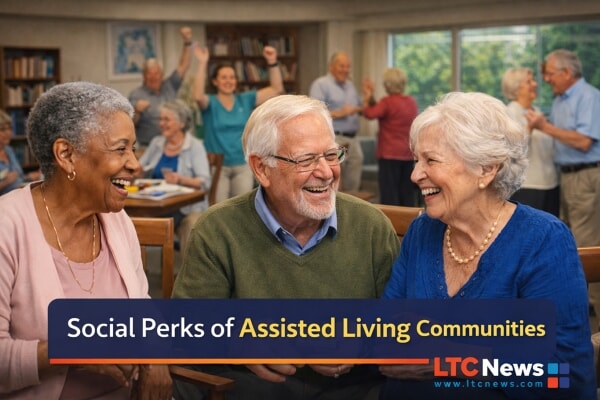
Assisted living communities are structured to reduce those risks by weaving social interaction into daily routines without forcing participation or sacrificing independence. At their best, assisted living communities offer more than support with daily tasks. They create an environment where relationships can still grow.
A supportive senior living community reduces loneliness by offering a built-in network. Daily group activities, shared meals, and family involvement create natural opportunities for connection. Familiar faces and regular interaction help relationships form comfortably over time.
Everyday Interaction That Happens Naturally
Social connection in assisted living does not depend on scheduled events alone. It happens in small, ordinary moments.
Shared hallways, gardens, lounges, and activity rooms make casual interaction part of daily life. You may run into the same neighbors each morning, exchange greetings, or stop for a brief conversation. Those moments matter. Familiar faces create a sense of comfort and stability.
Unlike social plans that require energy, transportation, or coordination, these interactions require little effort. You remain in control. Conversation is available, not required. Staff members often help support this rhythm by noticing who may be feeling isolated and gently encouraging connection without pressure.
Key to Socialization - Activities
Not everyone enjoys large gatherings. Assisted living communities that prioritize social well-being recognize that personality, energy, and comfort levels vary. However, activities are one of the most important drivers of social connection in assisted living because they give you or a loved one a natural reason to interact without pressure. When activities are part of the daily routine, conversation happens organically around shared interests rather than forced introductions.
Whether it is a small discussion group, a fitness class, or a creative session, activities create structure, familiarity, and repeated contact, three essentials for building real relationships over time. For many residents, participation starts quietly and grows into confidence as familiar faces and shared experiences turn into genuine connections.
Most communities offer a range of activities, including:
- Creative options such as art, crafts, or music
- Gentle movement or balance-focused exercise
- Games, puzzles, or card groups
- Small discussion circles or book clubs
- Educational talks or guest presentations
Large group events create energy and shared experiences. Smaller gatherings offer quiet connection for those who prefer a slower pace. Residents often start by observing and gradually join in as they feel comfortable.
Choice matters. When you can engage on your own terms, confidence tends to grow naturally.
Shared Dining as a Social Anchor
Meals often become the heart of daily social life in assisted living. Communal dining creates a predictable rhythm and a natural reason to gather.
Sitting with familiar faces encourages conversation without formality. Over time, shared meals can lead to friendships built on routine and familiarity.
Special menus, holiday meals, and themed dining nights add variety and spark conversation. Food becomes more than nutrition. It becomes a shared experience.
For many residents, these daily moments provide a sense of belonging that is difficult to replicate when living alone.
Events and Celebrations That Create Meaning
Assisted living communities often mark time through shared events and celebrations. Holidays, birthdays, and seasonal gatherings offer moments of recognition and joy.
Music nights, film screenings, and cultural programs create common experiences residents can talk about afterward.
Familiar songs, traditions, or celebrations often connect people to meaningful memories from earlier life. These moments reinforce identity and remind residents that their experiences still matter.
A steady calendar of events can make days feel fuller and more predictable, which many older adults find reassuring.
Staff Support That Encourages Connection
Social well-being does not happen by accident. Staff play a critical role in shaping the tone of a community.
Staff members who take time to learn residents’ names, backgrounds, and preferences help reduce the anxiety that can come with meeting new people. Simple introductions between neighbors often lead to lasting friendships.
When staff notice someone pulling away or struggling to adjust, they can gently guide that person toward activities or social settings that feel safe and manageable.
This behind-the-scenes support often makes the difference between a resident feeling included or overlooked.
Family Involvement Without Disruption
Moving into assisted living does not mean losing connection with family. Well-designed communities provide welcoming spaces for visits and shared activities.
Family will always remain important. According to University of Michigan research, family connections support mental health and participation in social activities for older adults.
We were interested in understanding how much the presence of family ties matters for older adults’ well-being … strong social family ties create benefits that are unaffected by distance. — Sarah E. Patterson, Ph.D., research scientist at the University of Michigan Institute for Social Research.
Planned events, open gatherings, and comfortable common areas make it easier for families to spend time together without stress. Even if family members live far away, video connections can still maintain family bonds.
When families feel welcome, residents remain connected to the people who know them best. Staff often help guide these interactions, so visits feel relaxed and supportive rather than overwhelming.
Maintaining family bonds remains an important part of emotional health.
Balancing Social Life with Privacy
The strongest assisted living environments balance connection with personal space. Private apartments allow for rest, independence, and reflection. Shared spaces provide opportunities to connect when you choose. This balance helps residents feel supported rather than managed.
Researchers have observed that when studying senior living communities, individual apartments in assisted living facilities serve as retreats where residents maintain independence, while common spaces support connection.
Residents appreciated their privacy… [yet] social interaction and recreation occurred in common areas. — Research published in the Journal of Housing For the Elderly by H.H. Ewen et al.
Finding Quality Assisted Living
When you begin searching for an assisted living community for a loved one, start with the budget. Assisted living costs vary widely, and understanding what is affordable helps narrow options quickly.
If your loved one has Long-Term Care Insurance, you typically have more flexibility to choose a higher-quality community and services that better match their needs. Many families also find that selling a home reduces ongoing expenses such as property taxes, maintenance, and utilities. Even so, long-term care costs remain significant and continue to rise, making careful planning essential.
Use the LTC News Caregiver Directory to narrow down options.
Once you have a list, start making calls. If your loved one has Long-Term Care Insurance, be sure to tell the admissions director that they have a policy. It will get them to the top of the list at better facilities.
Need help filing an LTC Insurance claim? LTC News partners with Amada Senior Care to offer free Long-Term Care Insurance claim support at no cost and with no obligation — File a Long-Term Care Insurance Claim.
During a tour, observing resident interactions can be revealing. Are people engaged with one another? Do staff greet residents by name? Does the atmosphere feel relaxed?
Those details often say more than marketing materials.
Why Social Well-Being Matters
Social isolation is not just an emotional issue. It can affect physical health, cognitive function, and long-term independence.
Experts widely agree that loneliness can accelerate decline, increasing the likelihood that someone may need higher levels of care sooner. Environments that support daily interaction often help residents stay engaged and emotionally stable for longer periods.
Planning Makes it Easier on Family and Finances
This social connection adds to a better quality of life. It is one reason many Long-Term Care Insurance policies recognize assisted living as a covered setting when care is necessary. Social engagement is part of maintaining overall well-being, not separate from care needs.
LTC Insurance will cover all types and levels of extended care, including in-home care. However, many people elect to move to assisted living. For you, in your planning, you want to have a choice without regard for the cost.
Health insurance and Medicare only pay for short-term skilled care. When you add an LTC policy, you will have access to the choice of extended care you want, in any setting, without adversely impacting income and assets or creating a burden on those you love.
However, this should be part of your retirement plan as premiums are based, in part, on your age and health. Most people acquire an LTC policy between the ages of 47 and 67, but those older and younger also obtain coverage.
Be sure to seek an expert in long-term care planning who represents all the top-rated insurance companies that offer long-term care solutions.
Meanwhile, for an older family member, help them enjoy a better quality of life as they need help with daily activities. Assisted living is one of many options.


Sponsored