How to Plan a Beach Day with Aging Parents

About This Article
You want to enjoy a beach vacation with your aging parents, not spend the day worrying about heat, mobility, or exhaustion. With the right timing, accessible beaches, and thoughtful planning, a day by the ocean can be relaxing, safe, and full of meaningful moments.

Anna Marino
Anna Marino is a seasoned writer specializing in topics related to family, aging, and lifestyle in retirement. She shares advice on intergenerational relationships and strategies for enjoying retirement.
Table of Contents
- Start With the Right Timing
- Choose Beaches That Prioritize Accessibility
- Focus on Comfort and Safety Essentials
- Pack for Dignity, Warmth, and Ease
- Plan for Shade, Seating, and Regular Rest
- Navigating Sand and Water Safely
- Beach Day Checklist for Aging Parents
- What to Consider When an Older Adult Has a Caregiver or Lives in Care
- Ending the Day on a Comfortable Note
You remember beach trips when no one checked the clock. You parked where you could, carried too much gear, and stayed until sunset without thinking twice. Now, planning a beach day with your parents feels different.
You find yourself scanning weather forecasts, checking walking distances, and wondering how long they can stay comfortable before the day turns from relaxing to exhausting.
That shift can catch you off guard. You want the beach to feel like a gift, not a challenge. You want your parents to enjoy the water, the breeze, and the simple pleasure of being together, without worrying about heat, balance, or fatigue.
You picture the sound of waves, shared laughter, and quiet time together. But when you bring aging parents to the beach, the experience changes. Heat, uneven sand, medications, fatigue, and mobility all matter. A successful beach day depends less on spontaneity and more on planning for comfort, safety, and pacing.
Thoughtful planning helps you protect those moments rather than rush through them. With a few smart choices, beach trips can remain one of the most enjoyable and accessible outings for older adults.
Start With the Right Timing
Timing can make or break a beach day for older adults.
The goal is to choose hours when the sun and crowds are most manageable. In warmer months, that usually means arriving early in the morning between 8 a.m. and 10 a.m. or visiting later in the afternoon after 4 p.m., when heat and UV exposure ease.
For winter beach trips to warmer destinations, timing can be more flexible, but pacing still matters. Midday sun can remain intense in southern coastal areas, and many medications common among older adults can increase sensitivity to sunlight, leading to dehydration or dizziness. Breaks, shade, and shorter visits are important year-round.
Shorter visits often work best. Two to three relaxed hours usually provide plenty of enjoyment without exhaustion.
Choose Beaches That Prioritize Accessibility
Not all beaches are created equal when it comes to aging visitors.
Many popular coastal communities now invest in accessibility upgrades, including:
- Firm mobility mats over sand
- Beach wheelchairs are available at no cost
- Boardwalks that extend closer to the shoreline
- Shaded rest areas and accessible restrooms
These features reduce fall risk and make it easier for parents to stay engaged instead of sidelined.
America’s Most Visited Beaches by Season
Understanding seasonal travel patterns helps you avoid crowds and choose destinations that suit older adults.
Most Popular U.S. Beaches in Winter Months
Winter beach travel is driven by mild weather, walkability, and accessibility rather than swimming.
- Clearwater Beach, Florida – Calm surf, flat paths, and senior-friendly amenities
- Siesta Key, Florida – Cooler sand, wide beaches, and strong accessibility features
- Naples Beach, Florida – Quiet, upscale atmosphere with boardwalk access
- Myrtle Beach, South Carolina – Long promenades and winter lodging discounts
- Gulf Shores, Alabama – Milder winter climate and accessible public beaches
These destinations are especially popular with older travelers seeking warmth without extreme heat.
Most Popular U.S. Beaches in Summer Months
Summer beaches bring heat and larger crowds, but careful timing and destination choice still allow older adults to enjoy the water safely. In addition to oceanfront destinations, many families travel to Great Lakes and inland beaches, which often offer cooler temperatures and gentler conditions during peak summer.
- Virginia Beach, Virginia – Extensive boardwalk, frequent shaded seating, and strong accessibility features
- Outer Banks, North Carolina – Wide shorelines, early-morning access, and quieter beaches outside peak hours
- Cape Cod, Massachusetts – Cooler summer temperatures, calm waters, and walkable beach towns
- Santa Monica, California – Flat walking paths, reliable medical access nearby, and well-maintained public facilities
- Ocean City, Maryland – Strong public safety presence, beach wheelchairs, and accessible rest areas
Popular Great Lakes and Inland Summer Beach Destinations
- Lake Michigan (Illinois, Indiana, Michigan, and Wisconsin) – Freshwater beaches with cooler air temperatures, long promenades, and easy access in cities such as Holland, Grand Haven, St. Joseph, Milwaukee, and the fabulous beaches in Chicago.
- Sleeping Bear Dunes National Lakeshore, Michigan – Scenic overlooks, shaded trails, and calmer shoreline areas for short visits
- Door County, Wisconsin – Smaller beaches, quieter towns, and a slower pace that appeals to older travelers
- Lake Tahoe (California and Nevada) – Alpine climate, mild summer temperatures, and accessible lakeside parks
- Lake Champlain (Vermont and New York) – Gentle freshwater beaches and walkable waterfronts
Freshwater and inland beaches can be especially appealing for older adults because they often have lower humidity, fewer rip current risks, and cooler evenings, making longer stays more comfortable.
Focus on Comfort and Safety Essentials
Older adults face unique challenges at the beach, including hydration, balance, and temperature regulation.
Plan for:
- Lightweight, breathable clothing with UPF protection
- Slip-resistant water shoes or sandals for wet surfaces
- Wide-brim hats and UV-blocking sunglasses
- Frequent hydration, even when parents say they are not thirsty
Many families find that a towel for the outdoors works well because it is easy to carry, dries quickly, and can offer warmth or privacy while changing.
Medication planning matters. Bring prescriptions in a labeled pouch and use a small cooler for temperature-sensitive medications. Some drugs increase dizziness or dehydration, making shade breaks essential.
Pack for Dignity, Warmth, and Ease
Comfort is not only physical. It is emotional.
Quick-dry towels or lightweight wraps offer warmth during breezes and provide privacy for changing. Having these small comforts readily available helps parents feel confident and relaxed instead of self-conscious.
Plan for Shade, Seating, and Regular Rest
Shade is one of the most overlooked needs for older adults at the beach.
Bring or rent:
- A large umbrella, canopy, or shaded cabana
- Sturdy chairs with armrests to support standing and sitting
- Seating that sits higher off the sand rather than low beach loungers
Encourage short rest periods every 20 to 30 minutes. Hydration should begin before arriving and continue throughout the visit.
Navigating Sand and Water Safely
Sand challenges balance, especially for people with arthritis or joint issues.
Tips that help:
- Walk near the waterline, where the sand is firmer
- Use mobility mats when available
- Offer an arm or use a wide-base cane for stability
Before entering the water, always check flag warnings, tide schedules, and rip current advisories. Calm water can still pose a risk. For many older adults, gentle shoreline splashing provides the joy of the ocean without unnecessary danger.
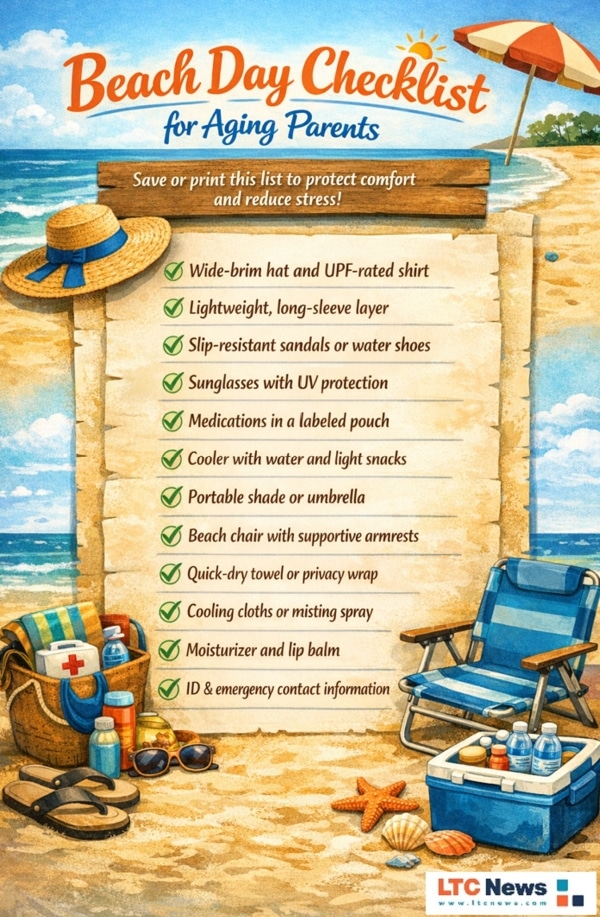
Beach Day Checklist for Aging Parents
What to Consider When an Older Adult Has a Caregiver or Lives in Care
If your parent receives care at home or lives in assisted living, memory care, or a nursing home, extra planning is essential before a beach outing. Start by coordinating with caregivers or facility staff well in advance.
Confirm their mobility needs, medication schedules, dietary restrictions, and any medical precautions that may affect time outdoors. For residents in memory care or skilled nursing, ask whether off-site visits require written permission, supervision guidelines, or documentation. Clear communication helps prevent missed medications, fatigue, or confusion during the outing.
You should also consider how changes in routine may affect your parent. Transitions can be disorienting, especially for those with dementia or cognitive impairment. Keep the visit short, choose familiar companions, and plan a calm return. Bring comfort items, identification, and emergency contacts, and know where the nearest restroom and shaded rest areas are located.
If a caregiver accompanies you, clarify roles ahead of time so everyone understands who is responsible for mobility, hydration, and safety. Thoughtful preparation protects your parent’s well-being and keeps the day enjoyable rather than overwhelming.
Ending the Day on a Comfortable Note
Before leaving, help parents rinse sand from their feet, rehydrate, and change into dry clothing. Once home, a warm shower and light meal often bring comfortable fatigue rather than exhaustion.
Check in later that evening for signs of dehydration, sun sensitivity, or soreness. Thoughtful planning helps beach memories stay positive instead of stressful.
Planning Matters as Parents Age
Beach outings highlight something families often overlook. As parents age, even simple pleasures require planning. Many older adults require help with everyday living activities. Someone with dementia needs special supervision. However, with proper care and attention they can still enjoy a good quality of life and enjoy a trip to the beach.
The beach can still be a place of joy, connection, and calm. With the right timing and thoughtful preparation, you give your parents the chance to enjoy the ocean safely and with dignity—while creating memories that matter.


Sponsored