Protecting Seniors at Home: First-Aid Skills and CPR That Can Save a Life
About This Article
First aid and CPR can save a senior’s life at home or while living in a long-term care facility. Learn how to respond to falls, choking, and cardiac emergencies with confidence.

Linda Kople
Linda Kople is a freelance writer focused on caregiving, aging, health, wellness, long-term care, and retirement planning
Table of Contents
- Why First Aid Matters More as You Age
- Most Common Emergencies Older Adults Face
- The First Step in Any Emergency: Stay Calm
- Recognizing Cardiac Emergencies
- CPR: A Skill Every Family Should Have
- What CPR Does
- Why It Matters for You
- Hands-Only CPR Is Simple
- Why CPR Training Is Standard in Long-Term Care
- How to Respond to Common Emergencies
- Prevention: Your First Line of Defense
- Training Builds Confidence—and Saves Lives
- The Emotional Side of Emergency Care
- Caregiving Reality: Why Preparation Matters
- Long-Term Care Planning Still Matters
- Final Takeaway
You may not expect an emergency at home, but when you care for aging parents or loved ones, being prepared can make all the difference. This article explains the essential first-aid and CPR skills every family member and caregiver should know—and why those first few minutes can save a life and protect long-term independence.
You don’t expect an emergency—but if you have aging parents or help care for a loved one, you know how quickly life can change. One moment, everything is fine. The next, it’s a fall, a choking incident, or something far more serious. Even when at work, or out shopping, for example, you may witness an emergency and you could save a life.
In those moments, what you know—and how fast you act—can make all the difference. I'm not trying to be dramatic, but it can be the difference between life and death.
First-aid knowledge is no longer optional—it’s essential. It gives you the ability to act quickly and effectively—not panic. According to the American Heart Association, survival drops 7–10 percent for every minute without CPR. Research supports the importance of CPR.
Our findings reinforce that every second counts when starting bystander CPR, and even a few minutes’ delay can make a big difference. If you see someone in need of CPR, don’t dwell on how long they’ve been down – your quick actions could save their life.” — Evan O’Keefe, who was a cardiovascular fellow at Saint Luke’s Mid America Heart Institute and the University of Missouri–Kansas City at the time of the research.
Why First Aid Matters More as You Age
As you get older, your body becomes more vulnerable to injury and illness. Chronic conditions like heart disease, diabetes, osteoporosis, and high blood pressure increase the risk of emergencies at home.
According to the Centers for Disease Control and Prevention, 1 in 4 Americans age 65+ falls each year, making falls a leading cause of injury, hospitalization, and need for long-term care among older adults.
For families, the reality is clear:
- Emergencies often happen at home
- Help may not arrive immediately
- Your response in the first few minutes matters most
First-aid training gives you the ability to act quickly and effectively—not panic.
Most Common Emergencies Older Adults Face
Understanding what you are likely to encounter helps you prepare with confidence.
- Falls and Fractures
Falls are the most common cause of injury for older adults. Poor balance, medications, and home hazards all contribute. A fall can lead to hip fractures, head injuries, and loss of independence.
- Choking
Swallowing difficulties increase with age, especially for those with neurological conditions or dental issues.
- Cardiac Emergencies
Heart attacks and sudden cardiac arrest are serious risks and can occur without warning.
- Burns and Household Accidents
Reduced sensation and slower reaction times increase the risk of burns while cooking.
- Diabetic Episodes
Blood sugar swings can cause confusion, fainting, or seizures.
The First Step in Any Emergency: Stay Calm
No matter what type of emergency you are dealing with, your ability to remain calm is your most important tool.
Start with a quick assessment:
- Are they conscious?
- Are they breathing normally?
- Are they responsive or confused?
You need to keep yourself calm because additional hysterics are not helpful.” — Dr. Chris DeFlitch, Professor of Emergency Medicine at Penn State College of Medicine.
This quick assessment determines what you do next. Among all emergency skills, one stands above the rest: CPR.
Recognizing Cardiac Emergencies
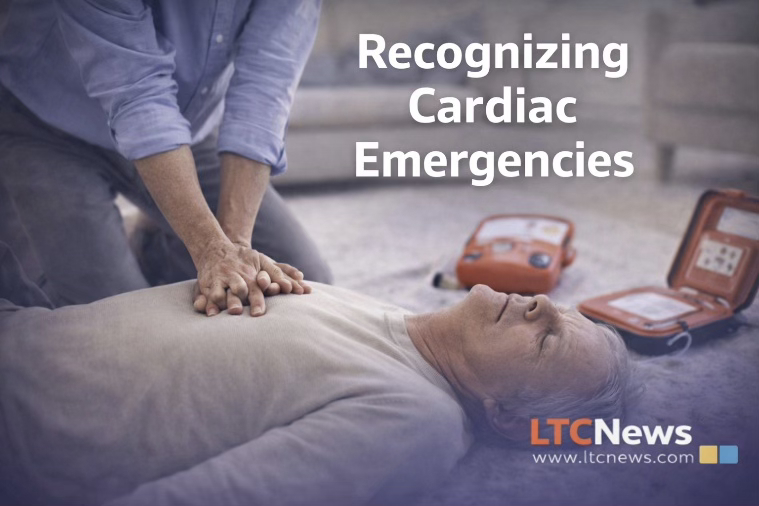
You may not think about cardiac arrest until it happens—but when it does, every second matters. For older adults, heart-related emergencies remain one of the most common and life-threatening events you may face at home or as a caregiver.
According to the American Heart Association, cardiac arrest often occurs without warning and requires immediate action. Unlike a heart attack, which may develop over time, sudden cardiac arrest causes the heart to stop beating effectively, cutting off blood flow to the brain and vital organs.
Recognizing a cardiac emergency quickly allows you to act without hesitation. Look for:
- Sudden collapse
- No breathing or only gasping
- No pulse
- Unresponsiveness
These signs mean you should act immediately. Call 911 and begin CPR. In these cases, immediate intervention is critical. Knowing basic CPR can double or even triple a person’s chance of survival. Your CPR, including chest compressions and rescue breathing, will help maintain the person's blood circulation and oxygen flow to vital organs until professional help arrives.
Even hands-only CPR—focused on consistent chest compressions—can make a significant difference when performed promptly. It’s highly recommended that if you are an informal family caregiver, you undergo certified CPR training to build confidence and ensure proper technique.
Even in daily life, you may witness a heart emergency at work, while shopping, or even at a restaurant. Knowing how the act can help save a life.
CPR: A Skill Every Family Should Have
If there is one skill you should prioritize, it is CPR. Cardiac arrest can happen suddenly—even in people without prior warning signs. When it does, survival depends on immediate action.
Immediate bystander CPR can double or triple a cardiac arrest victim’s chance of survival.” — American Heart Association, "What is CPR".
What CPR Does
CPR (cardiopulmonary resuscitation) helps maintain blood flow and oxygen to the brain and vital organs until emergency responders arrive. Permanent brain damage can begin within 4 to 6 minutes without oxygen, which is why immediate action is critical.
Why It Matters for You
If you:
- Have aging parents
- Help care for a spouse
- Are part of the sandwich generation
- Provide informal caregiving
…you are often the first responder.
If a cardiac emergency happened in your home today, would you feel confident stepping in?
Hands-Only CPR Is Simple
Even without full certification, you can perform hands-only CPR:
- Push hard and fast in the center of the chest
- Maintain a steady rhythm (100–120 compressions per minute)
It’s not about perfection. It’s about action.
Why CPR Training Is Standard in Long-Term Care
If you have ever placed a loved one in assisted living or a nursing home, safety is a top concern. One reason facilities respond quickly is that staff are trained. Most licensed long-term care providers require staff to be CPR-certified. This helps ensure:
- Immediate response to cardiac events
- Faster stabilization before EMS arrives
- Better outcomes for residents
Training programs recommended by organizations like the American Red Cross help caregivers build confidence and respond effectively during emergencies. It’s a reminder: the same level of preparedness should exist at home.
👉 When searching for caregivers and long-term care facilities, be sure to ask about staff CPR skills and training.
How to Respond to Common Emergencies
Falls
Do not rush to lift someone.
Instead:
- Check for pain, swelling, or deformity
- Look for signs of head injury
- Call 911 if anything seems serious
If they appear stable, help them up slowly.
Choking
If they can cough, encourage it.
If they cannot breathe or speak:
- Perform abdominal thrusts
- Call 911 immediately
Minor Cuts and Wounds
Even small injuries can become serious infections.
Basic care:
- Wash your hands
- Clean the wound
- Apply pressure
- Cover with a sterile bandage
Watch for signs of infection.
Burns
For minor burns:
- Cool under running water for at least 10 minutes
- Cover with a clean dressing
Seek immediate care for severe burns.
Diabetic Emergencies
If conscious:
- Provide a quick sugar source (juice or glucose tablets)
If unconscious:
- Call 911
- Do not give food or drink
Prevention: Your First Line of Defense
Emergency response is critical—but prevention is even better.
Simple home upgrades can reduce risk:
- Install grab bars
- Remove loose rugs
- Improve lighting
- Use non-slip mats
- Keep medications organized
Preventing falls alone can significantly reduce the likelihood of hospitalization and the need for long-term care. These changes support independence and reduce long-term care risk.
Training Builds Confidence—and Saves Lives
First-aid knowledge and CPR skills fade without practice, reducing effectiveness in real emergencies.
CPR skills and knowledge have been found to deteriorate within 6–12 months of initial training.” — Researchers, Sultan Qaboos University Hospital.
Consider:
- Taking a certified CPR and first-aid course
- Refreshing skills every one to two years
- Practicing emergency scenarios
Many local hospitals and community organizations offer affordable training.
The Emotional Side of Emergency Care
Emergencies are not just physical—they are emotional. Older adults may feel fear, embarrassment, or loss of control. Your response matters. Speak calmly. Offer reassurance. Protect their dignity.
How you communicate in a crisis matters. Staying calm and offering reassurance can help reduce fear.” — Dr. Keri Peterson, MD, board-certified internal medicine physician in private practice in New York, affiliated with Mount Sinai Health System.
Caregiving Reality: Why Preparation Matters
More than 63 million Americans now provide unpaid care, a 45% increase since 2015, according to recent research reported by LTC News. Many caregivers are untrained and unprepared for emergencies. When a crisis happens, the physical and emotional burden can escalate quickly, especially without a plan in place.
Family caregivers experience significant emotional stress, including anxiety and feelings of being overwhelmed, especially during high-pressure situations.” — Researchers in caregiver mental health, National Study of Caregiving academic analysis.
Being prepared with first aid and CPR is one way to reduce that burden and improve outcomes.
Long-Term Care Planning Still Matters
Even with preparation, some health events lead to ongoing extended care needs. Without a plan, including Long-Term Care Insurance, families often face rushed decisions, financial strain, and limited care options during a crisis.
- Medicare only covers short-term skilled care (up to 100 days)
- Long-term care is mostly paid out of pocket
- Long-Term Care Insurance provides guaranteed, tax-free benefits for extended care at home or in a facility
- Qualified caregivers and long-term care facilities have professional CPR training to assist in any emergency
Knowing the cost of long-term care services will help, whether you are planning for the future or addressing an older loved one's needs today. You can explore current care costs using the LTC News Cost of Care Calculator and find providers through the LTC News Caregiver Directory.
You can’t predict when an emergency will happen—but you can decide how prepared you will be.
👉 If something happened to someone today and you were there; would you know what to do?
Final Takeaway
You are probably familiar with CPR, but may not understand its history and how it developed into the life-saving technique used today. Modern CPR techniques were refined in the 1960s when medical researchers combined chest compressions with mouth-to-mouth resuscitation. Over the decades, guidelines have evolved to emphasize effective compressions, proper depth and rhythm, and simplified instructions for bystanders.
Today, hands-only CPR is widely promoted for untrained first responders, making it easier for anyone to step in during a cardiac emergency. This evolution reflects ongoing medical research aimed at improving survival rates.
You can’t predict when an emergency will happen—but you can prepare for it. Learn CPR. Understand basic first aid. Make your home safer. Plan for long-term care.
Because when seconds matter, preparation is everything. The steps you take today can protect your loved ones—and give you the confidence to act when it matters most.
Frequently Asked Questions
What is the most common emergency for seniors at home?
Falls are the most common, followed by cardiac events, choking, and medication-related issues.
Does Medicare cover long-term care after an emergency?
No. Medicare only covers short-term skilled care (up to 100 days). Ongoing long-term care is not covered.
Do I need CPR training if I’m not a healthcare professional?
Yes. If you care for an older adult, you are often the first person available in an emergency. CPR training prepares you to act quickly.
What is hands-only CPR?
Hands-only CPR involves chest compressions without rescue breaths. It is recommended for untrained bystanders and can still improve survival.
How often should CPR certification be renewed?
Most organizations recommend every two years to stay current with guidelines.

Sponsored