Family Caregiving Soars — 63 Million Americans Now Providing Unpaid Care

About This Article
AARP and the National Alliance for Caregiving report a record 63 million Americans now serve as unpaid family caregivers. Rising stress, lack of training, and financial strain are pushing families to the brink, especially as long-term care needs grow more complex.

Linda Kople
Linda Kople is a freelance writer focused on caregiving, aging, health, wellness, long-term care, and retirement planning
Table of Contents
- Caregiving is Getting Harder—and More Complex
- Burnout Is the New Normal
- Most Caregivers Are Unpaid—and Unprotected
- What Medicare and Medicaid Really Cover
- Why Long-Term Care Insurance Belongs in Every Retirement Plan
- Finding the Right Caregiver or Facility
- If a Loved One Has a Policy—Ask Now, Use it Right Away
- What You Can Do Right Now
- Final Thoughts: A Crisis in Motion, a Call to Prepare
- 10 Quick Facts From This Article
- Frequently Asked Questions About Family Caregiving and Long-Term Care Planning
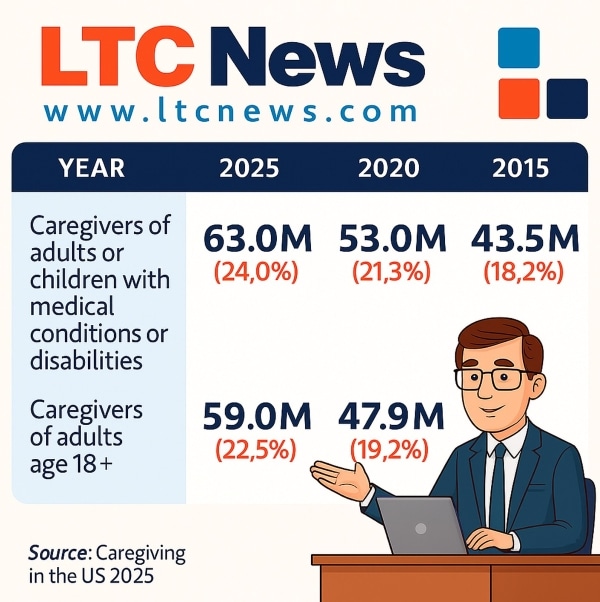
If you’re caring for an aging parent, a spouse with a chronic illness, or even a disabled adult child, you’re not alone. According to the 2025 Caregiving in the U.S. report from AARP and the National Alliance for Caregiving (NAC), 63 million Americans are providing unpaid care to an adult or child with health or functional needs. That’s 1 in 4 adults—and a 45% increase since 2015.
This new data confirms what many of us already feel: caregiving is no longer just a personal responsibility—it’s a national crisis.
“We’ve crossed a threshold,” said Jason Resendez, president and CEO of NAC.
Family caregivers are doing more for longer, often with little training and almost no support.
Caregiving is Getting Harder—and More Complex
Today’s caregivers are not just preparing meals or helping with transportation. Many are performing complex medical tasks once reserved for nurses.
- 84% help with three or more IADLs, instrumental activities of daily living, such as managing finances, transportation, and household chores.
- Nearly 50% assist with ADLs, activities of daily living, including bathing, dressing, and eating.
- 40% perform “high-intensity” medical tasks, such as wound care, administering injections, or operating medical devices.
Most receive no formal training. Only 11% say they’ve been trained to handle these responsibilities.
You may be doing this kind of care right now—without realizing just how much you’ve taken on.
Burnout Is the New Normal
Caregivers are stretched thin—and paying the price emotionally, physically, and financially.
- 61% work full- or part-time while caregiving
- 53% report mental health challenges, including anxiety, depression, and exhaustion
- 1 in 3 say caregiving has caused them to feel isolated or overwhelmed
Women, people of color, and members of the “sandwich generation”—those caring for both children and aging parents—are especially at risk.
Most Caregivers Are Unpaid—and Unprotected
According to the AARP/NAC report:
- Only 18% of caregivers receive any financial compensation.
- Most unpaid caregivers don’t qualify for job protections or paid leave.
- Fewer than half know where to turn for help or guidance.
Often, the caregiver is simply the one who happens to be closest—typically a daughter or spouse—regardless of time, training, or readiness.
What Medicare and Medicaid Really Cover
One of the most common mistakes families make is assuming Medicare will cover long-term care. It doesn’t.
- Medicare pays only for short-term skilled care, typically after a hospital stay—and usually no more than 100 days.
- It does not cover custodial care, like help with dressing, bathing, or supervision for dementia.
- Medicaid does cover long-term care—but only for people with limited income and assets.
This gap in coverage forces millions of families to become unpaid caregivers or pay out of pocket—unless they qualify for Medicaid or have Long-Term Care Insurance.
Why Long-Term Care Insurance Belongs in Every Retirement Plan
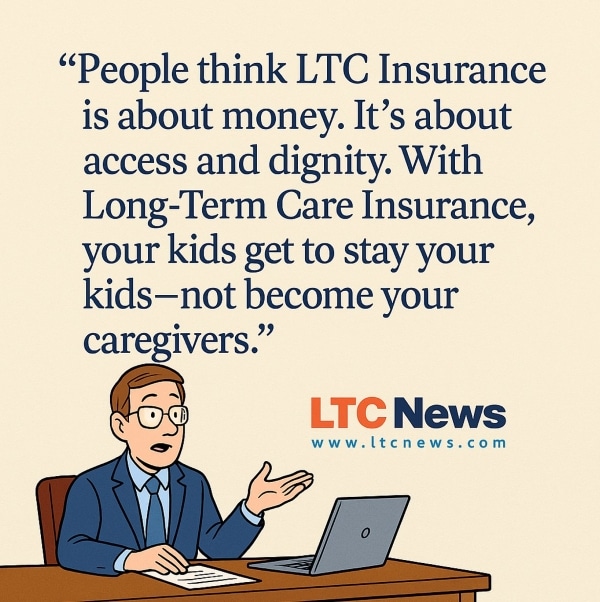
If you’re planning for retirement, Long-Term Care Insurance should be part of your strategy. This isn’t just about protecting your nest egg. It’s about preserving your independence—and your relationships.
With a properly designed policy, you get:
- Choice of quality care providers, including home care, assisted living, memory care, and nursing homes.
- Quality professional care services reduce the burden on your family, giving them the time to be family instead of caregivers.
- Greater control over how and where you receive extended care
Premiums for Long-Term Care Insurance are based on your age and health at the time of application, so the earlier you plan, the more affordable it will be.
Use the LTC News Cost of Care Calculator to understand the real current and future cost of care where you live, based on zip code.
Finding the Right Caregiver or Facility
Whether you’re planning or need immediate help for a loved one, finding reliable care is critical—especially if your loved one wants to remain at home.
Use the LTC News Caregiver Directory to search the nation’s largest and most comprehensive database of:
- Home care agencies and private caregivers
- Assisted living and memory care facilities
- Nursing homes
- Respite care and short-term support services
You can search by ZIP code and filter by service type. Whether you need daily support or you're a family caregiver looking for a weekend break, the directory connects you with experienced, vetted providers.
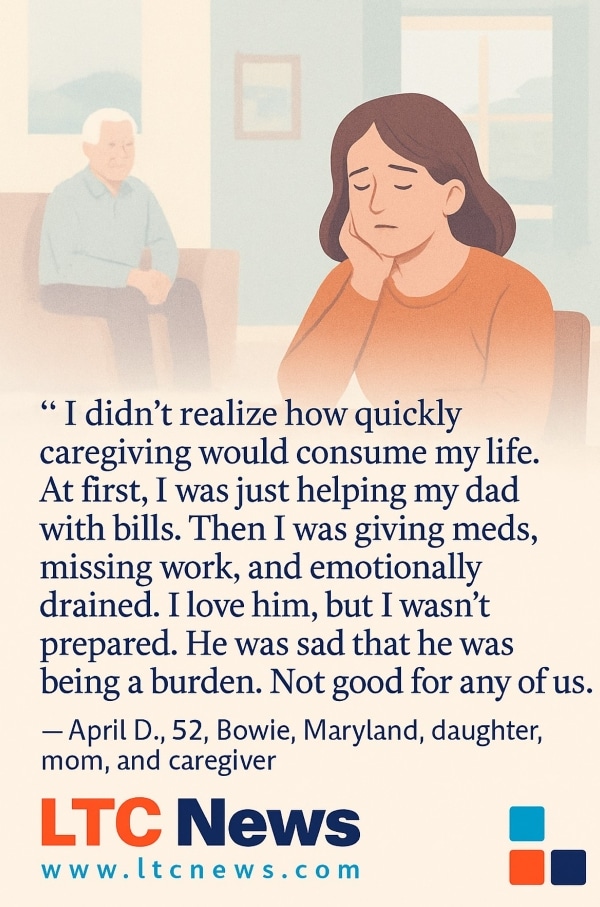
You can share your thoughts and experiences about aging, caregiving, health, and long-term care with LTC News —Contact LTC News.
If a Loved One Has a Policy—Ask Now, Use it Right Away
Many families forget to check: your loved one might already own a Long-Term Care Insurance policy—and never told you.
If so, you may be able to use it today to cover:
- In-home care
- Adult day care
- Assisted living or memory care
- Nursing homes and rehab
- Hospice and palliative services
Need help filing a claim? LTC News partners with Amada Senior Care to provide free claim support with no cost or obligation. Their trained experts can walk you through the entire process and help you access benefits quickly and correctly — File a Long-Term Care Insurance Claim.
What You Can Do Right Now
Whether you’re a caregiver, planning ahead, or supporting aging parents, here are key steps:
- Talk to your family now about long-term care preferences and policies
- Check for existing LTC Insurance coverage
- Use the LTC News Cost of Care Calculator to understand future care expenses
- Search the Caregiver Directory to find professional support near you
- Explore your own LTC Insurance options to avoid becoming a burden on loved ones.
Most people acquire Long-Term Care Insurance between the ages of 47 and 67, but work with a qualified LTC Insurance specialist, no matter your age, and they will help find the best coverage and the lowest cost based on your age, health, and other factors.
Final Thoughts: A Crisis in Motion, a Call to Prepare
The 2025 Caregiving in the U.S. report makes one thing clear: we are living in the age of the family caregiver.
Caregivers are doing critical work—without pay, training, or recognition. As long-term care costs continue to rise and public programs fall short, families must take steps now to protect themselves and their loved ones.
Don’t wait for a crisis. Build a plan. Look into your options. And remember—you’re not alone.
10 Quick Facts From This Article
- 63 million Americans are now providing unpaid care to a family member or loved one, highlighting the massive role families play in supporting older adults and those with chronic health conditions.
- The number of family caregivers in the United States has increased by about 45% since 2015, reflecting the nation’s rapidly aging population.
- Today, roughly one in four American adults is serving as a caregiver for a relative, spouse, friend, or neighbor.
- Many family caregivers provide assistance with Activities of Daily Living (ADLs) such as bathing, dressing, eating, mobility, and toileting.
- In addition to personal care, caregivers often manage complex medical tasks, including medication management, wound care, and coordinating doctor visits.
- Caregiving responsibilities frequently require caregivers to balance work, family life, and caregiving duties, which can lead to financial strain and emotional stress.
- Many caregivers report declining physical and mental health as they juggle caregiving responsibilities with their own lives.
- The majority of family caregivers receive no financial compensation for the care they provide.
- Without planning, families often face crisis-driven decisions about care, housing, and finances when a loved one suddenly needs long-term support.
- Planning ahead for long-term care, including exploring Long-Term Care Insurance and professional caregiving resources, can reduce stress and protect family finances while ensuring access to quality care.
Frequently Asked Questions About Family Caregiving and Long-Term Care Planning
How many Americans are currently family caregivers?
According to the 2025 Caregiving in the U.S. report from AARP and the National Alliance for Caregiving, about 63 million Americans now provide unpaid care for a loved one with health, aging, or disability-related needs. That equals roughly one in four adults in the United States.
What types of tasks do family caregivers typically perform?
Many caregivers help with both Activities of Daily Living (ADLs) and Instrumental Activities of Daily Living (IADLs). These duties can include bathing, dressing, transportation, meal preparation, medication management, paying bills, wound care, and coordinating medical appointments. Increasingly, caregivers are handling medical tasks once performed only by trained professionals.
Why are so many family caregivers experiencing burnout?
Caregiving often becomes a second full-time job. Many caregivers balance employment, parenting, and caregiving responsibilities at the same time. Emotional stress, sleep deprivation, financial pressure, and lack of training contribute to anxiety, depression, and physical exhaustion.
Does Medicare pay for long-term care services?
No. Medicare primarily covers short-term skilled medical care after a qualifying hospital stay. It generally does not pay for ongoing custodial care, including help with bathing, dressing, supervision due to dementia, or extended assistance at home or in assisted living facilities.
What is the difference between Medicare and Medicaid for long-term care?
Medicare is health insurance primarily for people age 65 and older and does not cover most long-term custodial care. Medicaid can pay for long-term care services, but only for individuals who meet strict income and asset requirements. Many middle-class families must spend down savings before qualifying for Medicaid assistance.
Why is Long-Term Care Insurance important?
Long-Term Care Insurance can help pay for care at home, assisted living, memory care, adult day care, and nursing homes. Coverage can reduce the financial and emotional burden placed on spouses and adult children while giving you more control over where and how you receive care.
At what age should you consider Long-Term Care Insurance?
Many people begin exploring Long-Term Care Insurance between ages 47 and 67. Premiums are generally lower and underwriting is easier when you apply while you are younger and in better health. Waiting until health problems develop can limit options or increase costs.
How can families estimate future long-term care costs?
Families can use the LTC News Cost of Long-Term Care Calculator to compare current and projected future costs for home care, assisted living, memory care, and nursing homes based on ZIP code and local market conditions.
What should you do if a parent or spouse may already own a Long-Term Care Insurance policy?
Ask now. Many older adults purchased policies years ago and family members may not know coverage exists. Benefits may help pay for home care, assisted living, memory care, hospice, and other extended care services. Early claims planning can make accessing benefits easier during a crisis.
How can you find professional caregivers or senior care facilities near you?
The LTC News Caregiver Directory allows families to search for home care providers, assisted living communities, memory care facilities, nursing homes, respite services, and other long-term care resources by ZIP code and service type.
What are the warning signs that caregiving responsibilities are becoming too much for one person?
Common signs include chronic exhaustion, missed work, financial strain, worsening health, depression, irritability, social isolation, and difficulty keeping up with daily responsibilities. Seeking professional support early can help prevent caregiver burnout and improve quality of care for your loved one.

Sponsored