Best Small Towns to Retire in 2026 — and What to Know Before You Move

About This Article
Retirees seeking an active lifestyle increasingly choose small towns with trails, walkable downtowns, and river or lake access. Before relocating, weigh cost of living, state taxes, healthcare access, long-term care availability, transportation and cultural amenities alongside any national ranking.

Linda Kople
Linda Kople is a freelance writer focused on caregiving, aging, health, wellness, long-term care, and retirement planning
Table of Contents
Retirement does not look like a rocking chair on a quiet porch for a lot of people anymore. You want trails to hike, water to paddle, and a downtown you can walk to for coffee without moving the car first. That shift has sent a fresh wave of house hunters into towns most Americans could not find on a map five years ago.
Small towns have become an increasingly attractive option for retirees who want outdoor recreation, less congestion and a strong sense of community without giving up access to everyday services. A handful of communities keep showing up in national rankings and real estate data for 2026, and each offers something an active retiree can build a routine around, not just admire from a rental car window during a scouting trip.
But a walkable Main Street and a livability score only tell part of the story. Where you settle also determines your tax bill, how far you drive for a specialist, and whether help is available if you or a spouse eventually need long-term care.
Here is a closer look at six towns drawing attention this year, followed by the financial and care-related factors worth checking before you sign anything.
Six Small Towns Worth a Closer Look
Each of these communities turned up in recent national rankings and conversations for a different reason, from river access to trail systems to sheer retiree demand.
Bellevue, Kentucky

Bellevue sits along the Ohio River, facing the Cincinnati skyline directly across the water, with roughly 5,500 residents. GOBankingRates ranked Bellevue the number one small town for retirement in its 2025 rankings and number 2 for 2026, citing a livability score of 92 out of 100 and average monthly expenditures of roughly $ 1,599.
Bellevue has stayed prominent in more recent coverage as well: Southern Living separately named it the best small town in the South for retirement in 2026, again citing that livability score. Downtown Bellevue is known for its 19th-century Italianate storefronts, farmers markets, art shows, parades and concerts, and a 10-minute drive puts residents in Cincinnati or Newport.
On the practical side, Kentucky does not tax Social Security benefits, and the state's overall cost of living runs below the national average. Cincinnati's larger hospital systems sit just across the river, which matters for retirees who want small-town living without giving up access to specialists.
The Transit Authority of Northern Kentucky (TANK) runs a Southbank Shuttle that loops through Bellevue, Newport, Covington and downtown Cincinnati roughly every 15 minutes for most of the year, and TANK separately operates a senior transportation program for Northern Kentucky residents.
Weather follows the same four-season Ohio Valley pattern as Cincinnati: cold, sometimes snowy winters and hot, humid summers, not the mild version some retirees picture when they hear "riverfront town."
Cincinnati's cultural and sports calendar effectively becomes Bellevue's own. Residents are a short trip from Cincinnati Reds baseball, Cincinnati Bengals football, the Cincinnati Symphony Orchestra, the Cincinnati Art Museum and the Cincinnati Zoo and Botanical Garden, on top of Bellevue's own farmers markets, art shows and summer concerts.
On the long-term care side, Campbell County has several skilled nursing, assisted living, and memory care options nearby, along with in-home care providers. The broader Cincinnati metro area offers a much larger pool of home care agencies, assisted living communities, and memory care providers than a similarly sized town without a major metro next door.
That combination, walkable small-town living paired with a large regional healthcare and long-term care network close by, is a meaningful part of Bellevue's appeal for retirees planning further ahead than just the next decade.
Search: Use the LTC News Caregiver Directory to find caregivers and long-term care facilities anywhere in the United States.
Hollidaysburg, Pennsylvania
Central Pennsylvania does not get much attention in retirement coverage, which is part of why Hollidaysburg still feels undiscovered. The town sits at the eastern base of the Allegheny Ridge, and its Canal Basin Park, a restored 19th-century canal terminus, offers walking and biking trails, a performance amphitheater and access to the Lower Trail, a crushed-limestone rail trail maintained by the National Park Service's Allegheny Portage Railroad site. Winters are real here, not the mild version some retirees picture when they hear "small town." This one is for people who don't mind shoveling snow in exchange for four actual seasons and a cost of living well under most of the East Coast.
Pennsylvania is worth a second look for tax planning specifically. The state does not tax Social Security benefits or most retirement income, including pensions and withdrawals from 401(k) and IRA accounts, which is part of why GOBankingRates found Pennsylvania claiming 22 of the 50 spots on its February 2026 small towns ranking, more than any other state.
Hollidaysburg's healthcare access centers on Altoona, five miles north. UPMC Altoona is a 380-bed teaching hospital and regional referral center affiliated with the University of Pittsburgh Medical Center, offering more than 20 specialties along with heart, cancer and women's health programs through its UPMC Hillman Cancer Center and UPMC Heart and Vascular Institute partnerships. UPMC also runs a primary care office right in Hollidaysburg.
Altoona Metro Transit (AMTRAN) connects the two towns directly, with its number 8 Hollidaysburg route running past UPMC's Logan Medical Center, the Blair County Courthouse, and the Hollidaysburg Public Library on its way into Altoona (AMTRAN, "Regular Routes").
For residents who no longer drive, Blair Senior Services runs a door-to-door shared-ride van program for county residents 65 and older, with the state covering most of the trip cost and riders paying a small copay. Winters bring real snow off the Allegheny ridges, and summers stay mild by comparison, the same four-season climate found throughout central Pennsylvania.
For culture and entertainment, Altoona's Mishler Theatre, a restored 1906 Beaux-Arts venue run by the Blair County Arts Foundation, hosts touring productions and community theater a short drive from downtown Hollidaysburg. Baseball fans get the Altoona Curve, the Pittsburgh Pirates' Double-A affiliate, at Blair County Ballpark. Long-term care options are notably close to home with a variety of in-home care providers and long-term care facilities. For a town of under 6,000 people, that combination of an on-site continuum-of-care community and a major regional hospital nearby is more than many small towns can offer.
Superior, Colorado
Superior is compact and walkable, sits a short drive from Boulder's trail system and medical campuses, and has generally offered lower home prices than Boulder itself. However, the gap has narrowed as the town has grown in popularity. Retirees who settle here get easy access to the open space trails along the Boulder-Superior border, a small but active town center, and a quick commute into Boulder for specialists, a concert or a class at the university.
LTC News has covered how Colorado offers meaningful tax advantages for many retirees, nationally recognized health care systems, abundant outdoor recreation and a wide variety of retirement communities.
Superior's healthcare and transportation both benefit from its spot in the U.S. 36 corridor between Boulder and Denver. AdventHealth Avista, a 114-bed full-service hospital with a Level III trauma center and cardiology, orthopedics, spine and maternity programs, sits just a few miles away in neighboring Louisville, and Boulder's larger hospital systems, including Boulder Community Health, are a short drive further.
Getting around does not require a car for everything: the Regional Transportation District (RTD) runs local, express and regional bus routes through Superior's U.S. 36 and McCaslin park-n-ride, including the Flatiron Flyer to Boulder and Denver Union Station, a FlexRide on-demand service within town, and a direct SkyRide route to Denver International Airport, with discounted fares for riders 65 and older. RTD also runs a Senior Shopper program for group trips to stores and community centers.
Winters bring genuine mountain-front snow and cold snaps, but Superior's roughly 300 days of sunshine a year and dry climate mean snow tends to melt quickly, a pattern typical of the Front Range.
Boulder's cultural and academic life is close enough to feel local: the University of Colorado Boulder's concerts, lectures and Buffaloes athletics, the Boulder Philharmonic, and the Pearl Street pedestrian mall's shops, galleries and street performers are all a short drive or bus ride from Superior, on top of nearly 30 miles of trails within Superior itself, including the Rock Creek Trail through the Coalton Trailhead.
For long-term care, Superior sits within a few miles of a substantial cluster of assisted living, memory care, and skilled nursing communities in Louisville and Broomfield, including Balfour's Louisville campus, Cherrywood Village, and several others, giving residents more options nearby than a similarly sized town without that concentration of senior care providers.
Real estate experts at Westminster real estate told LTC News that homebuyers are expanding their search to areas where housing inventory is typically broader than in Boulder, while keeping the Rocky Mountain foothills within easy reach.
Louisville, Colorado
A few miles from Superior, Louisville shares the same appeal: proximity to Boulder's trails and hospitals without Boulder's price tag, plus its own walkable downtown. Louisville's Main Street is smaller-scale than Boulder's Pearl Street but offers its own mix of local restaurants, coffee shops, parks and small-town events. That balance of trail access and strong health care also shows up farther south in the Denver suburbs, where housing inventory is typically broader than in Boulder while keeping the Rocky Mountain foothills within easy reach.
Louisville shares the same healthcare access as Superior, plus one advantage: AdventHealth Avista, the 114-bed full-service hospital with Level III trauma, cardiology, orthopedics, spine and maternity care, sits inside Louisville itself rather than a drive away, with Boulder's larger hospital systems a short trip beyond that.
RTD's local, express and regional bus routes serve Louisville as well, connecting to the Flatiron Flyer for Boulder and Denver Union Station and to SkyRide service for Denver International Airport, with discounted senior fares for riders 65 and older. Winters bring the same Front Range pattern as the rest of Boulder County: real cold and occasional heavy snow, offset by roughly 300 sunny days a year that tend to melt snow off quickly.
Louisville's own downtown carries a full cultural calendar: a Friday night Street Faire with live music, a Saturday morning farmers market that runs May through October, summer Concerts in the Park, a Labor Day Parade that regularly draws more than 1,000 participants, and a seasonal outdoor ice rink called Old Town Skate. The Louisville Recreation and Senior Center runs a dedicated senior services program with its own activities calendar, and Coal Creek Golf Course and roughly 1,700 acres of city open space, including the Coal Creek Trail, give retirees room to stay active close to home.
On the long-term care side, Louisville has its own assisted living and skilled nursing options right in town, with a much larger cluster of assisted living, memory care and nursing home communities in neighboring Broomfield just a few minutes away. A variety of in-home caregivers and agencies are also available.
Search: Use the LTC News Caregiver Directory to find caregivers and long-term care facilities anywhere in the United States.
Bloomfield, Wisconsin
Geneva Lake draws the bigger crowds, while nearby Bloomfield offers a quieter residential setting with easy access to the lake and to Lake Geneva itself. The nearby Lake Geneva Farmers Market runs weekly from May through October, and Geneva Lake itself offers public kayak launches, paddleboard and boat rentals, and fishing for smallmouth bass and other species.
The Geneva Lake Shore Path, a public 21-mile walking trail around the lake, and Big Foot Beach State Park's wooded trails add more options for retirees who want to stay active outdoors. Lake Geneva's walkable downtown sits a short drive away for dinner or errands.
Wisconsin does not tax Social Security benefits, though other retirement income, including pension and 401(k) withdrawals, is generally subject to the state's income tax. That is worth weighing against the lake access and lower overall cost of living.
Bloomfield's healthcare access centers on Mercyhealth Hospital and Medical Center–Walworth, a critical access hospital in nearby Lake Geneva offering emergency care and more than 85 specialty and subspecialty services, and Aurora Lakeland Medical Center about five miles away in Elkhorn, which adds cardiology, oncology, urology and orthopedics.
Milwaukee's larger specialty and children's hospitals are roughly 45 miles north. Transportation is more limited here than in a bigger town, which is worth being honest about: Walworth County runs a Dial-a-Ride shared-ride taxi and specialized transit program, but it has no fixed-route bus service like a metro suburb would, so many retirees plan to drive or arrange rides for longer trips. Winters bring real lake-effect snow and cold off Geneva Lake, and summers are warm and humid, a full four-season Midwest climate.
For culture, the restored Yerkes Observatory in nearby Williams Bay, an 1897 landmark once used by Edwin Hubble and Carl Sagan, now offers public tours, concerts and stargazing nights on its lakeside grounds, and the walkable downtowns of Lake Geneva and Williams Bay add galleries, shops and seasonal festivals on top of Bloomfield's own farmers market and lake access.
Organized spectator sports are limited locally, though Milwaukee's Brewers, Bucks and Packers are all within a roughly 45- to 90-minute drive for retirees willing to make a day of it.
Long-term care options are concentrated in Lake Geneva and the village of Walworth, a short drive from Bloomfield.
South Williamsport, Pennsylvania
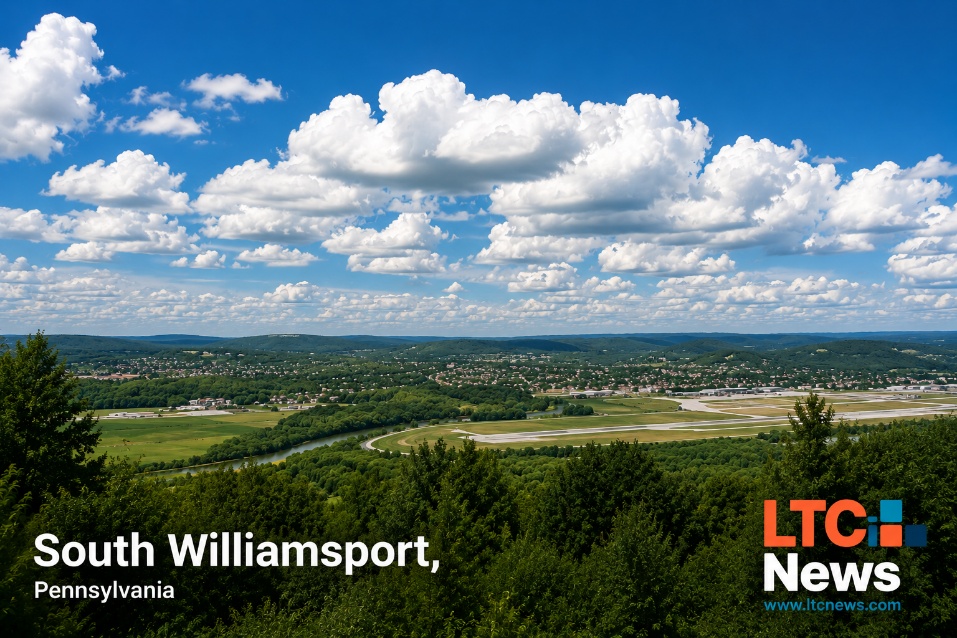
Home of the Little League World Series, South Williamsport already has a small-town identity most of the country recognizes, even people who have never set foot there. South Williamsport sits in the Susquehanna River valley, ringed by the wooded ridges of the Allegheny Plateau, and the surrounding hills turn a deep, layered gold and red each fall, one of the quieter rewards of choosing a mountain river town over a flatter retirement destination.
Beyond baseball season, it offers river access along the Susquehanna and relatively affordable housing compared with many retirement destinations. At under 6,000 residents, the town stays firmly in walkable-downtown territory rather than the sprawling suburb category so many "small town" lists sneak into.
South Williamsport's healthcare access centers on Williamsport, directly across the Susquehanna. UPMC Williamsport is a 224-bed Level II trauma center with heart and vascular, orthopedic, cancer, and rehabilitation services, and UPMC's Divine Providence Campus nearby adds outpatient specialties including dermatology, rheumatology, and pain management. Geisinger also operates hospitals and clinics throughout Lycoming County for a second full health system option.
River Valley Transit, the regional bus operator, was founded specifically to serve Williamsport alongside South Williamsport and its other neighboring communities. However, ridership area-wide leans heavily on personal vehicles, with public transit accounting for a small share of trips. Winters bring real Appalachian cold and snow, with warm, humid summers, a full four-season climate typical of north-central Pennsylvania.
For culture and sports, the Community Arts Center in downtown Williamsport hosts touring Broadway shows, concerts and regional student performances in a restored historic theater, and the Williamsport Crosscutters, a founding MLB Draft League team, play a summer season at Historic Bowman Field, a ballpark dating to 1926 that has also hosted the annual MLB Little League Classic. And of course, every August the Little League World Series brings the sport's biggest amateur stage right to South Williamsport's doorstep.
On the long-term care side, Williamsport has a genuine concentration of options close by with a variety of long-term care facilities and in-home caregivers available.
A note on rankings: GOBankingRates rankings shift from year to year based on rent, crime and livability data, so treat any single list as a starting point for research, not the final word, and verify specific crime, cost and housing figures for any town you are seriously considering.
What Active Retirees Actually Need to Check
Rankings measure walkability, rent and crime. They rarely measure what determines whether a move actually works out over 10 or 20 years. Before you make an offer, run each town through these categories.
- Cost of Living
Look past the median home price. Property taxes, homeowners insurance, utility costs and grocery prices all vary by county, not just by state, and they compound every month you live there. A town with a lower list price but a high property tax rate can cost more over five years than a pricier town with a lighter tax bill.
- State and Local Taxes
Whether a state taxes Social Security benefits, pensions and retirement account withdrawals can add up to thousands of dollars a year. As of the 2026 tax year, Kiplinger reports that eight states may tax at least some Social Security benefits: Colorado, Connecticut, Minnesota, Montana, New Mexico, Rhode Island, Utah and Vermont. Exemptions, deductions and income thresholds mean many retirees in those states end up owing no state tax on their benefits at all.
Kentucky, Pennsylvania, and Wisconsin, home to four of the six towns above, are not on that list. Beyond Social Security, check how each state treats pension income, IRA and 401(k) withdrawals, and estate or inheritance taxes, since a handful of states still apply those.
- Healthcare Access
A trail system and a lively square will not make up for a 90-minute drive to the nearest hospital. Look past whether a town has a hospital at all and ask what it actually covers. Cardiology, oncology, orthopedics, neurology, rehabilitation and major emergency care are often concentrated at larger regional or university medical centers, so a nearby community hospital may still mean a 45- to 60-mile drive for a serious diagnosis or a specialist referral. Every town profiled above sits within a reasonable drive of a larger metro area, which is part of why they made the list, but it is worth confirming which specialties are actually available nearby versus which require travel.
- Long-Term Care and Aging in Place
This is the piece that most retirement rankings skip entirely, and it matters. Federal research estimates that 56 percent of Americans age 65 will eventually need long-term services and supports, ranging from help at home to care in an assisted living community or nursing home.
Federally tax-qualified Long-Term Care Insurance generally pays benefits when a person is expected to need substantial help with at least two of six activities of daily living for at least 90 days, or requires substantial supervision because of severe cognitive impairment; that is a specific insurance benefit trigger, not the same measure behind the 56 percent estimate.
Learn More: What is a Benefit Trigger?
Actual long-term care costs vary widely by location, type of care and how long care is needed. The LTC News Cost of Long-Term Care Services Calculator provides current costs for home care, adult day care, assisted living, memory care and nursing home care by location, which is a more useful reference than any national average when you are comparing specific towns. You will also see how those costs are projected to increase in the coming years and decades.
Do not assume Medicare will cover ongoing long-term care after a move. Medicare primarily covers medical care and limited short-term skilled nursing or rehabilitation under specific circumstances; it does not pay for ongoing custodial long-term care. Medicaid can pay for long-term care for people with limited financial resources.
Before relocating, find out whether the area has home care agencies, assisted living communities and memory care options nearby, and how long the waitlists run. Rural towns often rely on a smaller pool of home care workers, which can mean longer waits when help is needed. LTC News's Caregiver Directory lets you search licensed home care, assisted living and memory care providers by ZIP code.
Location also affects family caregivers. Roughly 63 million Americans, nearly one in four adults, provided ongoing unpaid care to a family member or friend. Moving several states away from adult children may work perfectly well during an active retirement but can create real logistical and financial challenges later if a spouse or parent needs regular help, so it is worth weighing distance from family alongside distance from a hospital. Of course, even if you live close by, most adult children aren't in a position to be full-time caregivers.
Long-Term Care Insurance is one way to address this risk. Coverage is medically underwritten, so health is a major factor in whether someone can qualify, and premiums are also lower when coverage is purchased at younger ages. LTC News research finds most people who purchase LTC Insurance coverage apply between ages 47 and 67, which overlaps with when many people are actively planning a retirement relocation.
Policies can pay for care at home, adult day care, assisted living, memory care or nursing home care, depending on how the policy is structured. Most states, though not all, also participate in Long-Term Care Partnership programs, which can allow a qualifying policy's benefits to protect an equivalent amount of assets if the policyholder later exhausts their LTC policy benefits and need to qualify for Medicaid; participation and reciprocity rules vary by state, so it is worth confirming how a specific state's program works, and whether it recognizes a policy purchased elsewhere, before relocating.
Learn More: What Is the Partnership Program in Long-Term Care Insurance?
- Transportation
Not everyone drives forever. Ask whether the town has any public transit, volunteer driver programs, senior transportation services or, for eligible Medicaid beneficiaries, non-emergency medical transportation for residents who eventually give up driving. It helps to know what exists locally before you actually need it.
- Culture, the Arts and Staying Social
An active retirement is not only physical. Look for a community calendar: farmers markets, summer concerts, art walks, a local theater or museum, and a library with programming for older adults. Every town above has at least one of these built into its identity, whether it is Bellevue's summer concerts and art shows or Bloomfield's farmers markets and lake events.
A full calendar matters for staying connected, which research consistently ties to better health outcomes in retirement.
Retirement Reality Check
Before you make an offer on a home, confirm these for any town on your shortlist:
- Housing costs and property tax rate
- State and local taxes on Social Security, pensions and retirement account withdrawals
- Distance to the nearest full-service hospital and to specialty care (cardiology, oncology, orthopedics, neurology)
- Home care agency availability and typical wait times
- Assisted living and memory care options nearby
- Whether the state has a Long-Term Care Partnership program, and how it applies if you move again later
- Winter weather and climate, and how they could affect mobility, driving and home upkeep as you age
- Public transit, volunteer driver programs or non-emergency medical transportation
- Airport access, if you travel to see family
- Distance from adult children or other family caregivers
- Community calendar: farmers markets, concerts, museums, senior programming
The LTC News Cost of Care Calculator and Caregiver Directory can help with several of these directly.
What Actually Matters Before Signing Anything
Numbers and rankings only go so far. Ask someone who actually relocated, and they will talk about the things lists always miss: a quirky neighbor, an early-closing pharmacy, or bumpy side streets that make winter walks tricky. Long-term happiness comes down to practical, everyday details like local healthcare, winter weather and getting around town once you stop driving as much.
The best retirement town is not simply the one where you want to live at 65. It is one that can still work for you at 75 or 85. Trails, restaurants and a lively downtown may help make retirement enjoyable today. Access to quality healthcare, long-term care services, transportation and family support can help determine whether you can remain there comfortably and independently years from now.
Frequently Asked Questions
What are some of the best small towns for an active retirement in 2026?
Bellevue, Kentucky; Hollidaysburg and South Williamsport, Pennsylvania; Superior and Louisville, Colorado; and Bloomfield, Wisconsin, are among the small communities worth considering. Each offers a different combination of outdoor recreation, community activities, health care access and proximity to larger cities or regional services. Rankings should be a starting point, however, rather than the sole reason for choosing where to retire.
What should I look for in a small town for retirement?
Look beyond home prices, scenery and walkability. Consider property taxes, retirement-income taxes, access to hospitals and specialists, transportation, weather, cultural activities and proximity to family. You should also investigate whether home care, assisted living, memory care and nursing home care are readily available if your needs change as you age.
What is the most important question to ask before choosing a retirement town?
Ask whether the community will still work for you as you get older. A town that is ideal at age 65 may be much less practical at 75 or 85 if specialty health care is far away, transportation is limited, or long-term care providers are scarce. The best retirement destination should support both an active lifestyle today and changing needs later.
Why is health care access important when choosing where to retire?
Having a hospital nearby does not necessarily mean you have convenient access to specialty care. Cardiology, oncology, orthopedics, neurology, rehabilitation, and advanced emergency services may be concentrated at larger regional medical centers. Before moving, check both the nearest hospital and how far you would need to travel for specialists you may need as you get older.


Sponsored