AI and Remote Monitoring Could Help People with Dementia Live Safely at Home Longer
About This Article
If someone you love is living with dementia, new technology may help them remain independent and safe at home for a longer period.

Linda Kople
Linda Kople is a freelance writer focused on caregiving, aging, health, wellness, long-term care, and retirement planning
Table of Contents
- Why Staying at Home Matters
- Moving Beyond Occasional Checkups
- Personalized Rehabilitation Through Data
- Earlier Detection Could Improve Outcomes
- Supporting Family Caregivers
- Supporting Dementia Care Across the Care Continuum
- Technology Has Limits
- Why This Matters for Long-Term Care Planning
- Navigating Long-Term Care Insurance Claims
- Future of Dementia Rehabilitation
Caring for a loved one is a profound act of devotion, but when dementia enters the equation, that bond is tested in ways few are ever prepared for. Overnight, family members are thrust into the demanding role of full-time caregiver, navigating a complex maze of changing personalities, lost memories, and fading conversations with zero training.
According to the Alzheimer's Association, an estimated 7.4 million Americans are now living with clinical Alzheimer's dementia, leaving nearly 13 million heartbroken families to manage the heavy emotional toll. As the disease aggressively steals pieces of the person they love, caregivers are left to face the crushing, daily grief of a long goodbye, anchoring themselves through communication barriers and distressing behavioral shifts.
Watching someone you love lose memories, judgment, and independence can be heartbreaking. At the same time, families often struggle to balance safety with dignity. How do you protect a parent or spouse from falls, wandering, and medication mistakes without taking away their freedom?
Artificial intelligence (AI) and remote monitoring technologies are beginning to offer new solutions. While they cannot stop dementia, these tools may help older adults remain safe at home longer, support rehabilitation efforts, and give family caregivers greater peace of mind.
It is a real problem. According to the Alzheimer's Association, an estimated 7.4 million Americans are now living with clinical Alzheimer's dementia, leaving nearly 13 million heartbroken families to manage the heavy emotional toll. As the disease aggressively steals pieces of the person they love, caregivers are left to face the crushing, daily grief of a long goodbye, anchoring themselves through communication barriers and distressing behavioral shifts.
As the number of Americans living with Alzheimer's disease and other forms of dementia continues to grow, technology is becoming an increasingly important part of the care toolbox.
AI’s ability to rapidly detect risks and offer targeted care suggestions is also transforming patients’ quality of life, while providing their caregivers with much-needed support.
"As we face a growing dementia crisis, AI is no longer a future concept, it's becoming a practical tool that helps us detect disease earlier, personalize care and support the millions of families who are navigating this every day."
Why Staying at Home Matters
Most older adults want to remain in their own homes as they age. Familiar surroundings can provide comfort, preserve routines, and help maintain social connections. For people with dementia, remaining in a familiar environment may also reduce confusion and anxiety.
However, safety concerns often force families to consider assisted living, memory care, or nursing home placement sooner than they would like.
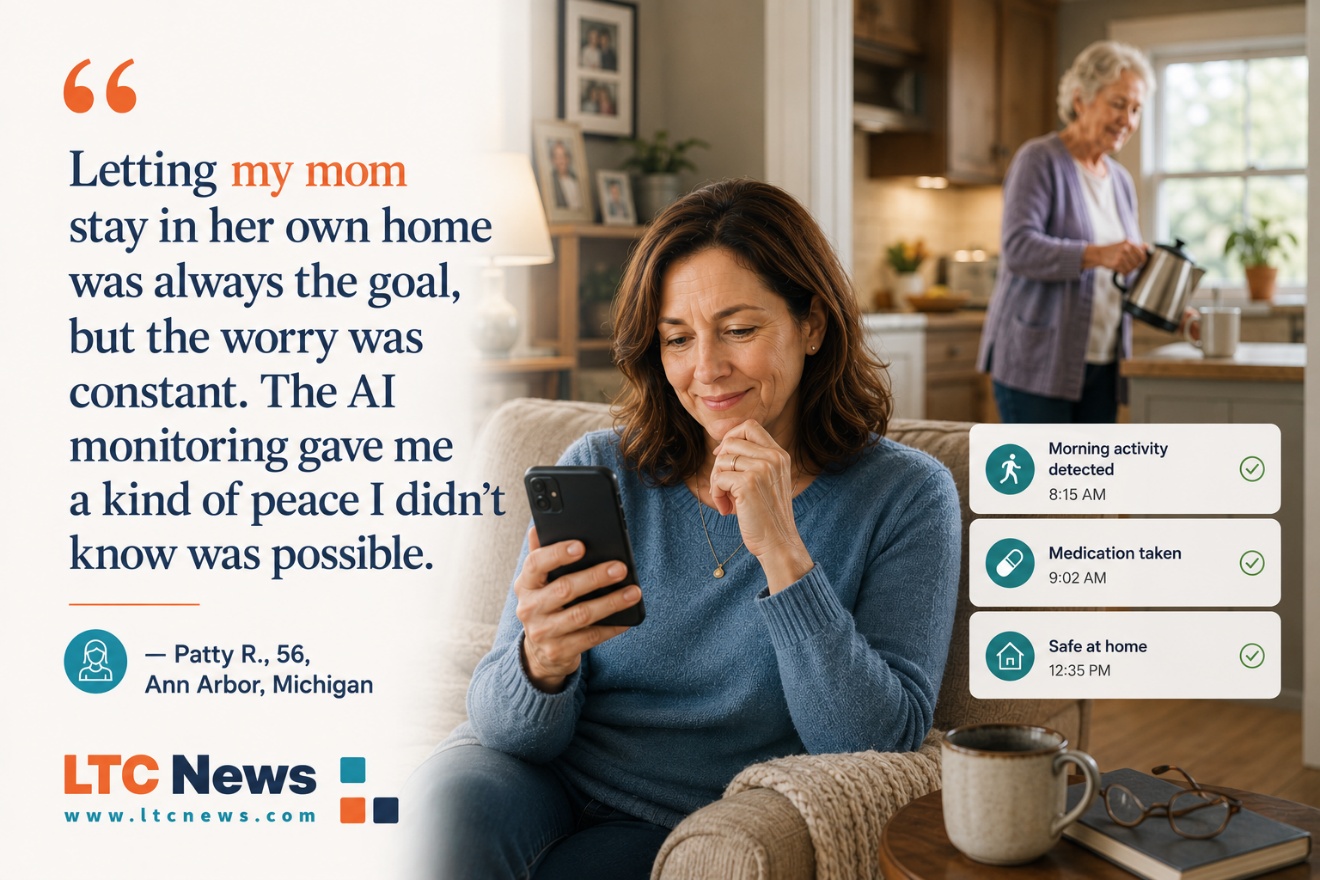
Technology is increasingly helping bridge that gap. AI-powered systems can monitor changes in health and behavior, identify emerging risks, and alert caregivers before a minor issue becomes a crisis. In some cases, these tools may help delay institutional care by providing additional layers of support while preserving independence.
Share your thoughts and experiences about aging, caregiving, health, retirement, and long-term care with LTC News —Contact LTC News.
Moving Beyond Occasional Checkups
Traditional dementia rehabilitation programs focus on maintaining cognitive function, preserving physical abilities, and helping individuals continue performing activities of daily living. These programs can be highly effective. However, they generally rely on scheduled appointments and periodic evaluations rather than continuous observation.
Dementia symptoms often fluctuate throughout the day. Subtle changes in sleep patterns, mobility, behavior, and cognition may go unnoticed between healthcare visits.
AI-powered technologies are helping close that gap.
Smart watches, wearable sensors, motion detectors, and connected home systems can monitor activity patterns around the clock. These systems can identify changes that may signal worsening cognitive impairment, increased fall risk, or emerging health concerns.
Instead of relying solely on periodic assessments, care teams can receive ongoing data that provides a more complete picture of an individual's condition. For families, that means potential problems may be identified before they become emergencies.
Personalized Rehabilitation Through Data
No two people experience dementia in exactly the same way. One person may struggle primarily with memory. Another may experience significant changes in mobility, sleep patterns, or behavior.
AI algorithms are being developed to spot changes in patients’ behavior rapidly. These include key warning signs such as shifts in sleep patterns and unusual physical gaits. This data can be used by licensed physical therapists and care teams to produce personalized insights into how best to provide each dementia patient with the standard of care they need to thrive.
AI systems can analyze large amounts of information and identify trends that may not be obvious during routine evaluations.
Researchers are developing programs capable of detecting:
- Changes in walking patterns
- Sleep disruptions
- Reduced activity levels
- Social withdrawal
- Medication adherence problems
- Increased confusion or wandering behavior
These insights allow physicians, therapists, and care teams to tailor rehabilitation programs to an individual's changing needs. Some AI-based cognitive rehabilitation platforms can adapt exercises in real time based on patient performance, creating a more personalized experience than traditional one-size-fits-all programs.
Early studies have shown encouraging results. Researchers found that patients participating in AI-assisted cognitive therapy programs demonstrated improved cognitive function, increased access to therapy sessions, and reported improvements in quality of life.
The evidence for personalized rehabilitation is compelling. The World Alzheimer Report 2025, published by Alzheimer's Disease International and co-authored by Professor Linda Clare, Professor of Clinical Psychology of Aging and Dementia at the University of Exeter, found that people who engaged in tailored individual cognitive rehabilitation had lower disability levels than those who received only standard care, and remained in their own homes an average of six months longer before moving into residential care.
AI-powered platforms that adapt in real time have the potential to bring that kind of personalization to far more people, without requiring additional clinical staff.
Earlier Detection Could Improve Outcomes
One of the most promising uses of AI involves identifying dementia earlier. Researchers increasingly believe that brain changes associated with Alzheimer's disease and other forms of dementia can begin years or even decades before symptoms become obvious.
Unfortunately, many individuals remain undiagnosed until significant cognitive decline has already occurred.
AI systems are being trained to analyze:
- Brain imaging
- Speech patterns
- Behavioral changes
- Cognitive testing results
- Biomarker data
These technologies may eventually help physicians identify risk factors earlier and intervene sooner. Earlier diagnosis often gives families more time to:
- Develop care plans
- Address legal and financial matters
- Explore treatment options
- Implement lifestyle changes that support brain health
- Consider future long-term care needs
While AI is not replacing medical professionals, it is becoming a powerful tool that may help physicians and care teams recognize concerns sooner and begin appropriate interventions earlier.
Supporting Family Caregivers
Dementia affects entire families. Family caregivers already shoulder enormous responsibilities. According to the 2025 AARP and National Alliance for Caregiving report, approximately 63 million Americans provide unpaid care for a loved one, a 45 percent increase since 2015.
Many caregivers reduce work hours, take extended leave, or leave the workforce altogether to provide care. The emotional burden can be equally challenging.
Caregivers frequently worry about:
- Falls
- Wandering
- Medication errors
- Sleep disruptions
- Missed warning signs
Remote monitoring technologies can reduce some of that stress. Today's systems may include:
- Fall Detection
Advanced sensors can identify falls and automatically alert family members or emergency responders.
- Wandering Alerts
Door and window sensors can alert caregivers if someone unexpectedly leaves the home.
- Medication Support
Smart medication systems can provide reminders and notify caregivers if doses are missed.
- Voice-Based Assistance
AI-powered voice assistants can offer reminders, directions, and daily prompts that help support independence. For caregivers, these tools provide reassurance without requiring constant physical supervision.
Supporting Dementia Care Across the Care Continuum
Dementia rehabilitation does not occur in a single setting. Care needs often evolve over time. Many individuals begin with support at home through family caregivers and professional home care services. As cognitive decline progresses, they may benefit from adult day care programs, assisted living communities, memory care residences, or skilled nursing facilities.
AI and remote monitoring technologies are increasingly being incorporated across this continuum of care. Home care agencies can use monitoring systems to identify changing needs. Assisted living and memory care communities may use sensors to improve resident safety.
Rehabilitation teams can track progress between therapy sessions and adjust treatment plans based on real-time information. Rather than replacing caregivers, these technologies are helping care providers deliver more personalized and responsive support.
Technology Has Limits
Despite its promise, artificial intelligence is not a substitute for human care. Monitoring systems can generate false alarms. Wearable devices may not always be worn consistently. Internet outages and technical issues can interrupt data collection. Some older adults may also be uncomfortable using technology or struggle to adapt to new devices.
Privacy is another consideration. Families should carefully evaluate how data is collected, stored, and shared before selecting monitoring systems.
Experts emphasize that successful dementia care still depends on strong relationships among physicians, therapists, professional caregivers, and family members.
Technology works best when it complements human oversight rather than replacing it.
Why This Matters for Long-Term Care Planning
Dementia remains one of the leading reasons older adults eventually require long-term care services and supports. Over half of the people who reach age 65 will need extended care services during their lifetime.
Many families mistakenly assume Medicare will pay for ongoing dementia care. Medicare covers short-term skilled care and rehabilitation when eligibility requirements are met. It does not pay for most ongoing custodial care associated with dementia.
Medicaid may help cover care costs, but eligibility is generally limited to individuals who meet limited income and asset requirements.
While technology may help delay the need for more intensive care, families should recognize that dementia is generally progressive. Planning now remains essential. Understanding care costs, identifying available resources, and considering Long-Term Care Insurance before health problems arise can help families maintain more choices later in life.
Most people acquire an LTC Insurance policy between the ages of 47 and 67 when premiums are lower, and their health is typically better. Every insurance company has its own underwriting rules and premiums; while affordable, they vary dramatically between insurance companies.
👉 Learn More: LTC News Long-Term Care Insurance Learning Center.
Seek help from a qualified Long-Term Care Insurance specialist who represents the major insurance companies offering long-term care solutions.
The LTC News Cost of Long-Term Care Services Calculator allows you to research current and projected long-term care costs in your area. Understanding those costs can be an important part of preparing for future care planning needs or finding quality care options for a loved one with dementia or other long-term care needs.
👉 LTC News Caregiver Directory has over 80,000 caregivers, adult day care centers, assisted living, memory care, rehab centers, senior communities, and nursing homes in a database searchable by zip code. Plus, it is free to use.
Navigating Long-Term Care Insurance Claims
Families often face difficult decisions as dementia progresses. If a loved one has a Long-Term Care Insurance policy, consider yourself lucky. Be sure to use the tax-free benefits as soon as your loved one is eligible for benefits.
LTC News partners with Amada Senior Care to provide complimentary, no obligation claims assistance for anyone who has an LTC policy. Experienced professionals can help families navigate paperwork, coordinate benefits, and access policy benefits during a stressful and often confusing time — File a Long-Term Care Insurance Claim.
Future of Dementia Rehabilitation
Artificial intelligence and remote monitoring are helping transform dementia care from a reactive to a proactive model. Instead of waiting for a crisis, care teams increasingly have tools that identify warning signs earlier, personalize treatment plans, and support caregivers in real time.
The technology remains in its early stages, but the potential is significant. As AI becomes more sophisticated, dementia rehabilitation may become more accessible, personalized, and effective than ever before.
For families navigating dementia today, these innovations offer something that can often feel in short supply: more information, more support, and greater peace of mind. While technology cannot stop dementia, it may help many people live safely at home longer, maintain independence, and enjoy a better quality of life throughout the journey.
Frequently Asked Questions
How can AI support dementia rehabilitation?
AI-powered rehabilitation programs can personalize cognitive exercises, monitor progress between therapy sessions and adapt activities based on an individual's performance. These tools may help improve engagement and allow care plans to be adjusted more quickly as needs change.
What happens if dementia progresses despite using AI technology?
Dementia is generally progressive. While technology may improve safety, support rehabilitation and help maintain independence, most individuals will eventually require increasing levels of care. Families should plan ahead for future care needs, including home care, adult day care, assisted living, memory care or nursing home care.
Will Medicare pay for AI monitoring devices or remote monitoring systems?
Coverage varies. Medicare may cover certain remote patient monitoring services when prescribed and supervised by a physician, but many consumer monitoring devices and smart-home technologies are not covered. Families should verify coverage with Medicare, Medicare Advantage plans and supplemental insurance providers.
What are the benefits of continuous monitoring for people with dementia?
Continuous monitoring can help detect subtle changes in sleep patterns, mobility, wandering behavior, medication adherence and activity levels. Early identification of these changes may allow for faster interventions and improved care outcomes.
Can artificial intelligence help detect dementia earlier?
Artificial intelligence cannot diagnose dementia on its own, but it can help physicians identify potential warning signs earlier. Researchers are developing systems that analyze brain imaging, speech patterns, cognitive assessments and behavioral changes to identify individuals who may be at higher risk for dementia before symptoms become severe.
Can AI replace family caregivers or professional care providers?
No. Artificial intelligence is designed to support, not replace, family caregivers, physicians, therapists and professional care providers. Human judgment, emotional support and hands-on assistance remain essential components of quality dementia care.
Can AI help someone with dementia stay at home longer?
Potentially, yes. AI-powered monitoring systems can identify changes in behavior, mobility and daily routines that may indicate growing safety concerns. By alerting caregivers and care teams sooner, these technologies may help address problems before they become crises, allowing some individuals to remain safely at home longer.
Are remote monitoring systems safe and private?
Many systems include privacy protections, but families should carefully review how information is collected, stored and shared. Understanding data security policies and choosing reputable providers can help protect personal information while still benefiting from monitoring technology.
Can remote monitoring reduce caregiver stress?
Yes. Remote monitoring systems can provide alerts for falls, wandering incidents, missed medications and other concerns. Having access to real-time information often gives family caregivers greater peace of mind and may reduce the need for constant supervision.
Does Long-Term Care Insurance cover dementia-related care?
Most qualified Long-Term Care Insurance policies cover dementia and Alzheimer's disease once benefit eligibility requirements are met. Benefits can typically be used for home care, adult day care, assisted living, memory care and nursing home services. Policies vary, so reviewing coverage details before a crisis occurs is important.
What types of remote monitoring technologies are used in dementia care?
Common technologies include wearable devices, motion sensors, fall-detection systems, smart medication reminders, door and window sensors, GPS tracking tools and voice-activated assistants. These tools can help monitor safety, support daily routines and provide caregivers with timely alerts.


Sponsored