Zepbound Costs, Coverage, and Health Risks - Especially for Adults Over 50

About This Article
Zepbound is one of the most talked-about new weight-loss drugs in the U.S., but prices, insurance rules, and health risks vary widely. Here is what you need to know before you start, especially if you are over 50 or managing chronic conditions.

Linda Maxwell
Linda Maxwell is a journalist who writes about aging, health, chronic illness, caregiving, and long-term care issues impacting older adults and their families.
Table of Contents
- What is Zepbound - What is it Used For?
- How Zepbound Works
- Why Zepbound?
- How Zepbound is Dosed
- What Influences Zepbound Pricing?
- Prior Authorization and Insurance Barriers
- Health Benefits and Risks for Older Adults
- Legal and Safety Issues with Importing Medications
- Why Zepbound Matters for Long-Term Care Planning
- Questions to Ask Before Starting Zepbound
You see the ads. You hear friends talk about rapid weight loss. But when you ask what Zepbound actually costs, the answers can be shocking. For many adults over 50, especially those with diabetes, heart disease, or joint pain, Zepbound feels like hope. It can also feel financially and medically complicated.
Women often have a more difficult time maintain or losing weight as they age. Your ideal weight does change based on your age. No matter what your gender, your weight has an impact on your health and quality of life. Understanding how this drug works, what it treats, how it is priced, and how it may affect your long-term health helps you decide if it fits into your life and your retirement plans.
What is Zepbound - What is it Used For?
Zepbound is the brand name for tirzepatide, a prescription injectable medication made by Eli Lilly. It was approved by the U.S. Food and Drug Administration (FDA) in 2023 for chronic weight management in adults who:
- Have a body mass index (BMI) of 30 or higher (obesity), or
- Have a BMI of 27 or higher and at least one weight-related condition such as high blood pressure, Type 2 diabetes, high cholesterol, or sleep apnea
| Height | 150lbs | 170lbs | 190lbs | 210lbs | 230lbs | 250lbs |
| 5'0" | 29.3 | 33.2 | 37.1 | 41.0 | 44.9 | 48.8 |
| 5'2" | 27.4 | 31.1 | 34.7 | 38.4 | 42.1 | 45.8 |
| 5'4" | 25.8 | 29.2 | 32.6 | 36.0 | 39.5 | 42.9 |
| 5'6" | 24.2 | 27.4 | 30.7 | 33.9 | 37.1 | 40.3 |
| 5'8" | 22.8 | 25.8 | 28.9 | 32.0 | 35.0 | 38.0 |
| 5'10" | 21.5 | 24.4 | 27.3 | 30.1 | 33.0 | 35.9 |
| 6'0" | 20.3 | 23.1 | 25.8 | 28.5 | 31.2 | 33.9 |
| 6'2" | 19.3 | 21.9 | 24.6 | 27.2 | 29.8 | 32.4 |
| 6'4" | 18.3 | 20.8 | 23.1 | 25.6 | 28.0 | 30.4 |
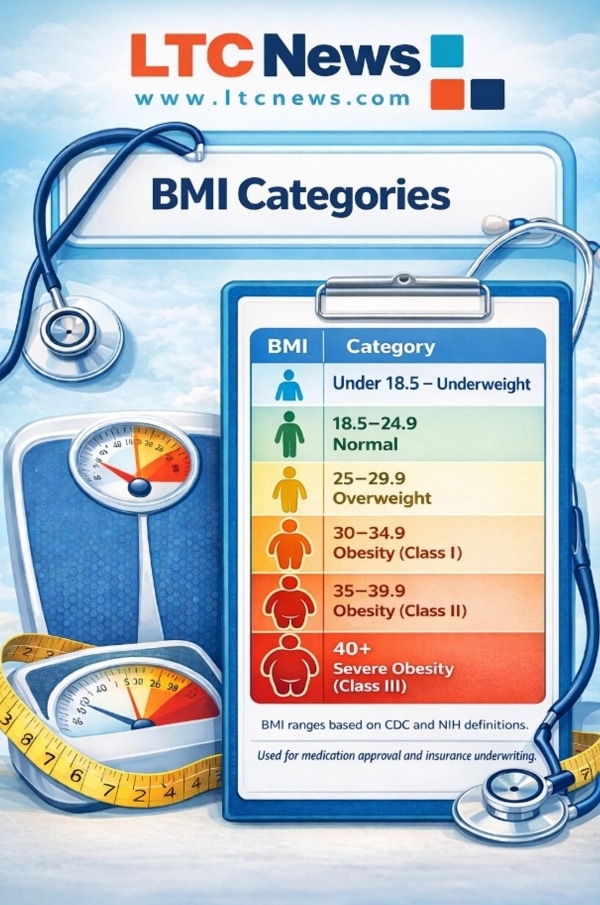
Most insurers use the FDA use BMI thresholds to approve drugs like Zepbound:
- BMI ≥ 30 qualifies for obesity treatment
- BMI ≥ 27 qualifies if you also have conditions like diabetes, high blood pressure, or sleep apnea
For example:
- A 5’6” person at 190 lb. has a BMI of 30.7 (obesity)
- A 5’10” person at 210 lb. has a BMI of 30.1 (obesity)
- A 6’0” person at 230 lb. has a BMI of 31.2 (obesity)
These numbers often determine whether insurance will even consider paying for Zepbound. Your BMI also has an impact on aging, health, and future risk for needing long-term care. In addition to health issues, the risk of falls and joint problems that limit mobility increase as your BMI increases.
How Zepbound Works
Zepbound works by mimicking two natural hormones, GLP-1 and GIP, that help control appetite, blood sugar, and how quickly food leaves your stomach. The result is reduced hunger, slower digestion, and improved insulin sensitivity.
The FDA approval was based on large clinical trials showing average weight loss of 15 percent to more than 20 percent of body weight, depending on dose and duration, according to data published in The New England Journal of Medicine in 2022.
Why Zepbound?
Weight loss is important at all ages, but as you age, pre-existing health issues can be more complicated with being overweight. After age 50, weight gain becomes harder to reverse. Muscle mass declines. Metabolism slows. Hormonal changes increase fat storage.
At the same time, obesity raises the risk of:
- Type 2 diabetes
- Heart disease and stroke
- Arthritis and joint damage
- Fatty liver disease
- Sleep apnea
- Reduced mobility and independence
Dr. Louis Aronne, director of the Comprehensive Weight Control Center at Weill Cornell Medicine, told The New York Times in 2023 that GLP-1-based drugs represent “the most powerful tools we’ve ever had for treating obesity as a disease.”
For many people in their 50s, 60s, and 70s, Zepbound is not about appearance. It is about reducing the risk of future disability, assisted living or nursing home placement, or dependence on caregivers.
How Zepbound is Dosed
Zepbound is injected once a week using a prefilled pen. Your treatment begins with a low dose that is gradually increased over several months. This slow increase helps reduce your risk of nausea, vomiting, and diarrhea.
Because doses change over time, what you pay in the first three to six months may not match what you pay once you reach your maintenance dose.
What Influences Zepbound Pricing?
Drug prices have been in the news and Americans often pay more for medications than people elsewhere in the world.
In case after case, our citizens pay massively higher prices than other nations pay for the same exact pill, from the same factory... and when I say the price is different, you can see some examples where the price is beyond anything — four times, five times different. — President Donald J. Trump.
There is no single “price” for Zepbound in the United States. For general, non-promotional product reference, you can review dosing formats and packaging details on the Zepbound Product Page before discussing treatment options with your doctor.
As prices go down, more people will benefit from drugs like Zepbound.
Bringing the price down really is going to impact those people who either don’t have insurance for [GLP-1s] and have been paying out of pocket... Lowering the cost of GLP-1s for people could have a significant impact on their health. — Cristy Gallagher, STOP Obesity Alliance, George Washington University.
What you pay depends on multiple factors.
Manufacturer List Price
Eli Lilly sets a list price, which is the starting point before insurance, rebates, or pharmacy discounts. As of 2025, the list price for Zepbound is more than $1,000 per month for many doses, according to Eli Lilly and pharmacy benefit managers.
Almost no one pays the list price, but it influences everything else.
Pharmacy Benefit Managers (PBMs)
PBMs negotiate rebates behind the scenes with drug companies. These discounts often do not reach patients directly, but they affect which drugs insurers cover and how they are tiered.
Insurance Design
Your out-of-pocket cost depends on:
- Whether Zepbound is on your plan’s formulary
- What tier it is placed on
- Whether you have a deductible
- Your copay or coinsurance
Two people with the same drug and the same insurer may pay very different amounts.
Dose and Titration
Higher doses typically cost more. During the first few months, your dose may change frequently, which can lead to unpredictable pharmacy charges.
Pharmacy Contracts
Different in-network pharmacies may quote different prices. Mail-order and specialty pharmacies sometimes offer lower prices than retail stores.
Prior Authorization and Insurance Barriers
Most insurance plans require prior authorization for Zepbound. That means your doctor must submit proof that you meet medical criteria, such as:
- Body mass index
- Weight-related conditions
- Prior weight-loss attempts
If paperwork is missing or incomplete, coverage can be denied. Appeals are common and can take weeks or months.
During that time, people often pay out of pocket or interrupt treatment, which can lead to side effects and wasted medication.
Health Benefits and Risks for Older Adults
Potential Benefits
For adults over 50, Zepbound can:
- Improve blood sugar control
- Lower blood pressure
- Reduce cholesterol
- Decrease strain on joints
- Improve mobility and stamina
Weight loss can delay or prevent the need for long-term care by reducing falls, heart disease, and complications from diabetes.
Potential Risks
Zepbound can also cause:
- Nausea, vomiting, and diarrhea
- Dehydration
- Gallbladder problems
- Muscle loss if your protein intake is low
- Worsening of kidney disease in some patients
People with a history of pancreatitis, thyroid cancer, or severe gastrointestinal disease may not be good candidates. Careful medical supervision matters, especially if you already have a chronic illness.
Legal and Safety Issues with Importing Medications
Some people look to foreign pharmacies to lower costs. That can often save money, but can create serious legal and safety risks.
U.S. Prescription Drug Importation Laws
Under U.S. federal law, it is generally illegal to import prescription drugs from outside the United States, even for personal use. All drugs sold in the U.S. must be FDA-approved and distributed through authorized supply chains.
Any allowance for personal importation is based on FDA enforcement discretion, not a legal right.
FDA enforcement discretion is not a legal exemption.
Foreign Pharmacies and U.S. Consumers
Websites that operate legally in Canada are not automatically legal for U.S. patients. The FDA does not approve foreign online pharmacies for direct U.S. sales unless they are part of a formal importation program.
U.S. regulators cannot verify shipping, refrigeration, and authenticity. That creates medical and legal risk.
For a general, non-transactional educational context, you can review publicly available information from CanadianInsulin, then discuss any questions with their healthcare team before making decisions.
Why Zepbound Matters for Long-Term Care Planning
Weight, diabetes, heart disease, and mobility are major drivers of long-term care. Falls, strokes, amputations, and dementia all rise with metabolic disease.
Reducing obesity may lower your risk of needing assisted living, home care, or nursing home placement later in life. But the medication itself is expensive and usually not covered long-term by Medicare.
You can explore educational resources related to your weight management to better understand how nutrition, activity, and monitoring habits can support long-term planning alongside prescribed therapy.
Aging brings changes to your health, body, and mind. However, you can take proactive steps to better prepare for the costs and burdens related to aging and long-term care.
As you get older, your risk for needing assistance with daily living activities increases dramatically. Your risk for dementia also increases. Medicare does not cover long-term care beyond short-term skilled care. When you develop a disability, dementia, or frailty, those costs fall on you or your family unless you have Long-Term Care Insurance.
Long-Term Care Insurance requires medical underwriting, and eligibility rules vary by insurance company. Seek help from a qualified LTC Insurance specialist to get accurate quotes from all the top-rated companies based on your age and health.
The cost of long-term care is rising sharply. It depends a lot on where you live. You can use the LTC News Cost of Care Calculator to see what home care, assisted living, and nursing home care costs where you live.
For families looking for caregivers or long-term care facilities, the LTC News Caregiver Directory allows you to search providers by zip code.
For now, you can be proactive with your health by eating properly, exercising, and regular doctor visits, and if you need help with weight loss, medications can be invaluable.
Questions to Ask Before Starting Zepbound
- What will my real monthly cost be after insurance?
- Will I need prior authorization every year?
- What happens if I stop and restart?
- How will this affect my diabetes, kidneys, or heart?
- What happens if supply shortages interrupt my doses?
The Health Bottom Line
Zepbound is a powerful new tool for weight and metabolic health, especially for adults over 50 trying to avoid future disability. But it comes with high costs, insurance barriers, and medical risks that must be managed carefully.
Before you start, make sure you understand not only the price at the pharmacy but also how this drug fits into your long-term health, financial security, and independence as you age.
Be sure to ask yourself: "Are you planning for the day when health changes may require help, even if weight loss improves your outlook now?"
Medical disclaimer: This content is for informational purposes only and is not a substitute for professional medical or legal advice.


Sponsored