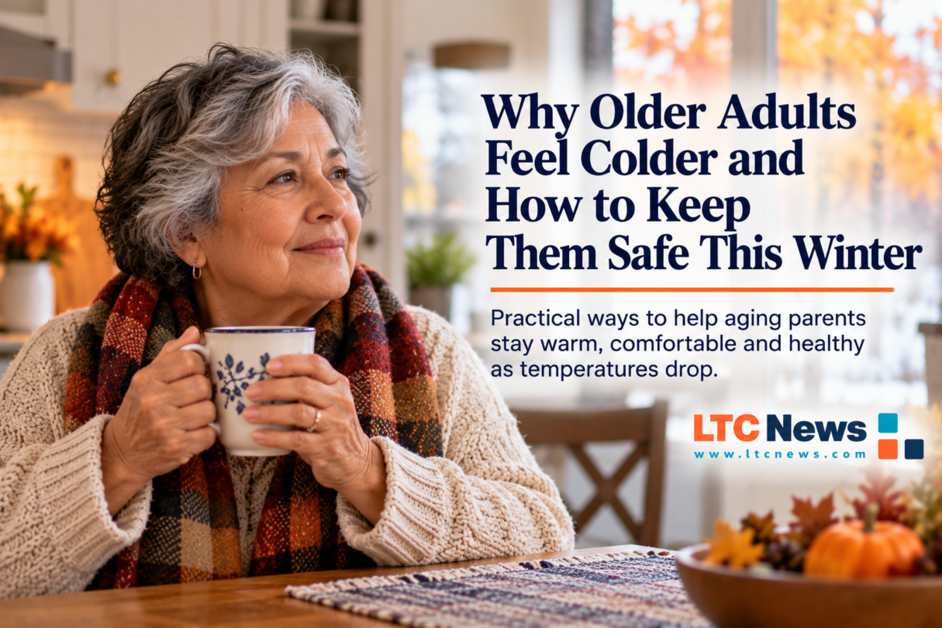
Why Older Adults Feel Colder and How to Keep Them Safe This Winter
About This Article
Cold weather can be especially hard on older adults, even indoors, because they often struggle to stay warm. Learn why aging makes it harder to stay warm and how family caregivers can help loved ones remain comfortable, healthy, and safe throughout winter.

Mallory Knee
Mallory Knee is a freelance writer for multiple online publications where she can showcase her affinity for all things beauty and fashion.
Table of Contents
- Set a Comfortable and Safe Indoor Temperature
- Keep Cold Drafts Away from Favorite Seating Areas
- Choose Comfortable Clothing That Holds in Warmth
- Make Blankets and Bedding Easy to Adjust
- Protect Cold Feet Without Increasing Fall Risks
- Offer Warm Drinks and Encourage Safe Movement
- Use Space Heaters and Other Heating Devices Safely
- Know When Feeling Cold Becomes a Medical Concern
- What to look for when you visit:
- Check In Without Taking Away Independence
- When Staying Warm Becomes a Sign of a Bigger Need
- A Comfortable Home Is Part of Healthy Aging
Mom keeps asking you to turn up the heat, even though the house already feels warm. Dad sits in his favorite chair wearing a sweater and still complains that his hands are cold.
Sound familiar? Even some people in their 50s start complaining about being too cold. As temperatures drop in the fall and winter, many older adults find it harder to stay warm. What feels comfortable to a younger family member may leave an aging parent reaching for another blanket.
There's a reason for that. As we age, changes in metabolism, circulation, muscle mass, and the body's ability to regulate temperature can make us more sensitive to cold. Cleveland Clinic Geriatric medicine specialist Ken Koncilja, MD, says older adults may even experience changes in core body temperature.
As we age, our body distribution changes, including our body fat percentage, muscle mass, skin, and sweat glands. These changes can affect our body’s thermal regulation.” — Dr. Ken Koncilja.
Certain medications and health conditions can make staying warm even more difficult. Diabetes, thyroid disorders, and poor circulation can affect how the body regulates temperature. Arthritis and Parkinson's disease may make it harder to dress warmly or move to a warmer spot, while someone living with dementia may not realize they're getting too cold or know what to do about it.
Staying warm isn't simply about comfort. Prolonged exposure to cold can cause serious health problems, including hypothermia, even indoors. Cold temperatures can also strain the heart and circulation, especially for people with existing cardiovascular conditions. As colder weather approaches, family and professional caregivers can make a few practical changes to help aging parents and other loved ones stay comfortable and safe at home.
Set a Comfortable and Safe Indoor Temperature
You may be perfectly comfortable at 68 degrees, but your aging parent might need a warmer room. The National Institute on Aging, in its Cold Weather Safety for Older Adults guidance, recommends keeping indoor temperatures at least 68 degrees Fahrenheit during cold weather. Some older adults may need higher temperatures depending on their health and personal comfort.
Pay attention to the rooms your loved one uses most often, especially the bedroom and living room. Older homes may have uneven heating, leaving one room noticeably colder than another. Don't assume someone is warm enough simply because they aren't complaining. An older adult with cognitive impairment or reduced sensation may not recognize or communicate discomfort.
Heating costs can also be a concern, especially for older adults living on fixed incomes. The federal Low Income Home Energy Assistance Program (LIHEAP) helps eligible households with heating bills through state agencies. Funding is limited and varies by state, so families should check current availability and apply early. Keeping the home adequately heated is a health priority, not a luxury.
Keep Cold Drafts Away from Favorite Seating Areas
Dad may love sitting by the living room window to watch the birds, but that favorite chair could become one of the coldest places in the house. Many older adults end up turning up the heat “to compensate for doors and windows that aren’t keeping the cold out. Windows, exterior doors, and poorly insulated walls can create chilly spots even when the thermostat shows a comfortable temperature.
When possible, move frequently used chairs away from drafts. Weatherstripping around doors and windows can help keep cold air out, while insulated curtains may reduce heat loss. Make sure furniture changes don't block walkways or create obstacles for someone using a walker or wheelchair.
Choose Comfortable Clothing That Holds in Warmth
A heavy sweater isn't always the best answer. Older adults may have arthritis, limited hand strength, or difficulty dressing. Bulky clothing can make movement uncomfortable and everyday tasks harder.
Several lightweight layers are often easier to manage than one heavy garment. Soft fabrics can provide warmth without restricting movement, and layers can be removed when someone gets too warm. For an older adult who spends much of the day seated, a cardigan or lightweight fleece may be especially useful. Fingerless gloves can keep hands comfortable while letting someone read, use a phone, or handle small objects.
Choose clothing that's easy to put on and take off, particularly for someone who needs assistance dressing.
Make Blankets and Bedding Easy to Adjust
An extra blanket within reach can make a big difference during a cold afternoon. But heavier isn't necessarily better. Someone with arthritis, weakness, or limited mobility may struggle to move a thick comforter or weighted blanket. Two lighter blankets may provide similar warmth while being easier to adjust.
At bedtime, choose warm, comfortable sleepwear and bedding that provides enough warmth without being too heavy. Too many blankets can cause overheating or make it difficult for an older adult to move comfortably. A loved one with limited mobility may need help adjusting their covers during the night.
If you care for someone who gets cold easily, extra blankets nearby give them another layer whenever they need it. They may prefer two lighter blankets over one heavy one. For someone with dementia, familiar bedding and a consistent sleeping environment may also help reduce confusion.
Protect Cold Feet Without Increasing Fall Risks
Cold feet are common among older adults, especially those who spend a lot of time sitting or have circulation problems. Warm socks can help, but footwear also needs to be safe. Loose slippers, oversized socks, and shoes that slide off the heel can increase the chance of tripping. Properly fitted slippers or indoor shoes with supportive, non-slip soles are generally better choices for someone who walks around the house.
Make sure your loved one's footwear fits securely and supports them well while walking, not just while sitting. If their feet remain unusually cold, painful, numb, or discolored despite a warm environment, contact a doctor. These symptoms may indicate a circulation or nerve problem. Sudden pain, significant changes in skin color, or loss of sensation require immediate medical attention.
Offer Warm Drinks and Encourage Safe Movement
A warm cup of tea, decaffeinated coffee, or another favorite beverage can make a chilly afternoon more pleasant. It also provides an opportunity to spend time together. Be mindful of the drink's temperature, particularly if your loved one has reduced sensation or difficulty handling a cup. Follow medical guidance for anyone with swallowing difficulties, fluid restrictions, or special dietary needs.
Gentle physical activity can also help someone feel warmer. If an older adult can move safely, walking around the house or doing familiar seated exercises may improve comfort and help prevent stiffness from prolonged sitting. However, don't encourage someone with poor balance or significant mobility limitations to walk without appropriate assistance. The goal is comfortable, safe movement, not exercise beyond their abilities.
Use Space Heaters and Other Heating Devices Safely
When one room feels colder than the rest of the house, a portable space heater may seem like an easy solution. But these devices require special precautions, especially in homes where an older adult has limited mobility, reduced sensation, or memory problems.
The U.S. Consumer Product Safety Commission, in its winter heating safety advisory, recommends keeping all sides of portable heaters at least 3 feet away from anything that can catch fire, including curtains, bedding and upholstered furniture. Place heaters on stable, level surfaces where they can't be easily knocked over. Choose models with safety features such as automatic tip-over shutoff.
Plug electric heaters directly into wall outlets, never extension cords or power strips. Turn them off when you leave the room or go to sleep. Never use a gas oven, stovetop, or outdoor heating device to warm a home. Improper heating equipment can create dangerous carbon monoxide exposure. Make sure smoke alarms and carbon monoxide detectors are working properly.
Electric blankets and heating pads also deserve caution. Older adults with diabetes, neuropathy, dementia, or reduced skin sensation may not notice excessive heat and can suffer burns.
Know When Feeling Cold Becomes a Medical Concern
There's a difference between feeling chilly and becoming dangerously cold. Hypothermia occurs when the body loses heat faster than it can produce it, causing core body temperature to fall to 95 degrees Fahrenheit or lower.
Older adults are particularly vulnerable because their bodies may have more difficulty maintaining a normal temperature. Hypothermia can develop indoors, especially when heating is inadequate. According to the Centers for Disease Control and Prevention, in its Preventing Hypothermia guidance, warning signs of hypothermia in adults include:
- Shivering
- Exhaustion or feeling very tired
- Confusion
- Fumbling hands
- Memory loss
- Slurred speech
- Drowsiness
An older adult may not shiver, even when dangerously cold. Don't assume sudden confusion or unusual sleepiness is simply part of aging.
👉 Suspected hypothermia is a medical emergency. Call 911 immediately.
While waiting for emergency help, move the person into a warm room or shelter and remove wet clothing. The CDC recommends warming the center of the body first, including the chest, neck, head, and groin. Dry blankets, clothing, and skin-to-skin contact under loose, dry coverings can help retain warmth.
If the person is alert and able to swallow safely, offer a warm, nonalcoholic drink. Never give anything by mouth to someone who is unconscious. Keep the person dry and covered while waiting for medical assistance.
How Nursing Homes and Assisted Living Communities Keep Residents Warm and What Families Should Watch For
If your parent lives in a nursing home or assisted living community, you may assume someone else has the thermostat covered. Usually that’s true, but not always. However, nursing homes must meet a federal standard.
Nursing homes that accept Medicare or Medicaid must follow federal rules from the Centers for Medicare & Medicaid Services (CMS). Residents have a right to a safe, clean, comfortable, and homelike environment, including comfortable, safe temperatures. Facilities first certified after Oct. 1, 1990, must keep temperatures between 71 and 81 degrees Fahrenheit. Older buildings must still keep temperatures comfortable and safe for residents.
Facilities also need a plan for power or heat failures. Under federal emergency preparedness rules, nursing homes must have policies covering alternate sources of energy to maintain temperatures that protect patient health, along with emergency lighting.
Rules on paper don’t always match what happens in the hallway. During one Minnesota inspection, with an outdoor low of minus 8 degrees, state inspectors measured a hallway at 58.5 degrees and found 10 residents in an activity room that was 59.5 degrees. In an Indiana nursing home inspected in January 2023, 7 of 71 occupied rooms fell below the 71-degree minimum.
If your loved one lives in assisted living or memory care, they are not covered by the federal nursing home standard. Each state sets its own rules, and some say little about indoor temperature. Ask the community directly what temperature range it maintains and how it handles complaints about cold rooms.
What to look for when you visit:
- Feel the room, not just the thermostat. Rooms near exterior walls, windows, or the end of a hallway may run colder than common areas.
- Check common spaces. Dining rooms and activity areas can be chilly, especially early in the morning.
- Notice how your parent is dressed. Are they wearing layers, socks, and non-slip footwear? Is a blanket within reach?
- Ask whether residents can adjust their own room temperature. Locked thermostats are common. Find out who to call when a room feels cold.
- Watch for changes in behavior. New confusion, unusual sleepiness, or slurred speech can be early signs of hypothermia. Report them to the nurse right away.
- Ask about the backup plan. What happens to the heat if the power goes out during a winter storm? Does the facility have a generator, and what does it power?
If concerns aren’t resolved, start with the facility’s administrator or director of nursing. If that doesn’t work, contact your state’s Long-Term Care Ombudsman Program, a free advocacy service for residents of nursing homes and assisted living communities.
Before choosing a nursing home, review its inspection history on Medicare’s Care Compare website, which lists past citations, including temperature problems. You can also search for nursing homes, assisted living communities, and home care providers in your parent’s area through the LTC News Caregiver Directory.
👉 If you manage a long-term care facility or home care agency, you can claim your free listing on the LTC News Caregiver Directory and/or upgrade the listing to enhance visibility and highlight your staff and services through the LTC News Directory Business Portal.
Check In Without Taking Away Independence
Sometimes the simplest way to help an aging parent stay comfortable is to ask. Would you like another blanket? Is the bedroom warm enough at night? Are your feet cold when you sit in that chair? Small questions can reveal problems that might otherwise go unnoticed.
Some older adults hesitate to complain because they don't want to inconvenience their children or caregivers. Others may worry about the cost of turning up the heat. For someone living alone, regular phone calls or visits during particularly cold weather can provide reassurance and an opportunity to identify problems with the home's heating system.
If your loved one receives professional home care, ask caregivers to report concerns about room temperatures, clothing, bedding, or changes in the person's condition. For someone living in a long-term care facility, be proactive and ask whether your loved one is comfortable. On a very cold day, visit and see for yourself.
Whenever possible, involve your loved one in decisions about their comfort. Maintaining independence and personal choice remains important, even when someone needs help with daily activities.
When Staying Warm Becomes a Sign of a Bigger Need
Sometimes a cold house isn't really about the thermostat. If Mom can no longer adjust the heat, dress herself appropriately or recognize when she's getting too cold, the problem may be more than ordinary discomfort.
Difficulty dressing, moving around, or managing other daily activities can signal a growing need for help. Memory loss or dementia may also make it harder for someone to recognize unsafe conditions or ask for help. Professional home caregivers can assist with dressing, daily routines, and maintaining a comfortable home environment. They can also alert family members when they notice changes in an older adult's condition.
If your parent needs additional help, the LTC News Caregiver Directory can help you locate care providers in your area. The LTC News Cost of Care Calculator lets you compare the cost of professional care where your loved one lives.
If your parent already has Long-Term Care Insurance, the policy may cover in-home care once they meet the benefit eligibility requirements. LTC News partners with Amada Senior Care to provide free claim support with no cost or obligation. Trained experts can walk you through the entire process and help you access benefits quickly and correctly—File a Long-Term Care Insurance Claim.
For adult children caring for aging parents, these experiences can also raise questions about their own future. The LTC News Long-Term Care Insurance Education Center explains how planning ahead can help protect retirement income and assets, preserve care choices, and reduce the burden on family members.
A Comfortable Home Is Part of Healthy Aging
Cold weather can make everyday life harder for older adults, but small changes can help them stay comfortable in the place they call home. A warmer bedroom, safer footwear, an extra blanket, or a favorite chair moved away from a draft may seem like minor adjustments. For someone who has trouble staying warm, those changes can make a meaningful difference.
As winter approaches, pay attention to what your aging loved one needs rather than assuming everyone experiences cold the same way. Keeping Mom or Dad warm isn't just about comfort. It's another way to protect their health, respect their independence, and help them keep enjoying life at home.
Frequently Asked Questions
What temperature must nursing homes maintain during winter?
Federal regulations require Medicare- and Medicaid-certified nursing homes first certified after Oct. 1, 1990, to maintain temperatures between 71 and 81 degrees Fahrenheit. Older certified facilities must still provide safe and comfortable temperatures. Assisted living and memory care communities generally follow state-specific requirements rather than the federal nursing home temperature standard.
What is a safe indoor temperature for older adults during winter?
The National Institute on Aging recommends keeping indoor temperatures at least 68 degrees Fahrenheit during cold weather. Some older adults may need warmer conditions, especially those with chronic health problems or limited mobility. Check bedrooms and other frequently used rooms, since temperatures can vary throughout a home.
Are space heaters safe for older adults?
Portable space heaters can provide additional warmth, but they must be used carefully. Keep heaters at least 3 feet from bedding, curtains and furniture. Plug them directly into wall outlets and turn them off before leaving the room or going to sleep. Extra caution is necessary for older adults with dementia, reduced sensation or mobility limitations.
Can an older person develop hypothermia inside their home?
Yes. Hypothermia can occur indoors when someone is exposed to temperatures that are too cold for their body to maintain normal warmth. Warning signs include shivering, confusion, memory loss, slurred speech, fumbling hands, exhaustion and drowsiness. Suspected hypothermia is a medical emergency. Call 911 immediately.
What should families do if a nursing home or assisted living facility is too cold?
Tell the nurse, administrator or facility management about the problem and request that the temperature be checked. If the concern isn't resolved, contact your state's Long-Term Care Ombudsman Program. Families can also review nursing home inspection histories through Medicare Care Compare.
Why do older adults feel colder than younger people?
As people age, changes in circulation, metabolism, muscle mass and body fat can make it harder to regulate body temperature. Certain medications and health conditions, including diabetes and thyroid disorders, can increase sensitivity to cold. Older adults who are less physically active may also produce less body heat.

Sponsored