Why Having a Purpose in Life Matters More as You Get Older

About This Article
Retirement, health changes, and caregiving can leave you wondering what's next. Having a sense of purpose matters as you age and can even improve your quality of life.

Marcus Howard
Marcus Howard writes about alternative health topics for older adults such as CBD, acupuncture, and herbal medicine.
You spent years, maybe decades, running on the fuel of responsibility. Careers, mortgages, raising children, meeting deadlines: life didn't leave much room to ask why you were doing it all, because the what was always right in front of you. Until one day, the noise quiets down.
Retirement settles in, the house empties out, or life hands you an unexpected transition like illness or loss. You finally have the gift of time, yet something essential feels conspicuously absent. You don’t need another way to stay busy; you need a reason to get out of bed.
As you grow older, cultivating a sense of purpose shifts from a luxury to a necessity. Science links this necessity directly to better mental health, physical vitality, and longevity.
Can Having a Purpose Help You Live Longer?
A sense of purpose means feeling that your life has direction and that what you do matters. It doesn't require an impressive career, a major accomplishment, or an ambitious goal. Sometimes, purpose is as simple as helping a grandchild with homework, volunteering at church, caring for a pet or checking on a neighbor who lives alone.
Research suggests that having a reason to get up each morning may also be associated with a longer life. A study involving 6,985 Americans over age 50 found that people with the lowest sense of purpose had approximately 2.4 times the mortality rate of those reporting the highest sense of purpose over about four years, after researchers accounted for several health, psychological, and demographic factors.
The study doesn't prove that having a purpose makes you live longer. Researchers acknowledged that people already dealing with serious or chronic illnesses may have had a lower sense of purpose when the study began. Poor health could influence both a person's outlook and their risk of dying.
Still, the findings suggest that maintaining meaningful activities and relationships may be an important part of healthy aging. The National Institute on Aging also encourages older adults to participate in activities they enjoy, including hobbies, volunteering, and spending time with family and friends. The agency explains that meaningful social and productive activities may support emotional well-being, resilience, and independence.
In fact, research from UC Davis showed that having a sense of purpose in life may have another benefit as you get older: reducing the risk of dementia. A higher sense of purpose in life was linked to an approximately 28% lower risk of developing cognitive impairment, including mild cognitive impairment and dementia.
Aliza Wingo, senior author of the study and professor in the UC Davis Department of Psychiatry and Behavioral Sciences, said their findings showed that having a sense of purpose helps the brain stay resilient with age.
Even for people with a genetic risk for Alzheimer’s disease, sense of purpose was linked to a later onset and lower likelihood of developing dementia.” — Dr. Aliza Wingo.
Why Purpose Can Become Harder to Find with Age
Retirement is often described as the reward for decades of hard work. But leaving a career can also mean losing daily routines, friendships, and the feeling of being needed. Other changes can be even more difficult.
An older adult who once enjoyed traveling may develop mobility problems. Someone who spent years caring for a spouse may struggle with loneliness after that spouse dies. A parent whose children have moved away may wonder where they fit into their adult children's lives.
Health challenges can also change how you see yourself. Perhaps you once took pride in maintaining your home, playing golf, or organizing family gatherings. Now, physical limitations make those activities difficult or impossible. Losing the ability to do something you love can be painful. Finding a new purpose doesn't mean pretending those losses don't hurt. It means discovering what can still bring meaning and connection to your life.
Someone who can no longer volunteer outside the home might mentor a younger person by telephone, share family stories, or offer encouragement to someone facing a difficult time. Your ability to contribute may change, but your value doesn't.
Elliot M. Friedman, Ph.D., is the William and Sally Berner Hanley Professor of Gerontology in the Department of Human Development and Family Science at Purdue University. He told The New York Times that your sense of purpose tends to decline with age.
Opportunities for purpose and meaning in later life are just fewer and farther between as older people are expected to slowly detach themselves from society.” — Elliot M. Friedman, Ph.D.
Five Ways to Find More Meaning in Everyday Life
You don't have to completely reinvent yourself. Finding purpose often begins with small changes that make everyday life more satisfying.
- Stay connected to people. Schedule regular conversations with friends, spend time with grandchildren, or reconnect with someone you've lost touch with. Relationships provide companionship and opportunities to feel needed.
- Volunteer or mentor someone. Local charities, schools, hospitals, senior centers, and faith communities often welcome people willing to share their time and experience. Even a few hours each month can make a difference.
- Keep learning. Take a class, explore a hobby, learn a language, or develop a new skill. Having something to work toward can make everyday life more interesting.
- Explore digital tools for personal growth. Apps such as Overwell offer short lessons that help users better understand emotional patterns, manage stress, and develop coping skills. People with a clear sense of purpose often feel more motivated, more focused, and more satisfied with their lives. Think of someone who feels low after a long period of loneliness. Then they start volunteering at a local shelter or mentoring a young student. Soon, they feel needed. Their week has shape, and their efforts matter to someone. Energy that was missing begins to return. You can learn how Overwell works,for example,and how its short lessons help you reflect on what matters to you.
Other options include journaling apps, online classes, and guided reflection exercises. Digital tools can encourage personal growth, although their benefits vary and they aren't substitutes for meaningful relationships or professional mental health care when needed.
- Find meaning in what you're already doing. Helping an aging parent, supporting a spouse, or being available to a friend can provide purpose. You don't necessarily need another responsibility. Sometimes, recognizing the importance of what you already contribute can change how you feel about your day.
For many people, faith becomes a deeper source of purpose with age. In his 2026 message for the World Day for Grandparents and the Elderly, Pope Leo XIV encouraged older adults to turn to God in prayer, writing, “It is never too late to begin turning to him.”
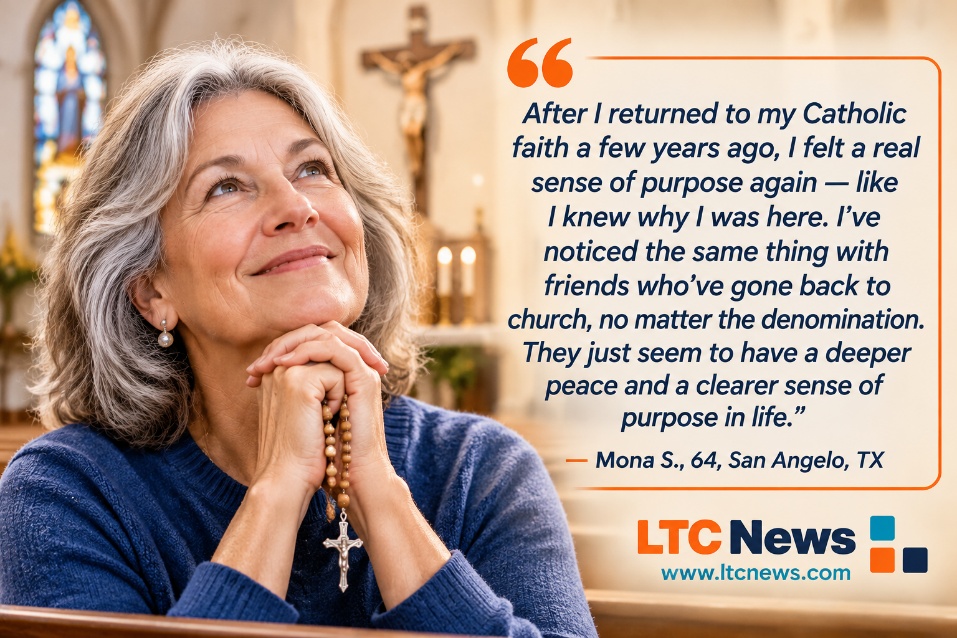
Share your thoughts and experiences about aging, caregiving, health, retirement, and long-term care with LTC News —Contact LTC News.
No matter what, you might discover that the activities that bring you the greatest satisfaction aren't necessarily the ones that keep you busiest.
When Caring for Someone Else Becomes Your Purpose
Caring for a spouse or aging parent may be one of the most meaningful things you ever do. But when every day revolves around medications, medical appointments, meals, and personal care, it's easy to lose sight of your own needs. You may love the person you're caring for while also feeling exhausted, frustrated, or lonely. Those feelings can exist together.
Caregiving can provide a strong sense of purpose, but it shouldn't become your entire identity. Finding time for friendships, personal interests, and occasional breaks is part of maintaining your own well-being.
If caregiving responsibilities are becoming overwhelming, consider asking family members for help or exploring adult day services, respite care, or professional home care. The LTC News Caregiver Directory can help families locate care providers and services in their communities.
Support can make it easier to keep caring for someone you love while maintaining the activities and relationships that matter to you.
Purpose, Healthy Aging and Planning for the Future
Growing older doesn't necessarily mean giving up the things that make life meaningful. But changes in health, mobility or memory can make familiar activities more difficult.
Having appropriate support, whether from family, community programs, or professional caregivers, can help older adults remain engaged in activities they enjoy. For example, someone who needs assistance getting dressed or moving around the house may still enjoy attending church, visiting friends, or participating in family gatherings when the right help is available.
Planning for future extended care needs also gives families more options if additional assistance becomes necessary. Medicare covers only limited, medically necessary skilled care under specific conditions. It doesn't pay for ongoing custodial long-term care. Medicaid can help eligible individuals with limited financial resources, while Long-Term Care Insurance can provide benefits for covered care services, depending on the policy.
Understanding your options before a health crisis can help protect both your independence and your family's well-being.
It's Never Too Late to Find a New Purpose
The things that gave your life meaning at 35 may look very different at 65 or 85. That's not necessarily a loss. It can be an opportunity to discover new interests, strengthen relationships, and share the experience you've gained over a lifetime.
Dr. Patricia Boyle is a professor of behavioral sciences at the Rush Alzheimer’s Disease Center at Rush University Medical Center in Chicago. She told the Star Tribune that people can find purpose in very simple things, like caring for a pet, gardening, or being kind to a neighbor.
Even small goals can help motivate someone to keep going.” — Dr. Patricia Boyle.
You don't need an extraordinary mission to live a meaningful life. Sometimes, knowing that someone looks forward to your phone call, appreciates your advice, or enjoys your company is reason enough to greet another day with hope.
Frequently Asked Questions
How does planning for long-term care help preserve your sense of purpose?
Planning ahead can give you more choices if health, mobility or memory problems affect your independence. Long-Term Care Insurance, personal savings and community resources may help you access appropriate care and remain engaged in activities and relationships that matter to you. Preparing before a crisis can also reduce the responsibilities placed on family caregivers.
How can you find purpose after retirement?
Start with activities that make you feel connected, useful or fulfilled. Volunteering, mentoring, learning new skills, participating in faith communities and spending time with family can provide meaning. You don't need a major new goal. Small, consistent activities can make everyday life more rewarding.
Can having a sense of purpose reduce your risk of dementia?
Some research suggests that older adults with a stronger sense of purpose may have a lower risk of developing cognitive impairment, including dementia. The article discusses research from UC Davis linking greater purpose with an approximately 28 percent lower risk. However, these findings show an association, not proof that purpose prevents Alzheimer's disease or other forms of dementia.
Why is having a sense of purpose important as you get older?
Having a sense of purpose gives your life meaning, direction and motivation. Research suggests that older adults who feel their lives have purpose may experience better emotional well-being and healthier aging. Purpose can come from family, friendships, faith, volunteering or simply knowing that others depend on you.
Can having a purpose help you live longer?
Research suggests a connection between having a strong sense of purpose and lower mortality rates. A 2019 study published in JAMA Network Open involving 6,985 adults over age 50 found that those with the lowest sense of purpose had approximately 2.4 times the mortality rate of those with the highest sense of purpose over about four years. The study did not establish cause and effect.
Can caring for an aging parent or spouse give your life purpose?
Yes. Caregiving can be deeply meaningful, but it can also create stress, exhaustion and isolation. Maintaining friendships, personal interests and time for yourself is important. Family assistance, respite care and professional caregivers can help you balance caring for someone you love with protecting your own well-being.
Can you still have a meaningful life with chronic illness or limited mobility?
Yes. Physical limitations may change what you can do, but they don't eliminate your ability to contribute. Sharing experiences, mentoring others, maintaining relationships, practicing your faith or enjoying creative activities can provide purpose. Appropriate care and support may help you remain involved in activities you enjoy.
Are there apps or tools that can help you find more meaning in life?
Digital wellness tools, journaling apps and guided reflection exercises may help you identify personal values and develop healthier emotional habits. There are apps that offer short lessons focused on stress management and emotional well-being. These tools can support self-reflection but aren't substitutes for meaningful relationships or professional mental health care when needed.

Sponsored