Tree Stump Grinding: Hidden Risks and Why It Matters Especially for Older Homeowners
About This Article
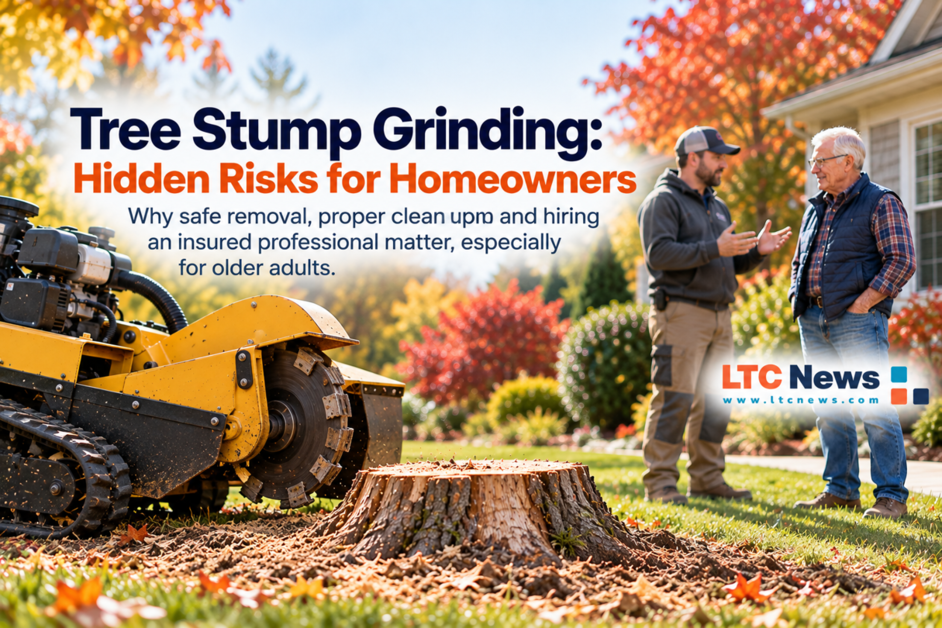
An old tree stump can be more than an eyesore, especially when it sits near a walkway or creates uneven ground. Professional stump grinding can help, but homeowners, especially older adults, should understand the safety risks, potential property damage, and importance of hiring a qualified contractor.

Sponsored Content
LTC News sponsored content reaches an audience interested in aging, caregiving, health care, lifestyle, long-term care, and retirement planning.
Table of Contents
- Why Tree Stumps Deserve Attention
- What Professional Tree Stump Grinding Involves
- Hidden Risks Beneath the Surface
- Choosing a Contractor and Avoiding Unexpected Costs
- Stump Grinding or Complete Removal: Which is Better?
- Don't Overlook the Condition of the Ground Afterward
- Maintaining the Yard is Part of Aging in Place
An old tree stump is easy to ignore. It may have been sitting in the yard for years, slowly decaying while grass and weeds grow around it. But when that stump is near a sidewalk, driveway, or frequently used part of the lawn, it can become a tripping hazard.
For homeowners, especially older homeowners and those with balance or mobility issues, uneven ground can make everyday activities harder. According to the Centers for Disease Control and Prevention (CDC), more than 14 million adults ages 65 and older report falling each year. Falls are the leading cause of injury among older Americans.
Removing a stump near a commonly used walking route may eliminate one potential hazard. However, professional tree stump grinding involves powerful equipment, underground obstacles, and other risks that homeowners should understand before scheduling the work.
Why Tree Stumps Deserve Attention
A stump in a rarely used corner of the property may not be much of a concern. One beside the driveway, mailbox, or garden path is another matter. Exposed roots can create uneven surfaces, while grass, fallen leaves, or poor lighting may make a low stump difficult to see.
Someone using a cane or walker may have additional difficulty navigating these obstacles. Even homeowners without mobility limitations can trip over a root hidden beneath the lawn. Stumps can also complicate routine yard maintenance. Mowing around them requires extra care, and decaying wood may attract certain insects or fungi.
Removing a stump will not eliminate every outdoor safety risk. Still, keeping frequently used paths clear is a practical part of maintaining a home as its occupants grow older.
What Professional Tree Stump Grinding Involves
Stump grinding uses a machine equipped with a rotating cutting wheel to break a stump into wood chips. Unlike complete stump removal, which involves digging out the stump and much of its root system, grinding generally removes the visible stump and some wood below ground level. Deeper roots remain and gradually decay.
Before starting, an experienced contractor should inspect the site, evaluate the stump, and identify potential obstacles.
The work generally involves:
- Site evaluation: Checking the stump's size, condition, location, and proximity to structures.
- Utility identification: Locating underground services and determining whether additional private utility locating is needed.
- Grinding: Making controlled passes until the stump reaches the agreed depth.
- Cleanup: Removing or redistributing wood chips according to the contract.
- Restoration: Filling and leveling the remaining depression when included in the service.
Not every stump is easy to remove. A large stump near a patio or retaining wall may require more planning than one in an open lawn. Homeowners should ask how deep the contractor plans to grind and what the quote includes.
Hidden Risks Beneath the Surface
The biggest challenges are not always visible. A stump grinder's cutting wheel can strike rocks, buried metal, construction debris, or other hard objects. Flying debris can injure people or damage nearby vehicles and windows.
Underground utilities present another concern. Gas lines, electrical cables, irrigation systems, septic components, and landscape lighting may run near a stump. Their depth and location vary, and older properties may have undocumented installations.
The national 811 system helps contractors arrange for participating utilities to mark underground lines before applicable ground-disturbing work. State requirements determine how far in advance notification must occur.
However, 811 markings may not cover privately owned systems, including some sprinkler lines, septic connections, and outdoor electrical wiring. Additional locating work may be necessary. Homeowners should tell contractors about known underground installations, even if those systems have not been used for years.
Grinding a stump isn't the same as digging a trench, so many crews skip the locate call that excavation work requires by law. That is where several avoidable claims start. It is also precisely the kind of exposure tree service insurance is built to cover.
A few underground hazards deserve real attention before the wheel ever touches the stump.
- Irrigation and sprinkler lines: These often run shallower than most crews expect.
- Septic lines and drain fields: A line running close to the surface can crack under grinding pressure.
- Old construction debris: Buried scraps from a prior landscaping or renovation project can show up with zero warning.
- Electrical and low-voltage lines: Landscape lighting and invisible fencing wires sit just below the surface. This is common on residential properties.
- Gas service lines: Older properties sometimes have lines that were never mapped correctly. A strike here is a serious safety event, not just a repair bill.
- Locate requests before grinding: Call before you dig applies to stump work too, not just full excavation jobs.
The equipment itself also presents risks. Grinders can become unstable on sloped or uneven terrain, and debris may travel beyond the immediate cutting area. Children, pets, and other bystanders should stay outside the contractor's designated safety zone. Older homeowners should not approach the equipment to observe the work or ask questions while it is operating.
Choosing a Contractor and Avoiding Unexpected Costs
Hiring a professional does not eliminate every risk, but an experienced contractor should know how to assess the property and operate the equipment safely.
Before accepting an estimate, homeowners should ask about the company's experience, equipment, and insurance. General liability insurance may cover certain accidental property damage or injuries, depending on the policy. Workers' compensation coverage may also be required under state law.
Contractors should be able to provide proof of applicable insurance. Homeowners should not assume that every type of damage is covered.
A written estimate should also explain:
- How deep the stump will be ground.
- Whether exposed surface roots are included.
- Who will arrange utility locating.
- Whether wood chips will be removed.
- Whether the hole will be filled with soil and leveled.
- What additional charges might apply.
It is also worth asking how the contractor will protect nearby landscaping, sidewalks, patios, and driveways. Photographs of the area before work begins can help document existing conditions if questions arise afterward.
Older homeowners who prefer not to manage these details alone can have a family member or trusted friend review the estimate and discuss accessibility concerns with the contractor.
Stump Grinding or Complete Removal: Which is Better?
The answer depends on what the homeowner plans to do with the space. Stump grinding is often faster and less disruptive because it does not require excavating the entire root system. It may be a good option when the goal is to restore an open lawn or eliminate a stump beside a walking route.
Complete removal generally requires more digging, disturbs more surrounding soil, and needs additional restoration work. However, full removal may be preferable when the area will be used for construction, a new patio, or another project requiring extensive excavation.
If the homeowner plans to install an accessible walkway or ramp, the contractor responsible for that project should evaluate the remaining roots and soil conditions before construction begins.
Don't Overlook the Condition of the Ground Afterward
Once the grinding is finished, the stump may be gone, but the area is not necessarily ready for regular use. Loose wood chips, soft soil, and depressions can create new obstacles. Over time, decaying roots may also cause additional settling.
For someone who uses a walker or has difficulty maintaining balance, a poorly restored area can remain troublesome. Ask whether the contractor will remove excess chips, add suitable soil, and level the ground. Grass can usually be reestablished after appropriate soil preparation, although growing conditions and seasonal weather affect the results.
Homeowners should inspect the completed work before treating the area as a regular walking route.
Maintaining the Yard is Part of Aging in Place
When families think about making a home safer for an aging parent, they often focus on bathrooms, stairways, and indoor lighting. The yard deserves attention, too.
A cracked sidewalk, exposed tree root, or poorly maintained path can make it harder to reach the mailbox, enjoy the garden, or spend time outdoors. For older adults who want to remain in their homes, keeping these familiar spaces usable can help support independence.
Professional stump grinding is one option when an old stump creates a problem. The key is to ensure the work is done safely and the surrounding ground is properly restored. A little attention to the yard now may prevent a more difficult maintenance problem later.

Sponsored