Transportation Challenges Grow with Age. Here's How Families Can Respond

About This Article
Transportation challenges can affect every aspect of aging, from medical care and grocery shopping to social activities and independence. Learn about transportation options for older adults, vehicle choices, assisted living transportation services, and how Long-Term Care Insurance can help support mobility needs as you age.

Anna Marino
Anna Marino is a seasoned writer specializing in topics related to family, aging, and lifestyle in retirement. She shares advice on intergenerational relationships and strategies for enjoying retirement.
Table of Contents
- When Transportation Becomes an Aging Challenge
- Transportation Barriers Affect Millions of Older Adults
- Transportation and Family Caregiving
- Why Transportation Matters for Aging in Place
- When It Is Time to Stop Driving
- Transportation Safety and Dementia
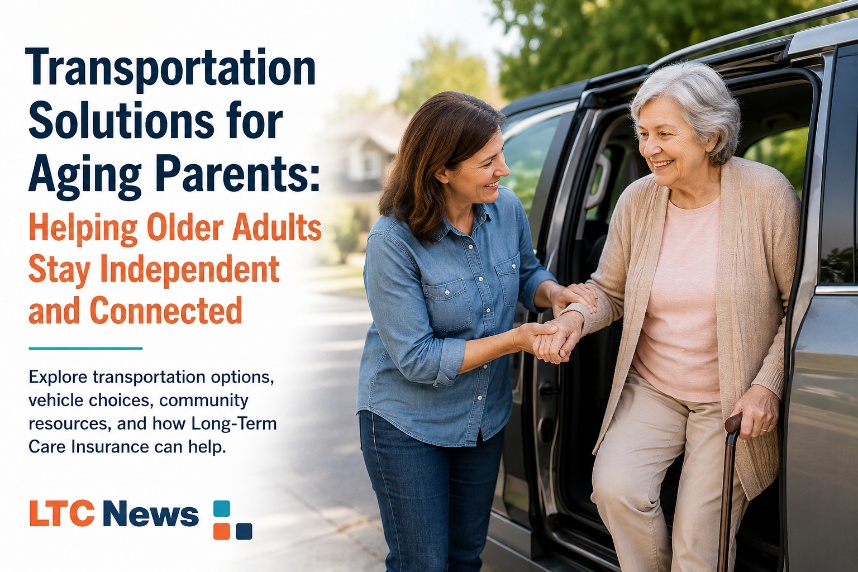
- Other Transportation Options for Older Adults
- Choosing the Right Vehicle for Transporting an Older Adult
- Standard Sedans and SUVs
- Minivans Offer Flexibility
- Wheelchair-Accessible Vans
- Side-Entry vs. Rear-Entry Ramps
- Vehicle Safety Features Matter
- Making Transportation Easier for Family Caregivers
- Don't Forget Long-Term Maintenance
- Transportation Options in Long-Term Care Communities
- Evaluate Transportation Services When Reviewing Facilities
- Questions To Ask Home Care Agencies
- Questions To Ask Long-Term Care Communities
- Transportation Often Signals the Need for Additional Support
- How Long-Term Care Insurance Can Help
- Transportation Is About More Than Getting Somewhere
You may not think about transportation until a parent misses a doctor's appointment, stops attending family gatherings, or gives up driving altogether. Transportation challenges often affect the entire family, creating new responsibilities and concerns for adult children and other caregivers.
For millions of older adults, mobility challenges create a loss of independence that affects health, social connections, and quality of life.
Fortunately, today's transportation options extend far beyond asking a family member for a ride. From community transportation programs and ride-sharing services to wheelchair-accessible vehicles and Long-Term Care Insurance benefits, families have more solutions than ever before.
When Transportation Becomes an Aging Challenge
The conversation often begins with your own concern. Maybe your mother no longer feels comfortable driving at night. Perhaps your father struggles to get into the family SUV after knee replacement surgery. You start noticing missed appointments, canceled social outings, or increasing dependence on family members for transportation.
Transportation problems affect far more than convenience. Without reliable transportation, older adults may experience:
- Social isolation
- Missed medical appointments
- Delayed treatment
- Reduced physical activity
- Greater dependence on family caregivers
- Loss of independence
Transportation is often one of the earliest signs that additional support may be needed to maintain independence and quality of life.
Transportation Barriers Affect Millions of Older Adults
Transportation is more than a convenience. It is a critical component of healthy aging. When older adults lose access to reliable transportation, the consequences can reach nearly every aspect of daily life.
The AAA Foundation's LongROAD research found that older adults who stop driving are significantly more likely to experience depression and are more likely to enter a long-term care setting than those who continue driving safely.
"The decision to stop driving, whether voluntary or involuntary, appears to contribute to a variety of health problems for seniors, particularly depression as social circles are greatly reduced." — Peter Kissinger, President and CEO, AAA Foundation for Traffic Safety.
Transportation challenges can affect:
- Access to physicians and specialists
- Medication adherence
- Grocery shopping and nutrition
- Participation in social activities
- Religious involvement
- Mental and emotional well-being
As mobility declines, reliable transportation becomes increasingly important for maintaining independence.
Transportation and Family Caregiving
Transportation is often one of the first caregiving responsibilities adult children assume. According to AARP and the National Alliance for Caregiving, 63 million Americans now provide unpaid care for loved ones, a 45 percent increase since 2015. The burden on family caregivers can be lifechanging, especially when their family member does not have Long-Term Care Insurance and they are taking on all the responsibility.
Many family caregivers spend hours each week:
- Driving parents to physician appointments
- Taking loved ones to therapy sessions
- Running errands
- Transporting family members to social events
- Coordinating medical transportation
Over time, transportation responsibilities can become physically demanding, emotionally stressful, and difficult to balance with work and family obligations. For many families, transportation challenges become the first indication that additional support services may be necessary.
Why Transportation Matters for Aging in Place
Most older adults want to remain in their homes for as long as possible. Aging in place requires more than a safe home environment. It also requires reliable access to the outside world.
You need transportation to:
- Attend medical appointments
- Pick up prescriptions
- Shop for groceries
- Participate in religious services
- Visit family and friends
- Attend community activities
- Access adult day care programs
Maintaining social connections and community involvement supports emotional well-being and quality of life as you age. Without transportation, aging in place becomes increasingly difficult.
When It Is Time to Stop Driving
One of the most difficult conversations families face is deciding when an aging parent should stop driving. Giving up the keys can feel like giving up independence.
Warning signs may include:
- New dents or accidents
- Getting lost in familiar areas
- Difficulty judging distances
- Delayed reaction times
- Increased anxiety while driving
- Medication side effects
- Vision changes
- Cognitive decline
The safest approach is to begin discussing transportation alternatives before a crisis occurs. Having a transportation plan in place before driving ends makes the transition easier for everyone involved.
Transportation Safety and Dementia
Transportation concerns are especially common for families caring for someone with dementia. Memory loss, impaired judgment, reduced reaction times, and confusion can make driving increasingly dangerous.
You may notice:
- Difficulty navigating familiar routes
- Missing turns or exits
- Slower responses to traffic conditions
- Confusion while driving
- Difficulty processing multiple tasks
Transportation options become even more important after driving retirement. Families often rely on:
- Home care providers
- Adult day care programs
- Assisted living transportation
- Memory care transportation
- Family caregivers
- Community transportation services
Reliable transportation helps individuals with dementia remain engaged in activities that support quality of life.
Other Transportation Options for Older Adults
Families are often surprised by the number of transportation resources available.
- Family Caregivers Often Become Transportation Coordinators
Family members remain the primary source of transportation for many older adults. Benefits include flexibility, familiarity, and companionship.
Challenges include caregiver burnout, scheduling conflicts, and increasing demands as care needs grow.
- Ride-Sharing Services Help Older Adults Stay Independent
Ride-sharing services have expanded transportation options for many older adults. Benefits include:
- On-demand service
- Lower costs than private transportation
- Availability in many communities
Limitations include:
- Limited physical assistance
- Lack of wheelchair accessibility in many vehicles
- Challenges for individuals with cognitive impairment
- Senior Transportation Programs
Many communities provide transportation specifically designed for older adults. Programs may be offered through:
- Area Agencies on Aging
- Senior centers
- Religious organizations
- Local governments
- Nonprofit organizations
- Non-Emergency Medical Transportation
Non-emergency medical transportation services help individuals who cannot safely use traditional transportation.
These services may include:
- Wheelchair transportation
- Ambulatory transportation
- Stretcher transportation
- Escort assistance
Choosing the Right Vehicle for Transporting an Older Adult
If transportation responsibilities have become part of your caregiving role, selecting the right vehicle can improve safety, comfort, and independence for everyone involved.
While many families rely on ride services, community transportation programs, or medical transportation providers, others discover that modifying or replacing a vehicle offers greater flexibility and long-term convenience.
As mobility changes with age, getting in and out of a vehicle often becomes one of the biggest obstacles. Arthritis, balance problems, Parkinson's disease, stroke recovery, joint replacements, chronic pain, and cognitive decline can all make transportation more difficult.
Standard Sedans and SUVs
For older adults who remain relatively mobile, a standard vehicle may still work well.
Look for:
- Wide-opening doors
- Higher seating positions
- Grab handles
- Low step-in height
- Power-adjustable seats
- Easy-to-use seat belts
Many caregivers find midsize SUVs easier than low-profile sedans because the higher seating position reduces the effort required to enter and exit the vehicle.
Minivans Offer Flexibility
Minivans are often one of the best choices for aging adults with mild to moderate mobility limitations.
Benefits include:
- Wide sliding doors
- Lower floor heights
- Easy access for walkers
- More room for caregiver assistance
- Extra cargo space for mobility equipment
Many families use traditional minivans for years before a wheelchair-accessible conversion becomes necessary.
Wheelchair-Accessible Vans
When a wheelchair becomes necessary, a wheelchair-accessible van can provide greater safety and independence.
Features may include:
- Power-operated ramps
- Lowered floors
- Automatic kneeling suspension systems
- Wheelchair securement systems
- Power doors
- Flexible seating configurations
These vehicles allow many wheelchair users to remain active and continue attending medical appointments, family gatherings, religious services, and community activities.
Finding the right vehicle requires a partner who understands your family's specific technical needs. When you work with reputable wheelchair van dealers, you gain access to expert advice and modified vehicles that are built for long-term reliability and total safety.
Side-Entry vs. Rear-Entry Ramps
Side-entry vans offer:
- Easier sidewalk access
- More flexible seating arrangements
- Better interaction with passengers
- Front passenger wheelchair positioning in some models
Rear-entry vans often provide:
- Easier loading in narrow parking spaces
- Lower conversion costs
- Simpler modifications
- Straight-line entry
Vehicle Safety Features Matter
Look for:
- Crash-tested wheelchair tie-down systems
- Proper floor reinforcement
- Side-impact protection
- Blind-spot monitoring
- Automatic emergency braking
- Backup cameras
- Lane-departure warning systems
Making Transportation Easier for Family Caregivers
Many modern mobility vehicles are designed to reduce the physical demands placed on caregivers. Power ramps, automatic doors, and lowering suspension systems help reduce lifting and strain.
Don't Forget Long-Term Maintenance
Accessible vehicles represent a significant investment.
Consider:
- Maintenance costs
- Ramp servicing
- Lift inspections
- Battery replacement
- Securement system maintenance
- Warranty coverage
The right vehicle is not simply transportation. It can help preserve independence, reduce caregiver burden, and improve quality of life.
Transportation Options in Long-Term Care Communities
Transportation remains an important quality-of-life issue even after a move into a care community. Not every assisted living community, memory care residence, or nursing home provides the same level of transportation support.
Some communities operate:
- Wheelchair-accessible buses
- Passenger vans
- Accessible shuttle vehicles
- Contracted transportation partnerships
Others provide transportation only for:
- Physician appointments
- Scheduled shopping trips
- Organized activities
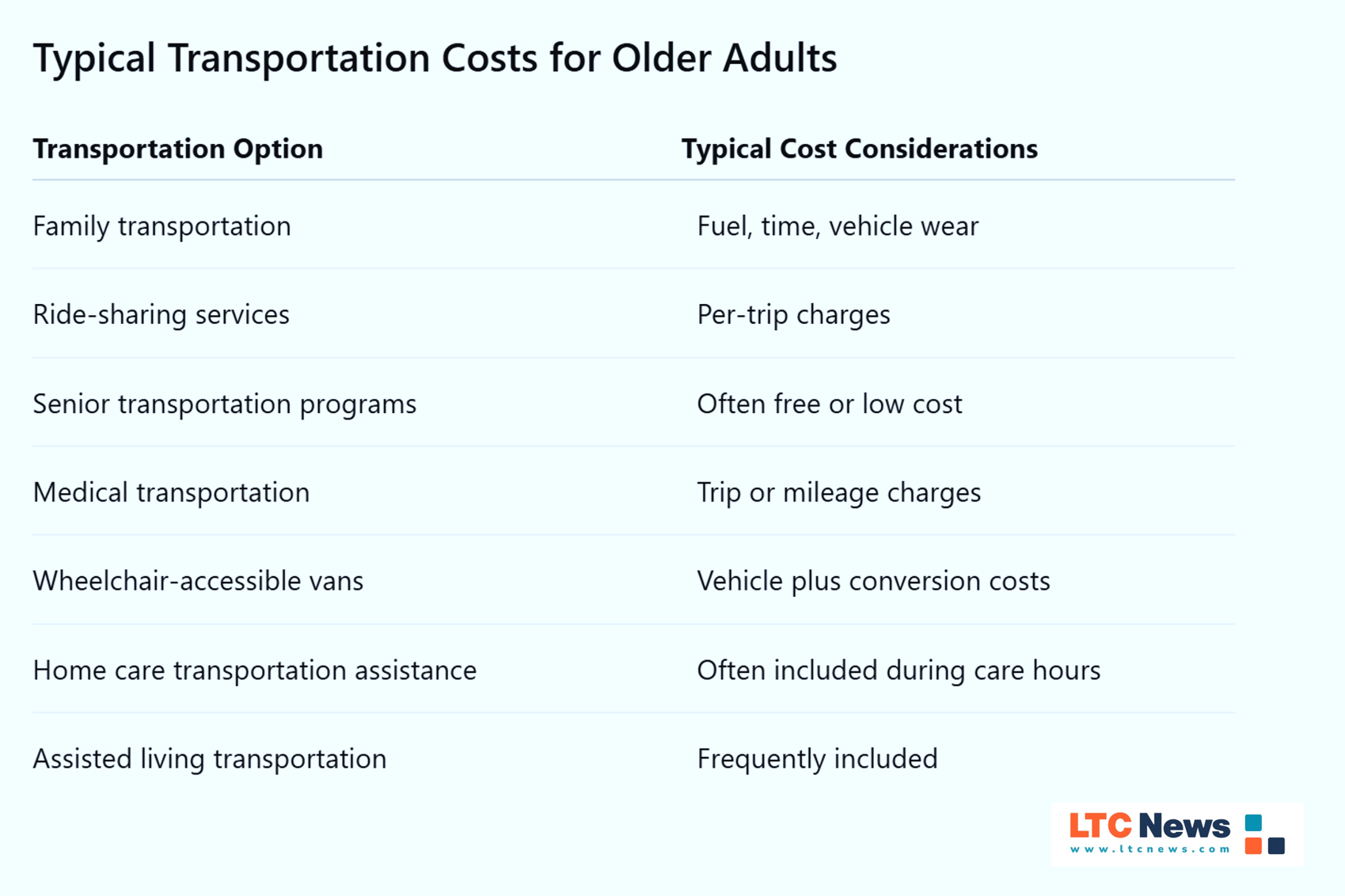
Some providers include transportation in monthly fees, while others charge separately. Many long-term care communities provide:
- Medical appointment transportation
- Shopping trips
- Religious services
- Community outings
- Restaurant visits
- Recreational activities
Evaluate Transportation Services When Reviewing Facilities
Transportation is often overlooked when evaluating care providers, yet it can play a major role in maintaining independence, healthcare access, and social engagement. The LTC News Caregiver Directory allows you to search for home care agencies, adult day care centers, assisted living communities, memory care providers, and nursing homes throughout the United States. Once you identify providers in your area, transportation services should be among the first topics discussed during tours and interviews.
Questions To Ask Home Care Agencies
- Can caregivers transport clients?
- Are transportation costs included?
- Are caregivers insured when driving clients?
- Can caregivers accompany clients into appointments?
Questions To Ask Long-Term Care Communities
- Is transportation included in the monthly fee?
- Are wheelchair-accessible vehicles available?
- How far in advance must transportation be scheduled?
- Are escorts available when needed?
- Are supervised outings offered?
- What transportation safety procedures are used?
- Can family members participate?
- How are medical transportation services coordinated?
- Are transportation costs billed separately?
- Are non-medical outings available?
Transportation policies often reveal a great deal about a provider's commitment to resident independence and quality of life.
Transportation Often Signals the Need for Additional Support
Transportation challenges rarely occur in isolation. Difficulty driving, transferring into vehicles, remembering appointments, or navigating familiar routes often signals broader concerns involving mobility, cognition, or activities of daily living.
For many families, transportation issues are among the earliest indicators that additional support may be needed.
That support may include:
- Home care services
- Adult day care programs
- Care coordination assistance
- Assisted living
- Memory care
- Skilled nursing care
How Long-Term Care Insurance Can Help
When transportation challenges begin interfering with daily life, healthcare access, or social engagement, it may be too late to explore long-term care planning solutions. Long-term care planning starts before you get older and is usually part of your retirement plan.
Long-Term Care Insurance is an important resource to access the quality extended care you will need at some point in your lifetime. Qualified Long-Term Care Insurance policies provide benefits for care received in:
- Your home
- Adult day care centers
- Assisted living communities
- Memory care facilities
- Nursing homes
Professional caregivers can often assist with transportation and accompany individuals to appointments as part of a broader plan of care. Most people acquire an LTC policy between the ages of 47 and 67. No matter what your age, you should have reasonably good health to qualify for coverage.
Seek the assistance of an experienced Long-Term Care Insurance specialist representing all the top-rate insurance companies that offer long-term care solutions.
👉 How to Apply for Long-Term Care Insurance
Transportation Is About More Than Getting Somewhere
Transportation is often viewed as a logistics issue. In reality, it is closely tied to independence, dignity, access to healthcare, social engagement, and quality of life.
Whether the solution involves family caregivers, ride-sharing services, community transportation programs, wheelchair-accessible vehicles, home care providers, or transportation offered through assisted living and memory care communities, the goal remains the same. You or a loved one wants to remain active, connected, and engaged in the people, places, and activities that matter most.
If transportation has become a growing concern for you or an aging parent, don't wait for a crisis. Exploring transportation options, care resources through the LTC News Caregiver Directory, and Long-Term Care Insurance solutions today can help preserve independence, reduce family stress, and improve quality of life for years to come.
Frequently Asked Questions
What type of vehicle is best for transporting an older adult?
The best vehicle depends on the person's mobility needs. Older adults who remain relatively independent may do well with a midsize SUV that offers a higher seating position and easy entry. Minivans provide additional room for caregivers and mobility equipment. Wheelchair-accessible vans with ramps, lowered floors, and securement systems may be necessary for individuals who use wheelchairs full time.
Do assisted living communities provide transportation?
Many assisted living communities offer scheduled transportation for medical appointments, shopping trips, religious services, recreational outings, and community events. Services vary by provider, so families should ask detailed questions about transportation availability, scheduling policies, accessibility, and any additional fees.
When should families start planning for future transportation needs?
Families should begin planning as soon as they notice changes in driving habits, mobility, balance, vision, or cognitive function. Transportation challenges are often among the first signs that additional support may be needed. Early planning helps avoid crises and allows older adults to maintain independence, healthcare access, and social engagement for as long as possible.
What transportation questions should I ask a long-term care provider?
Ask whether transportation is included in the monthly fee, whether wheelchair-accessible vehicles are available, how appointments are scheduled, whether escorts are provided, whether family members can participate in outings, and whether transportation is available for both medical and social activities.
What is non-emergency medical transportation?
Non-emergency medical transportation (NEMT) provides transportation for individuals who cannot safely use standard vehicles due to medical or mobility limitations. Services may include wheelchair-accessible transportation, ambulatory transportation, stretcher transportation, and escort assistance for medical appointments and treatments.
When should an aging parent stop driving?
There is no specific age when someone should stop driving. The decision should be based on safety, health, vision, reaction time, and cognitive abilities. Warning signs include getting lost in familiar areas, frequent near misses, new dents or accidents, difficulty judging distances, slower reaction times, and increasing confusion behind the wheel. Families should begin discussing alternative transportation options before a crisis occurs.
Do memory care communities offer transportation?
Many memory care communities provide supervised transportation for organized outings, appointments, and activities. Transportation services are typically designed with additional safety measures to accommodate residents with cognitive impairment.
How can the LTC News Caregiver Directory help?
The LTC News Caregiver Directory allows you to search for home care agencies, adult day care centers, assisted living communities, memory care providers, and nursing homes throughout the United States. When evaluating providers, use the directory to identify options in your area and compare transportation services, accessibility features, and care offerings.
Does Medicare cover transportation services?
Medicare generally does not cover routine transportation for medical appointments. Coverage is limited to certain medically necessary situations. Some Medicare Advantage plans may offer transportation benefits. Medicaid often provides transportation assistance for eligible individuals, and many communities offer low-cost or free transportation programs for older adults.
What are the best transportation options for seniors who no longer drive?
The best option depends on an individual's mobility, health, and location. Common choices include family caregivers, ride-sharing services, senior transportation programs, non-emergency medical transportation providers, adult day care transportation, home care agencies that provide transportation assistance, and transportation services offered through assisted living and other long-term care communities.
Can Long-Term Care Insurance help with transportation-related needs?
Yes. Qualified Long-Term Care Insurance policies often pay for home care, assisted living, memory care, adult day care, and nursing home services when benefit eligibility requirements are met. Professional caregivers covered by a policy may provide transportation assistance and accompany an individual to appointments as part of a broader plan of care.
What is the difference between a side-entry and rear-entry wheelchair van?
Side-entry wheelchair vans typically offer greater seating flexibility, easier sidewalk access, and better interaction with passengers. Rear-entry vans often work well in narrow parking spaces and usually cost less to convert. The best choice depends on the wheelchair user's needs, parking environment, and caregiver preferences.


Sponsored