The Evolving Role of Targeted Therapies in Chronic Lymphocytic Leukemia Care
About This Article
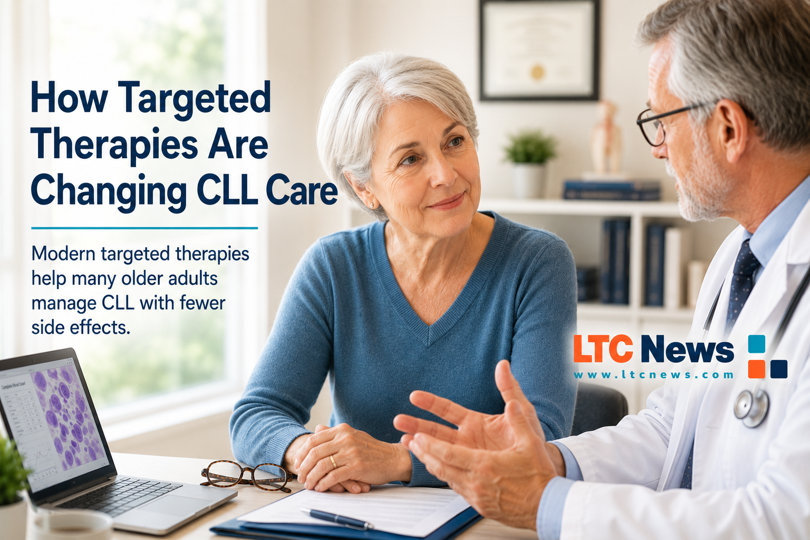
Chronic lymphocytic leukemia (CLL) is the most common leukemia in adults and primarily affects people over age 60. Advances in targeted therapies have transformed treatment by attacking leukemia cells more precisely than traditional chemotherapy, allowing many patients to live longer with fewer side effects while maintaining independence and quality of life.

Linda Maxwell
Linda Maxwell is a journalist who writes about aging, health, chronic illness, caregiving, and long-term care issues impacting older adults and their families.
Table of Contents
- A Cancer That Primarily Affects Older Adults
- What Is Chronic Lymphocytic Leukemia?
- No Two Patients Experience CLL the Same Way
- Many Patients Don't Need Treatment Right Away
- Recognizing the Symptoms
- How Physicians Diagnose CLL
- Why Aging Changes Treatment Decisions
- Living Longer Means Planning Differently
- How Targeted Therapies Revolutionized CLL Treatment
- What Is Targeted Therapy?
- BTK Inhibitors Changed the Standard of Care
- Understanding the Benefits—and Risks—of BTK Inhibitors
- BCL-2 Inhibitors Offer Another Powerful Option
- Continuous Therapy Versus Time-Limited Treatment
- Monoclonal Antibodies Strengthen Treatment
- Precision Medicine Is Changing Every Treatment Decision
- Quality of Life Is Now a Primary Goal
- Preventing Infections Remains Essential
- Research Continues to Expand Treatment Options
- Living Well With CLL: Planning for the Future While Preserving Independence
- Aging With CLL Often Means Managing More Than One Condition
- Family Caregivers Become Essential Partners
- Emotional Health Deserves Attention
- Health Insurance/Medicare Covers Treatment—but Not Most Long-Term Care
- Why Long-Term Care Planning Still Matters
- Finding Care Close to Home
- Looking Ahead at CLL
A diagnosis of leukemia once carried an expectation of aggressive chemotherapy, lengthy hospital stays, and significant disruption to everyday life. Today, many people diagnosed with chronic lymphocytic leukemia (CLL) face a much different outlook. Advances in targeted therapies have transformed treatment, allowing many patients to manage the disease for years while remaining active, independent, and engaged with family and friends.
That progress is especially meaningful because CLL primarily affects older adults. Many patients are already retired or approaching retirement when they receive the diagnosis. Their goals often extend beyond treating cancer—they also want to maintain their independence, protect their quality of life, and continue living in their own homes for as long as possible.
We are making significant strides against CLL both at time of diagnosis and at relapse setting with improvement in QOL." — Mohit Narang, M.D., medical oncologist and hematologist with Maryland Oncology Hematology and the Sarah Cannon Research Institute, Columbia, Maryland, quoted in Hematology Advisor.
Although targeted therapies have dramatically improved outcomes, CLL remains a chronic cancer that requires ongoing medical care, regular monitoring, and thoughtful planning. Understanding how the disease develops, who it affects, and how treatment has evolved can help patients and families make informed decisions about both healthcare and long-term care.
A Cancer That Primarily Affects Older Adults
Chronic lymphocytic leukemia is the most common leukemia diagnosed in adults in the United States and other Western countries. According to the American Cancer Society, about 22,760 Americans will be diagnosed with CLL in 2026, and about 4,350 people are expected to die from the disease. The average age at diagnosis is around 70 years. CLL is rarely seen in people under age 40.
Unlike many cancers, age itself is one of the strongest risk factors. Most patients diagnosed with CLL are already managing other age-related medical conditions, including:
- High blood pressure
- Heart disease
- Diabetes
- Kidney disease
- Arthritis
- Osteoporosis
- Reduced immune function
Managing multiple chronic illnesses often becomes just as important as treating the leukemia itself. Physicians increasingly tailor treatment plans to the whole person rather than focusing solely on the cancer.
What Is Chronic Lymphocytic Leukemia?
CLL is a slow-growing cancer of the blood and bone marrow that develops in B lymphocytes, a type of white blood cell that produces antibodies to help fight infection.
Healthy B cells mature, perform their role in the immune system, and then die naturally. In CLL, genetic changes prevent these cells from dying when they should. Instead, abnormal lymphocytes accumulate over time in the blood, bone marrow, lymph nodes, spleen, and sometimes the liver.
As leukemia cells multiply, they crowd out healthy blood-forming cells. Eventually, this process can interfere with the body's ability to produce normal red blood cells, platelets, and healthy white blood cells, increasing the risk of anemia, bleeding problems, and infections.
Unlike many cancers that form tumors in a single organ, CLL affects the body's blood and immune systems. Researchers at The University of Texas MD Anderson Cancer Center note that CLL has historically been considered treatable but not curable, and that physicians generally approach it as a chronic disease requiring long-term management rather than a condition that can usually be eliminated.
No Two Patients Experience CLL the Same Way
One of the defining characteristics of chronic lymphocytic leukemia is its unpredictability. Researchers at The University of Texas MD Anderson Cancer Center note that CLL is a heterogeneous disease with a variable clinical course; some patients present with aggressive disease requiring early treatment, while others follow an indolent course and may never need treatment at all.
Physicians evaluate numerous factors when estimating how CLL may behave, including:
- Chromosomal abnormalities
- TP53 mutations
- IGHV mutation status
- Blood cell counts
- Lymph node involvement
- Bone marrow function
- Age
- Overall health
- Other chronic medical conditions
That variability explains why physicians often describe CLL as a disease that is managed over time rather than cured. Treatment plans evolve as the leukemia changes and as a patient's health needs change with age.
Many Patients Don't Need Treatment Right Away
One of the most surprising aspects of a CLL diagnosis is that treatment often does not begin immediately. Instead, many patients enter a period known as active surveillance, sometimes called watchful waiting.
During this phase, physicians monitor blood counts, perform physical examinations, and evaluate symptoms through regular office visits. Treatment begins only when there is clear evidence that the disease is progressing or causing medical problems. Some never need treatment for their CLL.
Being told you have cancer and then being told we're going to watch it is really a hard process for people. It's being told that your health status is different than you thought it was before and we're not going to start treatment." — Lindsey Roeker, MD, hematologic oncologist, Mayo Clinic, Rochester, Minnesota.
For many patients, active surveillance safely delays treatment while avoiding unnecessary side effects. Research has shown that beginning therapy before it is medically necessary does not improve survival for most people with early-stage CLL.
Although waiting to begin treatment can create anxiety, physicians emphasize that careful monitoring is an active medical strategy—not the absence of care.
Recognizing the Symptoms
Many people have no symptoms when CLL is first discovered. Routine blood work performed during an annual physical often identifies an elevated lymphocyte count before patients notice anything unusual.
As the disease progresses, symptoms may include:
- Persistent fatigue
- Enlarged lymph nodes in the neck, underarms, or groin
- Frequent bacterial or viral infections
- Fever without another clear cause
- Night sweats
- Unexplained weight loss
- Shortness of breath during normal activity
- Easy bruising or bleeding
- Fullness or discomfort beneath the left rib cage caused by an enlarged spleen
Many of these symptoms can also occur with other medical conditions. Anyone experiencing persistent symptoms should be evaluated by a physician rather than assuming leukemia is the cause.
Fatigue often becomes one of the most challenging symptoms because it gradually affects work, hobbies, exercise, travel, and the ability to care for loved ones or maintain an active retirement.
How Physicians Diagnose CLL
Diagnosis usually begins after routine blood tests reveal an abnormally high lymphocyte count. Additional testing often includes:
- Complete blood count (CBC)
- Flow cytometry
- Fluorescence in situ hybridization (FISH)
- TP53 mutation testing
- IGHV mutation analysis
- Bone marrow biopsy in selected patients
- CT imaging when clinically indicated
Advanced genetic and molecular testing has become one of the biggest advances in modern leukemia care. Instead of relying solely on blood counts, hematologists increasingly use molecular profiling to determine how aggressive the leukemia may become and which targeted therapies are most likely to benefit an individual patient.
It can be difficult to wade through all of the data and sort out what the best treatment option is for each individual patient and at each line of therapy. This becomes a much more nuanced and personalized series of discussions over time. We need to engage our patients in these discussions, so they understand the rationale behind each treatment decision, and to ensure that they have a voice in how we approach their care." — Jacob Soumerai, MD, hematologist-oncologist, Mass General Cancer Center, Boston, Massachusetts.
Why Aging Changes Treatment Decisions
Growing older doesn't automatically limit treatment options. Instead of focusing only on chronological age, physicians increasingly evaluate what specialists call physiologic age—how healthy and functional a person actually is.
An active 80-year-old who exercises regularly and manages chronic illnesses well may tolerate therapy better than someone 15 years younger with significant heart disease, kidney disease, or frailty. Before recommending treatment, physicians often evaluate:
- Heart function
- Kidney function
- Liver function
- Balance and fall risk
- Cognitive function
- Mobility
- Nutrition
- Current medications
- Overall physical resilience
Those assessments help physicians select therapies that are both effective and appropriate for each patient's overall health.
Living Longer Means Planning Differently
Modern CLL treatments have significantly improved long-term survival. According to the National Cancer Institute's Surveillance, Epidemiology, and End Results (SEER) Program, the five-year relative survival rate for chronic lymphocytic leukemia is approximately 89.6%. Many patients now live well beyond five years, particularly when diagnosed early and treated with today's targeted therapies.
Treatment of CLL has had a paradigm shift in the past decade, where treatment has changed from a chemotherapy-based treatment to more targeted non-chemotherapy-based therapies, which are well tolerated." — Vijendra Singh, M.D., medical oncologist and member of the Hematology Oncology Multidisciplinary Team at the Barbara Ann Karmanos Cancer Institute in Detroit.
Longer survival has shifted the conversation beyond simply controlling cancer. Patients increasingly ask questions such as:
- Will I remain independent?
- Can I continue traveling?
- Will I be able to stay in my home?
- How will treatment affect my spouse or family?
- What happens if I eventually need long-term care?
Those concerns reflect a broader understanding that successful cancer treatment means more than extending life. Preserving independence, maintaining quality of life, and preparing for future healthcare needs have become equally important goals for many older adults living with chronic lymphocytic leukemia.
How Targeted Therapies Revolutionized CLL Treatment
For decades, chemotherapy was the cornerstone of treatment for chronic lymphocytic leukemia. Regimens combining chemotherapy and immunotherapy helped many patients achieve remission and extended survival, but they also came with significant side effects because the medications attacked both cancer cells and healthy, rapidly dividing cells.
Today, treatment looks very different for many patients.
Advances in genetics, molecular biology, and immunology have given physicians a much better understanding of how CLL cells survive and multiply. That research has led to targeted therapies designed to interrupt specific pathways leukemia cells depend on, often providing excellent disease control with fewer side effects than traditional chemotherapy.
Although chemotherapy still has a role for selected patients, targeted therapies have become the preferred first-line treatment for many individuals, particularly older adults.
What Is Targeted Therapy?
Targeted therapy is often described as precision medicine. Unlike chemotherapy, which attacks rapidly dividing cells throughout the body, targeted therapies interfere with specific proteins or signaling pathways that cancer cells need to survive.
Think of chemotherapy as using a wide floodlight to illuminate an entire field. Targeted therapy is more like using a spotlight aimed directly at the problem. Healthy cells can still be affected, and targeted therapies have their own side effects, but they generally avoid much of the widespread damage associated with older chemotherapy regimens.
For many patients, targeted therapies offer:
- Better long-term disease control
- Improved progression-free survival
- Oral treatment options
- Fewer hospital visits
- Less disruption to daily life
- Greater opportunity to remain active and independent
It's really been a paradigm shift from chemotherapy, moving towards targeted treatment approaches using new classes of inhibitors and other agents." — Nicole Lamanna, M.D., Professor of Medicine at Columbia University Medical Center.
BTK Inhibitors Changed the Standard of Care
One of the biggest breakthroughs in CLL treatment came with the development of Bruton's tyrosine kinase (BTK) inhibitors. BTK is a protein that helps B lymphocytes receive signals telling them to survive and multiply. CLL cells rely heavily on this signaling pathway. BTK inhibitors interrupt those signals, preventing leukemia cells from continuing to grow.
Several forms of CLL targeted therapy are currently in use or have been used in oncology, including:
- Ibrutinib
- Acalabrutinib
- Zanubrutinib
- Pirtobrutinib (for selected patients whose disease has progressed after prior BTK inhibitor therapy)
Most BTK inhibitors are taken once or twice daily as pills, allowing patients to receive treatment at home rather than making frequent trips to an infusion center. For many older adults, that convenience has become one of the greatest benefits of targeted therapy.
Understanding the Benefits—and Risks—of BTK Inhibitors
BTK inhibitors have helped thousands of patients achieve long periods of disease control. Research has demonstrated improvements in progression-free survival compared with many older treatment approaches. However, these medications also require careful monitoring.
Possible side effects include:
- High blood pressure
- Headaches
- Bruising
- Bleeding
- Diarrhea
- Muscle aches
- Fatigue
Some BTK inhibitors may also increase the risk of atrial fibrillation, an abnormal heart rhythm that becomes more common as people age. Because many CLL patients already have cardiovascular disease or high blood pressure, hematologists often work closely with cardiologists to monitor heart health throughout treatment.
Patients should never stop a BTK inhibitor without first discussing concerns with their physician, as abruptly discontinuing therapy can sometimes allow the disease to progress.
BCL-2 Inhibitors Offer Another Powerful Option
Another major advance involves medications targeting a protein called BCL-2. Cancer cells often produce excessive amounts of this protein, preventing them from undergoing normal programmed cell death.
Venetoclax blocks BCL-2, allowing leukemia cells to die naturally. One of the most attractive features of venetoclax-based treatment is that many patients receive therapy for a defined period rather than indefinitely. For some people, completing treatment after a planned course provides both psychological and practical advantages.
Because venetoclax can rapidly destroy leukemia cells, physicians carefully increase the dose over several weeks while monitoring blood tests to reduce the risk of tumor lysis syndrome, a potentially serious complication caused by the sudden breakdown of large numbers of cancer cells.
Continuous Therapy Versus Time-Limited Treatment
One of the biggest decisions patients and physicians now make is whether treatment should continue indefinitely or stop after a planned course. BTK inhibitors are commonly prescribed as continuous therapy.
Patients continue taking the medication as long as it remains effective and side effects are manageable. Venetoclax-based treatment, particularly when combined with a monoclonal antibody such as obinutuzumab, is often given for a fixed duration.
Each approach offers advantages. Continuous therapy may provide ongoing disease suppression but requires long-term medication adherence and monitoring. Time-limited therapy allows patients to complete treatment and enjoy periods without medication, although additional treatment may eventually become necessary if the disease returns.
The best choice depends on several factors, including the biology of the leukemia, other medical conditions, medication tolerance, and patient preferences.
Nicole Lamanna, M.D., hematologist-oncologist and CLL specialist, Herbert Irving Comprehensive Cancer Center, Columbia University Irving Medical Center, New York, emphasizes that both strategies remain highly effective in the frontline setting, advising doctors to review the advantages and trade-offs of continuous versus time-limited therapy while considering patient age, genomic risk factors, and personal treatment goals to guide shared decision-making in CLL care.
Monoclonal Antibodies Strengthen Treatment
Monoclonal antibodies have also become an important part of CLL care. These laboratory-produced proteins recognize specific markers on leukemia cells and help the immune system destroy them.
Frequently used medications include:
- Obinutuzumab
- Rituximab
These medications are typically administered through intravenous infusion and are often combined with targeted oral therapies to improve treatment effectiveness. Combination approaches have produced deeper remissions for many patients than older chemotherapy-based regimens.
Precision Medicine Is Changing Every Treatment Decision
One of the greatest advances in leukemia care isn't simply having more medications available. It's knowing which medication is most likely to help a particular patient.
Modern molecular testing allows physicians to evaluate:
- TP53 mutations
- Deletion 17p
- IGHV mutation status
- Other chromosomal abnormalities
- Kidney function
- Heart disease
- Previous treatments
- Overall health
Those results help physicians develop highly individualized treatment plans.
Quality of Life Is Now a Primary Goal
Success in CLL treatment is no longer measured only by blood counts or remission rates. Physicians increasingly focus on helping patients maintain their daily routines and independence.
We've been blessed to witness a revolution in CLL. What used to be a devastating diagnosis now has multiple pathways to long-term survival and improved quality of life." — Brian Koffman, MDCM, co-founder of the CLL Society and a CLL patient himself, writing in The Hematologist (American Society of Hematology).
Many patients receiving targeted therapies continue to:
- Travel
- Exercise
- Volunteer
- Spend time with grandchildren
- Attend family events
- Remain socially active
- Continue working, if they choose
Because many targeted therapies are taken orally, patients often spend less time receiving infusion treatments and more time living their lives. Maintaining independence has become one of the most meaningful outcomes of modern CLL care.
Preventing Infections Remains Essential
Even when treatment is working well, people with CLL remain at increased risk for infections because the disease affects the immune system itself. Physicians often recommend that patients stay current on vaccinations, including influenza, COVID-19, and pneumococcal vaccines. Depending on an individual's age, health, and vaccination history, physicians may also recommend the recombinant shingles vaccine.
Because recommendations can vary based on treatment and immune status, patients should consult their physician before receiving any vaccine, particularly live vaccines, which are generally avoided in people with weakened immune systems.
Prompt evaluation of fever, persistent cough, or other signs of infection remains an important part of ongoing care throughout the course of the disease.
Research Continues to Expand Treatment Options
Scientists continue to build on the success of targeted therapies.
Current areas of investigation include:
- Next-generation BTK inhibitors
- New BCL-2 inhibitor combinations
- Bispecific antibodies
- CAR T-cell therapy
- Cellular immunotherapies
- Earlier intervention for selected high-risk patients
- Treatments designed to overcome drug resistance
Each new advance moves physicians closer to therapies that control leukemia longer while minimizing side effects and preserving quality of life.
Living Well With CLL: Planning for the Future While Preserving Independence
Targeted therapies have transformed chronic lymphocytic leukemia from a disease that often required intensive chemotherapy into one that many people can successfully manage for years. Even with these advances, CLL remains a chronic cancer that requires ongoing medical care, regular monitoring, and thoughtful planning.
Many patients diagnosed today can expect to live for years after diagnosis. That is welcome news, but it also means that planning for healthy aging, maintaining independence, and preparing for future healthcare needs becomes increasingly important.
For many families, managing CLL is no longer just about treating cancer. It's about preserving quality of life.
Aging With CLL Often Means Managing More Than One Condition
Because most people are diagnosed around age 70, many already have one or more chronic medical conditions. Common examples include:
- Heart disease
- High blood pressure
- Diabetes
- Kidney disease
- Arthritis
- Osteoporosis
- Hearing or vision loss
Managing multiple chronic illnesses can become complicated, particularly when several physicians are involved in care. Primary care physicians, hematologists, cardiologists, pharmacists, and other specialists often work together to monitor medications, manage side effects, and reduce the risk of drug interactions.
Maintaining mobility, preventing falls, and protecting cognitive health become just as important as controlling leukemia.
Family Caregivers Become Essential Partners
CLL itself rarely causes a sudden, dramatic loss of independence. The more common scenario is that a person manages CLL for years while aging, and it is the combination of advancing age, accumulated comorbidities, potential treatment side effects, and immune vulnerability that eventually creates long-term care needs.
Although many people with CLL will remain independent for years, family members frequently become an important part of the healthcare team, especially as the person ages. A spouse or adult child may begin helping with transportation, medication management, scheduling appointments, meal preparation, or monitoring for new symptoms, in addition to actual help with daily living activities.
Those responsibilities often increase gradually rather than all at once. Approximately 63 million Americans provide unpaid care for an adult family member or friend. That means many people must juggle their careers, family responsibilities, and caregiving duties.
Many caregivers never expected to take on that role. Planning before an aging or medical crisis occurs can help families pay for caregivers and reduce stress.
Emotional Health Deserves Attention
Living with chronic cancer can affect emotional well-being long after treatment begins. Patients may experience:
- Anxiety before follow-up appointments
- Fear that the disease will progress
- Depression
- Sleep disturbances
- Financial worries
- Uncertainty about the future
Caregivers often experience similar emotions while balancing work, family responsibilities, and caregiving. Support groups, counselors, oncology social workers, patient advocacy organizations, and faith communities can all provide valuable support.
Open communication with physicians also helps patients better understand their disease and participate in treatment decisions.
Health Insurance/Medicare Covers Treatment—but Not Most Long-Term Care
Health insurance and Medicare generally pay for physician services, hospital care, approved cancer treatments, laboratory testing, imaging, and many prescription medications through Medicare Part D or Medicare Advantage plans.
However, Medicare does not pay for long-term custodial care. If someone eventually needs ongoing assistance with bathing, dressing, eating, transferring, toileting, continence, or supervision because of cognitive impairment, Medicare will not cover those extended services.
Medicaid may help pay for long-term care, but eligibility depends on having very limited financial resources. Understanding those limitations before care becomes necessary gives families more time to plan and more choices about where extended care is received.
Why Long-Term Care Planning Still Matters
Advances in CLL treatment have significantly improved survival, but patients continue to age. Many eventually require assistance because of conditions unrelated to leukemia, including:
- Alzheimer's disease or another dementia
- Parkinson's disease
- Stroke
- Severe arthritis
- Frailty
- Other chronic illnesses associated with aging
According to the U.S. Department of Health and Human Services, approximately 56% of Americans turning 65 today will need long-term services at some point in their lives. Preparing for that possibility is an important part of retirement planning.
People who purchased qualified Long-Term Care Insurance before developing CLL may have coverage that helps pay for care at home, in assisted living, in memory care, or in a nursing home once the policy benefit triggers are met.
Unfortunately, because CLL is generally considered a significant pre-existing medical condition, obtaining new Long-Term Care Insurance after diagnosis is often difficult or impossible.
For that reason, Long-Term Care Insurance specialists frequently encourage adults to explore long-term care planning while they are still healthy. LTC News research shows that many people purchase coverage between ages 47 and 67, when they are more likely to qualify medically and have access to a broader range of policy options.
Finding Care Close to Home
Many people with CLL eventually benefit from services that support independent living, even if they don't require full-time care. Depending on individual needs, those services may include:
- Home health care
- Personal care assistance
- Physical or occupational therapy
- Adult day care programs
- Transportation services
- Assisted living communities
- Memory care, when cognitive impairment develops
As needs change, families often discover that finding trustworthy providers can be challenging. The LTC News Caregiver Directory helps families locate licensed long-term care providers nationwide, making it easier to compare services and identify care options.
Families can also use the LTC News Cost of Long-Term Care Services Calculator to estimate the current (and projected future) cost of home care, assisted living, memory care, and nursing home services in their community. Understanding those costs early can improve financial planning and reduce surprises if care becomes necessary later.
Looking Ahead at CLL
Research into chronic lymphocytic leukemia continues at a remarkable pace. Scientists are evaluating:
- Next-generation BTK inhibitors
- Improved BCL-2 inhibitor combinations
- Time-limited treatment strategies
- Bispecific antibodies
- CAR T-cell therapies
- Other cellular immunotherapies
- Personalized treatment guided by increasingly sophisticated genetic testing
Researchers are also working to better understand why some patients develop treatment resistance and how therapies can be sequenced to extend disease control while minimizing side effects. Although a cure remains an important goal, today's therapies are already helping many people live longer, healthier lives.
Only a generation ago, treatment options for chronic lymphocytic leukemia were limited, and many patients faced lengthy chemotherapy regimens with significant side effects.
Today's targeted therapies have fundamentally changed that outlook. Many people now continue working, traveling, volunteering, enjoying retirement, and spending meaningful time with family while successfully managing their disease. Those advances represent more than scientific progress.
They give patients additional years to celebrate milestones, build memories with grandchildren, and remain active in their communities. Living with CLL still requires regular medical care and informed decision-making. Yet modern treatment has transformed what many patients can expect after diagnosis—from simply surviving to living well.

Sponsored