Ted Turner’s Death Highlights the Devastating Impact of Lewy Body Dementia on Families
About This Article
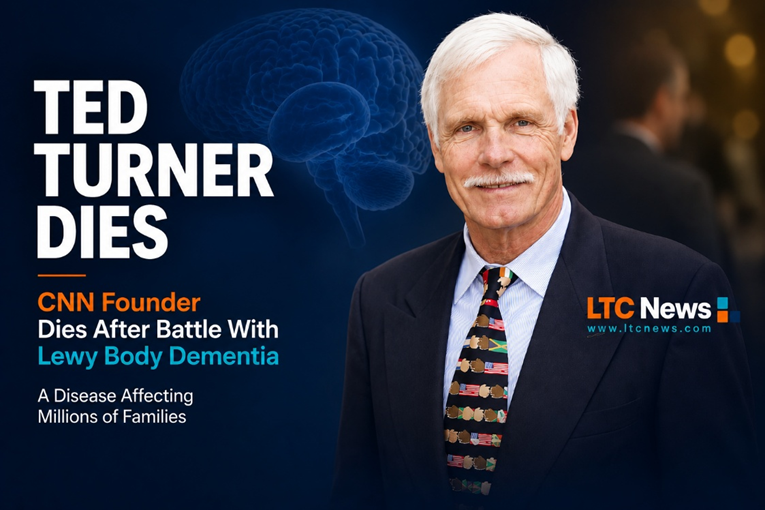
Ted Turner’s death is bringing new attention to Lewy body dementia, a progressive brain disease that affects memory, movement, sleep, and behavior. Understanding the symptoms, caregiving demands, and long-term care challenges can help families prepare before a crisis develops.

James Kelly
LTC News staff writer specializing in long-term care and aging.
Table of Contents
- Ted Turner Changed Television and Cable News Forever
- A Disease Often Misunderstood and Misdiagnosed
- Ted Turner’s Public Battle with Dementia
- Other Public Figures Connected to Lewy Body Dementia
- Why Lewy Body Dementia Is Especially Difficult for Caregivers
- Hidden Financial and Long-Term Care Costs of Dementia
- Why Early Planning Matters
- Researchers Continue Searching for Answers
- Ted Turner’s Death Reminds Americans to Prepare Early
You may have watched media pioneer Ted Turner build CNN into a global news empire, but his final years reflected a struggle millions of Americans quietly face every day: the devastating progression of dementia.
Turner, the outspoken founder of Cable News Network and one of the most influential figures in modern media, died at age 87 after living for years with Lewy body dementia, according to CNN and multiple national news organizations. No official cause of death was immediately released.
His death is putting renewed national attention on one of the least understood forms of dementia and the growing long-term care crisis affecting aging Americans.
For many households, Lewy body dementia is not simply a medical diagnosis. It becomes an emotional, financial, and caregiving journey that can last for years. That extended long-term care is not covered by health insurance or Medicare, as only Medicaid (for those with limited financial resources) and Long-Term Care Insurance will cover custodial long-term care.
Ted Turner Changed Television and Cable News Forever
Before his battle with dementia became public, Ted Turner was widely known as one of the most influential figures in modern broadcasting. Turner transformed cable television in the 1970s and 1980s by building media properties that changed how Americans consumed news and entertainment.
In 1980, he launched Cable News Network, better known as CNN, creating the world’s first 24-hour cable news network. At the time, many critics doubted viewers would watch news around the clock. Turner proved them wrong.

CNN reshaped journalism during major global events, including the Gulf War, when live international coverage became a defining moment in television news history.
Turner also expanded the reach of cable entertainment through TBS, originally known as SuperStation WTBS, which helped pioneer the concept of nationwide “superstations” distributed through cable systems across America. American families watched the many shows on TBS, even bring the Atlanta Braves to TV homes around the country.

Beyond television, Turner became known for philanthropy, environmental advocacy, ownership of the Atlanta Braves during their rise to national prominence, and his outspoken public personality.
His influence on media, journalism, and cable television remains enormous decades later.
A Disease Often Misunderstood and Misdiagnosed
Lewy body dementia affects an estimated 1.4 million Americans, according to the Lewy Body Dementia Association. Yet experts say it remains widely underdiagnosed or mistaken for other neurological or psychiatric conditions.
Unlike Alzheimer’s disease, which often begins primarily with memory loss, LBD frequently starts with changes in movement, sleep, mood, or visual perception. Unlike Alzheimer’s disease, Lewy body dementia often combines cognitive decline, movement problems, hallucinations, and sleep disturbances simultaneously, creating especially complex caregiving challenges.
Common symptoms may include:
- Visual hallucinations
- Tremors or slowed movement similar to Parkinson’s disease
- Confusion that fluctuates throughout the day
- Sleep disorders
- Anxiety or depression
- Balance problems and falls
- Blood pressure instability
- Difficulty concentrating
- Medication sensitivity
The disease shares characteristics with both Alzheimer’s and Parkinson’s disease, which can make diagnosis difficult.
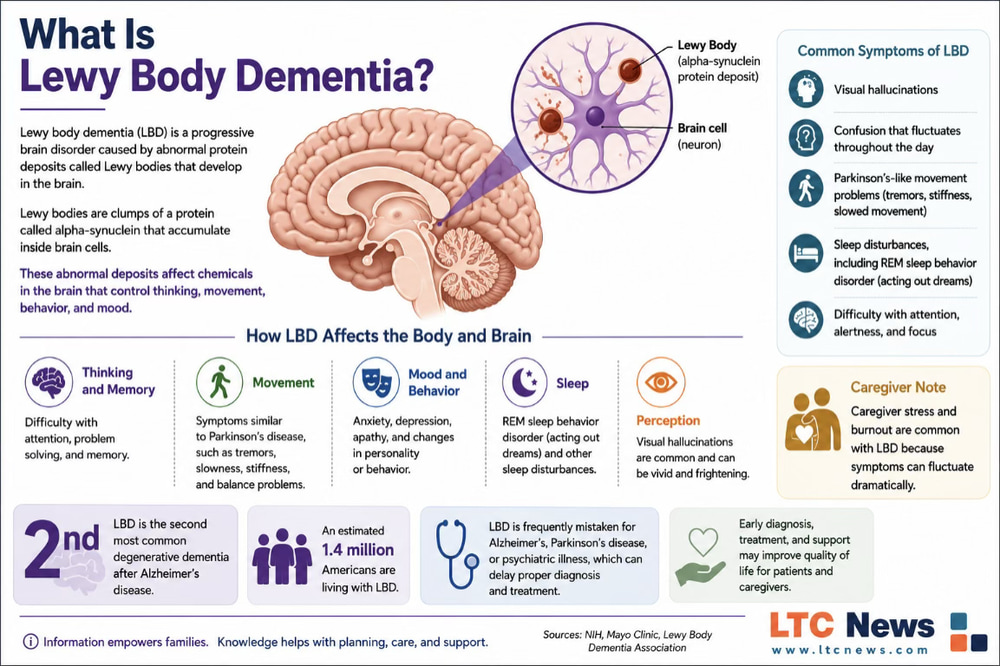
Lewy body dementia can be challenging to diagnose because its symptoms overlap with both Alzheimer’s disease and Parkinson’s disease, according to the Mayo Clinic.
“Getting the correct diagnosis is critical for patients and families,” said Melissa Armstrong, M.D., M.Sc., director of the Mangurian Clinical-Research Center for Lewy Body and Parkinson’s Disease Dementia at the Fixel Center for Neurological Diseases at UF Health, writing in an article published in The Conversation.
While no one wants to hear they have a disease that can’t be cured, many feel relief in finally understanding what’s happening.”
Armstrong notes that Lewy body dementia is frequently misdiagnosed, often because of limited awareness among physicians, patients, and families. Research shows that many individuals initially receive the wrong diagnosis, with about 26 percent first told they have Alzheimer’s disease and another 24 percent diagnosed with psychiatric conditions such as depression before the correct cause is identified.
The National Institute on Aging notes that many patients initially receive incorrect diagnoses, delaying proper treatment and caregiver support. Fluctuating symptoms and changing cognition can be especially distressing for caregivers and loved ones.
Some individuals with LBD also react severely to certain antipsychotic medications, making specialized medical supervision critical.
Ted Turner’s Public Battle with Dementia
Turner first publicly disclosed his diagnosis in 2018 during an interview with journalist Ted Koppel. At the time, Turner described persistent fatigue and acknowledged that the disease was gradually changing his daily life.
In recent years, the New York Post reported that his health had declined, including complications involving pneumonia and mobility issues.
Friends and colleagues remembered Turner as a larger-than-life figure who transformed global journalism. Yet his final years also reflected the reality many Americans know firsthand: dementia progressively affects independence, communication, mobility, and safety.
Other Public Figures Connected to Lewy Body Dementia
Turner is not alone among public figures whose lives were affected by LBD. Others connected to the disease include:
- Robin Williams
- Tom Seaver
- Estelle Getty
- Casey Kasem
- Mark Volman
Public awareness of the disease increased substantially after Williams’ death in 2014. An autopsy later revealed extensive Lewy body dementia pathology in his brain, helping explain the severe neurological and psychiatric symptoms he experienced.
Williams’ widow, Susan Williams, later described the disease as “a terrorist” inside his brain during interviews discussing the emotional devastation caregivers often experience.
Why Lewy Body Dementia Is Especially Difficult for Caregivers
Caregivers often describe Lewy body dementia as one of the most emotionally exhausting forms of dementia because symptoms can change dramatically from hour to hour or day to day.
A loved one may appear alert during breakfast and severely confused by evening. Hallucinations can become frightening. Sleep disorders may leave spouses awake throughout the night. Falls and wandering risks often increase as the disease progresses.
Safety concerns frequently intensify over time. Some individuals with Lewy body dementia may wander, become disoriented, or experience hallucinations that increase the risk of falls, injuries, or unsafe behavior at home.
Caregivers also experience emotional strain due to personality changes and unpredictable behavior. Adult children often find themselves coordinating doctor appointments, medications, finances, transportation, and daily supervision while balancing careers and their own families.
According to the Cleveland Clinic, REM sleep behavior disorder is particularly common in LBD, causing some individuals to physically act out dreams while asleep. That can create serious safety concerns for both patients and spouses.
Many households eventually require outside help, including:
- In-home care providers
- Adult day care
- Respite care
- Memory care communities
- Skilled nursing facilities
The emotional burden can become overwhelming. LTC News has reported that 63 million Americans now provide unpaid care for aging or disabled loved ones, reflecting a sharp increase in caregiving responsibilities nationwide.
Hidden Financial and Long-Term Care Costs of Dementia
Dementia is not simply a health issue. It often becomes a long-term care crisis. As symptoms worsen, many people eventually need assistance with activities of daily living, including:
- Bathing
- Dressing
- Medication management
- Meal preparation
- Transportation
- Mobility assistance
- Supervision for safety
- Cognitive support
Some individuals remain at home with caregivers for years. Others transition into assisted living, memory care, or nursing homes as needs intensify.
The costs can be enormous. The cost of long-term care services will depend on where you live and the type of services you require, according to a recent survey of long-term care costs in the United States by LTC News.
Medicare generally pays only for limited short-term skilled care or rehabilitation following a qualifying hospitalization. Medicare does not cover ongoing custodial long-term care, dementia supervision, or most extended memory care services.
As a result, many households must rely on personal savings, Medicaid after spending down assets, unpaid caregiving, or Long-Term Care Insurance benefits.
The LTC News research shows that memory care and in-home dementia care costs continue rising nationwide due to caregiver shortages, inflation, and increased demand for specialized support.
Finding quality long-term care can also be challenging for families. Families can use the LTC News Caregiver Directory to locate memory care communities, in-home care providers, adult day care programs, and dementia-trained caregivers in their local area.
Why Early Planning Matters
High-profile dementia cases also highlight the importance of planning before a crisis develops.
Experts often recommend discussing:
- Advance directives
- Powers of attorney
- Estate planning
- Long-Term Care Insurance
- Home safety modifications
- Future caregiving preferences
- Financial planning for extended care
Long-Term Care Insurance policies can help cover the cost of in-home care, assisted living, memory care, or nursing home services, depending on the policy. Benefits are generally tax-free and can help households avoid rapidly draining retirement savings while reducing the caregiving burden placed on spouses and adult children.
Learn More: LTC News Long-Term Care Insurance Learning Center
Planning early matters because dementia diagnoses often make obtaining new coverage difficult or impossible. Most people will purchase Long-Term Care Insurance between the ages of 47 and 67.
Researchers Continue Searching for Answers
There is currently no cure for Lewy body dementia. Researchers continue studying why abnormal protein deposits develop in the brain and how treatments might slow progression or improve symptoms.
Doctors often focus on symptom management, safety strategies, physical activity, structured routines, sleep support, and caregiver education.
Earlier diagnosis may help people better prepare emotionally, legally, and financially for the progression of the disease.
Ted Turner’s Death Reminds Americans to Prepare Early
Turner’s death reminds Americans that dementia does not discriminate based on wealth, fame, or accomplishment. Even one of the world’s most influential media executives ultimately faced the same challenges confronting millions of aging Americans: declining independence, escalating care needs, caregiver stress, and difficult financial decisions tied to long-term care.
If you notice memory changes, hallucinations, movement problems, personality shifts, or unusual confusion in a loved one, experts say early medical evaluation is critical.
Experts also say the best time to plan for long-term care is before cognitive decline begins. Understanding dementia risks, reviewing legal and financial plans, and exploring care options early may help protect independence, financial security, and family stability later.
Frequently Asked Questions
What is the average cost of memory care?
Memory care costs vary depending on location and level of supervision required. According to LTC News research referenced in the article, memory care and in-home dementia care costs continue rising nationwide due to inflation, caregiver shortages, and increased demand.
Did Ted Turner have Lewy body dementia?
Yes. Ted Turner publicly disclosed his Lewy body dementia diagnosis in 2018 during an interview with journalist Ted Koppel. Turner later experienced declining health, mobility problems, and complications associated with the disease.
Is Lewy body dementia hereditary?
Most cases of Lewy body dementia are not directly inherited, although genetics may increase risk in some families. Researchers continue studying how genetics, aging, and environmental factors contribute to the disease.
How is Lewy body dementia different from Alzheimer’s disease?
Alzheimer’s disease usually begins with memory loss, while Lewy body dementia often starts with hallucinations, movement problems, sleep disorders, or fluctuating alertness. LBD also shares characteristics with Parkinson’s disease, making diagnosis more complicated.
Why is caregiving for Lewy body dementia especially difficult?
Caregivers often face:
- Hallucinations
- Wandering risks
- Sleep disruption
- Falls
- Personality changes
- Rapid changes in cognition and alertness
Symptoms may fluctuate dramatically throughout the day, creating emotional and physical strain for spouses and adult children.
When should you plan for long-term care?
Experts recommend planning before cognitive decline develops. Early planning may allow people to:
- Explore Long-Term Care Insurance options
- Create legal documents
- Discuss caregiving preferences
- Protect retirement savings
- Reduce future family stress
Planning becomes much more difficult after a dementia diagnosis.
What is Lewy body dementia?
Lewy body dementia (LBD) is a progressive brain disease caused by abnormal protein deposits called Lewy bodies that develop inside brain cells. The condition affects memory, thinking, movement, mood, sleep, and behavior. Common symptoms include hallucinations, confusion, tremors, sleep disturbances, and Parkinson’s-like movement problems.
How do families pay for memory care and dementia care?
Families often rely on:
- Personal savings
- Medicaid (after qualifying financially)
- Unpaid family caregiving
- Long-Term Care Insurance
- Retirement income and investments
Long-Term Care Insurance policies may help cover in-home care, assisted living, memory care, and nursing home services depending on the policy.
What celebrities have had Lewy body dementia?
Public figures connected to Lewy body dementia include:
- Robin Williams
- Tom Seaver
- Estelle Getty
- Mark Volman
- Ted Turner
Public awareness of the disease increased significantly after findings about Robin Williams’ condition were revealed following his death.
Can Lewy body dementia be cured?
There is currently no cure for Lewy body dementia. Doctors typically focus on managing symptoms, improving safety, supporting caregivers, and maintaining quality of life for as long as possible.
Why is Lewy body dementia often misdiagnosed?
LBD symptoms overlap with Alzheimer’s disease, Parkinson’s disease, and some psychiatric conditions. Research cited in the article notes that many people are initially diagnosed incorrectly before receiving an accurate diagnosis.
What are the early signs of Lewy body dementia?
What are the early signs of Lewy body dementia?
Early symptoms often include:
- Visual hallucinations
- Tremors or stiffness
- Confusion that changes throughout the day
- Sleep disturbances
- Anxiety or depression
- Difficulty concentrating
- Balance problems and falls
Unlike Alzheimer’s disease, movement and behavioral symptoms may appear early in Lewy body dementia.
What type of long-term care do people with Lewy body dementia eventually need?
As the disease progresses, many people eventually require:
- In-home care
- Adult day care
- Respite care
- Assisted living
- Memory care communities
- Skilled nursing care
Needs typically increase as cognition, mobility, and safety decline.
Does Medicare pay for dementia care?
Medicare generally pays only for limited short-term skilled care or rehabilitation after a qualifying hospitalization. Medicare does not cover ongoing custodial long-term care, dementia supervision, or most memory care services.


Sponsored