Protein After 50: Can Whey Protein Help Preserve Muscle, Strength and Independence?
About This Article
Maintaining muscle as you age helps you stay active, steady, and independent. Protein plays a role, but emerging research shows that how you use your muscles may matter just as much as what’s in your shake.

Marcus Howard
Marcus Howard writes about alternative health topics for older adults such as CBD, acupuncture, and herbal medicine.
Table of Contents
- Why Muscle Becomes More Important as You Age
- Protein Helps Maintain and Repair Muscle
- What Is Whey Protein?
- What Does the Latest Research Say About Whey Protein and Aging?
- Don't Forget the Exercise Part
- Do You Need Whey Protein?
- Is Grass-Fed Whey Protein Better?
- What About "Cold-Processed" Whey?
- How to Choose a Protein Powder
- Muscle Is Part of Your Independence Strategy
- Healthy Aging Is About More Than Protein
You probably don't think much about the muscles you use to get out of a chair, climb stairs, or carry groceries. You just do it until maybe you can't. As you get older, however, maintaining that strength becomes increasingly important. Losing too much muscle and strength can make everyday activities more difficult and eventually affect your ability to live independently.
That's why protein deserves attention as you age. You need protein to maintain and repair muscle, and some older adults may struggle to get enough from their normal diet. Dr. Marily Oppezzo, nutrition scientist at Stanford Lifestyle Medicine, says that maintaining muscle after 50 requires more than hitting daily protein goals.
It’s important to learn about protein and make sure we are eating enough because it’s a major building block of our bodies. We need to eat enough protein every single day to get the essential nutrients necessary for optimal health and functioning.” — Marily Oppezzo, Ph.D., MS, RDN.
Whey protein offers a convenient source. But you don't necessarily need a protein shake, and paying extra for labels such as "grass-fed" may not provide the advantages that some marketing claims suggest. Research increasingly points to a broader strategy: adequate nutrition combined with regular strength-building activity.
Why Muscle Becomes More Important as You Age
Some loss of muscle mass and strength can occur with aging. Physical inactivity, poor nutrition, chronic illness, hospitalization, and extended periods of bed rest can accelerate that loss. At its most serious level, age-related muscle loss can contribute to sarcopenia, a condition involving losses in muscle strength, mass, and physical performance.
The consequences can extend well beyond whether you can lift something heavy. Muscle strength can affect your ability to:
- Rise from a chair or toilet.
- Walk safely.
- Climb stairs.
- Carry groceries.
- Maintain balance.
- Recover from illness or hospitalization.
- Perform household tasks.
- Remain independent.
Falls illustrate why maintaining physical function matters. The Centers for Disease Control and Prevention reports that more than one in four adults age 65 and older falls each year. The CDC also reports about 4.5 million emergency department visits due to falls among older adults each year, including 3.1 million treated-and-released visits and 1.4 million hospitalizations.
Muscle weakness isn't the only reason people fall. Vision problems, medications, balance disorders, neurological conditions, blood pressure changes, and home hazards can also contribute. Still, maintaining strength and balance is one practical way to support mobility as you age.
Dr. Howard LeWine, MD, is the Chief Medical Editor at Harvard Health Publishing. He emphasizes that fall risk is multifactorial, not just about muscle weakness. He says medications, vision problems, balance disorders, and neurological conditions contribute.
Medications can be lifesaving. But they can also increase your risk of falling. They can cause blurred vision, dizziness, drowsiness, impaired alertness or judgment, poor balance, and weakened muscles.” — Howard E. LeWine, MD, Harvard Health Publishing.
Protein Helps Maintain and Repair Muscle
Protein supplies amino acids that your body uses to build and repair tissues. The National Institute on Aging recommends that older adults consume a variety of nutrient-dense foods. It specifically advises adding foods such as seafood, dairy, or fortified soy products, along with beans, peas, and lentils, to help get enough protein throughout the day and maintain muscle.
The longstanding Recommended Dietary Allowance for adults is 0.8 grams of protein per kilogram of body weight per day. However, researchers continue to examine whether older adults may benefit from more. A 2025 review, Protein and Aging: Practicalities and Practice, published in Nutrients, reported that research supports about 1.0 to 1.2 grams per kilogram per day for healthy older adults. That means most older adults need roughly 1 gram of protein per kilogram of body weight each day—about 70 to 85 grams daily for someone who weighs 150 to 180 pounds.
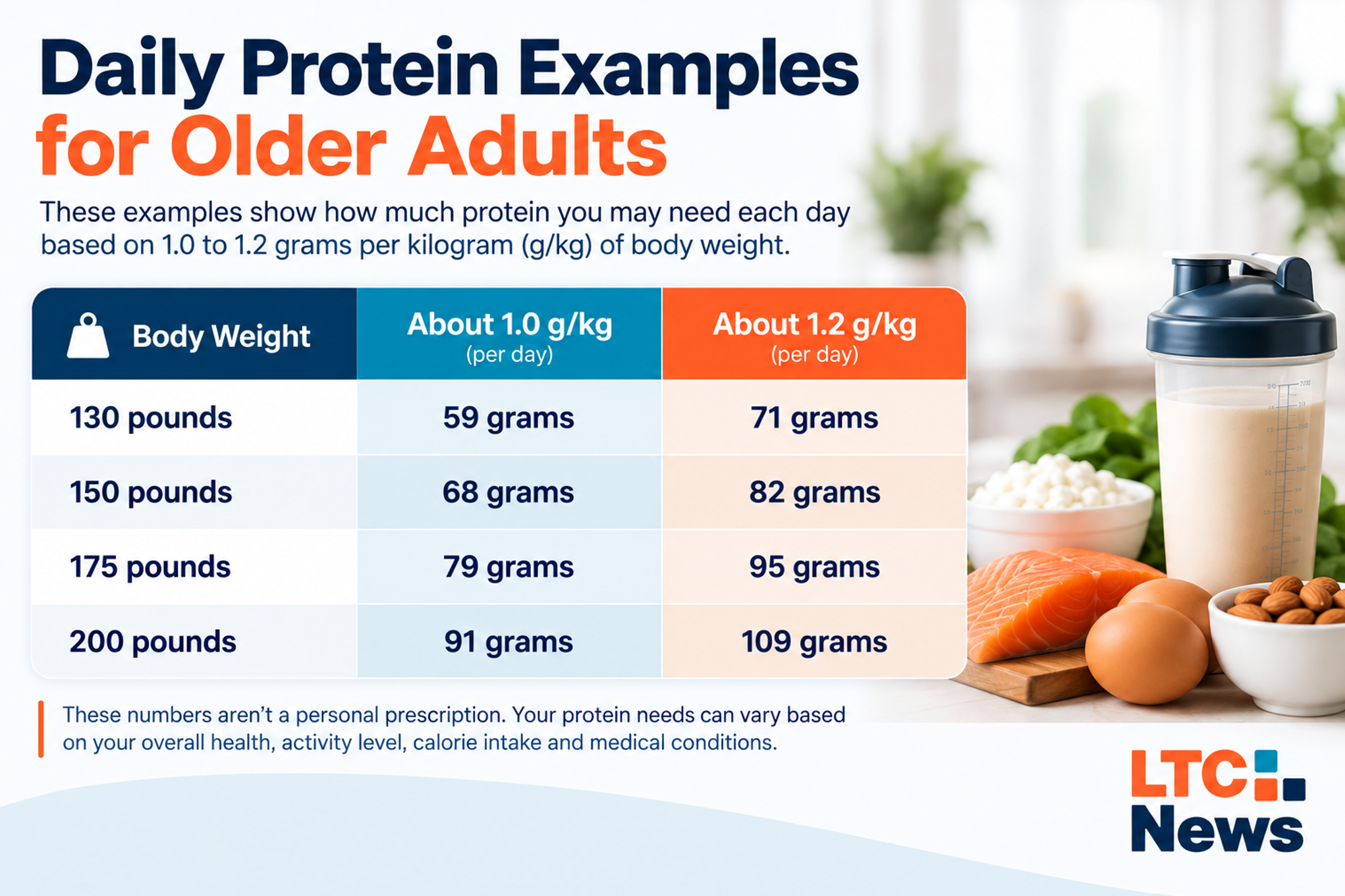
The numbers in the image above aren't a personal prescription. Your protein needs can vary based on your overall health, activity, calorie intake, and medical conditions. Kidney disease is an important example.
The American Diabetes Association's Standards of Care in Diabetes—2026 recommends 0.8 grams per kilogram of body weight per day for people with stage G3 or higher chronic kidney disease who aren't receiving dialysis. Protein recommendations differ for people receiving dialysis.
If you have kidney disease or another condition that requires dietary management, talk with your physician or registered dietitian before substantially increasing your protein intake.
What Is Whey Protein?
Whey is one of the principal proteins found in cow's milk. During cheesemaking, milk separates into solids and liquid. Whey comes from the liquid portion and can be processed into concentrated forms of protein.
You'll commonly see three forms:
- Whey protein concentrate contains protein along with varying amounts of lactose, fat, and other milk components.
- Whey protein isolate undergoes additional processing to remove more fat and lactose and generally contains a higher percentage of protein.
- Whey protein hydrolysate has undergone additional processing that breaks some proteins into smaller components.
Whey protein is a complete protein, meaning it contains all of the essential amino acids your body needs. It is particularly high in branchedchain amino acids like leucine, which plays a key role in stimulating muscle protein synthesis.” — Mount Sinai Health Library.
Some people can benefit from organic grass-fed protein powder, which helps you get a high-quality, hormone-free supplement. Grass-fed whey in a whey protein supplement comes from a grass-fed cow's milk. It has higher nutritional value and a superior nutritional profile, including nutrients like Omega-3 fatty acids.
Whey is considered a complete protein because it contains all nine essential amino acids, including leucine, which stimulates muscle protein synthesis. But high-quality protein doesn't automatically mean you need to buy it as a supplement.
Whey protein is a highquality, complete protein that contains all of the essential amino acids. It’s particularly rich in leucine, the amino acid that acts as the main trigger for muscle protein synthesis.” — Stuart M. Phillips, PhD, Professor of Kinesiology, McMaster University.
What Does the Latest Research Say About Whey Protein and Aging?
Recent research supports the idea that protein and exercise can work together. However, the evidence doesn't establish protein supplements as a magic solution. An August 2026 systematic review and network meta-analysis published in Frontiers in Nutrition examined 18 randomized controlled trials involving 1,341 older adults with sarcopenia or at high risk for it.
Researchers found that adding protein or protein-related supplementation to resistance or functional exercise improved grip strength and appendicular skeletal muscle mass index. However, the authors rated the certainty of much of the evidence as very low and said the findings should be interpreted cautiously.
Another recent study offers additional insight. A systematic review and meta-analysis published Sept. 4, 2026, in Medicine examined seven randomized controlled trials involving 472 participants with sarcopenia.
Researchers studied strength training combined with whey protein or beta-hydroxy-beta-methylbutyrate (HMB), a metabolite of the amino acid leucine. The analysis found improvements in fat-free mass and selected measures of physical performance. Whey protein combined with strength training was associated with improved handgrip strength. However, the researchers cautioned that the small number of trials, relatively small sample sizes, and other limitations mean the findings should be considered promising rather than definitive.
A broader systematic review published in 2025 examined whey protein supplementation in older adults. Researchers analyzed 25 studies involving 1,454 participants aged 64 to 84. Overall, whey supplementation produced a modest improvement in lower-body muscle strength. Whey combined with resistance training increased lean body mass in subgroup analysis, while many other measures of body composition and cardiometabolic health did not significantly improve.
Taken together, these studies suggest a practical message: protein may help many people, but exercise remains an important part of preserving strength and physical function.
Don't Forget the Exercise Part
Buying protein powder while remaining sedentary misses an important part of maintaining muscle. Current federal recommendations call for adults age 65 and older to get at least 150 minutes of moderate-intensity aerobic activity each week, perform muscle-strengthening activities at least two days a week, and include activities that improve balance.
Strength-building activity doesn't necessarily require a gym. Depending on your health and abilities, it could include:
- Resistance bands.
- Hand weights.
- Weight machines.
- Body-weight exercises.
- Squats or modified squats.
- Repeatedly standing from a chair.
- Exercises recommended by a physical therapist.
If you have mobility limitations, heart disease, significant joint problems, or other medical conditions, ask your physician, physical therapist, or care team what type of activity is appropriate for you.
Do You Need Whey Protein?
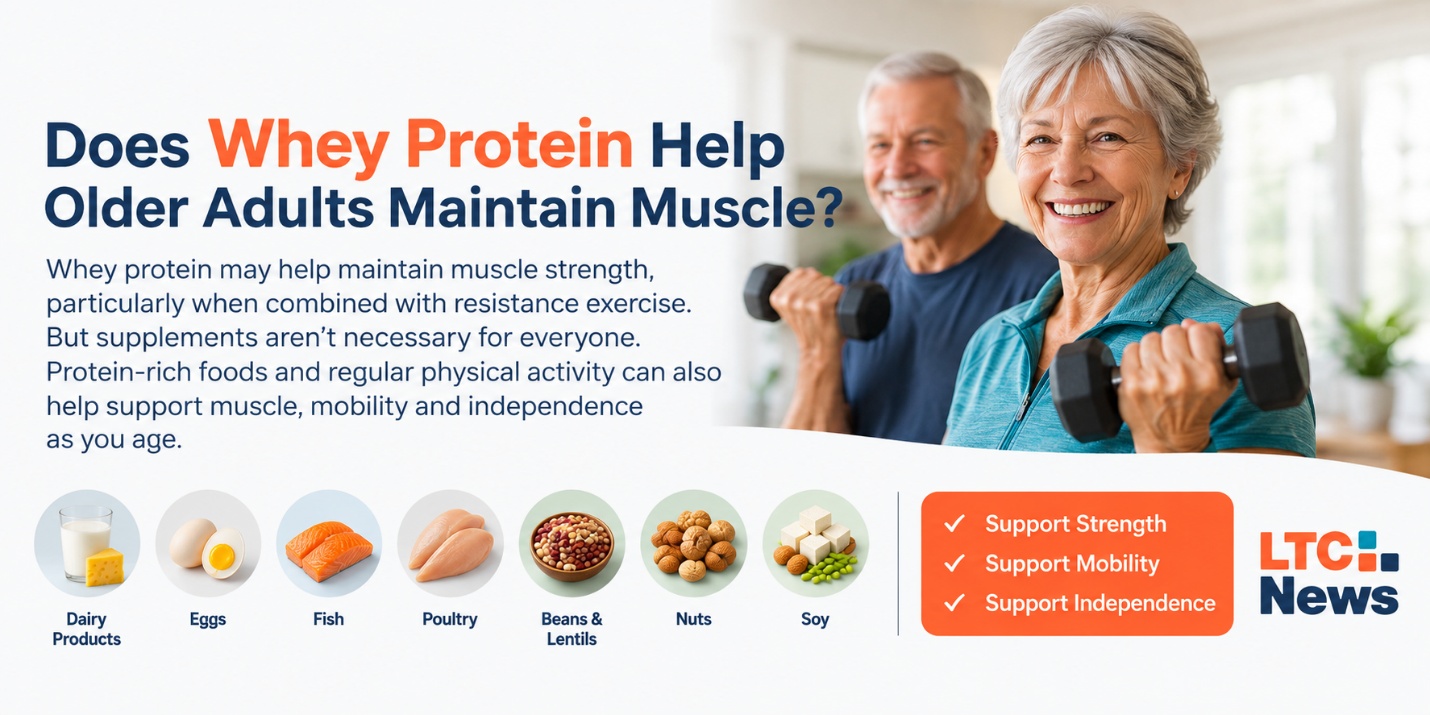
Probably not if you're already getting adequate protein from food. Whole foods can provide nutrients that aren't necessarily present in a scoop of protein powder. For example, fish can provide protein and omega-3 fatty acids. Yogurt provides protein and calcium. Beans and lentils provide protein and fiber. Nuts and seeds provide protein, healthy fats, and other nutrients.
Whey's major advantage is convenience. If your appetite has declined, preparing meals has become difficult or you're struggling to consume enough protein, adding protein powder to a smoothie, oatmeal or yogurt may be an easy way to increase your intake. Think of whey as a tool, not a requirement.
Is Grass-Fed Whey Protein Better?
Consumers should be cautious when evaluating the marketing claims surrounding grass-fed whey. Research has documented differences in the fatty-acid composition of milk from different feeding systems. That difference has helped fuel claims that grass-fed whey provides substantially more omega-3 fatty acids and conjugated linoleic acid, or CLA. However, there's an important distinction. Milk and whey protein powder aren't the same thing.
Whey protein, particularly whey isolate, can contain relatively little fat. Differences in the fatty-acid composition of the original milk therefore don't necessarily translate into a meaningful nutritional difference in the finished protein powder.
The studies reviewed for this article don't establish that choosing grass-fed whey protein instead of a nutritionally comparable conventional whey protein leads to greater gains in muscle mass or strength. You may still prefer grass-fed products because of farming practices, animal-welfare considerations, or personal preferences. Those are separate considerations from whether the protein itself builds more muscle.
What About "Cold-Processed" Whey?
"Cold processed" is another term frequently used to market protein supplements. Manufacturing methods can affect protein characteristics. Proteins can undergo structural changes when heated, a process known as denaturation.
However, denaturation doesn't automatically make a protein nutritionally useless. Your digestive system ultimately breaks dietary proteins down so their amino acids can be absorbed and used by your body. Rather than assuming "cold processed" means a product is automatically superior, look at its protein content, ingredients, nutritional profile, and overall quality.
How to Choose a Protein Powder
If you decide to use protein powder, don't choose it based solely on words like "grass-fed," "natural," or "premium."
Check the Nutrition Facts and ingredient labels. Consider:
- Protein per serving.
- Calories per serving.
- Added sugars.
- Saturated fat.
- Sodium.
- Ingredient list.
- Serving size.
- Allergens.
- Independent quality testing.
Whey comes from milk, so people with a milk allergy should avoid it unless their healthcare professional advises otherwise. People who are lactose intolerant may tolerate some whey isolates better than concentrates because isolates generally contain less lactose. Individual tolerance varies.
Muscle Is Part of Your Independence Strategy
Think about how many everyday activities depend on strength. You need muscle, and as you age, you need the strength to get up from the toilet, step safely into a shower, get out of bed, climb stairs, carry laundry, and walk through a grocery store. Losing enough strength and mobility can make those activities difficult and eventually create a need for long-term care services.
Learn More: What is long-term care?
That assistance may come from a spouse or other family caregiver, professional home care, adult day care, assisted living, memory care, or a nursing home, depending on your needs. The risk isn't remote. Research from the U.S. Department of Health and Human Services estimates that 56 percent of Americans turning age 65 will need long-term services and supports during their remaining lifetime.
Maintaining strength won't eliminate the possibility that you'll someday need long-term care. Cognitive decline, chronic disease, neurological disorders, injuries, and many other health problems can create a need for help. But preserving physical function can support independence for as long as possible.
Being proactive about your health is always essential; however, planning for the consequences of aging and future long-term care matters, too. Aging wins no matter what you do, since your healthspan usually doesn't match your lifespan. The cost of help is high, as Medicare only pays for short-term skilled care, not ongoing custodial long-term care. Medicaid can pay for long-term care for people who have limited financial resources.
Long-Term Care Insurance can provide benefits for qualified care at home, adult day care, assisted living, memory care or a nursing home, depending on the policy. Federally tax-qualified LTC policies under Section 7702(b) trigger benefits when someone needs help with at least two of the six activities of daily living or has a qualifying cognitive impairment, in addition to available consumer protections and tax benefits.
👉 Compare Long-Term Care Insurance Companies and Products
In most states, Partnership Long-Term Care Insurance can also provide dollar-for-dollar asset disregard if the policyholder eventually needs Medicaid if they exhaust their long-term care benefits.
Long-term care costs vary substantially depending on where you live and the type of care you need. The LTC News Cost of Long-Term Care Services Calculator shows current and future projected costs for home care, adult day care, assisted living, memory care, and nursing home care throughout the United States.
NOTE: If your family is already dealing with a loved one who needs extended care, you can use the LTC News Caregiver Directory to find care providers and other services in your area.LTC News also offers free assistance with Long-Term Care Insurance claims, helping families understand the claims process and get benefits started if they have an LTC policy.
Healthy Aging Is About More Than Protein
No protein powder can prevent every consequence of aging. Your genetics, medical conditions, medications, injuries, nutrition and activity level all influence how well you maintain mobility and independence. But there are things you can do. Eating adequate protein, staying physically active, strengthening your muscles, and addressing changes in balance or mobility early can support physical function.
If you suddenly have trouble getting out of a chair, climbing stairs, walking at your usual pace, or doing activities that once seemed easy, don't automatically dismiss it as getting older. Talk with your physician or another member of your care team.
A change in strength or mobility can sometimes point to a medical problem that deserves attention. Your physician may also recommend physical therapy, nutritional evaluation, or an appropriate exercise program. Maintaining muscle isn't about becoming a bodybuilder at 60, 70 or 80. It's about giving yourself a better chance to keep doing the everyday things you want to do on your own.
Frequently Asked Questions
How much protein do older adults need?
The adult Recommended Dietary Allowance is 0.8 grams per kilogram of body weight per day. A 2025 review of protein and aging reported that research supports about 1.0 to 1.2 grams per kilogram per day for healthy older adults. Individual needs vary, particularly for people with chronic health conditions.
Should people with kidney disease use protein powder?
Ask your physician or registered dietitian before significantly increasing protein if you have chronic kidney disease. The American Diabetes Association's 2026 Standards of Care recommends 0.8 grams per kilogram per day for people with stage G3 or higher chronic kidney disease who aren't receiving dialysis. Protein recommendations differ for people receiving dialysis.
Can whey protein prevent sarcopenia?
No supplement can guarantee that you will avoid sarcopenia. Research suggests adequate protein combined with resistance or strength exercise can help support muscle mass and strength. Overall nutrition, physical activity, and management of chronic health conditions also matter.
Is whey protein good for people over 50?
Whey protein can provide a convenient source of complete protein for adults over 50, particularly when getting enough protein from meals is difficult. Recent research suggests whey supplementation may provide modest benefits for muscle strength and can complement resistance exercise. It isn't necessary for everyone.
Is grass-fed whey healthier than regular whey protein?
Grass-fed milk can have a different fatty-acid profile, but that doesn't necessarily translate into meaningful differences in a finished whey protein powder. The research reviewed for this article doesn't establish that grass-fed whey produces greater muscle or strength benefits than a nutritionally comparable conventional whey protein.
What exercise is best for maintaining muscle as you age?
Muscle-strengthening or resistance activity is particularly important. Current federal guidance recommends that adults age 65 and older do muscle-strengthening activities at least two days each week, along with aerobic activity and balance exercises appropriate to their abilities.
Is whey protein better than getting protein from food?
Not necessarily. Fish, eggs, dairy, poultry, beans, lentils, nuts and soy can provide protein along with other nutrients. Whey protein's main advantage is convenience, especially for someone who struggles to get enough protein from meals.

Sponsored