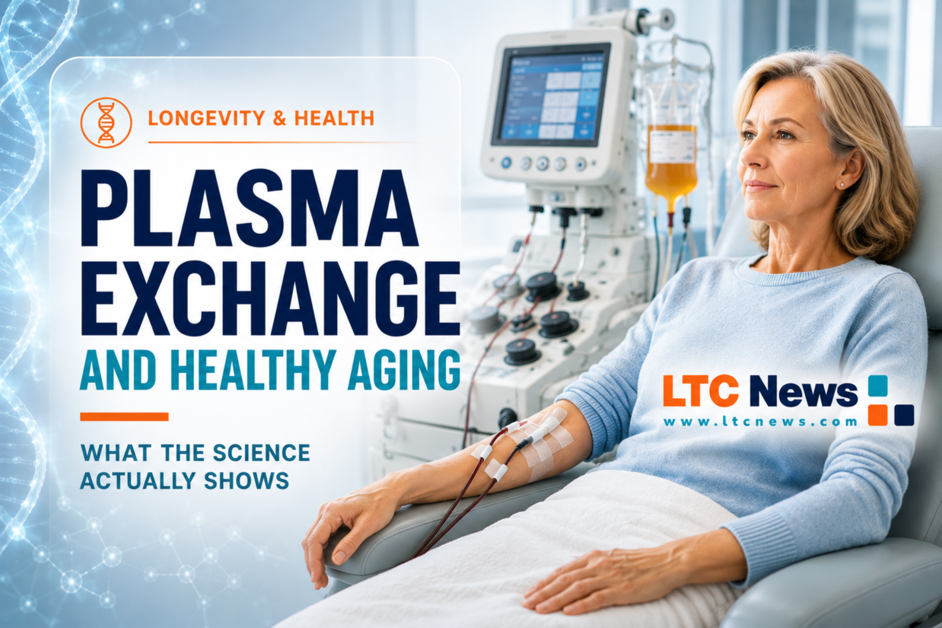
Plasma Exchange and Healthy Aging: What Science Actually Shows
About This Article
Therapeutic plasma exchange (TPE) is a longestablished treatment for certain autoimmune, neurological, and blood disorders. Early studies have fueled interest in plasmabased “blood rejuvenation” or “plasma reset” ideas but much there is much debate on plasmapheresis treatment.

Marcus Howard
Marcus Howard writes about alternative health topics for older adults such as CBD, acupuncture, and herbal medicine.
Table of Contents
- Plasma Exchange Is Established Medicine for Serious Illness
- Plasmapheresis and Plasma Exchange Aren't Quite the Same Thing
- Plasma Exchange Isn't Dialysis, and It Isn't a One-Time Detox
- What Longevity Research Actually Shows
- Don't Confuse Plasma Exchange With "Young Blood"
- What Plasma Exchange Feels Like, and Its Real Risks
- What This Means for Your Long-Term Care Planning
- Longevity Research Continues
The following discusses a medical procedure and emerging research. It is not medical advice. Talk with your doctor before considering any apheresis-based treatment.
If you've come across ads for "blood rejuvenation" or "plasma resets" at a longevity clinic, you're seeing one of the more confusing trends in healthy-aging marketing today. The underlying procedure, therapeutic plasma exchange, is real medicine and can be exciting to think about. Its use as an anti-aging treatment is something else entirely, and the gap between the two is exactly where the confusion lives.
Plasmapheresis, also called therapeutic plasma exchange (TPE), is a medical procedure that removes the liquid portion of your blood (plasma), filters out harmful substances, and then returns your blood cells along with replacement fluid. It’s an extracorporeal therapy, meaning the blood is processed outside the body.
As interest in longevity medicine has grown, so has the amount of oversimplified and sometimes flatly inaccurate information circulating about plasmapheresis treatment. Some of it undersells a genuinely well-established medical procedure by lumping it in with unrelated "detox" trends; some of it oversells the newer wellness applications as more proven than the current research actually supports
You deserve a clear answer to a simple question: does removing and replacing your blood plasma actually slow aging? Here's what the research says, and what it doesn't.
Plasma Exchange Is Established Medicine for Serious Illness
Therapeutic plasma exchange, often shortened to TPE, has been used for decades to treat certain autoimmune, neurological, and blood disorders. It is not a wellness "detox." The American Society for Apheresis (ASFA), a leading professional organization in the field, publishes evidence-based clinical guidelines covering 166 graded indications for therapeutic apheresis, each rated by the strength of the supporting evidence.
One clear example is Guillain-Barré syndrome, a rare disorder in which your immune system attacks your peripheral nerves. According to the National Institute of Neurological Disorders and Stroke (NINDS), plasma exchange and intravenous immunoglobulin (IVIG) are the two treatments most commonly used to interrupt that immune attack, and they generally work equally well when started within two weeks of symptom onset.
That track record is why TPE has real credibility in medicine. Using the same procedure to try to slow biological aging in an otherwise healthy person is a very different question, and one the research hasn't settled yet.
Plasmapheresis and Plasma Exchange Aren't Quite the Same Thing
You'll often see "plasmapheresis" and "plasma exchange" used interchangeably, but there's a technical difference. Plasmapheresis broadly means separating plasma from the rest of your blood.
Therapeutic plasma exchange goes a step further: a meaningful amount of your plasma is removed and replaced with a substitute fluid, often albumin, while your blood cells are returned to your body.
Plasma is the liquid part of your blood. It carries proteins, antibodies, clotting factors, hormones, and other substances your body depends on. In certain diseases, some of those circulating substances are part of the problem, so removing them can bring relief relatively quickly. That mechanism is why TPE has a legitimate place in treating conditions like Guillain-Barré syndrome, neuromyelitis optica spectrum disorder and several blood disorders.
Plasma Exchange Isn't Dialysis, and It Isn't a One-Time Detox
The two procedures can look alike on the surface: blood leaves your body through tubing, moves through a machine and returns to you. But dialysis removes waste products and excess fluid when your kidneys can't do that job. Plasma exchange instead separates plasma from your blood cells and removes it, replacing it with a substitute fluid.
It's also not a one-time "reset." Your body continuously replenishes plasma, so removing and replacing it doesn't permanently shut off whatever process was producing the antibodies or proteins involved. That's why patients treated for an established medical condition typically need a series of treatments rather than a single session. If a longevity clinic markets TPE to you as a permanent bloodstream cleanse, that claim should raise your guard.

What Longevity Research Actually Shows
The science gets genuinely interesting here, and this is exactly where marketing tends to outrun the evidence. In 2022, researchers from UC Berkeley and Global Apheresis published a study in the journal GeroScience examining what happened to circulating proteins after rounds of TPE. The study reported a shift toward a younger systemic protein profile, based on a new measure the researchers defined using ten protein biomarkers.
A more rigorous follow-up came in May 2025. Researchers from the Buck Institute for Research on Aging and Circulate Health published a randomized, placebo-controlled trial in the journal Aging Cell, involving 42 adults over age 50. Participants received biweekly TPE with or without IVIG, monthly TPE, or a sham placebo procedure.
Across 36 epigenetic clocks (biomarker tests that estimate biological age from patterns in your DNA), 15 showed statistically significant improvement compared with placebo. The biweekly TPE-plus-IVIG group showed the largest average change, including reductions of up to 2.6 years on certain estimates of biological age.
That does not mean participants literally became 2.6 years younger. These clocks are experimental biomarkers, not measurements of additional lifespan or years of disease-free living. The trial also reported a favorable safety profile, with only two of the 42 participants discontinuing treatment.
Importantly, some of the strongest findings occurred when TPE was combined with IVIG, making it difficult to attribute every observed effect to plasma exchange alone.
That's a genuinely notable result for such a small trial. But here's the distinction that matters most for you: epigenetic clocks are surrogate biomarkers. They estimate aspects of biological aging, but changing a biomarker is not the same as proving a health outcome. No study has shown that TPE helps healthy people:
- live longer;
- avoid Alzheimer's or other forms of dementia;
- prevent heart disease or cancer;
- maintain mobility longer;
- delay frailty or disability; or
- avoid needing long-term care.
Those are the outcomes that actually matter to you and your family. Confirming that a biomarker shifted in a promising direction is worthwhile science. It is not the same as confirming that the treatment extends your healthy years. That distinction is important when interpreting the results.
Don't Confuse Plasma Exchange With "Young Blood"
Another distinction is worth understanding clearly: therapeutic plasma exchange research is not the same as commercial infusions of plasma collected specifically from young donors.
The Food and Drug Administration (FDA) has repeatedly warned consumers about businesses selling "young plasma" infusions for aging, memory loss, and other conditions. In a December 2024 update, the FDA reiterated that it has not approved young-donor plasma for these uses and said it is not aware of evidence demonstrating a clinical benefit for preventing aging or memory loss. That warning is specifically about infusing plasma from young donors, not the TPE-plus-replacement-fluid research described above, but the two are often confused in marketing, and you should know the difference before evaluating either.
What Plasma Exchange Feels Like, and Its Real Risks
Your experience with TPE depends heavily on your health, the reason for treatment, and the specific protocol used. Some people tolerate it with few problems. Others report fatigue, tingling, dizziness, or changes in blood pressure during or afterward.
TPE is not risk-free, even with decades of use behind it. Documented complications can include:
- low calcium related to the anticoagulant used during the procedure;
- tingling or muscle symptoms;
- low blood pressure;
- allergic reactions;
- electrolyte disturbances;
- bleeding or clotting abnormalities; and
- complications related to the IV access site.
For someone receiving TPE for an established medical indication, physicians have evidence to weigh the expected benefit against those risks. For a healthy adult considering TPE purely for longevity purposes, that calculation is different: the potential benefit remains unproven, while the procedure still carries the same medical risks. Your individual risk also depends on your health history, current medications, vascular access, and how often you'd undergo the procedure.
There Is No Standard Anti-Aging Protocol
If you're evaluating a longevity clinic's TPE offer, it's worth knowing that no broadly accepted medical standard exists for how often a healthy person should undergo plasma exchange for aging purposes, or whether they should at all. Research protocols have varied by study. A schedule used in a clinical trial is not automatically a proven preventive treatment for the general public, so be skeptical of any clinic presenting one specific regimen as though it were settled medicine.
Before considering treatment, ask the provider a direct question: what measurable health outcome is this expected to improve, and what's the evidence behind that claim? A responsible provider should be able to answer clearly, explain what remains unknown, and describe how they'll evaluate your response. Claims that a treatment will "reverse aging" or "clean your blood" deserve particular scrutiny.

What This Means for Your Long-Term Care Planning
For adults in their 40s, 50s and 60s, the real goal behind most longevity interest isn't simply adding years. It's healthspan: staying independent, cognitively sharp and physically capable for as long as possible. That goal connects directly to long-term care planning, because aging is the largest overall risk factor for the conditions that most often lead to needing help with everyday activities, including dementia, stroke, cardiovascular disease and frailty.
Experts say the difference between lifespan and healthspan is dependence, meaning the need for long-term care. Right now, there is no evidence that plasma exchange performed for longevity purposes reduces your future need for long-term care. That matters because the stakes are real: according to a 2022 HHS analysis, 56 percent of Americans turning 65 will need long-term care at some point, with women facing a 64 percent lifetime risk and men a 49 percent risk. On average, that care lasts about 3.1 years.
HHS estimated average lifetime long-term care expenditures of about $120,900 per person in that analysis, with 37 percent paid out of pocket. That figure is a modeled lifetime estimate, not a snapshot of what care costs today where you live. For current, location-specific numbers, use the LTC News Cost of Long-Term Care Services Calculator. Alzheimer's disease alone affects an estimated 7.4 million Americans age 65 and older today, a number the Alzheimer's Association projects to reach about 13.8 million by 2060.
None of that means experimental longevity treatments have no place in your health decisions. It means they shouldn't substitute for the strategies with far deeper evidence behind them: regular physical activity, managing cardiovascular risk factors, maintaining muscle strength, avoiding tobacco, staying socially engaged and planning financially for the real possibility of needing care. The LTC News Learning Center is a good place to start if you want to understand your options before a crisis forces the decision.
Medicare and most health insurance plans cover only limited skilled care under specific circumstances, and Medicaid requires you to meet financial and functional eligibility rules first. Preparing before a health crisis hits, rather than after, tends to give families far more choice about where and how care is delivered.
Longevity Research Continues
Plasma exchange occupies an unusual place in the longevity conversation. It's neither a fringe procedure nor a proven fountain of youth. TPE has decades of evidence-based use for certain serious diseases, and early human research has produced genuinely intriguing biomarker changes, including measurable shifts in biological age. But no study has shown that it helps healthy people live longer, avoid dementia, preserve independence, or reduce their odds of needing long-term care.
The honest answer today isn't that plasma exchange works for healthy aging, or that it doesn't. It's that researchers don't yet know whether these promising biomarker changes will translate into more years of genuinely healthy living. Larger trials, followed over longer periods, would be needed to find out.
Science is attempting to increase lifespan and healthspan while reducing dependency. However, aging will still win, and the science is not close to making much of a difference yet. However, being proactive with your health and retirement planning can help you and your family address the consequences of aging and the impact of future long-term care.
For this reason, many people are investigating adding Long-Term Insurance to their retirement plan. LTC News has a tremendous amount of tools and resources to help you learn more.
Learn More: LTC News Long-Term Care Insurance Learning Center
We’re living in an extraordinary moment, with science advancing faster than at any point in human history. But that excitement shouldn’t tempt us into believing a breakthrough is just around the corner that will erase the realities of aging. Hope is not a plan. Even in an age of rapid innovation, prudent, practical preparation—including longterm care planning—remains essential.
Frequently Asked Questions
Why does healthy aging matter for long-term care planning?
Healthspan — the years a person remains healthy, independent and functional — is closely connected with long-term care risk. HHS research estimates that 56 percent of Americans turning 65 will eventually need long-term care. While longevity research continues, maintaining health and preparing financially for the possibility of future care remain important parts of retirement planning.
Is there a standard plasma exchange protocol for healthy aging?
No. There is currently no broadly accepted medical standard establishing whether otherwise healthy people should undergo plasma exchange for anti-aging purposes or how frequently treatment should be performed. Research protocols have varied, and a schedule used in a clinical trial should not be interpreted as a proven preventive treatment.
Can plasma exchange reduce the chance of needing long-term care?
There is currently no evidence that TPE used for longevity purposes reduces a person's future need for long-term care. Research would need to demonstrate meaningful outcomes such as reduced disability, better cognitive or physical function, less frailty or greater independence — not simply changes in biological-age biomarkers.
Is plasma exchange the same as receiving "young blood" or young-donor plasma?
No. TPE research generally involves removing plasma and replacing it with an appropriate replacement fluid. It should not be confused with commercial infusions of plasma collected from young donors. The FDA has warned that young-donor plasma has not been approved to prevent aging or memory loss and that clinical benefits for those purposes have not been established.
Is plasma exchange a proven anti-aging treatment?
No. Early studies have found intriguing changes in proteins and epigenetic markers associated with biological aging, but researchers have not shown that TPE helps healthy people live longer, prevents age-related diseases, preserves independence or reduces the likelihood of needing long-term care.
What are the risks of therapeutic plasma exchange?
TPE has decades of medical use, but it is not risk-free. Potential complications include low calcium, tingling, changes in blood pressure, allergic reactions, electrolyte disturbances, bleeding or clotting abnormalities and problems related to IV or vascular access. Individual risks depend on a person's health, medications and treatment protocol.
Is plasma exchange the same as dialysis?
No. Dialysis removes waste products and excess fluid when the kidneys cannot adequately perform that function. Plasma exchange removes plasma and replaces it with another fluid while returning blood cells to the body. Although both procedures process blood outside the body, they serve very different medical purposes.
What is therapeutic plasma exchange?
Therapeutic plasma exchange (TPE) is a medical procedure that removes plasma, the liquid portion of blood, and replaces it with another fluid, often albumin, while returning blood cells to the body. TPE has long-established medical uses for certain autoimmune, neurological, and blood disorders.
Did a study really show people became 2.6 years younger after plasma exchange?
Not literally. A small 2025 randomized, placebo-controlled trial involving 42 adults found improvements in several epigenetic clocks, with changes of up to 2.6 years on certain biological-age estimates. These clocks are experimental biomarkers, not measurements showing that participants gained 2.6 years of life or became physically 2.6 years younger. Some of the strongest results also occurred when TPE was combined with intravenous immunoglobulin (IVIG), making it difficult to attribute all the effects to plasma exchange alone.

Sponsored