Online Gambling, Loneliness Fuel Rise in Senior Addiction

About This Article
Older adults may face increased gambling addiction risk because of retirement, loneliness, grief, cognitive decline, depression, and easy access to online betting. Seniors living on fixed incomes may also experience more severe financial consequences because they cannot often rebuild retirement savings after major gambling losses.

Linda Kople
Linda Kople is a freelance writer focused on caregiving, aging, health, wellness, long-term care, and retirement planning
Table of Contents
- Depression and Isolation Add to Senior Gambling Problems
- Gambling Has Become Easier Than Ever
- Sports Betting Advertising Is Everywhere
- Retirement Can Create Emotional Vulnerability
- Loneliness Is Becoming a Public Health Crisis
- Cognitive Decline and Medications Can Increase Risk
- Gambling Losses Can Destroy Retirement Security
- Gambling Addiction Often Goes Undetected
- Gambling Addiction Can Become Hidden Inside Long-Term Care Settings
- Shame and Stigma Keep Many Older Adults Silent
- Health Consequences Extend Beyond Finances
- Getting Help for Gambling Addiction in Older Adults
- Gambling Addiction is Treatable in Older Adults
- Warning Signs of Gambling Addiction Families Should Never Ignore
More older Americans are becoming vulnerable to gambling addiction as online betting expands nationwide. Experts warn that retirement, loneliness, cognitive decline, and financial stress are creating unique risks for seniors and their families.
Healthcare providers and aging specialists say the growing problem is no longer just about casinos. Smartphones, online casino apps, sports betting platforms, and digital gambling services are quietly reshaping addiction risks for older adults already facing isolation, grief, or declining health.
Dr. Edith Langford, a psychotherapist who has worked extensively with older adults and gambling addiction, warned that loneliness and online betting are creating dangerous conditions for seniors.
Seniors cannot recover financially when they lose. — Dr. Edith Langford, quoted in the Guardian.
Depression and Isolation Add to Senior Gambling Problems
You work hard your entire life, expecting retirement to bring peace, freedom, and time with family. But for a growing number of older Americans, maybe even your parents, retirement has become something far more fragile. The issues are numerous.
Loneliness. Financial stress. Isolation. Depression. Risk of Long-Term Care.
Now, experts warn that another issue is quietly emerging alongside those challenges: gambling addiction among older adults. What once required a trip to a casino can now happen instantly from a recliner, smartphone, or kitchen table. Online casinos, sports betting apps, digital slot games, and mobile gambling platforms have made betting easier, faster, and more accessible than ever before. For vulnerable seniors, that access can quickly become dangerous.
Behavioral health specialists say older adults face unique emotional, medical, and financial risks that can make gambling addiction especially devastating later in life. Yet the issue often remains hidden until retirement savings, relationships, or health have already deteriorated.
These specialists say these problems can make gambling addiction especially devastating later in life.
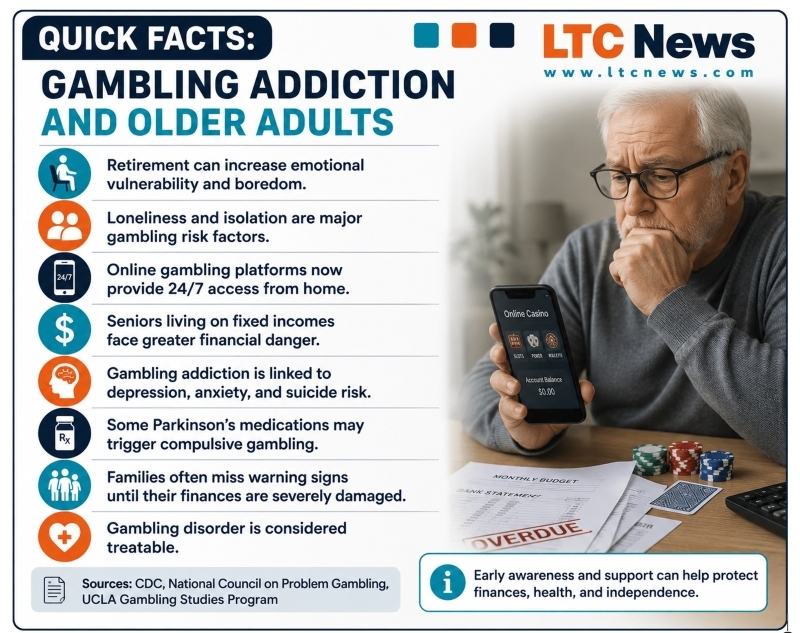
Gambling Has Become Easier Than Ever
America’s gambling landscape has changed dramatically over the past decade. Since the 2018 Supreme Court decision allowing states to legalize sports betting, online gambling has expanded rapidly nationwide.
Mobile betting apps now operate around the clock, aggressively marketing directly to consumers through television, streaming services, podcasts, and social media.
According to the American Gaming Association, commercial gaming revenue in the United States has reached record levels as online betting continues expanding nationwide. For older adults, the barriers that once limited gambling participation have largely disappeared.
A person no longer needs transportation to a casino. Gambling now exists inside the home. That shift matters because many older adults already spend more time alone due to retirement, mobility limitations, caregiving responsibilities, illness, or the loss of spouses and longtime friends.
Sports Betting Advertising Is Everywhere
Addiction specialists increasingly warn that nonstop sports betting advertising may normalize gambling behavior for vulnerable populations, including older adults.
Television and radio broadcasts, streaming platforms, celebrity endorsements, podcasts, and bonus promotions now place gambling marketing directly into daily life in ways that barely existed a decade ago.
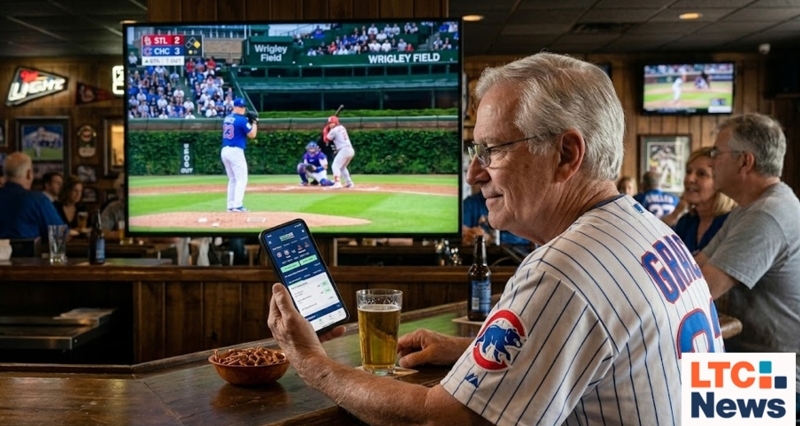
Experts say repeated exposure to gambling advertising may make betting appear less risky and more socially acceptable, particularly for older adults seeking entertainment or connection.
Retirement Can Create Emotional Vulnerability
Retirement is often portrayed as carefree and relaxing. In reality, the transition can be emotionally destabilizing for many people. The loss of professional identity, structured routine, daily interaction, and social purpose can create feelings of boredom, loneliness, anxiety, and depression.
Research published in Frontiers in Psychiatry found retirement-related changes can directly influence gambling behavior, particularly when financial stress and reduced income are involved.
The loss of a spouse, children moving to different cities, limited mobility, and the deaths of longtime friends can shrink a person's world considerably. Gambling venues, whether physical or digital, fill a social void.
Experts say gambling frequently begins as entertainment but can evolve into an emotional escape. An estimated 38 percent of older gamblers report gambling to distract themselves from problems, relieve boredom, or cope with loneliness, according to research referenced in the source material.
When older adults lose daily structure and social engagement, unhealthy coping behaviors can quietly emerge. Experts say that gambling can become a substitute for social connection, stimulation, and emotional relief. Some researchers also warn that older women may face unique gambling risks after widowhood, caregiving stress, retirement, or social isolation.
Loneliness Is Becoming a Public Health Crisis
Social isolation among older adults has become one of the nation’s most serious aging-related health concerns. The Centers for Disease Control and Prevention Healthy Aging Program warns that chronic loneliness and isolation are associated with increased risks for:
- Dementia
- Heart disease
- Depression
- Anxiety
- Premature death
Dr. Carla Perissinotto, professor of medicine in geriatrics at the University of California, San Francisco, has repeatedly warned that loneliness among older adults should be treated as a serious health issue because of its impact on both physical and mental well-being.
The profound effects of loneliness on health and independence are a critical public health problem. It is no longer medically or ethically acceptable to ignore older adults who feel lonely and marginalized. — Dr. Carla Perissinotto, quoted in an article in The New York Times.
Casinos and gambling platforms often market themselves as social environments. For isolated older adults, it can become emotionally appealing.
Vonzella Jenkins, executive director of Icarus Behavioral Health in Nevada, explained how gambling can fill emotional gaps for seniors.
The loss of a spouse, children moving to different cities, limited mobility, and the deaths of longtime friends can shrink a person's world considerably. Gambling venues, whether physical or digital, fill a social void.
Research cited by the New York Council on Problem Gambling estimates between 39 percent and 45 percent of casino visitors are over age 65.
Cognitive Decline and Medications Can Increase Risk
Aging itself may increase vulnerability to compulsive gambling behaviors.
Even mild cognitive decline can impair:
- Financial judgment
- Risk assessment
- Impulse control
- Decision-making ability
That can make it harder for older adults to recognize when gambling has shifted from entertainment into addiction.
Some medications may further complicate the issue. The U.S. Food and Drug Administration has warned that dopamine agonists commonly prescribed for Parkinson’s disease may increase compulsive behaviors, including gambling addiction, because of how the drugs affect the brain’s reward system.
Researchers and elder-care specialists have documented cases where compulsive gambling emerged in patients with no prior addiction history after beginning certain medications.
My view of addictions is that they often start as coping strategies — a way of managing something that then gets out of control. — Rebecca Harris, psychotherapist and manager of the National Center for Gaming Disorders, quoted in the Guardian.
Older adults are particularly vulnerable because cognitive impairment, depression, and medication side effects can overlap in ways families may not immediately recognize.
Gambling Losses Can Destroy Retirement Security
Financial losses affect people differently later in life. A younger adult may eventually recover through future employment and decades of additional earnings. Retirees living on Social Security, pensions, or retirement savings often do not have that opportunity.
A major gambling loss can permanently compromise:
- Housing stability
- Healthcare access
- Long-term care planning
- Retirement income
- Family inheritance goals
Experts say this creates a unique urgency for older adults struggling with gambling addiction. The problem is that the financial recovery windows are much smaller for retirees. A gambling problem that develops later in life can quickly threaten decades of retirement planning.
Research also suggests pension distributions, investment withdrawals, and Social Security deposits may create periods of elevated gambling risk for vulnerable individuals.
Elder law attorneys and financial planners also warn that gambling addiction can increase vulnerability to scams, financial exploitation, and elder abuse, particularly when cognitive decline is already present.
Gambling Addiction Often Goes Undetected
Problem gambling among seniors is frequently hidden for years. Unlike alcohol or substance abuse, gambling addiction may leave few immediate physical signs. Older adults may quietly gamble online without family members realizing the extent of the behavior.
Healthcare providers may miss it as well. Many physicians do not routinely screen older adults for gambling addiction during wellness visits, despite growing evidence that gambling-related harm among seniors is increasing.
Gambling Addiction Can Become Hidden Inside Long-Term Care Settings
Problem gambling among older adults can become even more difficult to recognize once someone enters assisted living, independent living, memory care, or other long-term care settings. As more older adults require help with daily living activities and move into care communities, the personal struggles they faced before admission often move with them. Gambling addiction, depression, loneliness, financial stress, and other behavioral health issues do not necessarily disappear simply because someone now lives in a supervised environment.
Unlike alcohol or drug misuse, gambling addiction often leaves few immediate physical signs. A resident may quietly gamble online from a smartphone, tablet, or computer without staff or family members realizing the extent of the problem. Digital gambling apps, online casino games, sports betting platforms, and sweepstakes-style games can all be accessed privately from a resident’s room.
Experts say the emotional conditions that contribute to gambling addiction may intensify in long-term care settings for some older adults. Loss of independence, grief, isolation, boredom, chronic illness, depression, and separation from family can create emotional vulnerability, particularly during the transition into a care facility.
Some long-term care residents may also experience cognitive decline that impairs judgment, financial decision-making, or impulse control. Families may mistakenly assume unusual spending patterns are simply confusion or memory-related problems rather than signs of compulsive gambling behavior.
The issue can also remain largely invisible to healthcare providers. Physicians and facility staff typically screen more aggressively for falls, dementia, medication misuse, depression, or alcohol abuse than for gambling addiction. As a result, gambling-related financial harm may continue for months or years without intervention.
In some cases, older adults may:
- Spend large portions of retirement income on gambling apps or casino trips
- Repeatedly request money from family members
- Hide online transactions or credit card debt
- Become emotionally distressed after gambling losses
- Withdraw socially or show increased anxiety and depression
Facilities themselves may unintentionally overlook the problem because gambling can appear socially harmless. Bingo nights, card games, casino-themed activities, and organized casino outings are common recreational activities in some senior communities. While most residents participate responsibly, experts warn that these activities may become problematic for vulnerable individuals already struggling with compulsive behaviors or emotional distress.
Behavioral health specialists say long-term care providers should consider incorporating gambling-risk awareness into broader mental health and wellness assessments, particularly as online gambling becomes increasingly accessible to older adults living in communal care settings.
Families should also pay attention to sudden financial changes, unexplained requests for money, secretive device use, or emotional swings tied to gambling wins and losses, even after a loved one enters a supervised care environment.
Shame and Stigma Keep Many Older Adults Silent
Shame also plays a major role in why gambling addiction among seniors often remains hidden for years. Older generations frequently grew up in an era when addiction was viewed as a personal weakness, moral failing, or lack of self-control rather than a recognized medical or behavioral health condition. That stigma can make older adults reluctant to admit they are struggling, even to close family members, physicians, or mental health professionals.
Researchers say shame surrounding addiction often becomes internalized, creating fear, secrecy, denial, and social withdrawal that can delay treatment and worsen financial or emotional harm. Older adults may worry about embarrassment, judgment, loss of independence, or becoming a burden on their families.
The National Institutes of Health MedlinePlus Magazine notes that addiction was historically seen by many people “as a character flaw” rather than a treatable health condition. Experts say those outdated beliefs still affect many older Americans today.
Studies show that when we shame and blame a person with addiction, it discourages that person from accepting their disease and asking for help.
Behavioral health specialists warn that stigma may be even stronger for older adults because many seniors were raised in generations that valued privacy, self-reliance, and emotional restraint. As a result, gambling addiction may remain hidden until retirement savings, relationships, or health have already suffered serious damage.
Health Consequences Extend Beyond Finances
Problem gambling is strongly associated with worsening physical and mental health.
Older adults with gambling disorders experience higher rates of:
- Depression
- Anxiety
- Sleep disorders
- Heart disease
- Chronic stress
- Suicidal thoughts
- Social withdrawal
The relationship often becomes cyclical. Poor health or grief may drive gambling as an emotional escape. Gambling losses and stress then worsen anxiety, depression, and physical decline. That cycle can eventually threaten independence and increase future long-term care needs.
Getting Help for Gambling Addiction in Older Adults
Getting help for gambling addiction later in life can be complicated, particularly when mental health, financial decline, and long-term care needs begin overlapping.
Medicare may cover certain behavioral health counseling, psychiatric evaluations, outpatient therapy, and other medically necessary mental health services related to addiction treatment. However, Medicare does not pay for ongoing custodial long-term care services, including most assisted living, supervision related to cognitive decline, or extended in-home personal care assistance.
That distinction becomes critical when gambling addiction contributes to worsening depression, anxiety, memory loss, cognitive impairment, or declining physical health later in life.
For many families, the problem extends beyond gambling itself. Older adults struggling with addiction may also begin neglecting medications, missing medical appointments, isolating socially, or losing the ability to safely manage finances and daily activities independently. In severe cases, gambling losses can accelerate the need for assisted living, memory care, or home healthcare services.
Experts say gambling addiction in older adults often requires a broader treatment approach than simply stopping gambling behavior alone.
Treatment may involve:
- Behavioral health counseling
- Cognitive behavioral therapy (CBT)
- Depression or anxiety treatment
- Medication management
- Financial counseling
- Family support programs
- Social engagement and structured activities
- Evaluation for cognitive decline or dementia
Because older adults frequently experience co-existing health conditions, specialists say coordination between physicians, mental health professionals, caregivers, and family members is especially important.
Gambling Addiction is Treatable in Older Adults
Another challenge is that many older adults do not realize that gambling addiction is considered a treatable behavioral health condition. Older adults living in assisted living or independent living communities may continue gambling online privately through smartphones, tablets, or computers, even while receiving help with daily activities.
Financial oversight may be necessary in some situations, particularly when cognitive decline or impulsive behavior begins to affect judgment. Adult children, caregivers, elder law attorneys, or trusted financial professionals may need to help monitor accounts, establish safeguards, or prevent financial exploitation.
The National Council on Problem Gambling and Gamblers Anonymous both offer support resources specifically designed to help individuals and families affected by gambling addiction.
For families already navigating caregiving responsibilities, recognizing gambling addiction early may help prevent financial devastation, emotional strain, and worsening long-term care needs later in retirement.
The LTC News Caregiver Directory can help families locate home healthcare providers, assisted living communities, memory care services, and caregiving resources nationwide. Be sure to ask them if they have experience in dealing with gambling addictions if you feel your loved one has had that issue in the past.
Warning Signs of Gambling Addiction Families Should Never Ignore
Families should pay attention to subtle behavioral and financial changes in older family members.
Potential warning signs may include:
- Unexplained financial stress
- Increasing credit card debt
- Secretive behavior around money
- Frequent casino visits
- Excessive use of gambling apps or websites
- Mood swings tied to gambling wins or losses
- Withdrawal from family activities
- Borrowing money unexpectedly
- Selling valuables
- Depression or irritability
Experts recommend approaching conversations carefully and compassionately. Accusations may increase shame and defensiveness. Questions rooted in concern are often more effective.
Examples include:
- “You seem stressed lately. How are you doing?”
- “I’ve noticed you’ve been gambling more. Is everything okay?”
- “Do you want to talk about anything that’s worrying you?”
If gambling became your loved one’s primary source of emotional escape or social connection, would you recognize the warning signs before retirement savings disappeared?
Frequently Asked Questions
What are warning signs of gambling addiction in seniors?
Warning signs may include:
- Unexplained financial problems
- Increasing credit card debt
- Secretive behavior around money
- Frequent casino visits
- Excessive use of gambling apps
- Mood swings tied to wins or losses
- Social withdrawal
- Depression or irritability
- Borrowing money unexpectedly
Families often miss these signs until serious financial damage has already occurred.
Can gambling addiction continue inside assisted living or long-term care facilities?
Yes. Gambling addiction can continue in assisted living, independent living, memory care, or other long-term care settings. Residents may quietly gamble online through smartphones or tablets without staff or family members realizing the extent of the problem.
Why are older adults more vulnerable to gambling addiction?
Older adults may become more vulnerable to gambling addiction because retirement, loneliness, grief, depression, financial stress, and cognitive decline can increase emotional vulnerability. Easy access to online gambling apps and sports betting platforms has also made gambling more accessible from home.
Can medications contribute to gambling addiction in older adults?
Yes. The U.S. Food and Drug Administration has warned that some dopamine agonists prescribed for Parkinson’s disease may increase compulsive behaviors, including gambling addiction, because of how they affect the brain’s reward system.
Does Medicare cover treatment for gambling addiction?
Medicare may cover certain behavioral health counseling, psychiatric evaluations, outpatient therapy, and medically necessary mental health services related to addiction treatment. However, Medicare does not pay for ongoing custodial long-term care services, including most assisted living or extended personal care assistance.
Why do many older adults hide gambling problems?
Shame and stigma often prevent older adults from discussing gambling addiction openly. Many seniors grew up viewing addiction as a personal weakness rather than a medical condition, making them less likely to seek help from family members or healthcare professionals.
Can loneliness and isolation increase gambling problems in seniors?
Yes. Experts say loneliness and social isolation are major risk factors for gambling addiction among older adults. Some seniors may use gambling as a way to cope with boredom, grief, stress, or emotional disconnection after retirement or the loss of loved ones.
Is online gambling making addiction worse for older adults?
Behavioral health specialists warn that online gambling platforms, sports betting apps, and digital casino games have dramatically increased access to gambling. Older adults no longer need transportation to casinos because gambling is now available 24/7 through smartphones, tablets, and computers.
How can gambling addiction affect long-term care planning?
Serious gambling losses can threaten retirement savings, housing stability, healthcare access, and future long-term care planning. In severe cases, gambling addiction may accelerate the need for assisted living, home healthcare, or memory care services.
What treatment options are available for older adults with gambling addiction?
Treatment may include:
- Cognitive behavioral therapy (CBT)
- Behavioral health counseling
- Depression and anxiety treatment
- Financial counseling
- Family support programs
- Peer support groups
- Evaluation for dementia or cognitive decline
- Social engagement programs
The National Council on Problem Gambling and Gamblers Anonymous offer support resources for individuals and families dealing with gambling addiction.

Sponsored