Nutrition After 75: Why Food Becomes Medicine for Healthy Aging and Senior Independence

About This Article
Nutrition becomes critical, especially for older adults after age 75. Learn how protein, vitamins, and healthy meals help prevent frailty, illness, and loss of independence in older adults.

Marcus Howard
Marcus Howard writes about alternative health topics for older adults such as CBD, acupuncture, and herbal medicine.
Table of Contents
- Why Nutrition Needs Change After Age 75
- Why Nutrition Planning Should Begin Before Age 70
- Why Malnutrition Is So Common Among Older Adults
- Protein: The Key to Maintaining Strength and Independence
- How Dining Programs Are Designed in Senior Living Communities
- Nutrition Challenges for People Living with Dementia
- Warning Signs Your Loved One May Not Be Eating Enough
Nutrition becomes increasingly important as you age, particularly after 75, when the body requires more nutrient-dense foods even as appetite often declines. Experts in senior living say proper nutrition can help prevent frailty, infections, and hospitalizations while preserving strength, mobility, and independence.
For many people, eating is one of life’s great pleasures. But as we get older, appetite often declines, and some older adults simply do not eat enough. You may first notice it in small ways. Your mother’s clothes start to hang a little looser. Your father says he’s “not very hungry lately.” The refrigerator looks emptier every time you visit.
These subtle changes often signal something bigger. For older adults, especially those age 75 and older, nutrition is one of the most important drivers of strength, independence, and overall health.
Nearly 1 in 2 older adults in the United States is at risk of malnutrition, according to the National Council on Aging. Poor nutrition can increase the risk of falls, infections, hospitalizations, and loss of independence. The Centers for Disease Control and Prevention also notes that poor nutrition among older adults is associated with higher rates of illness and hospitalization.
Lauren Dubuque, Executive Director of Masonicare at Mystic, told LTC News that nutrition often becomes the quiet driver of health outcomes in senior living communities.

“Nutrition is one of the most powerful and underappreciated tools in healthcare. When older adults do not receive adequate nutrition, muscle loss accelerates and the immune system weakens. In many ways, food becomes preventative medicine.” — Lauren Dubuque.
Why Nutrition Needs Change After Age 75
As you age, your body processes food differently. Appetite may decline while the need for certain nutrients increases. Research from the National Institute on Aging shows older adults often require fewer calories but more nutrient-dense foods to maintain health.
Dubuque explains that after age 75—and especially into the 80s—the focus shifts toward targeted nutrition that supports strength and immune health.
Key nutrients become especially important:
- Protein to preserve muscle mass
- Fiber to support digestion
- Vitamin D and calcium for bone health
- Vitamin B12 for nerve and brain function
- Adequate hydration to prevent fatigue and confusion
Older adults are also more vulnerable to dehydration because the body’s thirst signals weaken with age. Even mild dehydration can contribute to fatigue, confusion, and urinary tract infections, according to the National Institute on Aging.
At the same time, aging brings changes that can make eating harder:
- Reduced taste and smell
- Medication side effects
- Chronic illness
- Reduced physical activity
- Difficulty cooking or grocery shopping
These changes, combined with a more sedentary lifestyle, can lead to decreased appetite and poor nutrition over time.
Why Nutrition Planning Should Begin Before Age 70
Nutrition challenges in later life rarely appear overnight. In many cases, they develop gradually over decades. That is why experts say the best time to prioritize nutrition for seniors is before someone reaches their mid-70s. Establishing healthy habits in your 50s and 60s helps preserve muscle mass, bone density, and metabolic health.
Research from the National Institutes of Health shows adults begin losing 3% to 8% of muscle mass per decade after age 60, a process known as sarcopenia.
Muscle loss and nutritional decline can directly affect long-term care risk. When older adults lose strength and balance, the risk of falls, disability, and the need for daily assistance rises significantly.
“With aging, you start losing muscle mass and muscle strength, and that can limit everyday activities.” — Rosaly Correa-de-Araujo, MD, PhD, aging expert with the National Institutes of Health.
Muscle loss and nutritional decline can directly affect long-term care risk. As strength, mobility, and balance decline, older adults face a greater risk of falls, hospitalization, and the need for assistance with daily activities.
Prevention often begins decades before long-term care becomes a concern. Strong nutrition habits earlier in life can reduce the likelihood of frailty later.
Important nutrition habits before age 70 include:
- Maintaining adequate daily protein intake
- Eating a diet rich in fruits, vegetables, and whole grains
- Monitoring vitamin D and B12 levels
- Staying physically active to support muscle preservation
- Maintaining healthy hydration habits
By the time someone reaches their late 70s or 80s, these habits can significantly reduce the risk of frailty and loss of independence.
Why Malnutrition Is So Common Among Older Adults
For many people, nutrition problems begin long before they move into assisted living or a nursing home. Living alone often leads to smaller, less balanced meals. Cooking may feel overwhelming. Eating alone can reduce appetite.
Dubuque says unintentional weight loss is one of the most common problems among residents when they first enter senior living communities.
Dietitians frequently see several common deficiencies:
- Low protein intake
- Vitamin D deficiency
- Low vitamin B12 levels
- Iron deficiency
- Dehydration
Once older adults enter communities with structured dining programs, improvements often happen quickly.
“A structured dining program combined with a social dining setting often restores appetite and nutritional balance fairly quickly.” — Lauren Dubuque.
Protein: The Key to Maintaining Strength and Independence
One of the most important nutrition priorities for older adults is protein.
According to research from the Harvard T.H. Chan School of Public Health, aging muscles become less responsive to small amounts of protein. Older adults, therefore, need higher-quality protein distributed throughout the day.
“As people age, their bodies become less efficient at processing protein, which makes adequate intake crucial for preserving muscle and maintaining independence.” — Katie Dodd, RDN, geriatric dietitian and founder of The Geriatric Dietitian, quoted in the San Francisco Chronicle.
Without enough protein, muscle loss accelerates, leading to weakness and instability.
Adequate protein intake helps support:
- Strength
- Mobility
- Balance
- Independence
In senior living communities, menus are designed to include protein at every meal through foods such as:
- Fish
- Poultry
- Eggs
- Dairy products
- Legumes
- Lean meats
Maintaining muscle mass is essential for preventing falls and preserving independence.
How Dining Programs Are Designed in Senior Living Communities
Food service in senior living communities has evolved dramatically in recent years. Today, many communities emphasize hospitality-style dining rather than institutional food service.
Menus often rotate every four to six weeks to provide variety while maintaining consistency. Residents frequently participate in menu planning through food committees or feedback programs.
Dubuque says resident involvement is essential.
“Dining should reflect the tastes and traditions of the people who live there. When residents help shape the menu, satisfaction rises and people are more likely to eat well.”
Many communities also incorporate seasonal ingredients and locally sourced foods when possible.
Benefits include:
- Improved flavor and freshness
- Higher nutritional value
- Greater menu variety
- Support for local agriculture
These efforts help create an environment that feels closer to restaurant dining than institutional food service.
Nutrition Challenges for People Living with Dementia
Eating becomes more complicated for individuals living with Alzheimer’s disease or other forms of dementia. According to the Alzheimer’s Association, people living with dementia often experience changes that affect their ability to eat independently.
Common challenges include:
- Forgetting to eat
- Difficulty using utensils
- Becoming distracted during meals
- Changes in taste perception
- Preference for sweets
- Weight and muscle loss as the disease progresses
Successful nutrition programs adapt to these challenges by offering:
- Smaller meal portions
- Finger foods that are easier to manage
- Familiar comfort foods
- Simplified plating
- High-contrast dishware to help residents see food clearly
- Calm dining environments that reduce distractions
These adjustments help maintain nutrition and preserve dignity and independence.
Warning Signs Your Loved One May Not Be Eating Enough
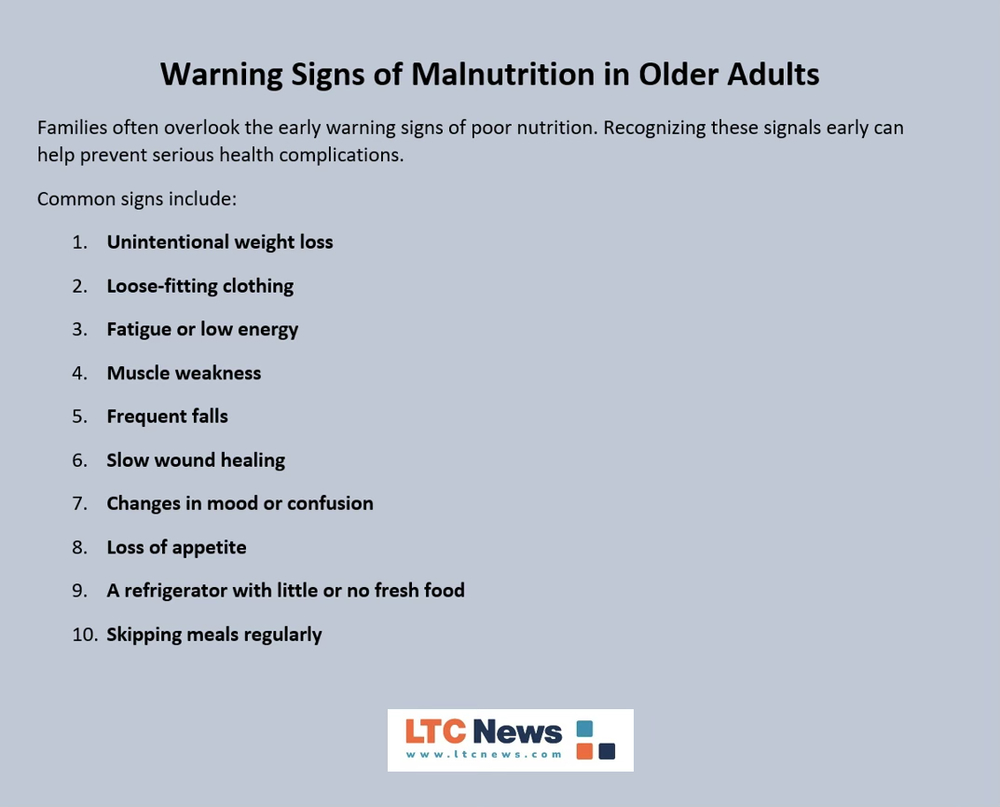
Malnutrition rarely appears suddenly. It usually develops gradually over time. Families should watch for subtle warning signs that an older loved one may not be getting enough nutrition.
Possible indicators include:
- Unintentional weight loss
- Clothing suddenly fitting loosely
- Fatigue or muscle weakness
- Increased falls
- Slow healing from minor injuries
- Changes in mood or cognition
- A refrigerator with little food
- Frequent skipped meals
Have you noticed an aging parent skipping meals or saying they simply are not hungry anymore? Early intervention can help prevent serious health complications.
If several of these signs appear, families should consider discussing nutrition concerns with a physician, dietitian, or care provider.
Nutrition Should Be Part of Long-Term Care Planning
Food plays a much larger role in aging than many families realize. Proper nutrition supports immune health, preserves muscle strength, and helps older adults remain independent longer. It also improves recovery from illness and can reduce the risk of hospitalization.
Families evaluating assisted living or nursing homes should consider nutrition programs as part of the care decision.
Questions to ask include:
- Are registered dietitians involved in menu planning?
- How does the community monitor unintentional weight loss?
- Are residents able to influence menu choices?
- How are special diets or nutritional needs managed?
The answers can reveal a great deal about the quality of care a community provides. In later life, food becomes far more than a daily routine. The right nutrition can help older adults maintain strength, avoid hospitalizations, and preserve independence for as long as possible.
Plus, the social aspect of dining in a long-term care facility has a positive impact on the quality of life.
"The social aspect of dining is enormously important. Meals are not simply about nutrition. They are about connection, routine, and enjoyment. When people eat together, appetite improves, and meals become an event rather than a task. For many residents, the dining room becomes the heart of the community where friendships form, and daily life unfolds." — Lauren Dubuque.
Social engagement during meals supports emotional well-being, which in turn supports better overall health. Searching for quality extended care will ensure a better quality of life. Use the search function of the LTC News Caregiver Directory to find quality long-term care facilities, senior communities, and even in-home caregivers.

Share your thoughts and experiences about aging, caregiving, health, retirement, and long-term care with LTC News —Contact LTC News.
Keep in mind that long-term care is not covered by Medicare or by any supplement beyond short-term skilled care. The better the quality of care, the more expensive it usually is. If your loved one has Long-Term Care Insurance (typically an LTC policy is purchased between the ages of 47 and 67), the benefits can pay for the quality extended care your loved one deserves.
Need help filing a claim for your loved one's LTC Insurance? LTC News partners with Amada Senior Care to provide free claim support with no cost or obligation. Their trained experts can walk you through the entire process and help you access benefits quickly and correctly — File a Long-Term Care Insurance Claim.
If there is no LTC policy, and your loved one has a life insurance policy, you could sell it for cash now to cover the costs of care.
Frequently Asked Questions
What foods are best for seniors to maintain muscle strength?
Foods rich in protein and essential nutrients are especially helpful for maintaining muscle strength. Good options include fish, eggs, lean meats, yogurt, dairy products, beans, nuts, and legumes. Combining adequate protein intake with regular physical activity helps older adults maintain strength and mobility.
Why is nutrition more important after age 75?
After age 75, the body becomes less efficient at absorbing nutrients and maintaining muscle mass. Older adults often require fewer calories but need foods that are richer in protein, vitamins, and minerals to maintain strength and prevent frailty.
What are common signs of malnutrition in seniors?
Common warning signs include:
- Unintentional weight loss
- Fatigue or weakness
- Frequent falls
- Slow wound healing
- Poor appetite
- Loose-fitting clothing
Families who notice these changes should speak with a physician or dietitian.
What nutrients are most important for older adults?
Experts often emphasize several key nutrients for healthy aging:
- Protein to maintain muscle mass
- Vitamin D and calcium to support bone health
- Vitamin B12 to support brain and nerve function
- Fiber to improve digestion
- Hydration to prevent fatigue and confusion
A balanced diet with nutrient-dense foods helps support overall health.
Can good nutrition help older adults stay independent longer?
Yes. Proper nutrition supports muscle strength, immune health, and energy levels. These factors play an important role in preventing falls, maintaining mobility, and allowing older adults to remain independent longer. Healthy eating habits established earlier in life can significantly influence health and independence in later years.
Why do older adults sometimes lose their appetite?
Several factors can contribute to appetite loss in later life, including medication side effects, chronic illness, dental problems, changes in taste or smell, and social isolation. Eating alone can also reduce appetite, which is why communal dining in senior living communities often improves nutrition.


Sponsored