Most Americans Aren't Prepared for Long-Term Care. The Holidays Are a Good Time to Talk.
About This Article
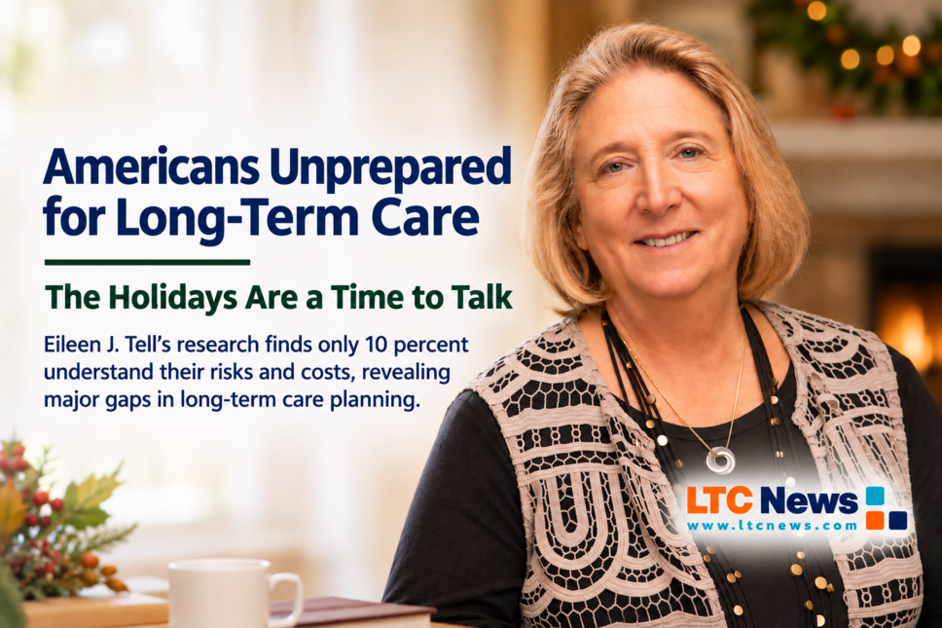
Most Americans underestimate their long-term care risk. Research by Eileen J. Tell found only 10 percent of adults 50 and older understood both their chances of needing care and that they may pay for it themselves. Medicare does not pay for ongoing custodial care.

Linda Kople
Linda Kople is a freelance writer focused on caregiving, aging, health, wellness, long-term care, and retirement planning
Table of Contents
- Why Do Americans Underestimate Their Need for Long-Term Care?
- Family Caregivers Are Already Paying Thousands Out of Pocket
- Medicare Confusion Leaves Families Financially Vulnerable
- Why Aren't More Families Planning for Long-Term Care?
- What Options Do Families Have?
- 'Saturday Night Live' Turned a Family Caregiving Problem Into Comedy
- Holidays Offer a Chance to Start the Conversation
- Don't Wait Until a Health Crisis Makes the Decisions
Americans spend years preparing financially for retirement, yet most have little understanding of one of the biggest expenses they could face as they grow older: long-term care. Yet the problem of aging and longevity is much more than a financial issue; it is about family.
New research reveals just how unprepared many families remain. Only 10 percent of surveyed adults age 50 and older understood both their likelihood of needing long-term care and how they would pay for it.
The findings come as November's Long-Term Care Awareness Month draws attention to an issue that often goes undiscussed until a health crisis forces families to make difficult decisions. With Thanksgiving, Christmas, and the December holidays bringing families together, researchers say it's an opportunity to talk about future extended care needs, financial responsibilities and the role adult children may eventually be expected to play.
In an interview with LTC News, researcher Eileen J. Tell, MPH, said the findings demonstrate how little progress Americans have made in understanding the financial and personal consequences of needing extended care.
"What surprised me most is how persistent knowledge gaps remain, despite decades of research and public education about LTC risks, costs, and financing," Tell said.
Eileen J. Tell, MPH, is principal and CEO of ET Consulting LLC and a senior fellow with the LeadingAge LTSS Center @UMass Boston. She has more than 30 years of experience in long-term care and aging research, public policy, consumer education and program development. Her article, Closing the Long-Term Care Knowledge Gap, appeared in the third-quarter 2026 issue of CLTC Digest.
While more people recognize that they may someday need care, particularly those with family caregiving experience, the vast majority still do not understand that they may be responsible for paying substantial care costs themselves." — Eileen J. Tell, MPH.
You might wonder whether these are ordinary signs of aging or indications that Mom or Dad needs more help. But there's another question families often overlook: If a parent eventually needs ongoing care, who will provide it, and how will everyone pay for it?
The conversation about aging and long-term care shouldn't be limited to the holiday season, but the holidays offer your family a chance to discuss questions many American families have never seriously considered and only address once a crisis has occurred.
Research published earlier this year found that only 10 percent of surveyed adults age 50 and older understood both their likelihood of needing long-term care and how they would pay for it. Researcher Eileen J. Tell, MPH, tells LTC News that the findings demonstrate how little progress Americans have made in understanding the financial and personal consequences of needing extended care.
"What surprised me most is how persistent knowledge gaps remain, despite decades of research and public education about LTC risks, costs, and financing," Tell said.
While more people recognize that they may someday need care, particularly those with family caregiving experience, the vast majority still do not understand that they may be responsible for paying substantial care costs themselves." — Eileen J. Tell, MPH.
Tell has more than 30 years of experience researching aging, long-term care financing, and public policy. Her article, Closing the Long-Term Care Knowledge Gap, draws on research involving more than 1,200 adults age 50 and older.
Why Do Americans Underestimate Their Need for Long-Term Care?
The study's research found that fewer than half of respondents, 48 percent, believed they would eventually need long-term care. Only 18 percent correctly understood that individuals generally pay for much of their care themselves unless they have another source of coverage.
"Most people learn about long-term care the hard way, when they or someone close to them needs care," Tell said.
Our research confirms that people with family caregiving experience are more likely to recognize their own future care risks." — Eileen J. Tell, MPH.
People may also avoid thinking about an uncomfortable future, particularly when they don't see an affordable solution. Tell noted that respondents were more willing to acknowledge they might need care at home than in a facility. She suggested that this could reflect their hopes for the future rather than an objective assessment of their likely care needs.
Long-term care isn't limited to nursing homes. It includes help with everyday activities such as bathing, dressing, toileting, eating, and moving around safely. Someone with Alzheimer's disease or another form of dementia may also need supervision, even when physically capable of performing many daily tasks.
Care can begin with occasional assistance at home and gradually increase as health or cognitive abilities change. Federal estimates suggest about 56 percent of Americans turning 65 will need long-term services and supports during their remaining lives. Not everyone will require paid care, but some will need substantial assistance for several years. Yet many people approaching retirement spend considerable time planning their income and investments without developing a plan for what happens if they can no longer live independently.
Tell's findings suggest that understanding the risk makes a difference. Respondents who correctly understood long-term care risks and costs were more likely to discuss care preferences with family, consider setting aside money, or research Long-Term Care Insurance.
The research found an association between knowledge and planning. However, it does not establish that education alone causes people to take action.
Family Caregivers Are Already Paying Thousands Out of Pocket
The financial demands of caregiving can be substantial, even before considering the full cost of professional long-term care. An AARP study released Oct. 28, 2026, found that family caregivers spend an average of $11,508 annually out of pocket helping an adult relative or friend. That's approximately $959 a month and 59 percent more than the $7,242 reported in AARP's 2021 study.
Caregiving expenses represent an average of 31 percent of caregivers' annual household income. For caregivers in households earning less than $40,000, the average share rises to 76 percent. The money often goes toward ordinary household needs. Housing and household expenses account for 42 percent of reported spending, while medical expenses account for another 29 percent.
The financial pressure increases when care becomes more complicated. Family caregivers supporting someone with Alzheimer's disease or another form of dementia spend an average of $15,846 annually, compared with $10,221 for those caring for someone without dementia.
Caregivers performing three or more medical or nursing tasks spend an average of $15,648, nearly twice the $7,948 reported by caregivers performing none of those tasks. The expenses can affect a caregiver's own financial future.
According to AARP, 65 percent of employed caregivers experienced at least one work-related disruption because of caregiving, including changing work hours, taking time off, or taking on additional work. Caregivers who reported withdrawing money from retirement savings had average annual caregiving expenses of $17,907. Those who borrowed money or took out loans reported average expenses of $16,580.
Those figures describe spending among caregivers in those circumstances, not the amount of money withdrawn or borrowed. The study included 2,538 adult caregivers surveyed during June and July 2026. These are expenses paid by caregivers themselves. For some families, helping an aging loved one also means reduced earnings, additional debt, and less money available for their own retirement.
These costs are separate from the full cost of professional home care, assisted living, memory care, or nursing home services. Professional long-term care costs are high and increasing every year. However, the cost of extended care services depends on the type of service you may need, how long you need it, and where you live.
The LTC News comprehensive ongoing survey of long-term care costs in the United States, including the District of Columbia, Puerto Rico, and the U.S. Virgin Islands, shows the national median average of in-home care, based on a 44-hour week, is now, as of November 2026, $5,809 a month. By 2026, LTC News research estimates that same cost will be nearly $10,000 a month. Assisted living, memory care, and nursing home care are higher, plus surcharges add to those costs as well.
While the cost of long-term care can adversely impact the income and assets of the care recipient, for some families, helping an aging loved one as a family caregiver also means reduced earnings, additional debt, and less money available for their own retirement.
Medicare Confusion Leaves Families Financially Vulnerable
One of the most troubling findings in Tell's research involves Medicare. The study found that 43 percent of respondents believed Medicare or Medicare supplemental coverage would pay for long-term care. Another 11 percent believed private health insurance would cover it.
For families counting on those programs, the misunderstanding can be expensive. "Most people do not understand the distinction between ongoing long-term care and the post-acute or rehabilitative services Medicare may cover under specific circumstances," Tell said.
Medicare's coverage rules are complex, and the limitations are poorly understood." — Eileen J. Tell, MPH.
Medicare pays for medically necessary health services and certain short-term skilled nursing and rehabilitation services. Under qualifying conditions, traditional Medicare Part A can cover up to 100 days of skilled nursing facility care per benefit period. Coverage is not guaranteed for 100 days and ends when the person no longer meets Medicare's requirements.
👉 Medicare does not pay for ongoing custodial long-term care when assistance with daily living is the only care needed.
For example, Medicare won't pay for someone to come to Dad's home every day simply because he needs help bathing, dressing, or using the bathroom. Medicare Advantage plans may provide limited supplemental services, depending on the plan, but they are not a substitute for comprehensive long-term care coverage. Medicare Supplement policies help with eligible Medicare cost-sharing rather than paying for ongoing custodial care.
Medicaid can cover qualifying long-term care services, including nursing home care and certain home and community-based services. However, eligibility depends on limited financial and functional requirements, and services vary by state.
Tell believes government agencies, insurers, and other organizations share responsibility for explaining these differences.
Both the public and private sectors have a responsibility to communicate clearly what Medicare, Medicare Advantage, supplemental insurance, and other health coverage do—and do not—pay for." — Eileen J. Tell, MPH.
Families can review Medicare's official skilled nursing facility coverage rules before assuming their health coverage will pay for extended care.
Why Aren't More Families Planning for Long-Term Care?
Understanding the need for care doesn't necessarily mean a family can afford to prepare for it. Tell's research addresses what is often called the "overlooked middle." The overlooked middle are those who have too many financial resources to qualify immediately for Medicaid but not enough wealth to comfortably pay for years of professional care. Many experts have told LTC News over the years that even those with more substantial wealth don't want to put those assets at risk, incur additional taxes, or burden their families, who would still be forced to manage that care if they self-fund it.
These overlooked middle households may own a home and have accumulated retirement savings, yet prolonged care expenses could consume a substantial portion of those resources.
Long-Term Care Insurance is one way to help manage that risk but Tell cautions against assuming people who don't purchase coverage are simply ignoring the problem.
"Several factors contribute to limited LTC Insurance uptake, beyond lack of awareness or denial," she said.
Traditional distribution has generally focused on more affluent consumers, and relatively few products are designed around middle-income affordability." — Eileen J. Tell, MPH.
She also identified product design, regulation, distribution, and concerns about premium stability as barriers.
Matt McCann, a nationally recognized long-term care planning specialist, disagrees that cost and products not designed for middle America are the problem. He notes that Long-Term Care Partnership programs were specifically designed to help middle-income Americans protect a portion of their assets while still having access to Medicaid should their care needs become extensive and prolonged.
"Many people assume that Long-Term Care Insurance is very expensive, but the partnership program was created with middle-class families in mind," McCann says.
Partnership Long-Term Care Insurance allows policyholders to preserve assets equal to the benefits paid by the policy while still qualifying for Medicaid if they exhaust their insurance benefits. It provides meaningful protection against the physical, emotional, and financial impact of long-term care while offering an added layer of security for the future." — Matt McCann.
McCann emphasizes that Long-Term Care Insurance policies can be customized to fit individual needs and budgets. Even a modest Partnership-qualified LTC policy can provide meaningful asset protection while helping reduce the financial stress, emotional strain, and caregiving burdens families often face during a long-term care crisis. According to LTC News research, most people investigate and purchase Long-Term Care Insurance between ages 47 and 67, when concerns about retirement, aging, and future care needs become more immediate.
Learn More: How Much Does Long-Term Care Insurance Cost?
However, Tell believes public policy could help address these challenges. She pointed to proposals such as the WISH Act, which would establish federal catastrophic long-term care coverage for qualifying prolonged care needs, potentially making private coverage for earlier expenses more affordable.
She also discussed the educational approach proposed in the PLAN Act, which would help consumers understand long-term care risks and evaluate their options without promoting a particular financial product. Neither proposal is an existing federal long-term care benefit.
"Education should help consumers understand their risks, evaluate available options, and make informed decisions appropriate to their circumstances," Tell said.
What Options Do Families Have?
Planning can involve savings, insurance, family support, or a combination of resources. Traditional Long-Term Care Insurance provides benefits for qualifying care expenses, subject to policy terms. Coverage may include care at home, assisted living, memory care, and nursing homes. Benefits from tax-qualified policies are generally received tax-free within applicable limits.
Hybrid LTC policies combine life insurance or annuities with qualified long-term care benefits. These policies are more expensive as they include a death benefit or other contractual value if long-term care is never needed.
Long-Term Care Partnership-qualified policies, available in participating states, can provide additional Medicaid asset protection for qualifying policyholders who meet applicable requirements.
Insurance isn't the right answer for every household, and coverage becomes harder or more expensive to obtain as people age or develop significant health problems, which is one reason some experts suggest additional government involvement.
Financial protection is only one reason to plan for LTC. Equally important are preserving choices about where and how care is received and reducing the financial, physical, and emotional demands placed on family members. These considerations are important whether a family ultimately purchases LTC insurance or pursues other planning strategies." — Eileen J. Tell, MPH.
'Saturday Night Live' Turned a Family Caregiving Problem Into Comedy
The responsibilities placed on adult children recently became the subject of a Saturday Night Live sketch that struck a familiar chord with many families. During the Nov. 14 episode hosted by John Mulaney, the show introduced a fictional elder care service called "Sister."
The service promises round-the-clock assistance for an aging father at no cost. The catch is that the caregiver is his daughter, who is expected to handle everything while her brother continues with his own life.
The joke works because the situation is familiar.
Women account for a majority of family caregivers, according to AARP and National Alliance for Caregiving research. In many families, daughters take on responsibilities such as managing medical appointments, medications, household needs, and emergencies while balancing employment and other obligations.
The sketch also illustrates why discussing care before it's needed matters. Without a plan, responsibilities can fall on whichever family member is available or willing to help. Tell emphasized that financial protection is only part of preparing for long-term care.
"Equally important are preserving choices about where and how care is received and reducing the financial, physical, and emotional demands placed on family members," she said.
She added that those considerations matter whether families purchase insurance or pursue other planning strategies.
Watch the SNL "Sister" sketch and read the LTC News feature, ‘SNL’ Puts ‘Sister’ in Charge of Dad’s Care. For Some Families, it Hits Home.
Holidays Offer a Chance to Start the Conversation
Thanksgiving and Christmas bring relatives together who may not see one another regularly. They also provide opportunities to notice changes in an older parent's health, mobility, or ability to manage daily activities.
Not every change signals a need for long-term care. But concerns about memory, falls, personal hygiene, or household management deserve attention rather than being dismissed as an inevitable part of aging. A holiday gathering doesn't need to turn into a formal financial planning meeting. A private conversation with a parent or spouse can be a good place to begin.
Tell believes personal experiences can make the need to prepare more understandable.
"Personal stories can be especially compelling because they make the consequences of needing care, and the value of planning ahead, more tangible," she said.
Families can start by discussing a few practical questions:
- Where would Mom or Dad prefer to receive care? Talk about remaining at home and what circumstances might make assisted living, memory care, or nursing home care necessary.
- Who would help if care were needed tomorrow? Discuss what a spouse, adult children, or other relatives could realistically do without jeopardizing their own health, employment, or finances.
- How would care be paid for? Review savings, retirement income, existing LTC Insurance policies, and other available benefits.
- Are important documents current? Confirm that powers of attorney, health care directives, and other legal arrangements reflect the person's wishes.
- What professional care is available nearby? Research local home care agencies, assisted living communities, and other providers before an urgent need arises.
The LTC News Caregiver Directory can help your family find local providers and explore care options. For those who already own LTC Insurance, reviewing policy benefits and claims requirements before care begins can help avoid confusion and delays. LTC News partners with Amada Senior Care to offer free assistance navigating LTC Insurance claims — File a Long-Term Care Insurance Claim.
Experts suggest including aging parents in these conversations whenever possible. Planning is about respecting their wishes, not taking away their independence.
Don't Wait Until a Health Crisis Makes the Decisions
Tell warns that the consequences of inadequate planning will become more difficult to manage as the population ages.
"As the population ages, inadequate planning and financing will place growing pressure on families, public programs, and an already strained direct care workforce," she said. "Delaying action will make these challenges increasingly difficult and costly to address."
Improving public understanding matters, but Tell says education must be paired with more affordable, accessible care and financing solutions.
When LTC News asked Tell which misconception she would most like to correct among Americans approaching retirement, her answer was immediate:
"That long-term care is something people can safely postpone thinking about until they need it," she said. "Planning ahead can preserve choices, reduce financial vulnerability, and help families prepare for care needs before a crisis occurs."
A conversation over the holidays won't answer every question. But it can help ensure that the people you love aren't left making difficult decisions for the first time in a hospital waiting room.
Frequently Asked Questions
Why do Americans underestimate their long-term care risks?
According to Tell, many people do not fully recognize their potential care needs until they experience caregiving firsthand. Her research found that people with family caregiving experience were more likely to recognize their own risks. Some respondents also appeared more willing to acknowledge the possibility of needing care at home than in a facility, which Tell suggested might reflect personal hopes rather than an objective assessment of risk.
How many Americans mistakenly believe Medicare pays for long-term care?
Tell's research found that 43 percent of respondents believed Medicare or Medicare supplemental coverage would pay for long-term care. Another 11 percent believed other private health insurance would cover it. Medicare generally does not pay for ongoing custodial care, although it covers certain short-term skilled services under qualifying conditions.
What did Eileen Tell's research reveal about Americans' understanding of long-term care?
Research highlighted by Eileen J. Tell, MPH, found that only 10 percent of surveyed adults age 50 and older correctly understood both their likelihood of needing long-term care and how they would pay for it. The findings, involving more than 1,200 respondents, reveal significant gaps in awareness despite decades of public education.
Do most Americans believe they will eventually need long-term care?
No. Tell's research found that only 48 percent of respondents believed they would eventually need long-term care. Federal estimates, however, suggest approximately 56 percent of Americans turning 65 will need long-term services and supports during their remaining lives.
Does understanding long-term care risks encourage people to plan?
Tell's research found an association between greater knowledge of long-term care risks and increased planning. Respondents who better understood those risks were more likely to discuss care preferences, consider financial preparations or explore Long-Term Care Insurance. However, the findings do not establish that education alone causes people to take action.


Sponsored