Health-Tracking Watches Help Older Adults Stay Independent—and Connected—in Senior Living
About This Article
Smartwatches are more than gadgets—they’re safety tools helping older adults with dementia or mobility issues stay independent. Learn how these devices ease the burden on families and fill a gap Medicare won’t cover.

Jacob Thomas
Jacob Thomas writes on health, wellness, and retirement topics, including aging, caregiving, insurance, and long-term care.
Your parents might still be living in your childhood home, but it may now feel too large and difficult to manage. While they’re still relatively independent, you may be noticing signs of decline. At this stage, options like in-home care can be an option, but they may not really need that much care, yet.
Another option for older adults is to move to an independent senior living community. An independent senior living community is designed for older adults who are generally healthy and self-sufficient but want the convenience, safety, and social benefits of a community setting.
These communities typically offer private apartments or cottages along with amenities like housekeeping, dining services, transportation, and recreational activities. Unlike assisted living or nursing homes, independent living doesn’t provide hands-on medical care or daily assistance with bathing or dressing—but it offers peace of mind, reduced responsibilities, and a vibrant environment where residents can enjoy an active lifestyle among peers.
However, when a loved one moves into a senior living community, it’s often a relief—but not without worry. What if they fall? What if they wander off or forget how to call for help? For families, especially those far away, peace of mind doesn’t come easily.
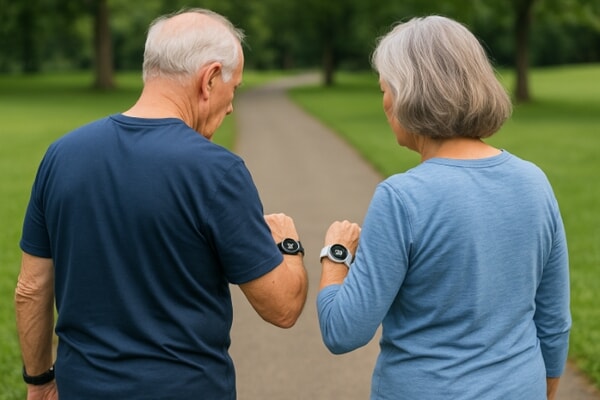
Technology is quietly stepping in to fill the gap. Today’s health-tracking watches aren’t just counting steps—they’re supporting independence, ensuring safety, and offering real-time connection for families.
A New Kind of Lifeline: Wearable Safety for Aging Adults
Health-tracking watches designed for older adults can detect problems and send alerts before a caregiver even realizes something’s wrong. Features commonly include:
- Automatic fall detection
- Emergency SOS calling
- GPS tracking with “safe zone” alerts
- Heart rate, oxygen, and blood pressure monitoring
- Medication and activity reminders
These tools, like health-tracking watches, provide peace of mind, especially for individuals who need assistance with activities of daily living (ADLs) or supervision due to early dementia.
Technology like this gives my residents more freedom and my staff more confidence. It doesn’t replace human care, but it strengthens it.
Maintaining Independence, Even with ADL Support
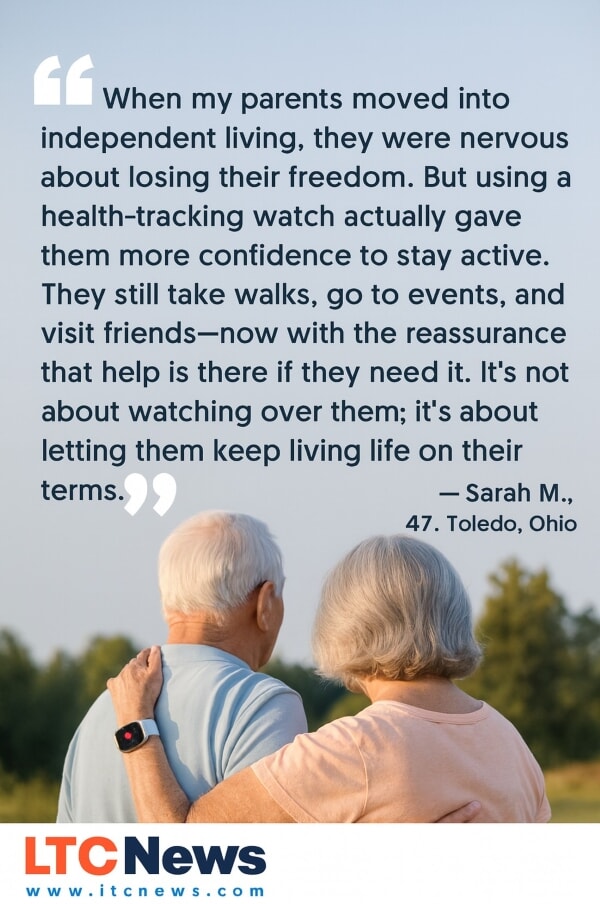
Needing help doesn’t mean giving up autonomy. Older adults with mobility issues or mild cognitive impairment often want to continue enjoying their routines—walking in the garden, attending programs, or visiting neighbors.
Traditional safety systems like pull cords or wall buttons fall short. They’re stationary, and they depend on the user activating them.
By contrast, wrist-based devices:
- Stay with the wearer 24/7
- Automatically detect and report incidents
- Eliminate the need for the user to remember anything
- Avoid adding to staff workload or intruding on daily life
Independence is a cornerstone of aging with dignity. Wearables that provide passive protection support that goal.
When Medicare Falls Short, LTC Insurance May Fill the Gap
Aging always wins, and at some point, your loved one, just like you someday, will need help with daily living activities or supervision due to dementia.
Technology may slow the need for a lot of care, but whether it is in-home caregivers or assisted living, long-term care is costly. These costs are increasing each year.
Here’s what many families don’t realize: Medicare and standard health insurance do not cover most long-term care needs. Medicare may pay for up to 100 days of skilled nursing care—but only under specific conditions following a hospital stay. Beyond that, you’re on your own.
Long-term care includes:
- Assistance with ADLs (e.g., bathing, dressing, mobility)
- Supervision due to dementia or cognitive decline
- Ongoing support in assisted living or at home
Long-Term Care Insurance, however, does cover both custodial and skilled care—and many modern policies also reimburse for equipment like wearable safety devices, home monitoring tools, and alert systems.
🔎 Use the LTC News Cost of Care Calculator to see what long-term care services cost in your state.
Choosing the Right Device for the Right Needs
Many families discover that having access to a simple, wearable device that detects falls and provides instant alerts gives them ongoing peace of mind, especially when they can’t be nearby in person. If you’re looking into wearable safety tools for yourself or a loved one, focus on function over flash.
Here’s what to consider:
| Feature | Who Benefits |
| Fall Detection | Individuals with poor balance or mobility issues. |
| GPS Tracking | Those with dementia or who go for unaccompanied walks. |
| Emergency Calling | Anyone who lives alone or is prone to confusion. |
| Health Monitoring | Those managing heart disease or respiratory issues. |
| Simple Interface | Seniors uncomfortable with new tech. |
Some models don’t require smartphone pairing or internet access—making them ideal for older users. Plus, this technology is available worldwide.
Filling the Caregiver Gap
More Americans are caring for loved ones than ever before. According to a recent AARP study, over 63 million Americans now serve as unpaid family caregivers. Many balance that role with full-time jobs or live far from the person they’re helping.
Across Canada, the U.K., and Australia, tens of millions of people are providing unpaid care to aging parents and relatives, often with little support. In Canada, about 7.8 million caregivers deliver care valued at over $97 billion annually. The U.K. has 5.8 million unpaid carers, with 1.7 million providing more than 50 hours per week, contributing services worth £184 billion—more than the entire NHS budget.
In Australia, 3 million caregivers support older adults, saving the healthcare system an estimated $78 billion in formal service costs. Despite cultural and system differences, all three countries face the same reality: unpaid family caregivers are the backbone of elder care, often at the cost of their own health, finances, and careers.
| Country | Approx. No. of Unpaid Carers | Share of Population | Annual Economic Value |
| Canada | 7.8 million | ~25% | $130 billion CAD |
| UK | 5.8 million | ~9% | $184 billion GBP |
| Australia | 3.0 million | ~12% | $78 billion AUD |
For those caregivers, health-tracking watches offer critical visibility. When a fall is detected or a loved one exits a defined “safe zone,” they receive an alert instantly. It’s a virtual extension of care—especially helpful in the early days after a loved one moves into a senior community or if cognitive changes are progressing.
The LTC News Caregiver Directory can also help you find in-home caregivers or care facilities, offering further support alongside technology.
The Takeaway: Small Device, Big Impact
A health-tracking watch isn’t just a piece of technology. It’s a tool for aging with confidence. For older adults, it offers safety without surrendering independence. For families, it provides constant connection, even when they can’t be there.
Whether you’re exploring options for your parent, your spouse, or yourself, consider wearable safety as part of a larger long-term care plan. And don’t wait until a crisis. The earlier you plan, like adding Long-Term Care Insurance to your retirement, the more options—and freedom—you’ll have.


Sponsored