GPS Trackers for Dementia Safety: Best Options to Consider in 2026
About This Article
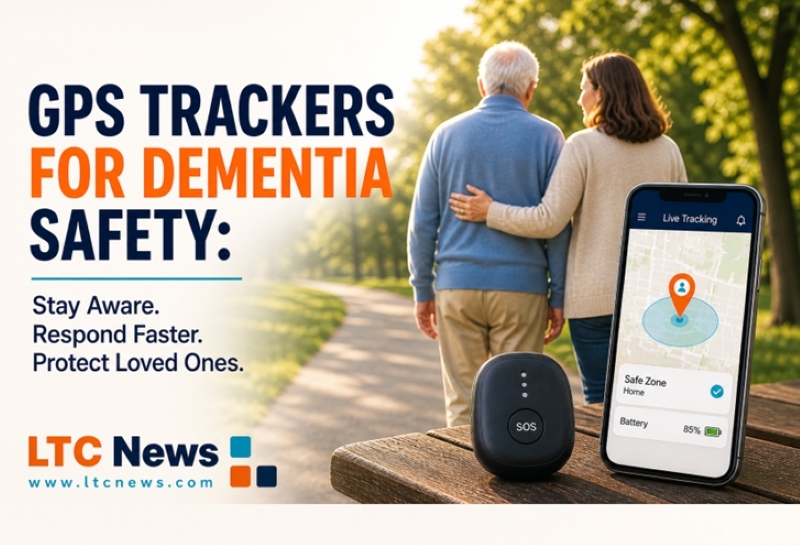
GPS trackers help protect loved ones with dementia from wandering. Trackers for dementia patients depend on their behavior and risk level. Devices with real-time tracking, geofencing alerts, strong battery life, and simple wearability provide the most effective protection against wandering and help caregivers respond quickly in emergencies.

Linda Kople
Linda Kople is a freelance writer focused on caregiving, aging, health, wellness, long-term care, and retirement planning
Table of Contents
- Why Wandering Is a Serious Dementia Risk
- What GPS Tracking Does—and What It Doesn’t
- What Are the Top 10 GPS Trackers for Dementia Care?
- Key Features That Matter Most
- How GPS Tracking Fits Into Long-Term Care Planning
- Emotional Reality Caregivers Face
- When GPS Tracking Is No Longer Enough
- Safety Comes from Planning, Not Just Technology
The early stages of being a caregiver for someone with dementia often feel like a series of "almosts." It rarely starts with something dramatic. He almost forgot where he parked. She almost missed the turn to the house she’s lived in for thirty years. We tell ourselves it’s just a long day or a momentary lapse, but deep down, a new kind of instinct is beginning to prickle at the back of our minds.
A familiar walk takes a little longer than usual. A trip to the mailbox turns into a search. A neighbor mentions your loved one seemed unsure where they were going.
These small, quiet moments are the first signals of a shifting reality—one in which the world begins to lose its landmarks. Most informal family caregivers, and many professional caregivers, are women. As women, we are often the natural protectors and coordinators of our families' safety and realizing that a loved one’s independence is becoming a liability is a heavy burden to carry. These transitions often happen far faster than we’re ready for, turning a peaceful afternoon into a frantic search before we’ve even had time to process the change.
In our modern toolkit, GPS tracking has become a vital resource. It offers more than just coordinates; it offers a few extra minutes of breath and a faster way to respond when the unthinkable happens. However, technology isn't a silver bullet. To truly protect those we love, we have to weave these digital tools into a much broader, more human safety plan—one built on constant supervision, local community awareness, and proactive care.
Why Wandering Is a Serious Dementia Risk
Memory loss affects more than recall. It changes judgment, direction, and awareness. According to the Alzheimer's Association 2026 Alzheimer’s Disease Facts and Figures report, an estimated 7.4 million Americans age 65 and older are living with Alzheimer’s dementia, and the number continues to grow as the population ages. The organization also reports that 6 in 10 people living with dementia will wander at least once, creating significant safety risks for families.
The National Institute on Aging notes that disorientation and wandering behaviors increase as cognitive decline progresses. At the same time, the Centers for Disease Control and Prevention highlights the elevated danger when individuals with cognitive impairment are unsupervised.
Common risks include:
- Leaving home without notice
- Getting lost in familiar places
- Walking without recognizing surroundings
- Panic or agitation when disoriented
Time is critical in these situations. The longer someone is missing, the greater the risk of injury or worse.
What GPS Tracking Does—and What It Doesn’t
GPS tracking improves response time. It gives you visibility when movement becomes unsafe.
What GPS trackers do well:
- Provide real-time location updates
- Send alerts when a safe zone is crossed
- Reduce search time during emergencies
- Offer communication tools in some devices
What they don’t do:
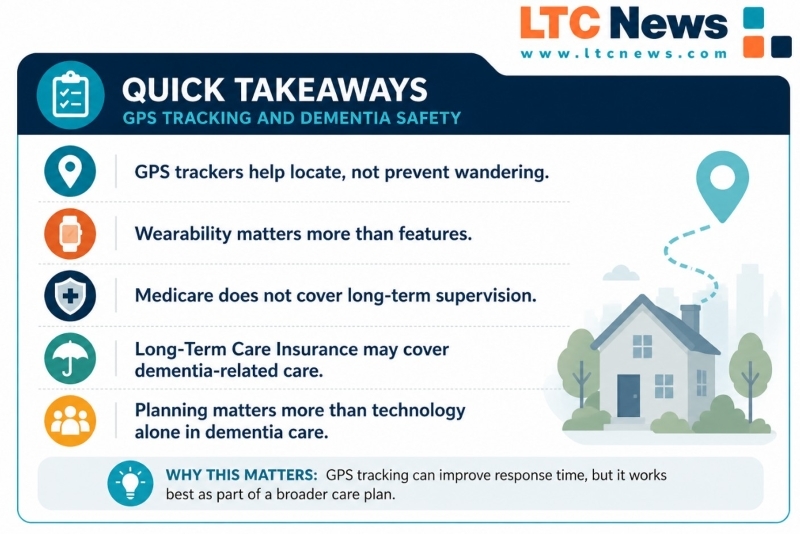
- Prevent wandering
- Replace supervision
- Work if not worn or carried
- Address underlying care needs
Bottom line: GPS tracking helps you respond faster—but it cannot replace supervision and care.
What Are the Top 10 GPS Trackers for Dementia Care?
Different devices work for different behaviors. The best option is the one your loved one will actually use. Editorial note: LTC News does not endorse specific products.
1. Family1st Senior GPS Tracker - Best Overall
Family1st Senior GPS Tracker provides real-time location tracking for caregivers who need quick visibility when someone moves beyond expected areas. Its portable format works best for families who want simple tracking without using a smartwatch.
Memory-related disorientation can lead to wandering in familiar neighborhoods, stores, or care settings. Geofencing alerts help caregivers know when a boundary is crossed, while long battery life reduces the chance of losing visibility during daily movement.
Why it helps
- Helps caregivers respond faster when wandering starts
- Connects location updates with safe-zone monitoring
- Reduces tracking interruptions caused by frequent charging
- Gives families a simple option when watch-style devices are not preferred
Practical note: Portable tracking works only when the device stays with the person during daily movement.
2. GPSTracker247 Real-Time GPS Tracker With No Monthly Fee
GPSTracker24/7 offers continuous tracking without recurring costs, making it a practical option for families who want steady location visibility without another monthly bill.
Cognitive decline can lead to repetitive movement patterns in which individuals leave safe areas without awareness. Continuous tracking enables continuous supervision without interruptions due to subscription concerns.
Key features
- No monthly fee model
- Real-time tracking
- Geofence alerts
- 4G LTE
- Up to 14-day battery
Why it helps
- Helps track repeated wandering behavior over time
- Supports consistent monitoring without financial interruption
- Reduces caregiver stress tied to ongoing costs
Practical note: Tracking performance depends on cellular coverage in the area.
3. AngelSense GPS Watch - Best for Active Monitoring
AngelSense GPS Watch combines location tracking with communication and alert systems, allowing caregivers to monitor movement and interact when needed.
Disorientation can prevent individuals from recognizing their surroundings or asking for help. Voice communication and real-time alerts allow caregivers to guide someone during confusion or distress.
Key features
- Live GPS tracking
- Auto-answer voice communication
- SOS button
- Smart wandering alerts
- Emergency search tools
Why it helps
- Helps guide individuals during confusion or panic
- Supports real-time response when wandering occurs suddenly
- Adds communication during moments of cognitive difficulty
Practical note: Feature depth may feel heavy for basic tracking needs
4. Tranquil GPS Watch - Best for Longer Battery Life
Tranquil GPS Watch focuses on extended battery life alongside tracking and communication, reducing reliance on frequent charging. Forgetfulness can lead to missed charging cycles, which creates gaps in tracking. Longer battery life helps maintain visibility even when daily routines are inconsistent.
Key features
- 7+ day battery
- Real-time GPS tracking
- SOS button
- Two-way communication
- Fully waterproof watch
Why it helps
- Helpful when charging burden is a major real-world problem
- Better for caregivers who want fewer interruptions and fewer dead-battery gaps
- Useful when the person is willing to wear a visible watch
Practical note: Long battery life helps, but wearer compliance still determines whether the watch stays useful.
5. Theora Connect - Best Smartwatch for Older Adults
Theora Connect offers a familiar smartwatch experience with tracking and communication features, making interaction simpler for everyday use.
Familiar objects are often easier to accept than unfamiliar devices when cognitive changes affect behavior. A watch format increases the likelihood of consistent use.
Key features
- GPS tracking
- Large watch-face information
- Touch and voice communication
- Automatic two-way voice communication
- Optional smart fall detection
Why it helps
- Supports communication when clarity becomes difficult
- Helps caregivers stay connected without disrupting routine
- Encourages consistent use through familiarity
Practical note: Works best when wrist-worn devices are tolerated
6. Medical Guardian MGMini - Best for Emergency Help Access
Medical Guardian MGMini supports cases where wandering combines with medical vulnerability. Disorientation outside the home increases risk, making emergency access critical.
Key features
- One-button emergency help
- Built-in two-way speaker
- GPS and Wi-Fi location support
- U.S. coverage
- Neck or belt-clip wear options
- Optional fall detection
Why it helps
- Helpful when falls or medical distress are as important as location awareness
- Useful for caregivers who want fast escalation to emergency help
- Better for medically vulnerable seniors who still go out or move around independently
Practical note: Mobile medical alert with GPS support is the best way to think about this device, rather than a dedicated wandering-prevention platform.
7. GPS SmartSole - Best Hidden Tracker
GPS SmartSole uses a hidden insole format to track location without requiring visible wearables or direct interaction. Some individuals remove unfamiliar objects or refuse to wear tracking devices. Hidden placement allows monitoring to continue without relying on active cooperation.
Key features
- Hidden insole design
- Fits shoes or slippers
- Geofence / zone alert support
- App-based location checking
- Discreet daily-wear format
Why it helps
- Maintains tracking when visible devices are rejected
- Supports monitoring without creating resistance
- Works well when footwear remains consistent
Practical note: Stable routines matter because tracked footwear must stay in use
8. Apple AirTag - Best for Simple Everyday Tracking
Apple AirTag provides item-based tracking through Bluetooth and Apple’s Find My network, making it easy to attach to personal belongings.
Memory issues often lead to misplacing items or leaving belongings behind. Attaching a tracker to commonly carried items adds a passive layer of location awareness.
Key features
- Bluetooth-based tracking
- Apple Find My network
- Compact and lightweight
- Replaceable battery
- Easy iPhone integration
Why it helps
- Supports tracking through everyday carried items
- Helps locate misplaced belongings quickly
- Provides passive updates in supported areas
Practical note: Limited usefulness in high-risk wandering due to lack of real-time GPS
9. AngelSense GPS Tracker - Best Non-Watch Dedicated Device
AngelSense GPS Tracker offers full monitoring and communication features in a non-watch format, allowing flexible placement.
Wrist-based devices may be removed due to discomfort or confusion. Alternative formats maintain tracking without relying on consistent wear on the wrist.
Key features
- Live GPS tracking
- Auto-answer voice communication
- Smart alerts for wandering
- Emergency features
- App support for guardians
Why it helps
- Supports supervision when wearable resistance occurs
- Helps manage wandering without wrist dependence
- Keeps communication active during confusion
Practical note: Works best for continuous monitoring needs
10. Tracki Mini GPS Tracker - Best Budget Pick
Tracki Mini GPS Tracker provides basic real-time tracking in a compact form, suitable for attaching to personal items or clothing. Navigation issues caused by memory loss can lead to unintended movement beyond safe areas. Basic tracking allows caregivers to monitor location even with limited budgets.
Key features
- Real-time tracking
- Built-in SIM
- Worldwide coverage positioning
- Quick setup
- Small portable format
Why it helps
- Supports location monitoring when awareness is reduced
- Provides a simple tracking layer for movement visibility
- Works as a backup tracking option
Practical note: Lacks advanced alerts and communication features for higher-risk situations
| Product | Best For | Device Type | Real-Time Tracking | Alerts | Battery Range | Key Advantage |
| Family1st Senior GPS Tracker | Overall use | Portable | Yes | Geofence | Long | Simple tracking + alerts |
| GPSTracker24/7 | No monthly fee | Portable | Yes | Geofence | Up to 14 days | No recurring cost |
| AngelSense GPS Watch | Active monitoring | Watch | Yes | Smart alerts | Moderate | Alerts + voice support |
| Tranquil GPS Watch | Low charging frequency | Watch | Yes | SOS + alerts | 7+ days | Long battery life |
| Theora Connect | Smartwatch users | Watch | Yes | Alerts | Moderate | Familiar watch design |
| Medical Guardian MGMini | Emergency response | Pendant/Clip | Yes | Emergency alerts | Moderate | Direct help access |
| GPS SmartSole | Hidden tracking | Insole | Yes | Geofence | Moderate | Discrete tracking |
| Apple AirTag | Passive tracking | Tag | Limitd | No real alerts | Long (replaceable) | Works with everyday items |
| AngelSense GPS Tracker | Non-watch monitoring | Portable | Yes | Smart alerts | Moderate | Full monitoring without watch |
| Tracki Mini GPS Tracker | budget tracking | Portable | Yes | Basic alerts | Moderate | Low-cost tracking |
Key Features That Matter Most
Choosing the right device is about behavior, not features.
Wandering Risk
Higher risk requires:
- Real-time tracking
- Instant alerts
- Geofencing
Wearability and Compliance
The best device is the one consistently used.
Ask:
- Will your loved one wear it?
- Will they remove it?
- Will they forget it?
Communication Features
Two-way voice or auto-answer can:
- Calm confusion
- Provide direction
- Reduce panic
Battery Life
Missed charging is common in dementia care.
Look for:
- Multi-day battery life
- Simple charging routines
Indoor Accuracy
Devices that combine GPS, Wi-Fi, and cellular signals offer better accuracy indoors and in dense areas.
Cost Structure
Options include:
- One-time purchase
- Monthly subscription
Choose based on actual need.
How GPS Tracking Fits Into Long-Term Care Planning
Technology can help you respond faster—but it cannot replace care. According to the U.S. Department of Health and Human Services, about 56 percent of adults aged 65 will need long-term care services that meet the federal definition at some point in their lives.
More than 63 million Americans are providing unpaid care to loved ones, many of whom have memory issues.
GPS tracking should be part of a broader plan for someone with dementia that includes:
- Supervision and caregiving support
- Safe home modifications
- Structured routines
- Emergency response planning
- Financial preparation
Important Coverage Reality
- Medicare does not cover long-term supervision for dementia
- Coverage by Medicare is limited to short-term skilled care (up to 100 days)
- Health insurance does not cover ongoing custodial care
However, Long-Term Care Insurance can:
- Cover in-home care
- Pay for assisted living or memory care
- Provide benefits for supervision
- Many policies will pay for technology to help someone remain at home
- Offer tax-free benefits
You can explore professional care options, including in-home care and long-term care facilities such as memory care, using the LTC News Caregiver Directory.
If your loved one with dementia has a Long-Term Care Insurance policy be sure to use the benefits to pay for quality memory care at home or in a facility. Some LTC policies will even pay benefits toward technology. LTC News partners with Amada Senior Care to provide free claim support with no cost or obligation. Their trained experts can walk you through the entire process and help you access benefits quickly and correctly — File a Long-Term Care Insurance Claim.
Emotional Reality Caregivers Face
Caregiving is deeply personal. Being a caregiver is also very emotional, and the emotions seem greater when dealing with a loved one with dementia.
You may feel:
- Fear when routines change
- Guilt about monitoring a loved one
- Exhaustion from constant vigilance
Think about this: How would you feel if your loved one didn’t come back when expected?
Wandering is one of the most dangerous behaviors associated with dementia. Technology, such as GPS tracking, can offer an added layer of safety and reduce response time, but it should never replace supervision and a structured care plan. — Alzheimer’s Association.
When GPS Tracking Is No Longer Enough
There comes a point when technology alone cannot manage risk.
Warning signs include:
- Frequent wandering
- Nighttime exits
- Increased confusion
- Safety incidents despite monitoring
At that stage, you may need:
- In-home caregiving
- Adult day care
- Memory care communities
Planning early gives you more control over these decisions.
Safety Comes from Planning, Not Just Technology
GPS tracking can help you respond faster. It can reduce panic. It can even save a life. But it works best as part of a plan—a plan that includes supervision, care, financial protection, and honest conversations about what comes next.
Are you relying on a device—or building a long-term strategy to protect your loved one?
Take the Next Step
- For older family members needing care and supervision, you can explore care options near you with the LTC News Caregiver Directory
- See average current costs and estimate future care costs using the LTC News Cost of Long-Term Care Services Calculator
- Learn how Long-Term Care Insurance can protect your income, preserve your assets, and ensure access to quality care before you retire and experience a decline in your health
Planning today gives you something technology alone cannot—peace of mind.
Frequently Asked Questions
What is the best GPS tracker for someone with dementia?
The best GPS tracker depends on the person’s behavior and level of risk. Devices with real-time tracking, geofencing alerts, long battery life, and easy wearability provide the most effective protection. For individuals who remove devices, hidden trackers or non-watch options may work better.
Are GPS trackers covered by Medicare or health insurance?
In most cases, GPS trackers are not covered by Medicare or standard health insurance. Medicare primarily covers short-term medical care, not ongoing supervision or safety tools. Some Long-Term Care Insurance policies may cover assistive technology or reimburse costs depending on the policy.
How does GPS tracking fit into long-term care planning?
GPS tracking is just one part of a broader care strategy. As dementia progresses, supervision needs increase. Planning should include caregiving support, home safety modifications, and financial preparation, including evaluating Long-Term Care Insurance options.
Do GPS trackers prevent wandering in dementia patients?
No. GPS trackers do not prevent wandering. They help caregivers locate someone quickly after they leave a safe area, reducing response time and improving safety outcomes.
When is GPS tracking no longer enough for dementia care?
GPS tracking becomes less effective when:
- Wandering becomes frequent or unpredictable
- Nighttime exits increase
- The person removes or disables the device
- Safety incidents continue despite monitoring
At that point, additional care—such as in-home caregivers or memory care—may be necessary.
What if my loved one refuses to wear a GPS device?
This is common. In these cases, consider:
- Hidden trackers placed in shoes or clothing
- Devices attached to everyday items
- Alternative supervision strategies
The most effective solution is one the person will consistently keep with them.
How accurate are GPS trackers for dementia care?
Most GPS trackers are highly accurate outdoors, typically within a few meters. Devices that combine GPS, Wi-Fi, and cellular signals offer better accuracy indoors, in apartment buildings, or in crowded urban areas.
What type of GPS tracker is best for severe dementia?
For advanced dementia, the best trackers are those that require minimal interaction. Options include:
- Hidden trackers (like insoles)
- Auto-answer communication devices
- Portable trackers secured to clothing
- These reduce the risk of removal or misuse.
Can GPS trackers work inside buildings?
GPS alone may be less accurate indoors. Devices that combine GPS with Wi-Fi and cellular signals provide better location tracking inside homes, stores, or care facilities.
How long do GPS tracker batteries last?
Battery life varies by device:
- Basic trackers: 1–3 days
- Advanced trackers: up to 7+ days
- Some long-range models: up to 14 days
Longer battery life is critical in dementia care, where charging routines may be inconsistent.


Sponsored