Fort Worth Is Adapting to the Needs of Retiring Baby Boomers and Gen Xers

About This Article
Fort Worth, Texas keeps surfacing as a smart place for some people to start your post50 chapter. Population growth is driving major upgrades across neighborhoods, hospitals, and transit — changes that make the city increasingly appealing for people planning a relocation later in life.

Linda Kople
Linda Kople is a freelance writer focused on caregiving, aging, health, wellness, long-term care, and retirement planning
Table of Contents
- No State Income Tax Changes the Math, and the Stakes Get Higher With Age
- Cost of Living Still Favors Fort Worth Over Its Neighbors
- Where Retirees Are Putting Down Roots
- Sports, Food and Everyday Texas Culture
- Getting Around: Roads, Rail and DFW
- Fort Worth's Weather and What It Means for Aging Adults
- What to Look for in a Home as You Age
- Healthcare: A Medical District Built for an Aging Population
- Aging in Place in Fort Worth
- What Extended Care Actually Costs in Fort Worth
- Long-Term Care Insurance Has Supported Texans for Decades
- The Texas Long-Term Care Insurance Partnership Program
- Is Fort Worth Right for Your Retirement?
Moving to Fort Worth or the greater Dallas-Fort Worth area can be an exciting way to start the next chapter of your life. You may be drawn by the Texas lifestyle, warmer winters, no state income tax, a major international airport, professional sports, restaurants and entertainment, or simply the chance to live closer to family.
With communities stretching across Tarrant County and the broader Metroplex, you can choose everything from a walkable Fort Worth neighborhood to a quiet suburb or a low-maintenance 55-plus community. Plus, the many benefits of living in the Republic of Texas attract people nationwide to consider relocating, especially as they downsize and get ready for retirement.
But choosing where to live in your 50s, 60s, and beyond is different from choosing where to live when you were 30. The house and neighborhood that work beautifully today also need to make sense if you stop driving, your mobility changes, or you or your spouse needs help with everyday activities. Access to physicians and hospitals matters, but so do home care, assisted living, memory care and other long-term care services — along with having a plan to pay for them without putting decades of retirement savings at risk.
Fort Worth may check many of the boxes for retirement. The question is whether the city and the greater Dallas-Fort Worth area can support not only the retirement you envision today, but the life and care you may need years from now.
No State Income Tax Changes the Math, and the Stakes Get Higher With Age
Texas is one of nine states that levies no personal income tax, and that alone reshapes a retirement budget. Social Security, pensions, 401(k) withdrawals and investment income all reach you untaxed by the state. For retirees with substantial pension, retirement-account, or investment income, the absence of a Texas individual income tax can produce meaningful savings compared with states that tax some or all of that income.
Why this matters after 50: Lower taxes can help preserve retirement income today, but they become even more important if you later need home care, assisted living, or nursing home care. Every dollar you are not sending to a state tax collector is a dollar that can go toward a home health aide, a Long-Term Care Insurance premium, or a care community entrance fee down the road.
Texas offsets some of that tax advantage with property taxes that run above the national average, generally 1.6 percent to 2.5 percent of assessed value depending on the taxing jurisdiction. Fort Worth homeowners get real relief once they turn 65: an additional $60,000 homestead exemption on school district taxes, on top of the general $100,000 homestead exemption, plus a tax ceiling that caps the dollar amount of school district taxes owed on that homestead, even if the tax rate or appraised value rises later.
Qualifying homeowners 65 and older can also defer payment of property taxes on their homestead until the home is sold or the owner passes away. However, Texas law charges 5 percent annual interest on deferred amounts, a cost worth weighing against the cash-flow relief. Those protections matter because a fixed income has to stretch further the longer retirement lasts, and healthcare and care costs typically rise, not fall, with age.
Cost of Living Still Favors Fort Worth Over Its Neighbors
Fort Worth's overall cost of living remains relatively competitive for a major Texas city, particularly when housing is part of the equation. The median home sale price in Fort Worth runs roughly $300,000 to $340,000, giving retirees access to a large metropolitan area without the housing prices found in some of Texas's other major cities.
Homes in Austin remain considerably more expensive, while prices in Dallas and many desirable suburbs across the Dallas-Fort Worth Metroplex can also run higher. Houston and San Antonio offer their own affordable options, making the choice less about which Texas city is cheapest and more about the combination of housing, taxes, healthcare, transportation, family proximity and lifestyle that works for your retirement.
That gap widens the farther you look outside the urban core. Tarrant County suburbs such as Weatherford and Burleson offer lower housing costs while staying within reach of Fort Worth's hospitals and medical specialists, a lower monthly housing cost that can also free up more of a fixed income for future in-home care, Medicare supplement premiums, or a Long-Term Care Insurance policy.
Where Retirees Are Putting Down Roots
Fort Worth's neighborhood mix gives retiring Boomers and Gen Xers real choice, from historic walkable districts to new-build low-maintenance communities, choices that matter for more than curb appeal: a single-story home with less yard work and a neighborhood you can navigate on foot both reduce fall risk and physical strain as mobility changes, extending the years you can comfortably age in place.
Walkable inner-city neighborhoods. Near Southside and the adjacent Fairmount Historic District have become magnets for retirees who want restaurants, coffee shops and healthcare within walking distance. Fairmount's nearly 900 homes, most built between 1895 and 1940, sit just blocks from the Magnolia Avenue dining corridor and the Medical District's hospital campuses. Bluebonnet Hills, just south of the Texas Christian University campus, offers a similar blend: tree-lined streets, bungalows and Tudor cottages dating to the 1930s, and a Walk Score around 77, one of the more pedestrian-friendly pockets in the city.
Buyers researching Bluebonnet Hills homes, or real estate anywhere in Texas, may benefit from consulting experienced real estate professionals for information about housing inventory, market conditions and neighborhood characteristics.
- Established central Fort Worth communities. Neighborhoods surrounding TCU, including Westcliff, Tanglewood and Ridglea, remain some of the city's most sought-after addresses for retirees who want mature trees, proximity to the Cultural District's museums, and easy access to both the Medical District and Sundance Square downtown.
- Suburban low-maintenance living. Builders including Lennar and K. Hovnanian have brought national 55-plus, age-restricted community formats to the Fort Worth area, offering single-story floor plans, smaller lots and lower upkeep. Ladera Living operates several 55-plus communities across the Dallas-Fort Worth metroplex built around clubhouses, fitness centers and organized social activities.
- Amenity-driven and lifestyle communities. Beyond age-restricted developments, master-planned communities throughout north and northwest Fort Worth combine golf courses, trails and resort-style pools with a broader mix of ages, appealing to retirees who still want grandchildren nearby.
Sports, Food and Everyday Texas Culture
Retirement is not only about taxes and hospitals. Fort Worth has real character, and access to social activities, recreation and community life can become increasingly important in retirement, particularly for people who want opportunities to stay active and connected.
The Dallas–Fort Worth area is one of the strongest sports markets in the country, with all five major men's professional leagues represented, plus the WNBA and major Division I college athletics.
The core DFW teams are the Dallas Cowboys (NFL), Texas Rangers (MLB), Dallas Mavericks (NBA), Dallas Stars (NHL), and FC Dallas (MLS). The Cowboys and Rangers both play in Arlington at AT&T Stadium and Globe Life Field, while the Mavericks and Stars share American Airlines Center in Dallas. FC Dallas plays in Frisco at Toyota Stadium.
The Dallas Wings (WNBA) are also a major part of the market. The franchise is in the process of establishing its long-term home in Dallas, including a new training facility scheduled for completion in 2027.
Fort Worth itself has a particularly strong Western-sports identity. The PBR World Finals are held there, with the 2026 event using Dickies Arena and Cowtown Coliseum. Plus, there are two prominent college sports programs within the immediate Dallas–Fort Worth metro area,Texas Christian University in Fort Worth and Southern Methodist University in Dallas. In addition, Arlington regularly hosts major neutral-site college football events at AT&T Stadium, including the Cotton Bowl Classic, and the stadium hosts Texas' high school football championships as well.
Downtown's Sundance Square anchors a walkable 35-block entertainment district with dozens of restaurants, live theaters and Bass Performance Hall for concerts and touring shows. The historic Fort Worth Stockyards, a National Historic District, still runs a daily cattle drive and is home to Texas barbecue, Tex-Mex and honky-tonks including Billy Bob's Texas. The Cultural District rounds things out with the Kimbell Art Museum, the Modern Art Museum of Fort Worth and the Fort Worth Botanic Garden.
Food is part of the area's identity. Fort Worth is known for classic Texas barbecue, chicken-fried steak, smoked brisket, authentic Mexican and Tex-Mex cuisine, upscale steakhouses and an expanding collection of chef-owned restaurants. Longtime favorites sit alongside newer dining districts that offer everything from sushi and Italian to Vietnamese, Mediterranean and farm-to-table cuisine. Whether you prefer a casual neighborhood café, a local brewery, an elegant steakhouse for special occasions or family-owned restaurants that have served the community for generations, the region offers exceptional variety.
Living in Fort Worth also means easy access to one of the nation's largest and most diverse dining scenes. Within a 30- to 45-minute drive, depending on traffic, retirees can explore thousands of restaurants throughout Dallas, Arlington, Grapevine, Southlake, Plano, Frisco and other Metroplex communities. The area regularly earns national recognition for its barbecue, Tex-Mex, craft breweries and growing international food scene, with strong Vietnamese, Korean, Indian, Chinese, Japanese, Middle Eastern and Latin American culinary communities.
For many retirees, these quality-of-life amenities matter. Easy access to sporting events, museums, live music, performing arts, parks, restaurants and year-round community festivals can make it easier to remain socially engaged, entertain visiting family members and enjoy an active retirement long after leaving the workforce.
Getting Around: Roads, Rail and DFW
Fort Worth was built for cars, and for most retirees a vehicle will remain the primary way to get around. The city consistently ranks among the easier large U.S. cities to drive in, and major highways, including Interstate 30, Interstate 35W and Interstate 20, connect Fort Worth neighborhoods to the rest of the metroplex.
Public transit has expanded for those who want an alternative, and a fare restructuring in 2026 made it more affordable. Trinity Metro, the region's transit authority, operates TEXRail, a 27-mile hybrid rail line connecting downtown Fort Worth's T&P Station to Dallas Fort Worth International Airport's Terminal B, with stops in North Richland Hills and Grapevine along the way. A local single ride now costs $2, or $1 with a reduced fare, and a local day pass covering Trinity Metro bus, On-Demand and TEXRail service runs $4, or $2 reduced. Riders 65 and older, along with people with disabilities and Medicare card holders, qualify for the reduced fare with valid identification.
The Trinity Railway Express adds a direct rail connection between Fort Worth and downtown Dallas, and a driving ability that changes with age, health conditions, or vision gives real transit options a role many retirees don't expect to need until they do.
Dallas Fort Worth International Airport, the fourth-busiest airport in the world by passenger traffic in 2025 according to Airports Council International, sits a short rail or highway trip from most Fort Worth neighborhoods, putting nonstop flights to visit grandchildren or take a winter escape within easy reach. Amtrak's Texas Eagle and Heartland Flyer routes also serve Fort Worth Central Station downtown.
Fort Worth's Weather and What It Means for Aging Adults
Fort Worth has a humid subtropical climate: hot, muggy summers and cold, occasionally icy winters. Average highs climb into the mid-90s from June through August, with roughly 17 days a year reaching the triple digits. Winters are comparatively mild for anyone coming from the northern half of the country, but they are not frost-free. The city sees about 32 nights a year at or below freezing and a light dusting of snow most winters, generally around an inch annually.
Extreme heat can pose greater health risks for older adults, particularly those with certain chronic conditions or taking medications that affect the body's ability to regulate temperature. A home with an efficient, well-maintained HVAC (heating, ventilation, and air conditioning) system is not a luxury upgrade in Fort Worth; it is a safety feature. Spring and fall, roughly March through mid-May and October through mid-November, offer the most comfortable stretches and are the seasons locals recommend for house hunting and outdoor activities alike.
What to Look for in a Home as You Age
Whether you choose a historic bungalow in Fairmount or a new build in a 55-plus community, a few features matter more with each passing year:
- Single-story living, or at minimum a full bedroom and bathroom on the ground floor, to avoid stairs as mobility changes.
- Wide doorways and hallways that can accommodate a walker or wheelchair if needed later.
- A curbless or low-threshold shower and grab bar-ready bathroom walls.
- Efficient, newer HVAC systems, given how much of the year Fort Worth spends in extreme heat.
- Low-maintenance yards and exteriors, since lawn care and roof upkeep become harder to manage or afford as a home ages alongside its owner.
- Proximity to healthcare, ideally within a short drive of a hospital system or your existing physicians, particularly if you or a spouse manages a chronic condition.
- Garage or covered parking, both for summer heat and any future accessible-vehicle needs.
None of these features require a brand-new house. Many are retrofits a contractor can add to an older Fort Worth home, and some sellers in retiree-heavy neighborhoods have already made the updates.
Healthcare: A Medical District Built for an Aging Population
Fort Worth's Near Southside is home to one of the largest concentrations of hospitals in North Texas, generally known as the Medical District. Baylor Scott & White All Saints Medical Center, Texas Health Harris Methodist Hospital Fort Worth, JPS Health Network, Cook Children's Health Care System and Medical City Fort Worth all operate major campuses within a few miles of one another. Several of Fort Worth's major health systems have expanded or announced major investments as the region's population grows.
For retirees, hospital beds are only part of the picture. The specialty and rehabilitation care available later in life is what really shapes quality of life, so here is a closer look at what Fort Worth offers:
- Geriatric medicine. Fort Worth has a growing bench of geriatricians and age-friendly primary care practices, including UNT Health's Center for Older Adults and Acclaim Health's geriatric medicine program, both built around chronic disease management, memory screening and coordinated care as needs change.
- Cancer care. Baylor Scott & White and JPS both operate comprehensive cancer programs in the Medical District, alongside the Moncrief Cancer Institute, a nonprofit cancer prevention and support center serving North Texas.
- Heart and vascular care. Baylor Scott & White The Heart Hospital – Fort Worth, on the All Saints campus, offers an advanced heart and lung disease center, cardiac and pulmonary rehabilitation, a dedicated Heart Rhythm Center, interventional cardiology and structural heart and valve services, all common needs as adults move into their 60s and 70s.
- Stroke and neurological care. Texas Health Harris Methodist Hospital Fort Worth holds Comprehensive Stroke Center certification, and the Texas Rehabilitation Hospital of Fort Worth is accredited for stroke, brain injury and spinal cord rehabilitation programs.
- Orthopedic and rehabilitation care. Multiple inpatient rehab hospitals, including Baylor Scott & White Institute for Rehabilitation and Medical City Fort Worth's inpatient rehabilitation unit, focus on recovery after joint replacement, fracture or surgery, a common bridge between a hospital stay and returning home.
- Home health and hospice. Several home health agencies serve Fort Worth and Tarrant County, providing skilled nursing, physical therapy and medication management in the home, and local hospice providers offer end-of-life and palliative care, both in private homes and in dedicated hospice facilities.
Why this matters after 50: Medicare may cover up to 100 days of skilled nursing facility care during a benefit period when eligibility requirements are met, but Medicare only covers a limited amount of skilled care, and it does not pay for ongoing custodial long-term care. Medicare-covered home health is limited to qualifying skilled services, such as physical therapy or wound care ordered by a doctor, not the ongoing hands-on help many older adults eventually need. Long-Term Care Insurance will pay for the numerous care providers in the area.
Aging in Place in Fort Worth
Most retirees say they want to stay in their own home as long as possible, and Fort Worth has built out a fuller continuum of care to support that goal than it had a decade ago.
- Home care agencies. A number of licensed home care and home health agencies operate across Tarrant County, offering care that ranges from a few hours of help each week to around-the-clock care for conditions such as dementia, Parkinson's disease, stroke recovery and general frailty.
- Adult day care. Adult day programs give family caregivers a break during the day while providing structured activities and supervision for older adults who still live at home.
- Memory care. Fort Worth has a range of dedicated memory care communities and memory care wings within larger assisted living facilities, designed with secured layouts to reduce wandering risk for residents living with Alzheimer's disease or another dementia.
- Assisted living and independent living. Independent living communities suit retirees who want a maintenance-free apartment and social calendar without daily care needs, while assisted living adds help with activities of daily living such as bathing, dressing and medication management.
- Continuing Care Retirement Communities (CCRCs). Also known as Life Plan Communities, CCRCs let a resident move in while healthy and independent, then transition to assisted living, memory care or skilled nursing on the same campus without leaving friends or familiar surroundings behind. Fort Worth has a handful of CCRCs, and the broader Texas market includes some of the highest-rated Life Plan Communities in the country.
- Skilled nursing and rehabilitation. For short-term recovery after a hospitalization or for longer-term custodial care, Fort Worth has multiple licensed skilled nursing and rehabilitation facilities within the Medical District and throughout the surrounding suburbs.
The choice is rarely just "home versus nursing home." Most people move through several of these settings over time, often starting with home care, adding adult day care or memory care support, and eventually needing assisted living or skilled nursing. Knowing what actually exists in Fort Worth, and what it costs, helps you plan realistically instead of assuming your current health will last indefinitely.
HINT: If you need extended care for you or a loved one, use the LTC News Caregiver Directory. It has over 80,000 providers nationwide, including in the Ft, Worth area.
What Extended Care Actually Costs in Fort Worth
Current long-term care costs in Fort Worth vary by provider, level of care and neighborhood. The LTC News Cost of Long-Term Care Services Calculator uses comprehensive data, including provider data from the LTC News Caregiver Directory to show local averages for home care, assisted living, memory care and nursing home care, along with projected future costs based on historical inflation models.
According to July 2026 data, in-home caregivers average $5,960 a month in Fort Worth, based on a 44-hour week. The projected cost in 2046 is $10,200 per month.
The state average for in-home care costs is $4,834 per month. Compare the state average to Fort Worth to other Texas communities:
Austin: $6,005
Fort Worth: $5,960
Houston: $5,583
San Antonio: $5,346
El Paso: $4,991
The cost of adult day care centers, assisted living, memory care, and nursing homes also varies depending on where in Texas you live. Plus, facilities will charge surcharges on top of the base cost.
Why this matters after 50: Even a well-managed retirement budget can be overwhelmed by a multi-year care event. Knowing your local, current numbers, not a national average, is the first step toward deciding the amount of Long-Term Care Insurance makes sense for your situation. Always seek the help of a qualified Long-Term Care Insurance specialist.
Learn: What is a Long-Term Care Insurance Specialist?
Long-Term Care Insurance Has Supported Texans for Decades
According to the AHIP (America's Health Insurance Plans) Long-Term Care Insurance Coverage: State-to-State 2025 report, released in November 2025 using data compiled through August 2025, Texas tells a striking story of a product that pays.
- In 2024 alone, insurers paid $1,072,975,680 in benefits.
- Since Long-Term Care Insurance policies were first sold in Texas in the early 1990s, insurers have paid $10,464,171,980 in cumulative benefits.
Nationally, the picture is just as strong. AHIP found that Long-Term Care Insurance providers paid more than $16.8 billion in LTC Insurance claims across the country in 2024, and total claims paid since the product's inception in the late 1970s now exceed $193 billion.
Those tax-free benefits typically go toward home care, assisted living or nursing home costs, protecting a policyholder's retirement savings and easing the caregiving burden that would otherwise fall to a spouse or adult children. Today, most Long-Term Care Insurance policyholders use their benefits for home care or assisted living rather than a nursing home, a shift toward independence that fits well with Fort Worth's growing range of in-home care agencies and senior living options described above.
Why this matters after 50: These are not projections. That $10.4 billion is money already paid out to hundreds of thousands of Texans, evidence that the product does what it is designed to do when the need arises.
The Texas Long-Term Care Insurance Partnership Program
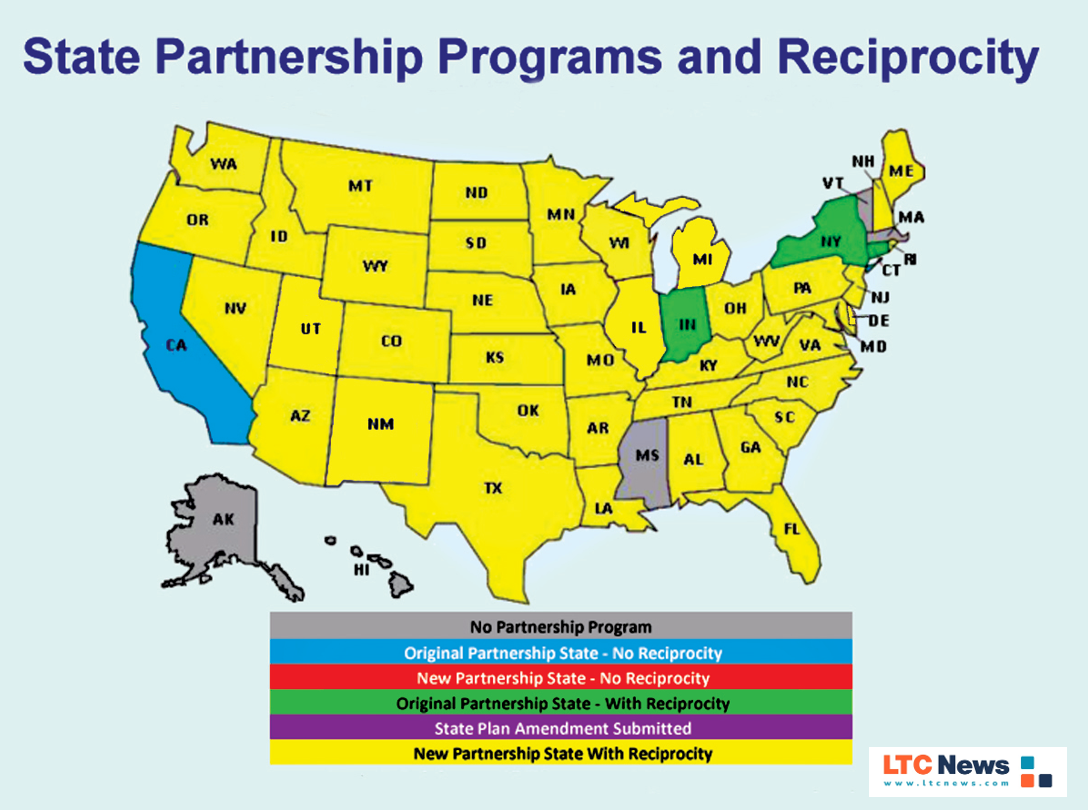
Texas participates in the federal-state Long-Term Care Insurance Partnership Program. Under the program, benefits paid by a qualifying, Partnership-certified LTC policy create a dollar-for-dollar asset disregard, meaning Medicaid ignores an amount of your countable assets equal to what your policy has paid out when determining Medicaid eligibility if you ever exhaust your LTC Insurance benefits. In practical terms, if your policy pays $700,000 in benefits, Medicaid disregards an additional $700,000 in assets you would otherwise have to spend down to pay for your extended care.
That matters in Texas, where the standard Medicaid asset limit for an individual applying for long-term care is $2,000 as of 2026, and a community spouse can typically retain between $32,532 and $162,660 under the Community Spouse Resource Allowance, figures that adjust periodically. For middle-income Texans who cannot self-fund years of nursing home care but do not want to spend down to near zero, a Partnership-qualified policy offers a meaningful middle path.
If you are relocating to Fort Worth, or anywhere in Texas, your existing LTC Insurance policy is likely reciprocal. See the map below.
Who Provides the Care: Family Caregivers, Professional Caregivers and Coordination
Fort Worth's growing senior population has brought a growing caregiver workforce with it, but the reality of caregiving in a new city deserves an honest look.
Some retirees move to Fort Worth specifically to be closer to adult children, hoping that proximity means built-in support later. It can, but it is not automatic. Adult children with careers, young families, and their own responsibilities may not be able to provide daily hands-on care even when they live nearby. Moving closer to family can ease loneliness and provide backup, but it does not eliminate the need to plan for professional care.
Moving away from family carries its own tradeoff. Retirees relocating to Fort Worth for the tax and lifestyle benefits, without family already in the area, should weigh that distance carefully. A lower cost of living and no state income tax do not replace a family member who can check in during a hospital stay or help coordinate a care transition.
Fort Worth's home care and home health agencies employ certified nursing assistants, home health aides and skilled nurses who can supplement or fully replace family caregiving. Geriatric care managers and hospital discharge planners in the Medical District also help families navigate transitions between hospital, rehabilitation, home care and long-term care settings, a service that becomes especially valuable if you relocate without a built-in local support network.
Why thismatters after 50: Whichever direction you move, closer to family or farther away, the honest question is the same: who will help coordinate your care, and how will you pay professionals to fill in the gaps family cannot? Long-Term Care Insurance and a realistic care budget matter regardless of how close your children live.
Is Fort Worth Right for Your Retirement?
Fort Worth gives retiring Baby Boomers and Gen Xers plenty to consider: no state income tax, a cost of living below most major Texas metros, an expanding medical district, and neighborhoods ranging from walkable historic districts to purpose-built 55-plus communities.
It also has real Texas character, from the Stockyards to college football Saturdays, that makes daily life feel like more than a spreadsheet decision.
Like everything in life, be sure to do your research before deciding to relocate and make sure your retirement plan addresses the cost of living, entertainment, healthcare, and long-term care costs that go wherever you decide to live.
Frequently Asked Questions
How much does long-term care cost in Fort Worth?
Costs vary depending on the type and amount of care needed. As of July 2026, in-home care averages about $5,960 per month in Fort Worth for a 44-hour workweek, with costs expected to continue rising over time. Assisted living, memory care and nursing home care typically cost even more, making advance financial planning increasingly important. The LTC News Cost of Long-Term Care Services Calculator can show you the current and projected costs of extended care services, not just in Fort Worth, but anywhere in the United States.
Does Long-Term Care Insurance cover care in Texas?
Yes. Qualified Long-Term Care Insurance policies generally pay benefits for covered services provided at home, in assisted living communities, memory care communities, adult day care centers and nursing homes when policy benefit triggers are met. Most modern claims begin with care at home.
Is Fort Worth a good place for active retirees?
Many retirees find Fort Worth appealing because of its combination of professional sports, college athletics, museums, performing arts, parks, restaurants, festivals and year-round cultural events. The Dallas-Fort Worth Metroplex also offers one of the nation's most diverse dining scenes, making it easy to stay socially engaged and entertain visiting family and friends.
Does Texas tax retirement income?
No. Texas does not have a state personal income tax. Social Security benefits, pensions, IRA and 401(k) withdrawals, and investment income are not subject to state income tax. However, homeowners should remember that Texas generally has higher property taxes than many other states.
What is the biggest mistake people make when relocating for retirement?
Many people focus on taxes, weather and housing prices but overlook future care needs. Before relocating, evaluate the availability of healthcare providers, long-term care services, transportation, caregiver support, proximity to family and a realistic plan to pay for extended care should it become necessary.
Is Fort Worth a good place to retire?
Fort Worth offers many advantages for retirees, including no state income tax, relatively affordable housing compared with several other major Texas cities, nationally recognized healthcare systems, a wide range of neighborhoods, and easy access to professional sports, arts, restaurants and cultural attractions. Whether it is the right place for you depends on your financial situation, healthcare needs, family location and long-term retirement goals.
What is the Texas Long-Term Care Insurance Partnership Program?
Texas participates in the federal-state Long-Term Care Insurance Partnership Program. Qualified Partnership policies provide dollar-for-dollar Medicaid asset protection if policy benefits are exhausted, allowing policyholders to preserve more of their assets than they otherwise could under standard Medicaid eligibility rules.
What should I look for when buying a retirement home?
Look beyond today's needs. Features such as single-story living, wide hallways, accessible bathrooms, low-maintenance exteriors, efficient air conditioning, covered parking and proximity to physicians and hospitals can make it easier to remain safely and comfortably in your home as you age.
Are there property tax benefits for older homeowners?
Yes. Texans age 65 and older who qualify for the homestead exemption receive additional property tax relief, including an extra school tax exemption and a tax ceiling on school district taxes for their primary residence. Eligible homeowners may also defer property taxes, although deferred taxes accrue interest.
What healthcare options are available for retirees?
Fort Worth's Medical District includes major hospitals, specialty physicians, rehabilitation centers, cancer care, heart and vascular programs, stroke centers, orthopedic care, home health providers and hospice organizations. The concentration of healthcare providers makes it easier for many retirees to access specialized medical care close to home.
Is Fort Worth less expensive than Dallas or Austin?
Generally, yes. Housing costs in Fort Worth remain below many parts of Dallas and are substantially lower than Austin. Living costs still vary by neighborhood and suburb, making it important to compare housing, transportation, healthcare and taxes before relocating.
Can I age in place in Fort Worth?
Yes. The area offers a full continuum of long-term care services, including home care, adult day care, assisted living, memory care, skilled nursing facilities and Continuing Care Retirement Communities (Life Plan Communities). Having these services available can make it easier to remain independent as needs change over time.

Sponsored