Everyday Tasks Getting Harder with Age? Simple Changes Can Help You Stay Independent
About This Article
From opening jars to bathing and grooming, small changes in strength, balance, and flexibility can make daily routines harder. Simple tools and occasional assistance can help older adults maintain independence. Recognize the signs that older loved ones need help and always be honest with yourself as you age.

Marcus Howard
Marcus Howard writes about alternative health topics for older adults such as CBD, acupuncture, and herbal medicine.
Table of Contents
- Why Does Personal Care Become Harder with Age?
- Start With Simple Changes at Home
- Choose Personal Care Products That Are Easy to Use
- Everyday Products Made Easier
- Don't Overlook Foot Care
- When Does Difficulty with Personal Care Become a Long-Term Care Concern?
- Getting Help Doesn't Mean Giving Up Independence
- Pay Attention to Small Changes Before They Become Big Problems
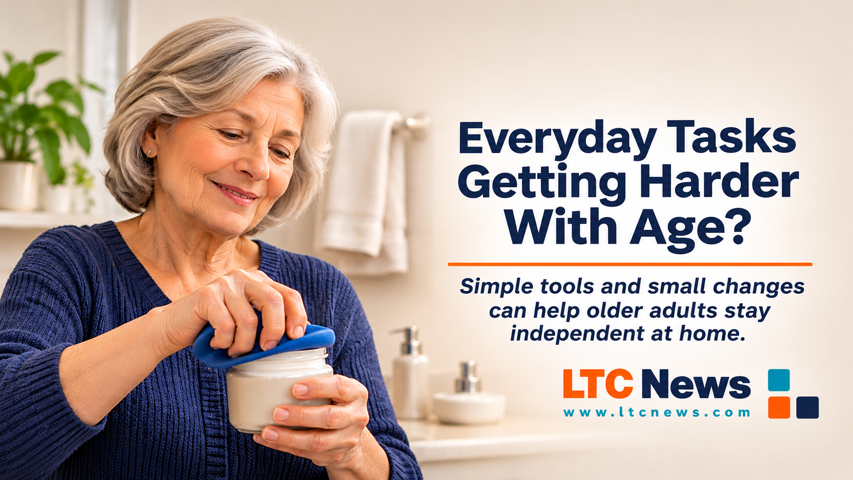
You've opened the same jar countless times. Now the lid seems harder to turn. Reaching your feet takes more effort than it once did. Reading the small print on a lotion bottle requires better lighting. Standing at the bathroom sink for several minutes leaves you feeling tired.
You may notice these changes in yourself or recognize them in an aging parent. Not every difficulty signals a serious health problem or the need for long-term care. However, changes in strength, balance, flexibility and vision can affect how comfortably and safely you manage everyday activities.
Dr. Emmanuel Osei-Boamah is a primary care physician with Mercy Family Care in Baltimore, Maryland, and is double board-certified in geriatric and internal medicine. He explains that as people get older, they gradually lose strength in their vision, balance system, body awareness, muscles, and reaction time. These changes make it harder to stay balanced. He warns that poor balance can put older adults’ ability to live independently at risk.
The good news is that small adjustments can often make a meaningful difference. While some of us may not like hearing it, one thing you or a loved one can do is exercise. Balanced exercises can be helpful.
The most effective programs incorporate movements encountered in daily life, such as reaching, bending, and transitional movements between positions. These “functional exercises” improve motor performance through task-specific training, rather than isolated muscle strengthening." — Dr. Emmanuel Osei-Boamah.
Why Does Personal Care Become Harder with Age?
Aging can bring physical changes that make familiar routines more demanding. Arthritis may affect your ability to grip containers or manipulate small objects. Reduced flexibility can make reaching your feet difficult. Changes in vision may complicate reading instructions, while balance problems can make bathing or dressing less safe.
Some difficulties develop gradually. Others may result from medication side effects, injuries or medical conditions that deserve attention. Don't automatically dismiss new or worsening difficulties as normal aging. If personal care becomes noticeably harder, discuss the changes with a healthcare professional.
“Life happens, and there are strategies and tools that can make a difference,” says Nicole Fukuzawa, an occupational therapist with Banner Health. An occupational therapist can also evaluate everyday activities and recommend practical ways to maintain independence.
Start With Simple Changes at Home
Before purchasing special equipment or changing an entire routine, identify what's causing the difficulty. Sometimes the solution is as simple as moving frequently used products to an accessible shelf or choosing a container that's easier to open.
Consider these adjustments:
- Improve lighting. Brighter, well-positioned lights make labels, grooming supplies and potential hazards easier to see.
- Keep essentials within reach. Store frequently used products between waist and shoulder height to reduce bending and stretching.
- Sit when practical. A stable chair can make grooming, applying lotion or other personal care activities less tiring.
- Choose easier packaging. Pump dispensers, larger handles and clearly printed labels may be more manageable than small jars or tightly sealed containers.
- Reduce bathroom hazards. Properly installed grab bars, nonslip surfaces and appropriate shower seating can improve safety.
The Centers for Disease Control and Prevention (CDC) reports that one in four Americans age 65 and older falls each year, making falls the leading cause of injury among older adults. The CDC recommends better lighting, removing tripping hazards and installing bathroom grab bars to help reduce fall risks.
Choose Personal Care Products That Are Easy to Use
A product may work well for someone younger but become frustrating when grip strength or flexibility changes. Consider the entire routine, not just what's inside the container. Can you open it comfortably? Read the directions? Reach the area where it needs to be applied? Clean up afterward?
Eric Gregoire, owner of Mountain Legend Balm Co., says families should consider these practical details before selecting products for an older adult.
When choosing a personal-care product for an older adult, consider the whole routine: opening the container, reading the directions, reaching the area, and cleaning up afterward. Ask which step is difficult before changing anything. Sometimes help opening a lid or moving supplies within reach is all the person wants.” — Eric Gregoire.
For example, Mountain Legend Balm Co.'s Nerve Comfort Balm is marketed as a massage balm containing ingredients such as MSM, arnica, menthol, and botanical oils. Follow the manufacturer's safety instructions, including any patch-testing recommendations. Avoid applying products to broken skin unless directed by a healthcare professional.
Anyone experiencing persistent burning, tingling, numbness, or pain should seek medical advice rather than relying just on a topical personal care product to address the underlying cause; however, some people see a benefit.
Everyday Products Made Easier
Simple, everyday products can make personal care easier for older adults, especially when arthritis, reduced grip strength, or limited flexibility makes familiar tasks more challenging. Lotions and soaps with pump dispensers may be easier to use than bottles with small caps, while electric toothbrushes with larger handles, easy-squeeze toothpaste tubes and shampoo bottles with flip-top lids can reduce frustration.
Adaptive tools can also help older adults continue using products they already own. Rubber jar grippers, electric jar openers, bottle-opening aids and easy-grip utensils can make everyday tasks more manageable. Long-handled sponges, lotion applicators and reachers can reduce the need to bend or stretch.
For people with weak grip strength or arthritis, Fukuzawa recommends soft foam tubing as a simple, all-purpose tool.
It can be applied to various items like toothbrushes, utensils, pens and tools to improve independence and comfort when you’re completing daily tasks like eating or writing. It can help if you have a weak grip, arthritis, or limits to your dexterity.” — Nicole Fukuzawa.
These relatively inexpensive products can help older adults maintain independence, preserve familiar routines and avoid needing assistance with tasks they can still manage with the right tools.
Don't Overlook Foot Care
Feet become harder to inspect and care for when bending, balance or vision becomes a problem. For people with diabetes, regular foot care is particularly important.
The National Institute of Diabetes and Digestive and Kidney Diseases (NIDDK) recommends checking your feet daily for cuts, blisters, redness, swelling and other changes. The CDC reinforces that advice, recommending daily foot checks even when your feet feel fine. If reaching your feet is difficult, use a mirror or ask someone to help with the inspection. Diabetes can damage nerves and reduce sensation, meaning a person may develop a foot injury without feeling pain.
People with diabetes should avoid applying lotion between their toes because trapped moisture can contribute to infection. They should also seek prompt medical attention for wounds, sores, or signs of infection. Persistent numbness, new weakness, unexplained pain or changes in walking deserve medical attention, whether or not someone has diabetes.
When Does Difficulty with Personal Care Become a Long-Term Care Concern?
Occasional help opening a jar or reaching a shelf is very different from needing regular assistance with bathing, dressing or using the toilet.
Healthcare professionals, the federal government, and Long-Term Care Insurance companies recognize six basic activities of daily living (ADLs):
- Bathing
- Dressing
- Toileting
- Transferring, such as getting in or out of a bed or chair
- Continence
- Eating
When someone begins needing hands-on assistance or supervision with these activities, it may signal a more significant care need. Qualified Long-Term Care Insurance policies require certification that a person cannot perform at least two ADLs without substantial assistance for an expected period of at least 90 days, or requires substantial supervision because of severe cognitive impairment.
Needing help with an occasional personal care task does not automatically meet those requirements. Still, recognizing changes early gives families time to explore solutions before a crisis develops.
Learn More: LTC News Learning Center
Getting Help Doesn't Mean Giving Up Independence
Many older adults resist assistance because they fear losing control over their daily lives. Yet help doesn't have to be an all-or-nothing decision. An aging parent may need someone to prepare the bathroom, organize medications or assist with bathing while remaining independent in most other activities. Ask what assistance would be welcome rather than assuming what's needed.
When additional support becomes necessary, professional in-home caregivers can assist with personal care, dressing, bathing and other daily activities, depending on the person's needs. Families can use the LTC News Caregiver Directory to explore home care agencies, assisted living communities, memory care facilities and other long-term care services nationwide.
You can also use the LTC News Cost of Care Calculator to research current and projected long-term care costs in your area. Medicare does not cover ongoing custodial care when that is the only care needed. It may cover qualifying short-term skilled care under specific conditions, including up to 100 days of skilled nursing facility care per benefit period when coverage requirements are met. Medicaid can cover long-term services for eligible individuals, subject to financial and functional requirements.
Long-Term Care Insurance, when purchased before significant health problems develop, can help pay for covered care at home or in a facility, reducing the financial and caregiving burden on loved ones. Benefits from qualified policies are tax-free, subject to applicable rules.
Pay Attention to Small Changes Before They Become Big Problems
A difficult jar lid, an awkward bathroom shelf or a grooming routine that suddenly feels exhausting may seem like minor inconveniences. Sometimes they are. But when everyday tasks become consistently harder, paying attention can help you identify health concerns, prevent accidents and find practical solutions.
The goal isn't to eliminate every challenge associated with aging. It's to make daily life safer, more comfortable and as independent as possible. Often, the right adjustment is a small one, made before the person begins avoiding the task altogether.
Adult children of aging parents should carefully observe how their parents manage everyday activities and arrange appropriate help when needed. At the same time, planning for the future costs and challenges of aging should be built into your own retirement plan.
Frequently Asked Questions
Why is daily foot care important for older adults with diabetes?
Diabetes can damage nerves and reduce feeling in the feet, making injuries difficult to notice. The CDC recommends checking feet every day, even when they feel fine. A mirror or another person's assistance can help when reaching or seeing the feet is difficult. Cuts, sores, swelling, or signs of infection should receive prompt medical attention.
How can older adults make their bathrooms safer?
Better lighting, properly installed grab bars, nonslip surfaces, and appropriate shower seating can reduce hazards. Keeping frequently used products within easy reach also limits unnecessary bending and stretching. The CDC reports that one in four Americans age 65 and older falls each year, making fall prevention especially important.
Why does everyday personal care become more difficult with age?
Changes in muscle strength, flexibility, vision, balance and coordination can make everyday activities more challenging. Arthritis and certain medical conditions can also affect your ability to open containers, bathe, dress, or reach your feet. New or worsening difficulties should be discussed with a healthcare professional rather than automatically attributed to aging.
When does difficulty with personal care indicate a need for long-term care?
Occasional difficulty opening a jar or reaching a shelf does not necessarily mean someone needs long-term care. However, regularly needing assistance with bathing, dressing, toileting, eating, transferring, or continence may indicate a more significant need. These six activities of daily living are also used when evaluating eligibility for benefits under qualified Long-Term Care Insurance policies.
What simple products can help older adults remain independent?
Products with pump dispensers, easy-open lids, larger handles, and readable labels can make personal care easier. Rubber jar grippers, electric jar openers, long-handled sponges, reachers, and foam grips for utensils or toothbrushes can also help people with limited strength or flexibility manage everyday tasks.


Sponsored