Essential Home Modifications for Aging in Place Comfort and Safety

About This Article
Several essential home modifications can improve safety, support independence, and help reduce long-term care risks for an older loved one or you as you age in place.

Mallory Knee
Mallory Knee is a freelance writer for multiple online publications where she can showcase her affinity for all things beauty and fashion.
Table of Contents
- Why Home Modifications Matter More Than Ever
- Safer Entryways and Doorways
- Bathroom Upgrades That Prevent Falls
- Kitchen Adjustments That Support Independence
- Climate Control and Air Quality
- Bedroom Safety and Nighttime Mobility
- Flooring That Supports Stability
- Smart Technology for Safety and Peace of Mind
- How Home Modifications Help You Avoid Long-Term Care
- Planning Ahead—Room by Room
- Preparing for the Future
You probably don’t think about your home as a risk. It’s familiar. Comfortable. Safe. You are used to the surroundings and often ignore things others may notice.
But for millions of older adults, everyday spaces like bathrooms, stairs, and even doorways quietly become the reason independence is lost—often after a single fall. It often happens suddenly: a fall, a hospital visit, or a moment when getting up from a chair is not as easy as it used to be.
Most older adults want to remain at home as they age.
This guide explains the essential home modifications that improve safety, support independence, and help reduce the risk of needing long-term care.
Planning ahead gives you more control, protects your lifestyle, and eases the burden on your family.
Why Home Modifications Matter More Than Ever
Aging in place isn’t just a preference. It is the reality for most Americans. According to AARP, nearly 77% of adults age 50 and older want to remain in their homes long-term. But without preparation, that goal can quickly become difficult.
For many of us, home is comfort. It’s family, friends and neighbors. It reflects our culture and our community. As we begin to lose control of other aspects of life, staying in our home says, ‘I can accept help, but I am still running the show.’ — Emily Johnson, licensed clinical social worker at the UCHealth Lone Tree Primary Care and Lone Tree Seniors Clinic.
However, our homes can be a danger zone for many older adults. The Centers for Disease Control and Prevention reports that more than 14 million older Americans experience a fall each year, making falls a leading cause of injury, long-term care, and death among adults age 65 and older.
A fall can change everything for an older adult. Prevention is critical to maintaining independence. — National Institute on Aging.
Falls are not a normal part of aging, and many are preventable with simple home modifications and increased awareness.
Most falls happen at home—often in spaces you use every day.
At the same time, about 56 percent of Americans age 65 and older will require long-term services and supports that meet the federal definition of long-term care, according to the U.S. Department of Health and Human Services.
Families are already feeling the pressure. More than 63 million Americans now provide unpaid care, many stepping into the role with little preparation or training. The responsibility can be overwhelming, especially when caring for a parent.
Yet, not every long-term care situation begins with a crisis. Some can be delayed, and others even avoided, by creating a safer living environment early. Start at home—because it is where most people prefer to live and where thoughtful changes can help preserve independence longer.
Safe aging in place requires thoughtful layout adjustments that reduce physical strain. For many, the need for home changes does not become clear until after a fall or health crisis, when decisions are rushed, expensive, and emotionally overwhelming.
Safe aging in place may also include getting a qualified in-home caregiver as well at some point. The proper home environment will allow a caregiver to better take care of you or a loved one when more assistance is needed. You can search for quality caregivers and other long-term care facilities by using the LTC News Caregiver Directory.
The right modifications can:
- Reduce fall risk
- Improve mobility and accessibility
- Support chronic health conditions
- Extend independence at home
- Delay or reduce long-term care costs
Safer Entryways and Doorways
Your entryway is your home’s first safety test. Even a small step or narrow doorway can become a serious barrier over time.
Key upgrades:
- Zero-step entryways or ramps
- Doorways widened to at least 36 inches
- Lever-style handles instead of knobs
- Motion-sensor outdoor lighting
These changes improve access for you, visitors, and caregivers while reducing fall risk.
Bathroom Upgrades That Prevent Falls
Bathrooms are one of the most dangerous areas in your home.
The National Center for Health Statistics reports that fall-related death rates among older adults continue to rise, with many incidents occurring in bathrooms.
Focus on these essential upgrades:
- Secure grab bars anchored into wall studs
- Walk-in showers or roll-in designs
- Non-slip flooring or textured tile
- Handheld shower heads
- Comfort-height toilets
These are not cosmetic improvements. They are critical safety features that can prevent serious injury.
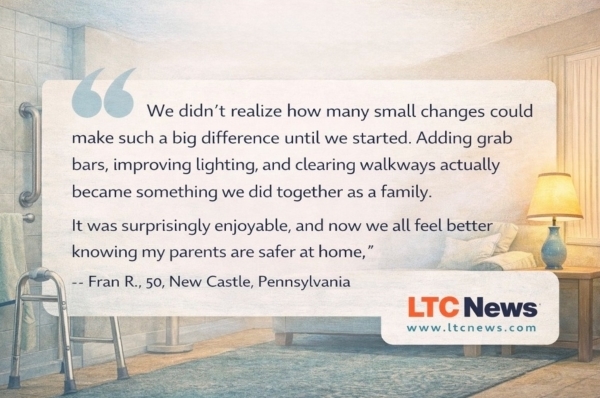
Share your experiences and insights on aging, caregiving, health, retirement, and long-term care with LTC News. Contact us today —Contact LTC News.
Kitchen Adjustments That Support Independence
The kitchen requires constant movement, reaching, and lifting.
Without adjustments, it can quickly become unsafe.
Smart modifications include:
- Pull-out shelves and drawers
- Lowered appliances to counter height
- Easy-grip cabinet handles
- Improved lighting for food prep areas
These changes help you stay independent and reduce strain during daily tasks.
Climate Control and Air Quality
As you age, your body becomes more sensitive to temperature changes and indoor air quality. Uneven heating and cooling can affect sleep, breathing, and overall well-being.
Research supports how indoor temperature has a significant impact on older adults.
Our findings underscore the importance of understanding how environmental factors, like indoor temperature, impact cognitive health in aging populations. — Amir Baniassadi, assistant scientist at the Hinda and Arthur Marcus Institute for Aging Research, quoted in the New York Post.
A properly controlled temperature environment is crucial for protecting the cognitive well-being of older adults. Relying on a single thermostat can lead to unnecessary energy usage and uneven comfort, particularly in bedrooms or frequently used living areas.
In these cases, exploring Tri-Zone Ductless Systems can help homeowners control the temperature in three separate spaces independently without major renovations, making them a practical solution for improving both comfort and energy efficiency.
Modern zoning systems and improved air filtration can:
- Maintain consistent temperatures
- Improve indoor air quality
- Reduce respiratory strain
- Support better sleep
This helps protect long-term health and daily comfort.
Bedroom Safety and Nighttime Mobility
Nighttime is one of the most common times for falls.
Disorientation, poor lighting, and obstacles increase risk.
Key improvements:
- Motion-activated nightlights
- Clear, clutter-free walking paths
- Proper bed height for easy entry and exit
- Accessible closet storage
These small changes can significantly reduce nighttime accidents.
Flooring That Supports Stability
Flooring has a direct impact on balance and mobility. Slippery or uneven surfaces are a leading cause of falls.
Safer flooring choices:
- Low-pile carpet for traction
- Non-slip finishes on hard surfaces
- Secured rugs with non-slip backing
- Smooth transitions between rooms
These upgrades promote steady, confident movement throughout your home.
Smart Technology for Safety and Peace of Mind
Technology can quietly support independence without disrupting your lifestyle.
Consider:
- Video doorbells to screen visitors
- Smart locks to eliminate key handling
- Medical alert systems for emergencies
- Remote monitoring for family peace of mind
These tools provide an added layer of safety and reassurance.
How Home Modifications Help You Avoid Long-Term Care
Home modifications require investment. Long-term care costs, whether in-home or in facilities such as assisted living and memory care, are far more expensive.
You can explore current local extended care costs using the LTC News Cost of Care Calculator, which tracks provider pricing nationwide. In many areas, in-home care exceeds $5,000 to $7,000 per month, with facility care costing significantly more.
Medicare and traditional health insurance only cover short-term skilled care—typically up to 100 days under limited conditions. They do not pay for ongoing assistance with daily activities like bathing, dressing, or supervision due to cognitive decline. Without a plan, families often pay out of pocket or rely on unpaid caregiving. Both can create financial and emotional strain.
Long-Term Care Insurance provides tax-free benefits that can be used for care at home, assisted living, or nursing care. Some LTC policies will pay limited benefits for home modifications to allow someone to remain at home safely. This gives you more control over where and how you receive care while protecting your savings.
Quick Aging-in-Place Safety Checklist
- Install grab bars in bathrooms
- Remove loose rugs and clutter
- Improve lighting throughout the home
- Ensure at least one step-free entrance
- Add night lighting in hallways and bedrooms
- Evaluate stair safety and handrails
Planning Ahead—Room by Room
You do not need to renovate everything at once. Make it a process,
Start with the highest-risk areas:
- Bathroom
- Entryways
- Bedroom
- Flooring
Then expand improvements over time.
Preparing for the Future
Aging in place is not about holding on to the past. It is about preparing for the future. The right modifications protect your safety, preserve your independence, and improve your quality of life.
Take a walk through your home or the home of an older loved one today. Is the home age- and disability-friendly? What would need to change for you—or your parents—to stay safe?
Then think about the care needs you or a loved one will need in the years ahead. Those long-term care costs will be your responsibility unless you prepare now. For many families, Long-Term Care Insurance is an affordable way to address the physical, emotional, and financial burdens that long-term care and longevity bring to you and your family.
Seek professional help to get accurate Long-Term Care Insurance quotes from all the top insurance companies that offer these products. A specialist will help you determine which options make sense based on your age, health, and family history.
The earlier you plan, the more choices you have. Start being proactive instead of reactive.
Frequently Asked Questions
How much does in-home care cost compared to home modifications?
In many areas, in-home care can cost $5,000 to $7,000 per month or more. In comparison, many home modifications are one-time investments that can delay or reduce the need for ongoing care.
What role does family play in aging in place?
Family members often become caregivers, providing support with daily activities and safety. With more than 63 million Americans providing unpaid care, making a home safer can reduce stress, improve outcomes, and ease the burden on loved ones.
How can smart technology improve safety for older adults at home?
Smart technology can enhance safety and peace of mind by offering:
- Video doorbells for security
- Smart locks for easier access
- Medical alert systems for emergencies
- Remote monitoring for family members
These tools help you stay independent while keeping loved ones informed.
How does Long-Term Care Insurance help with aging in place?
Long-Term Care Insurance provides tax-free benefits that can be used for in-home care, assisted living, or nursing care. Some policies may also cover limited home modifications that help you remain safely at home longer.
What are the biggest safety risks in a home for older adults?
The most common risks include:
- Slippery bathroom floors
- Poor lighting
- Loose rugs and clutter
- Stairs without proper railings
- Narrow doorways and uneven surfaces
These hazards increase the likelihood of falls, which are a leading cause of injury and long-term care needs.
Does Medicare cover home modifications for aging in place?
No. Medicare generally does not cover home modifications such as grab bars, ramps, or walk-in showers. It only covers limited short-term medical care. Long-term care services and home safety improvements are typically paid out of pocket or through other planning tools.
How can you prevent falls at home for seniors?
You can reduce fall risk by:
- Installing grab bars in bathrooms
- Improving lighting throughout the home
- Removing tripping hazards like rugs and clutter
- Using non-slip flooring
- Adding handrails and step-free entrances
Small changes can significantly improve safety and confidence.
When should you start making home modifications for aging in place?
The best time to start is before a health issue or fall occurs—typically in your 50s or early 60s. Planning early allows you to make thoughtful, cost-effective changes instead of reacting during a crisis.
Why is aging in place important for older adults?
Most older adults prefer to remain in their homes because it provides comfort, familiarity, and a sense of independence. Aging in place allows you to stay connected to your community while maintaining control over your daily life.
What are the most important home modifications for aging in place?
The most important home modifications focus on preventing falls and improving accessibility. Start with high-risk areas like bathrooms, entryways, and flooring. Key upgrades include grab bars, walk-in showers, non-slip flooring, improved lighting, and at least one step-free entrance.


Sponsored