CMS Launches $275 Million Initiative to Recruit Nurses for Nursing Homes
About This Article
New federal-state program offers eligible nurses up to $50,000 in financial incentives for a three-year commitment to work in nursing homes, targeting rural communities and areas with staffing shortages.

Table of Contents
- Why Nursing Home Staffing Matters to Residents and Families
- Nurses Can Receive Up to $50,000 in Financial Assistance
- Who Qualifies for the Nursing Home Program?
- Temporary Exception for Recently Hired Nurses
- Rural Communities Among the Primary Targets
- What Families Should Know When Choosing a Nursing Home
- Growing Long-Term Care Needs Add to Staffing Pressures
- How Nurses Can Apply
A new $275 million federal-state initiative aims to recruit and retain more than 4,000 nurses in nursing homes nationwide, offering financial incentives to address staffing shortages that can affect the quality and consistency of care for older adults.
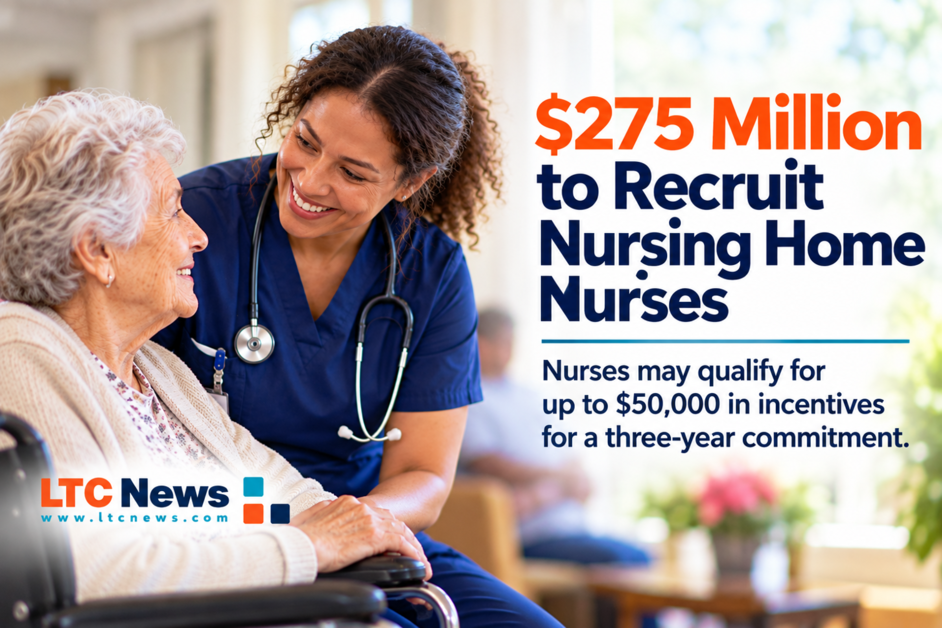
The Centers for Medicare & Medicaid Services (CMS) announced the Nurses for Nursing Homes initiative on October 23, 2026. Eligible registered nurses (RNs) and licensed practical or vocational nurses (LPNs/LVNs) can receive up to $40,000 in student loan repayment and a $10,000 stipend, for a combined maximum of $50,000. In exchange, participants must commit to three years of qualifying employment, generally working an average of at least 30 hours per week at an eligible nursing home.
All 50 states and the District of Columbia are participating. The program includes rural nursing facilities and additional nursing homes in communities experiencing significant nursing workforce shortages. CMS is contributing $100 million, while states have committed at least another $175 million. Funding comes from civil monetary penalties collected from nursing homes for regulatory violations, rather than a new congressional appropriation.
Applications open October 26, 2026.
Why Nursing Home Staffing Matters to Residents and Families
Nursing homes care for people with complex medical or age-related conditions, significant physical limitations, or cognitive impairment that requires ongoing supervision and assistance.
Residents may need help with bathing, dressing, eating, and other daily activities, along with medication management, wound care, and monitoring for changes in their health. Registered nurses and licensed practical nurses play important roles in providing and coordinating these services.
When nursing homes struggle to recruit and retain qualified nurses, residents may experience care disruptions, less continuity with familiar caregivers, and delays in recognizing changes in their condition. Families also consider staffing when choosing a nursing home for an aging parent or spouse.
CMS includes staffing information in its Five-Star Quality Rating System, which evaluates nursing homes on staffing, health inspections, and quality measures. The new initiative is intended to attract more nurses into long-term care and encourage them to remain in those positions.
HHS Secretary Robert F. Kennedy Jr. said the program would expand employment opportunities while strengthening nursing home care.
This initiative will recruit and retain thousands of nurses, expand care in rural and high-need communities, and create new pathways into long-term care careers." — HHS Secretary Robert F. Kennedy Jr.
CMS Administrator Dr. Mehmet Oz emphasized the importance of stable relationships between residents and caregivers.
When we offer student loan repayment through Nurses for Nursing Homes, we're not just giving nurses and nursing students future financial relief; we're supporting families who want their loved ones to receive quality care in nursing homes." —Dr. Mehmet Oz.
Nurses Can Receive Up to $50,000 in Financial Assistance
The initiative provides two financial incentives for qualifying nurses.
- Student loan repayment: Up to $40,000 for participants with eligible nursing education debt.
- Incentive stipend: Up to $10,000 for qualifying nurses. Nurses with eligible student loans may also receive the stipend, while those without qualifying debt generally must have graduated within the previous two years.
Nurses who meet the requirements for both benefits may receive up to $50,000 over their three-year service commitment. According to CMS, payments are distributed quarterly while participants remain eligible and employed in qualifying positions. Payments are taxable, and participants must meet applicable tax and loan repayment obligations.
The financial assistance is not provided as a single upfront payment. CMS expects the initiative to support more than 4,000 nurses nationwide. Actual participation will depend on applications, available funding, and the ability of eligible facilities to recruit and retain nurses.
Who Qualifies for the Nursing Home Program?
CMS established specific eligibility requirements for participating nurses.
Applicants generally must:
- Hold an active RN or LPN/LVN license when qualifying employment begins.
- Work an average of at least 30 hours per week at an eligible facility.
- Commit to three years of qualifying service.
- Have eligible educational debt to receive student loan repayment, or meet the applicable graduation requirements for a stipend without qualifying debt.
- Generally, have avoided employment in a nursing home or state nursing home inspection agency during the 60 days before opening an application account.
A limited number of state agency nursing home inspector positions also qualify.
Nursing students and nurses who have not yet secured qualifying employment may open an application account and begin the process. However, they must obtain the required license and qualifying employment before receiving payments.
Temporary Exception for Recently Hired Nurses
CMS is allowing a temporary exception to the 60-day employment restriction. During the program's first 90 days, October 26, 2026, through January 24, 2027, nurses who began working at an eligible nursing home between July 28 and October 25, 2026, may qualify.
This exception allows certain recently hired nurses to participate, even though they began working before applications opened. Other nurses already employed in nursing homes generally cannot qualify simply by transferring to another facility.
Applicants should review the complete CMS eligibility requirements and FAQ before making employment decisions.
Rural Communities Among the Primary Targets
Recruiting nurses can be especially difficult for nursing homes in rural areas. Smaller labor pools, competition from hospitals, geographic distances, and limited access to nursing education programs can make it challenging for facilities to fill positions.
CMS says all rural nursing facilities are eligible for the initiative, along with additional nursing homes in areas with greater workforce shortages. The agency is working with workforce organizations, nursing schools, and participating facilities to connect prospective nurses with employment opportunities.
For families in smaller communities, staffing shortages can be especially concerning when there are few nearby nursing homes to choose from. However, financial incentives do not necessarily resolve every challenge of recruiting and retaining nurses. Compensation, workload, scheduling, management practices, and working conditions can also influence whether nurses remain in long-term care.
The program's longer-term effectiveness will depend partly on whether participating facilities can retain nurses after their three-year financial commitments end.
What Families Should Know When Choosing a Nursing Home
For families evaluating nursing homes, the initiative highlights the importance of qualified nursing staff. Consistent staffing can help residents receive appropriate monitoring, medication management, and assistance with daily needs. However, a facility's participation in the initiative does not guarantee adequate staffing or high-quality care.
Families should continue evaluating nursing homes based on staffing levels, inspection findings, quality measures, and the facility's ability to meet their loved one's individual needs. The federal Medicare Care Compare website provides nursing home ratings and information that can help consumers compare facilities.
The LTC News Caregiver Directory also lets families search for nursing homes, assisted living facilities, memory care communities, and in-home care providers across the United States. When possible, families should visit facilities, ask about staffing and turnover, and discuss how residents' medical and personal care needs are addressed.
Growing Long-Term Care Needs Add to Staffing Pressures
The initiative comes as an aging population increases demand for long-term care services. Long-term care includes assistance with everyday activities and supervision for people with chronic illnesses, disabilities, or cognitive impairment. These services may be provided at home, in assisted living or memory care communities, or in nursing homes.
Nursing homes generally provide a higher level of ongoing medical and personal care than assisted living facilities. For families, finding appropriate care is only part of the challenge. Paying for extended care can also create significant financial pressure. Medicare does not cover ongoing custodial long-term care. Its nursing facility benefits are primarily limited to qualifying short-term skilled care, subject to coverage requirements.
Medicaid may cover nursing home care for people who meet financial and functional eligibility requirements. Long-Term Care Insurance can help pay for covered services, depending on the policy's benefits and conditions.
The LTC News Cost of Care Calculator provides current and projected costs for nursing homes, assisted living, memory care, and in-home care in communities nationwide. Although improving nursing home staffing could help strengthen access to care, it does not eliminate the need for families to prepare for the financial and caregiving consequences of aging.
How Nurses Can Apply
Applications for Nurses for Nursing Homes open October 26, 2026. Interested nursing students, recent graduates, and licensed nurses can visit the official Nurses for Nursing Homes website to review eligibility requirements, create an account, and search for participating facilities and available positions.
Applicants should carefully review the three-year employment commitment, payment provisions, and eligibility requirements. Financial incentives are subject to available funding, and applicants should not assume that opening an account guarantees an award.
CMS has published additional details in its Nurses for Nursing Homes Frequently Asked Questions.
The initiative represents a substantial investment in attracting nurses to long-term care. Whether it leads to lasting improvements in staffing stability and resident care will become clearer as participating facilities hire nurses and the program progresses.
The Nurses for Nursing Homes initiative is primarily limited to nurses working in eligible Medicare- or Medicaid-certified nursing homes. Nurses working exclusively in assisted living communities, standalone memory care facilities, or home care generally do not qualify for the financial incentives. However, nurses providing care in a memory care unit within an eligible certified nursing home may qualify if they meet the program's employment and other requirements. The distinction depends on the facility's certification and eligibility, not the type of residents receiving care.


Sponsored