Can Moon Phases Affect Sleep After 60? What Science Says
About This Article
Sleep often changes with age, leading many older adults to wonder why. Some believe lunar cycles influence sleep quality, and a few scientific studies suggest a possible connection.

Marcus Howard
Marcus Howard writes about alternative health topics for older adults such as CBD, acupuncture, and herbal medicine.
Table of Contents
- Why Sleep Changes After 60
- The Moon-Sleep Connection: More Than Just a Myth?
- Why Tracking Moon Phases May Still Be Useful
- Why This Matters as You Age
- What Matters More Than the Moon
- Sleep, Brain Health, and Healthy Aging
- Sleep Problems Can Affect Independence
- Sleep Tips After 60
- When Sleep Problems May Signal Something More Serious
- A Practical Experiment Worth Trying
- Understanding Your Sleep Patterns Can Help You Age Better
If you've reached your 60s or beyond and find yourself awake at 3 a.m., staring at the ceiling and wondering why sleep feels different than it used to, you're not alone. Many older adults report falling asleep earlier, waking more frequently during the night, or rising before dawn, unable to return to sleep. Others get what seems like a full night's rest but still wake feeling exhausted.
Sleep changes are a normal part of aging, but that doesn't make them any less frustrating. As a result, some people are looking beyond traditional sleep advice and paying attention to something humans have watched for thousands of years—the moon.
In old Hollywood films, a full moon meant one thing: trouble. Werewolves howled, monsters stirred, and nobody slept peacefully. Decades later, science is discovering the moon may still be disrupting your sleep, just in far less dramatic fashion.
Could lunar cycles influence sleep? The connection between the moon and sleep remains a popular topic on platforms like Nebula, a community where questions about natural cycles, self-awareness, and personal wellness rhythms are regularly explored. However, the answer is more complicated than folklore suggests.
We know that light, whether artificial or natural, can have a suppressant effect on melatonin, so it is plausible that moonlight could have a natural wake promoting effect," — Dr. Alex Dimitriu, a psychiatrist and sleep medicine specialist, and founder of Menlo Park Psychiatry and Sleep Medicine, quoted in Popular Science.
Frank Sinatra crooned "Fly Me to the Moon." Dean Martin sang "That's Amore" under its glow. For generations, the moon has been romanticized in songs, stories, and cinema. But if you're over 60 and waking at 3 a.m., the moon may be less a romantic muse and more a quiet accomplice in your sleepless nights.
Why Sleep Changes After 60
Growing older doesn't necessarily mean you'll sleep less, but the quality and structure of sleep often change. Deep sleep, the restorative stage that helps your body recover and supports memory and learning, tends to decrease with age. At the same time, nighttime awakenings become more common.
Several factors contribute to these changes:
- Shifts in circadian rhythms
- Reduced production of melatonin
- Chronic pain or arthritis
- Increased nighttime bathroom visits
- Medication side effects
- Heart disease and diabetes
- Sleep apnea and other sleep disorders
- Stress, anxiety, and depression
The effects extend beyond feeling tired. Poor sleep can influence memory, concentration, mood, balance, immune function, and overall quality of life.
Researchers increasingly recognize that quality sleep is one of the foundations of healthy aging.
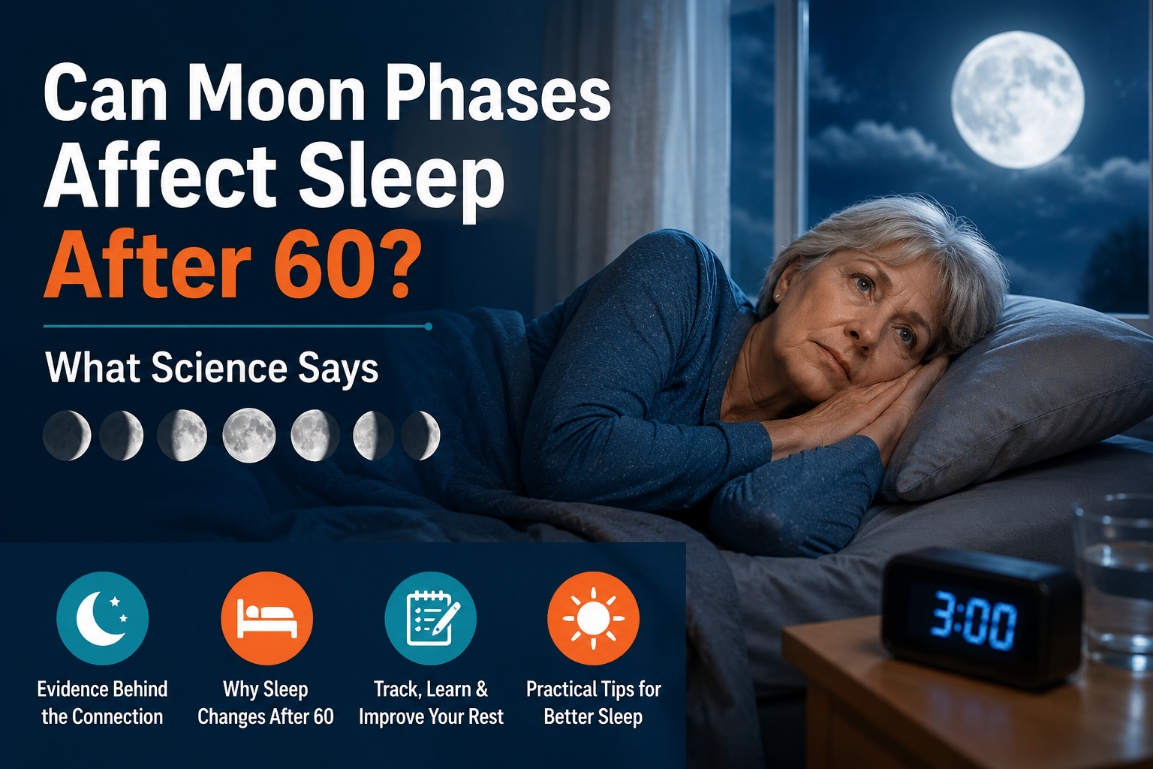
The Moon-Sleep Connection: More Than Just a Myth?
Have you ever looked out the window during a restless night and noticed a bright full moon hanging overhead? You're not alone.
For generations, people have blamed full moons for poor sleep, unusual dreams, and nighttime restlessness. While many scientists once dismissed the idea as folklore, several modern studies have uncovered evidence suggesting the relationship may be more complicated than previously thought.
One widely cited study published in Current Biology by researchers led by Professor Christian Cajochen found participants took longer to fall asleep around the full moon, experienced less deep sleep, and reported lower sleep quality.
Dr. Cajochen, Head of the Center for Chronobiology, Psychiatric Hospital of the University of Basel, Switzerland, says the research is the first reliable evidence that lunar rhythm can modulate sleep structure in humans.
The lunar cycle seems to influence human sleep, even when one does not 'see' the moon and is not aware of the actual moon phase." — Christian Cajochen, PhD.
Other studies have observed similar trends, while some have found no meaningful relationship at all. The result is a scientific picture that remains far from settled.
Sleep specialists generally agree that if lunar cycles influence sleep, the effect appears relatively small compared with factors such as medications, health conditions, stress levels, and daily habits.
Still, the possibility remains intriguing.
Humans evolved for thousands of years before electric lighting existed. Moonlight represented one of the brightest natural sources of nighttime illumination. Some researchers believe our ancestors may have adapted their activities around lunar cycles, and remnants of that relationship could still influence sleep patterns today.
We hypothesize that the patterns we observed are an innate adaptation that allowed our ancestors to take advantage of this natural source of evening light that occurred at a specific time during the lunar cycle." — Leandro Casiraghi, PhD, Researcher, Laboratorio Interdisciplinario del Tiempo (LITERA), Universidad de San Andrés, Buenos Aires, then-postdoctoral researcher Leandro Casiraghi at the University of Washington.
Whether that influence remains biologically significant is still being debated.
Why Tracking Moon Phases May Still Be Useful
Even if the moon has little direct impact on sleep, tracking lunar cycles alongside your sleep habits can provide valuable insights. Think of it as a sleep journal with an added layer of observation.
Record:
- Bedtime
- Wake-up time
- Number of nighttime awakenings
- Energy levels
- Mood
- Physical activity
- Stress levels
- Current moon phase
After several weeks, patterns may emerge. You might discover that poor sleep follows stressful days, late meals, alcohol consumption, reduced exercise, or inconsistent routines. Some people also notice recurring patterns around certain lunar phases.
Whether those patterns are caused by the moon or simply coincide with it matters less than the awareness the tracking creates.
Why This Matters as You Age
Poor sleep isn't just frustrating. Sleep problems have been linked to increased fall risk, memory issues, depression, cardiovascular disease, weakened immunity, and reduced independence later in life.
For older adults hoping to remain active, healthy, and self-sufficient, protecting sleep may be one of the most important—and often overlooked—parts of healthy aging.
Adult children should also monitor changes in a parent's sleep habits. Family members often notice increased fatigue, daytime napping, confusion, irritability, or nighttime wandering before the older adult recognizes the problem themselves.
Sleep disturbances can also increase caregiver stress, especially when an older parent experiences nighttime wandering, confusion, or frequent awakenings that disrupt the household. Those observations can provide important clues when discussing concerns with a physician.
What Matters More Than the Moon
For most adults, especially those over 60, everyday habits exert a much stronger influence on sleep quality than lunar cycles. The biggest contributors to poor sleep include:
- Irregular sleep schedules
- Limited physical activity
- Too little exposure to natural daylight
- Excessive evening screen time
- Alcohol consumption
- Chronic stress
- Poor sleep environments
- Untreated sleep disorders
Unlike lunar cycles, these factors directly influence circadian rhythms, hormone production, and sleep quality—and they can often be improved through lifestyle changes or medical treatment. The encouraging news is that most are within your control.
Sleep, Brain Health, and Healthy Aging
Sleep becomes increasingly important as you age because it affects you far more than energy levels. Research has linked chronic sleep problems to:
- Memory difficulties
- Reduced concentration
- Increased fall risk
- Depression
- Cardiovascular disease
- Reduced immune function
Some studies have also found associations between poor sleep and an increased risk of cognitive decline and dementia. During deep sleep, the brain helps clear waste products that accumulate throughout the day. Researchers continue to study how disruptions in this process may contribute to cognitive decline over time.
While poor sleep does not directly cause dementia, growing evidence suggests healthy sleep may play an important role in maintaining brain health as you age.
According to the Alzheimer's Association's 2026 Alzheimer's Disease Facts and Figures report, an estimated 7.4 million Americans age 65 and older are living with Alzheimer's disease, and 74 percent are age 75 or older.
Supporting brain health through quality sleep, physical activity, social engagement, and management of chronic health conditions remains an important part of healthy aging.
Sleep Problems Can Affect Independence
Sleep deprivation affects more than how you feel the next day. Chronic sleep problems can increase the risk of:
- Falls and injuries
- Medication mistakes
- Driving accidents
- Caregiver stress
- Emergency room visits
- Hospitalizations
Over time, untreated sleep disorders can contribute to challenges that affect an individual's ability to live independently. We have over a 50% chance of needing long-term care services once we reach age 65. Preserving your physical and cognitive health, including maintaining healthy sleep habits, may help reduce fall risk, support memory, and improve an individual's ability to remain independent longer.
Sleep Tips After 60
While researchers continue to study lunar cycles and sleep, most sleep specialists recommend focusing on proven habits that support healthy rest:
- Wake up at the same time every day.
- Get morning sunlight exposure.
- Stay physically active.
- Avoid large meals close to bedtime.
- Limit alcohol consumption in the evening.
- Reduce screen time before bed.
- Keep your bedroom cool, dark, and quiet.
- Discuss persistent sleep problems with your physician.
Small improvements practiced consistently often produce meaningful results.
When Sleep Problems May Signal Something More Serious
Sleep difficulties should never be automatically dismissed as "just getting older." Talk with your physician if you experience:
- Loud snoring
- Pauses in breathing during sleep
- Excessive daytime fatigue
- Frequent morning headaches
- Sudden changes in memory
- Confusion
- Restless legs
- Significant mood changes
Medical conditions can cause pain or other sleep-disruptive symptoms, or people can be on medications that could make them very sleepy during the day and make it hard for them to sleep at night. Or, interestingly, those medications might cause or worsen an underlying sleep disorder." — Dr. Brienne Miner, MD, MHS, geriatric and sleep medicine specialist, Yale School of Medicine.
Conditions such as sleep apnea, depression, anxiety disorders, Parkinson's disease, and Alzheimer's disease can all affect sleep quality. Early evaluation and treatment can improve both sleep and overall health.
A Practical Experiment Worth Trying
You don't need to become a lunar expert to test whether moon phases seem to affect your sleep. Try keeping a sleep journal for one complete lunar cycle—about 29 days.
Track when you sleep, how rested you feel, and any lifestyle factors that might influence your rest. Include the moon phase simply as another data point. At the end of the month, review your notes. You may find no connection at all. You may discover patterns that surprise you. Either way, you'll gain a clearer understanding of your sleep habits.
And that knowledge may prove more valuable than any theory about the moon.
Understanding Your Sleep Patterns Can Help You Age Better
The moon may not be responsible for every restless night, but paying closer attention to your sleep certainly has value. Whether you're tracking moon phases, monitoring bedtime habits, or discussing concerns with your physician, understanding your sleep patterns can help support better health, sharper thinking, and greater independence as you age.
Researchers may continue debating the extent of the moon's influence on sleep. What isn't debated is the importance of quality rest for healthy aging. If tracking lunar cycles helps you become more aware of your sleep habits, the exercise may be worthwhile—even if the most important discoveries have less to do with the moon and more to do with your overall health.
Healthy aging can help reduce risks and improve quality of life, but it cannot eliminate the realities of growing older. Even people who stay active, eat well, and get adequate sleep can eventually face chronic health conditions, mobility limitations, cognitive decline, frailty, or other challenges that require long-term care.
Aging ultimately affects us all, which is why preparation should be an essential part of any retirement strategy. Taking care of your health today—including prioritizing quality sleep—is important. Equally important is planning for the financial and emotional impact of future care needs.
Long-Term Care Insurance will help protect your income and savings, preserve your independence, and reduce the burden that often falls on family caregivers.
👉 Learn More: LTC News Long-Term Care Insurance Learning Center
No matter what the moon phase happens to be, planning now for aging is one of the smartest steps you can take for yourself and the people you love.
👉 Compare Long-Term Care Insurance Companies and Products
Long before alarm clocks or sleep trackers, the moon set the rhythm of the night. As we age and our sleep grows lighter, that ancient rhythm may matter more than ever.
Frequently Asked Questions
What are the best ways to improve my sleep naturally?
Sleep specialists recommend focusing on proven habits that support your body's natural rhythms:
- Stick to a schedule: Wake up at the exact same time every single day.
- Get morning light: Step into natural daylight early in the day to reset your internal clock.
- Optimize your environment: Keep your bedroom cool, dark, and entirely free of bright screens before bed.
- Watch your intake: Limit alcohol consumption and heavy meals close to bedtime.
How can keeping a sleep journal help me?
Tracking your sleep habits for a full lunar cycle (about 29 days) is a practical way to build self-awareness. By logging your bedtime, wake-up time, alcohol intake, stress levels, and the moon phase, you will start to see clear patterns. You will quickly learn whether your tossing and turning is actually coinciding with a full moon, or if it's more directly tied to a late meal, a stressful afternoon, or too much evening screen time.
What are the main causes of poor sleep in older adults?
While it is easy to blame external factors like the moon, nighttime restlessness after 60 is usually driven by a combination of:
- Chronic pain or arthritis
- Frequent trips to the bathroom
- Medication side effects
- Underlying medical issues (like heart disease, diabetes, or sleep apnea)
- Stress, anxiety, or depression
Why does planning for long-term care matter when talking about sleep?
Healthy sleep habits are a powerful tool to preserve your independence and physical health, but they cannot stop the aging process entirely. Statistics show we have over a 50% chance of needing long-term care services once we reach age 65. Planning ahead with strategies like Long-Term Care Insurance helps protect your retirement savings, maintain your independence, and prevents the emotional and physical burden of caregiving from falling entirely on your adult children.
When should I stop trying to fix my sleep on my own and see a doctor?
Sleep problems should never be dismissed as just "getting older." You should schedule a talk with your physician if you experience any of these warning signs:
- Loud, persistent snoring or pauses in breathing
- Excessive daytime exhaustion or frequent morning headaches
- Sudden changes in memory or confusion
- A restless, creeping sensation in your legs at night
Can the moon actually affect how I sleep?
The science is still mixed, but some research suggests a connection. A prominent study led by Dr. Christian Cajochen found that around a full moon, people took longer to fall asleep, had less deep sleep, and reported poorer overall sleep quality—even when they couldn't see the moon. However, other studies have found no link at all. If the moon does have an impact, sleep specialists agree it is relatively small compared to your daily habits and health conditions.
Why is getting deep sleep so critical as I age?
Deep sleep is essentially a "cleanup cycle" for your brain. During this stage, your brain helps clear out waste products that accumulate during the day. Chronic lack of deep sleep affects your daily life by increasing fall risks and causing memory difficulties. Over time, poor sleep is also linked to cardiovascular disease, weakened immunity, and a higher risk of cognitive decline.
Why does sleep change so much after age 60?
Changes in sleep architecture are a normal part of the aging process. As you get older, your body's internal circadian rhythms shift, and you naturally produce less melatonin (the hormone that triggers sleep). This leads to less time spent in deep, restorative sleep and causes you to wake up more frequently throughout the night.