Aging and Dehydration: Why Older Adults Face Greater Risks Than They Realize
About This Article
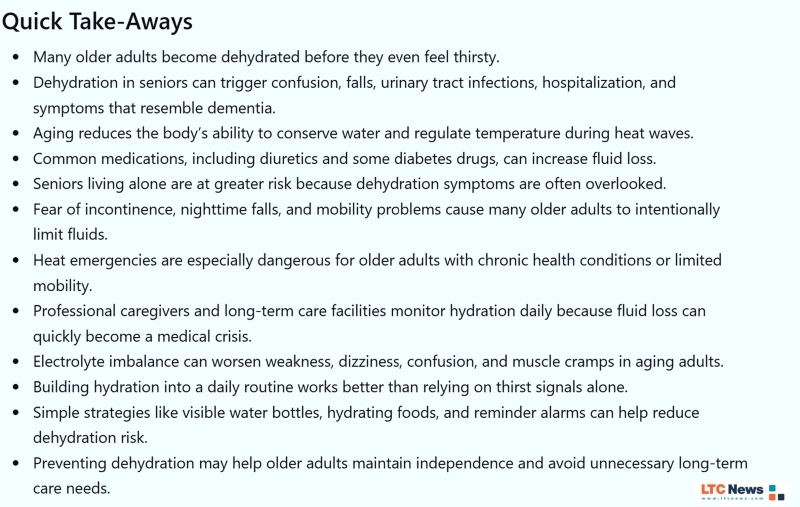
Older adults face a higher risk of dehydration because aging reduces thirst sensation, kidney function, and the body’s ability to conserve fluids. Chronic dehydration can increase the risk of falls, confusion, urinary tract infections, hospitalization, and worsening cognitive decline.

Marcus Howard
Marcus Howard writes about alternative health topics for older adults such as CBD, acupuncture, and herbal medicine.
Table of Contents
- Why Older Adults No Longer Feel Thirst Normally
- Why Older Adults Often Avoid Drinking Fluids
- Medications and Kidney Changes Increase the Risk
- When Dehydration Looks Like Dementia
- Falls, Infections, and Hospitalization
- Electrolytes Matter Too
- Heat Waves Make the Problem Worse
- Warning Signs Family Caregivers Should Never Ignore
- Practical Hydration Strategies That Actually Work
- Hydration and Long-Term Care
- Prevention Matters More Than Most Families Realize
You may notice it first in small ways. Your mom suddenly seems more confused during a summer heat wave. Your dad becomes dizzy getting out of a chair. An older spouse who normally feels sharp and independent starts acting unusually tired, weak, or forgetful.
Many families assume those changes are simply part of aging or feeling thirsty on a hot day. Sometimes, the problem is dehydration. A lack of fluids, especially in older adults, can trigger falls, confusion, urinary tract infections, hospitalization, and even symptoms that resemble dementia.
As you get older, your body becomes far less efficient at managing fluids. According to the Cleveland Clinic — Dehydration in Older Adults, body water naturally declines with age, increasing vulnerability to dehydration and heat-related illness.
Aging also changes how the body regulates fluids. Thirst sensation weakens, kidneys become less efficient, medications increase fluid loss, and chronic health conditions complicate hydration balance. The result is a dangerous combination that can affect nearly every major body system, often before a senior or caregiver realizes there is a problem.
Why Older Adults No Longer Feel Thirst Normally
One of the biggest aging-related changes involves thirst perception. The hypothalamus normally signals thirst when the body needs fluids. In younger adults, the system works efficiently. In aging adults, the threshold changes, meaning the brain may not signal thirst until dehydration has already developed.
In practical terms, many seniors become dehydrated before they even realize they need water. That is why relying on thirst alone becomes risky after age 60.
Adult children, or caregivers, often notice the warning signs first. An aging parent may drink coffee throughout the day but barely touch water. Some seniors intentionally avoid fluids because they fear nighttime falls or frequent bathroom trips. Others deny they are thirsty.
The problem is physiological, not stubbornness. By the time thirst appears, dehydration may already be affecting blood pressure, cognition, balance, and energy levels. Older adults frequently do not recognize dehydration until symptoms become severe because their sense of thirst diminishes with age.
By the time an older adult feels thirsty, that's already an indication of early dehydration. — Anne Vanderbilt, CNS, a geriatric clinical nurse specialist at the Cleveland Clinic, quoted in Drink Up: The Connection Between Age and Dehydration.
Why Older Adults Often Avoid Drinking Fluids
Many seniors do not become dehydrated simply because they forget to drink water. In many cases, they intentionally reduce fluid intake because of physical limitations, embarrassment, or fear of accidents.
Adult children often hear the same explanations repeatedly: “I don’t want to keep running to the bathroom,” or “I don’t want to fall during the night.” For older individuals living with mobility problems, arthritis, Parkinson’s disease, or incontinence, drinking less water can feel like a practical solution even though it creates serious health risks.
Common reasons aging adults avoid fluids include:
- Fear of urinary incontinence
- Mobility challenges
- Difficulty reaching the bathroom
- Dementia or forgetfulness
- Depression
- Reduced appetite
- Fear of nighttime falls
For retirees and seniors living alone, dehydration risks often go unnoticed until a medical emergency occurs. That is one reason family caregivers frequently become the first line of defense against dehydration-related complications.
Medications and Kidney Changes Increase the Risk
Dehydration becomes even more complicated when medications and chronic illness enter the picture. Many seniors take multiple prescriptions daily, and several common medications either increase fluid loss or interfere with the body’s ability to maintain proper hydration.
At the same time, aging kidneys gradually lose efficiency. Older kidneys often struggle to conserve water properly, meaning seniors may lose fluids faster even when the body is already dehydrated.
Certain medications can worsen dehydration risk, including:
- Diuretics
- Blood pressure medications
- Some diabetes drugs
- Laxatives
- Certain antidepressants
Polypharmacy, commonly defined as taking five or more medications simultaneously, is widespread among older Americans and can increase dehydration risk substantially.
The Mayo Clinic warns that many older adults don't feel thirsty until dehydration has already set in, making it essential to drink consistently rather than wait for warning signs.
When Dehydration Looks Like Dementia
One of the most frightening aspects of dehydration is how easily it can mimic cognitive decline. Even mild dehydration may contribute to confusion, fatigue, dizziness, agitation, poor concentration, and memory problems.
Research involving adults over age 65 has linked dehydration with reduced attention, slower processing speed, and worsening cognitive function. For individuals already living with dementia, the risks become even greater.
A person with Alzheimer’s disease or another cognitive disorder may:
- Forget to drink
- Refuse fluids
- Lose the ability to recognize thirst
- Become confused about cups or utensils
The dehydration then worsens confusion, creating a dangerous cycle.
The Alzheimer’s Association: Food, Eating and Alzheimer’s notes that dehydration can significantly worsen behavioral symptoms and confusion in people living with dementia.
Falls, Infections, and Hospitalization
Dehydration affects nearly every major body system. In seniors, even mild fluid loss can lower blood pressure, increase dizziness, and contribute to dangerous falls.
Falls are one of the most serious consequences of dehydration in older adults. Dehydration can lower blood pressure and cause dizziness, particularly when standing, significantly increasing fall risk. According to the CDC, more than 14 million older adults, 1 in 4 adults age 65 and older, report falling, and the fall death rate increased 21 percent between 2018 and 2024. Falls are the leading cause of injury-related death among older adults, and many result in hospitalization or long-term rehabilitation and extended long-term care.
In aging adults, urinary tract infections frequently trigger confusion, weakness, hallucinations, and hospitalization. Constipation and kidney stones also become more common when chronic dehydration persists.
For frail seniors, even constipation can spiral into appetite decline, medication complications, reduced mobility, and hospitalization.
Electrolytes Matter Too
Proper hydration involves more than simply drinking water. Aging adults also need balanced electrolytes to help regulate nerve function, muscle activity, and fluid retention.
Seniors lose important minerals, including sodium, potassium, and magnesium. Low electrolyte levels can produce symptoms similar to those of dehydration, including weakness, confusion, dizziness, and muscle cramps.
According to the Cleveland Clinic, electrolyte imbalances, including low sodium, potassium, and magnesium, can cause symptoms that closely mimic dehydration and are especially common in older adults whose kidneys are less efficient at regulating these minerals.
Many seniors use some of the best electrolyte powders, oral rehydration solutions, or mineral-enriched beverages to maintain balance. For seniors with restricted diets, reduced appetites, excessive fluid loss, or difficulty eating enough mineral-rich foods, electrolyte supplementation may help fill gaps that water alone cannot address. However, older individuals with heart disease, kidney disease, or sodium restrictions should consult a healthcare provider before regularly using electrolyte supplements.
Heat Waves Make the Problem Worse
Extreme heat creates additional risks for aging adults. Older bodies do not regulate temperature as efficiently, and reduced thirst sensation can accelerate dangerous dehydration during heat emergencies.
Extreme heat is becoming one of the most dangerous and underestimated threats to older adults. The National Weather Service warns that older adults, particularly those with pre-existing conditions, who take certain medications, live alone, or have limited mobility, face multiple serious health risks during periods of extreme heat.
- National Weather Service, "Heat Safety Tips and Resources."
The danger is biological. As the body ages, it loses the ability to cool itself efficiently.
A lot of times our older patients don't have the cardiac pumping mechanism necessary" to move blood from their core to the skin's surface, where sweat can cool it. — Dr. Julia Jernberg, a doctor and researcher at the University of Arizona, quoted by NPR.
On top of that, older adults sweat less effectively, and their instinct to drink water weakens, leading directly to dehydration and a reduced ability to cool down.
Adult children and caregivers should pay close attention during summer heat waves, power outages, air-conditioning failures, outdoor family gatherings, and vacations. Research also shows the majority of heat-related deaths among older adults occur indoors — quietly, at home.
Warning Signs Family Caregivers Should Never Ignore
Professional caregivers and long-term care facilities treat hydration as a daily clinical priority, not an afterthought. Staff conduct scheduled fluid rounds throughout the day, offering residents water, juice, and other beverages at regular intervals rather than waiting for a resident to ask.
Intake and output are tracked and documented for each resident, and urine color is monitored as a practical, real-time indicator of hydration status. Facilities also assess individual risk factors, including cognitive impairment, swallowing difficulties, and medication use, and develop personalized hydration care plans that account for each resident's preferences and medical needs.
For residents with dementia who may not recognize thirst or ask for fluids, staff are trained to offer drinks proactively and consistently throughout the day.
Dehydration does not always appear dramatic at first. In seniors, symptoms are often subtle and easy to mistake for normal aging, fatigue, medication side effects, or even dementia.
That is why family caregivers need to pay attention to small changes in behavior, energy levels, balance, and mental sharpness. Catching dehydration early may help prevent hospitalization or serious medical complications.
Caregivers should watch for:
- Dark urine
- Dry mouth
- Dizziness
- Fatigue
- Headaches
- Confusion
- Increased falls
- Constipation
- Low appetite
- Muscle cramps
- Unusual sleepiness
Persistent dark urine is often one of the clearest warning signs.
Severe confusion, weakness, or sudden behavioral changes require prompt medical attention.
Practical Hydration Strategies That Actually Work
Hydration strategies for seniors need to be realistic and consistent. Many aging adults just do not feel thirsty often enough to rely on instinct alone. Others become distracted, forgetful, or intentionally avoid fluids during the day.
Experts generally recommend building hydration into daily routines rather than waiting for thirst signals. Scheduled drinking often works better than relying on thirst signals alone.
Helpful strategies include:
- Keeping water visible
- Using marked water bottles
- Drinking fluids on a schedule
- Eating hydrating foods
- Using reminder alarms
- Monitoring urine color daily
Hydrating foods include:
- Watermelon
- Oranges
- Cucumbers
- Soups
- Yogurt
- Broths
For caregivers, hydration reminders can become just as important as medication reminders.
Search for quality caregivers and extended care facilities by using the comprehensive LTC News Caregiver Directory.
Hydration and Long-Term Care
Families often think about long-term care planning in terms of major medical conditions like dementia, stroke, or mobility loss. However, chronic dehydration quietly contributes to many of the health crises that eventually reduce independence.
Repeated dehydration can accelerate physical decline, increase hospitalization risk, and worsen cognitive problems. Over time, those complications may make aging safely at home far more difficult.
Seniors who become chronically dehydrated may experience:
- More falls
- Worsening frailty
- Cognitive decline
- Repeated hospitalizations
- Increasing caregiving needs
Those are often the same events that push families toward:
- Home care
- Assisted living
- Memory care
- Nursing home placement
Caregivers and long-term care providers routinely monitor fluid intake because hydration problems can escalate quickly in aging adults.
Long-Term Care Insurance policies help pay for care services that support older adults who are struggling with mobility limitations, dementia, or chronic illnesses that interfere with safe, independent living.
Learn More: LTC News Long-Term Care Insurance Learning Center.
Prevention Matters More Than Most Families Realize
Hydration may seem simple, but for seniors, it can become the difference between maintaining independence and facing repeated medical crises. A missed glass of water can contribute to falls, confusion, infections, and hospitalization.
Family caregivers often spend enormous time managing medications, appointments, and mobility concerns while overlooking one of the body’s most basic needs. Yet consistent hydration remains one of the simplest and most effective ways to help protect health, cognition, and quality of life as you age.
For aging adults and families planning for the future, paying attention to hydration is not just about comfort. It is part of protecting independence and reducing long-term care risks before a crisis occurs.
Frequently Asked Questions
Why does dehydration affect people with dementia more severely?
People living with dementia may forget to drink fluids, refuse beverages, or lose the ability to recognize thirst. Dehydration can then worsen confusion and behavioral symptoms, creating a dangerous cycle.
What are some simple ways seniors can stay hydrated?
Helpful strategies include:
- Drinking fluids on a schedule
- Keeping water visible
- Using reminder alarms
- Eating hydrating foods
- Monitoring urine color
- Carrying a refillable water bottle
Are electrolyte drinks helpful for seniors?
For some older adults, electrolyte powders, oral rehydration solutions, or mineral-enriched beverages may help support hydration and mineral balance. However, individuals with heart disease, kidney disease, or sodium restrictions should consult a healthcare provider before using electrolyte supplements regularly.
Why are heat waves especially dangerous for older adults?
Aging bodies do not regulate temperature as efficiently, and many seniors sweat less effectively or fail to recognize thirst. Heat waves can quickly lead to dangerous dehydration, heat exhaustion, or heat stroke.
Which medications can worsen dehydration?
Common medications that may increase dehydration risk include:
- Diuretics
- Blood pressure medications
- Some diabetes drugs
- Laxatives
- Certain antidepressants
Can dehydration cause confusion or memory problems?
Yes. Even mild dehydration may contribute to confusion, dizziness, agitation, fatigue, poor concentration, and memory issues. In some cases, dehydration symptoms can resemble dementia.
Can dehydration contribute to long-term care needs?
Yes. Chronic dehydration may worsen frailty, cognitive decline, falls, and repeated hospitalization, increasing the likelihood that an older adult will eventually require home care, assisted living, memory care, or nursing home care.
Can dehydration increase fall risk in older adults?
Yes. Dehydration can lower blood pressure and cause dizziness, especially when standing, increasing the risk of falls and hospitalization.
Why do some older adults intentionally avoid drinking water?
Many seniors limit fluids because they fear urinary incontinence, nighttime falls, mobility difficulties, or frequent bathroom trips. Others simply forget to drink or lose interest in food and beverages.
Why don’t many seniors feel thirsty even when dehydrated?
As people age, the brain’s thirst response becomes less sensitive. Many older adults do not recognize they are dehydrated until symptoms become more severe.
What are the most common warning signs of dehydration in seniors?
Warning signs may include:
- Dark urine
- Dry mouth
- Fatigue
- Dizziness
- Confusion
- Headaches
- Constipation
- Muscle cramps
- Weakness
- Increased falls
Why are older adults more likely to become dehydrated?
Aging changes how the body regulates fluids. Seniors often experience a weaker sense of thirst, reduced kidney efficiency, medication-related fluid loss, and chronic health conditions that increase dehydration risk.
How do long-term care facilities help prevent dehydration?
Professional caregivers and long-term care facilities often conduct scheduled hydration rounds, monitor urine color, track fluid intake, and create personalized hydration plans for residents, especially those with dementia or mobility limitations.


Sponsored