After the Crash: Why Car Accidents Can Lead to Long-Term Care for Older Adults
About This Article
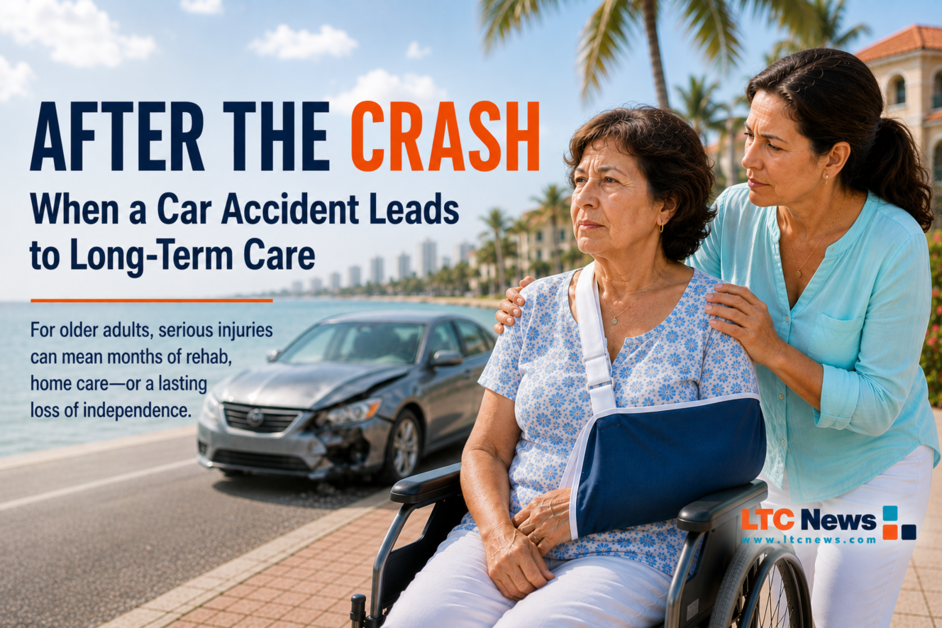
Older adults face a higher risk of serious injury in car crashes, and their recovery often takes longer. When it happens to a loved one, a broken hip, traumatic brain injury, or spinal damage can lead to hospitalization, rehab, home care, and, in some cases, a permanent need for longterm care.

Linda Kople
Linda Kople is a freelance writer focused on caregiving, aging, health, wellness, long-term care, and retirement planning
Table of Contents
- Older Adults Face Greater Consequences from Crashes
- A Crash Can Become a Long-Term Care Event
- The Accident Can Expose Problems That Were Already Developing
- Medicare Doesn't Mean Every Care Expense Is Covered
- Long-Term Care Insurance Can Help Pay for Ongoing Care
- Family Members Often Become the Caregivers
- Keep Track of the Care Being Provided
- What Does Extended Care Cost After an Accident?
- Finding Care After a Crash
- An Accident Can Change a Long-Term Care Plan Overnight
You might worry about your aging parents and whether they’re still safe behind the wheel. Even if their driving skills are steady, there’s a harder truth underneath it: you can’t control the other drivers on the road. Highways move faster, distractions are everywhere, and one careless moment from someone else can put an older adult at serious risk.
Older adults are more vulnerable to serious injuries and slower recoveries after vehicle crashes, sometimes turning an accident into months of rehabilitation, family caregiving, or an ongoing need for long-term care.
A car accident can change your life in seconds.
A broken hip, traumatic brain injury (TBI), spinal injury or multiple fractures can mean more than an emergency room visit and several weeks of recovery. For an older adult, a serious crash can begin a much longer journey involving hospitalization, rehabilitation, home health care and help with everyday activities, maybe even in a nursing home.
Every day in the United States, about 25 older adults are killed, and more than 740 are injured in motor vehicle crashes, according to the CDC, based on the 2022 data report, CDC, and Older Adult Drivers. For those who survive, the consequences can extend far beyond the initial hospitalization.
Sometimes, people never fully return to the level of independence they had before the accident. That possibility makes motor vehicle accidents an important but sometimes overlooked cause of ongoing extended care needs among older Americans.
Older Adults Face Greater Consequences from Crashes
The United States has a rapidly growing population of older drivers and passengers. We see this every day on the road. The National Highway Traffic Safety Administration (NHTSA) reports that the population age 65 and older reached 61.2 million in 2024, up 28 percent since 2015.
Overall U.S. traffic deaths declined in 2024, falling to 39,254 according to NHTSA's finalized data, and an early estimate puts 2025 fatalities even lower, at 36,640 (NHTSA, Overview of Motor Vehicle Traffic Crashes in 2024, DOT HS 813 791, April 2026). Older drivers didn't share in that improvement. Even as the nationwide total fell, fatalities in crashes involving drivers age 65 and older rose 1.4 percent from 2023, and 8,019 of the year's fatal crashes involved an older driver.
For a fuller picture of the toll on older adults, the most recent finalized age-specific data comes from 2023: 7,891 people age 65 and older died in motor vehicle crashes that year, and an estimated 279,225 were injured.
Surviving the crash, however, doesn't necessarily mean returning quickly to normal life. The Centers for Disease Control and Prevention (CDC) says the risk of being seriously injured or killed in a crash increases with age. Drivers aged 70 and older have higher crash death rates per crash than middle-aged drivers, largely because of increased vulnerability to injury.
Age-related physical changes help explain why. Bones may be more fragile. Muscle mass and strength may be reduced. Existing heart, lung, or neurological conditions can complicate recovery. An older adult may also have less physical reserve available to withstand a major trauma.
As a result, an injury that temporarily disrupts a younger person's life can have far greater consequences for someone in their 70s, 80s, or 90s.
A Crash Can Become a Long-Term Care Event
The distinction between medical care and long-term care becomes important after a serious accident. Physicians, nurses, therapists and other members of a medical care team treat the injury itself. Rehabilitation may include physical, occupational or speech therapy.
But what happens if the person still can't safely bathe, dress, use the bathroom, transfer from a bed to a chair or move around the home without assistance? That's when the consequences of an accident can lead to long-term care.
An older adult who was completely independent before the crash may suddenly need help with everyday activities, including:
- Help with bathing, dressing, and toileting.
- Assistance getting in and out of bed or a chair.
- Meal preparation and household assistance.
- Medication reminders.
- Transportation to medical and rehabilitation appointments.
- Mobility assistance and fall prevention.
- Supervision following a traumatic brain injury.
- Home modifications or adaptive equipment.
- Paid home care.
- Assisted living or nursing home care when returning home is no longer safe.
Some of these needs last weeks or months. Others can become permanent.
Traumatic brain injury is a particular concern here. The CDC says older adults have the highest rates of TBI-related hospitalization and death and can take longer to recover. Motor vehicle crashes are among the leading causes of TBI-related hospitalizations and deaths in older adults.
The effects can involve memory and thinking, movement, sleep, vision or hearing, and emotional functioning. Depending on the injury's severity, some problems can last for the rest of the person's life.
The Accident Can Expose Problems That Were Already Developing
Not every post-accident care need results entirely from the crash. An older adult may already have arthritis, balance problems, osteoporosis, mild cognitive impairment, diabetes, cardiovascular disease, or another chronic condition.
Before the accident, those conditions may have been manageable.
Then comes the crash. A hospitalization can lead to weakness and deconditioning. Pain can make walking more difficult. Reduced mobility can increase fall risk. Cognitive changes can make medication management harder.
An individual who was functioning independently before the accident may consequently have difficulty returning to that previous level of independence. That distinction is also important when insurance claims are involved.
After an Accident, It May Take Months for Physical and Health Changes to Develop
After a crash, the full impact on an older adult’s health isn’t always obvious right away. Some injuries — especially those involving the head, spine or joints — can take weeks or even months to fully emerge. Pain can worsen, mobility can decline and new symptoms may appear long after the initial shock has faded. Age‑related changes in bone strength, balance and healing make these delayed effects more common and more serious for older adults.
Jarrett Blakeley, CEO of Blakeley Car Accident & Personal Injury Lawyers, P.A., a Florida law firm representing accident victims, tells LTC News that families should avoid assuming that the first few weeks after an accident reveal its eventual financial impact.
Older adults often face longer recovery timelines and higher medical costs after a crash, and insurers are well aware of that. That makes it even more important for seniors and their families to understand what they're entitled to before accepting a quick settlement." — Jarrett Blakeley, a Miami Gardens, Florida car accident lawyer.
For families, that raises a hard question: how much recovery can realistically be expected before making financial decisions that can't later be undone?
Laws governing liability, damages, and insurance settlements vary by state. Families dealing with serious or lasting injuries may want legal advice from an attorney licensed in their state before agreeing to a final settlement.
Medicare Doesn't Mean Every Care Expense Is Covered
Medicare coverage is another area that can confuse families after an accident. When liability or no-fault automobile insurance is responsible for an accident, that insurance generally pays first for accident-related medical services, and Medicare is secondary.
Families should make sure health care providers know about the accident and other available insurance coverage so claims can be coordinated correctly. Medicare may cover medically necessary hospital services, physician care, therapy and qualifying short-term skilled nursing or home health services.
But Medicare should not be confused with long-term care coverage.
Medicare generally does not pay for ongoing custodial care simply because an older adult needs help with activities such as bathing, dressing, eating, toileting or supervision.
The gap between the two can become critical when an older person has completed the skilled rehabilitation Medicare covers but still cannot live independently. At that point, families may have to turn to personal income and assets, Long-Term Care Insurance, accident-related insurance proceeds, or Medicaid for those who meet financial and other eligibility requirements.
Long-Term Care Insurance Can Help Pay for Ongoing Care
A serious accident can also demonstrate the value of Long-Term Care Insurance already in place. A tax-qualified policy that meets federal guidelines pays benefits when an insured person is expected to need substantial assistance with at least two of the six activities of daily living for at least 90 days, or requires substantial supervision because of severe cognitive impairment, subject to the policy's terms and elimination period.
Once eligible for benefits, coverage can help pay for care at home, assisted living, or nursing home care without requiring the family to first resolve a liability claim against another driver. That can provide an important source of funding while legal and insurance issues are still being resolved.
Family Members Often Become the Caregivers
When an older adult comes home after a serious accident, professional care isn't always waiting at the front door. Frequently, a spouse or adult child steps in. They may coordinate appointments, prepare meals, manage medications, provide transportation, help with mobility, and assist with personal care.
That adds another family to America's enormous caregiving population. AARP and the National Alliance for Caregiving put the overall number at 63 million Americans, nearly one in four adults, caring for a loved one. Narrow that to caregivers of older adults specifically, and the number is 51 million, spending an average of 26 hours a week on caregiving, with 44 percent providing high-intensity care.
Many family caregivers perform complicated medical or nursing tasks, yet relatively few receive formal training. For families suddenly thrust into caregiving because of a car accident, the transition can be particularly abrupt.
Yesterday, Mom was driving herself to the grocery store. Today, an adult daughter may be arranging physical therapy, helping her shower, and trying to determine whether she can safely be left alone. Much of this care becomes a family responsibility unless Long-Term Care Insurance is in place, an insurance settlement is made if the care is due to someone's negligence, or Medicaid is available for those with limited financial resources.
Keep Track of the Care Being Provided
Families should document what happens after a serious crash. Keep records of medical appointments, rehabilitation, prescriptions, medical equipment and paid caregivers. Also document changes in the older person's ability to perform everyday activities.
If family members provide substantial care, keeping a record of that assistance can help physicians and care managers understand the person's actual level of need.
Depending on state law and the circumstances of an accident claim, documentation of paid care, future care needs, and other accident-related expenses may also become relevant to an insurance claim or legal case. Families should obtain state-specific legal advice rather than assuming every caregiving expense will be reimbursed.
What Does Extended Care Cost After an Accident?
Even a few months of care can add up, and costs vary widely by location and level of assistance. The LTC News Cost of Long-Term Care Services Calculator provides current costs for home care, assisted living, and nursing home care by state and location, along with projected future costs, so families aren't relying on a single national number that may not reflect what care actually costs where their loved one lives.
Finding quality care can also be a challenge, and the LTC News Caregiver Directory offers free help by allowing you to search from over 80,000 providers by ZIP code.
For context, LTC News reports that 2026 national median base costs are approximately:
- $69,300 a year for home health care based on a 44-hour week.
- $61,140 a year for assisted living base costs, plus surcharges.
- $132,228 a year for nursing home care.
Actual costs can be substantially higher depending on location, the number of hours of assistance required, and the complexity of someone's health and personal care needs. Don't assume a certain amount of savings, insurance proceeds or other resources will stretch to cover an extended period of care — check the real numbers first.
Finding Care After a Crash
Discharge from a hospital or rehabilitation center doesn't necessarily mean an older adult is ready to resume life independently. Before the person returns home, families should ask the discharge team several practical questions:
- Can they safely walk to the bathroom?
- Can they get in and out of bed without assistance?
- Can they bathe and dress safely?
- Can they prepare food?
- Can they correctly manage their medications?
- Can they safely manage stairs or other barriers in the home?
- Is someone needed in the home overnight?
- Are there cognitive or behavioral changes following a head injury?
If the answers indicate that ongoing assistance is necessary, families should start arranging care before discharge whenever possible. The LTC News Caregiver Directory can help you search for home care providers for your loved one, assisted living facilities, memory care and other long-term care services in their area.
An Accident Can Change a Long-Term Care Plan Overnight
Most people associate long-term care with aging, dementia or chronic disease. But long-term care is ultimately about function: whether someone can safely perform everyday activities without assistance or requires supervision because of cognitive impairment.
An accident can change that ability without warning. It also illustrates why planning for long-term care shouldn't begin only after someone becomes frail. Even if you were to recover from an accident, the injuries may have you uninsurable for Long-Term Care Insurance if you had not yet purchased a policy, as it is a medically underwritten insurance policy.
According to an HHS Office of the Assistant Secretary for Planning and Evaluation brief, 56 percent of Americans turning 65 will need long-term care at some point, using the federal definition of needing help with two or more activities of daily living, or substantial supervision due to severe cognitive impairment, for 90 days or longer (HHS ASPE, "Long-Term Services and Supports for Older Americans: Risks and Financing, 2022").
What that means is your risk of needing help with everyday living activities or supervision due to dementia is high and grows with age. Add a major health event or accident, and the need for long-term care services is high.
For some families, a car accident could be the event that begins that need. Planning before a crisis, including through Long-Term Care Insurance, can provide more choices over where care is received, protect income and assets, and reduce the pressure placed on spouses and adult children.
Visit the LTC News LTC Insurance Learning Center to learn more about how long-term care works, what it costs, and how Long-Term Care Insurance can help protect your family's finances and choices.
If your loved one was in an accident, seeking professional legal advice is essential.
Frequently Asked Questions
Can Long-Term Care Insurance pay benefits if the need for care was caused by a car accident?
Yes, if the insured meets the policy's benefit eligibility requirements. A tax-qualified Long-Term Care Insurance policy generally pays benefits when someone is expected to need substantial assistance with at least two of the six activities of daily living for at least 90 days or requires substantial supervision because of severe cognitive impairment, subject to the policy's terms and elimination period. The cause of the need could be an accident, illness, dementia, or the effects of aging.
Should families document care and expenses following a serious accident?
Yes. Keep records of medical appointments, rehabilitation, prescriptions, medical equipment, paid caregivers, and changes in the person's ability to perform everyday activities. Family caregivers should also document substantial assistance they provide. Depending on state law and the circumstances of the accident, records of paid care, future care needs and other expenses may be relevant to an insurance claim or legal case.
What should families do before an older adult comes home from the hospital or rehabilitation?
Determine whether the person can safely bathe, dress, use the bathroom, get in and out of bed, prepare food, manage medications, and navigate stairs or other barriers in the home. Families should also ask whether someone needs to be present overnight and whether a head injury has caused cognitive or behavioral changes. If ongoing assistance will be necessary, arrangements for home care or another appropriate care setting should ideally begin before discharge.
Why can car accident injuries be more serious for older adults?
Older adults are generally more physically vulnerable to injuries from a crash. Bones may be more fragile, muscle strength may be reduced, and existing health conditions can complicate recovery. The CDC says drivers age 70 and older have higher death rates per crash than middle-aged drivers, largely because they are more vulnerable to injury.
Does Medicare pay for long-term care after a car accident?
Generally, no. Medicare can cover medically necessary hospital care, physician services, rehabilitation, and qualifying short-term skilled nursing or home health services. However, Medicare generally does not pay for ongoing custodial long-term care when someone primarily needs help with everyday activities or supervision. Auto liability or no-fault insurance may also be responsible for paying accident-related medical expenses before Medicare.
Can a car accident cause an older adult to need long-term care?
Yes. A serious car accident can result in injuries such as broken hips, traumatic brain injuries, spinal injuries, or multiple fractures that affect an older adult's ability to live independently. Even after hospitalization and rehabilitation, some people continue to need help with bathing, dressing, toileting, transferring, mobility or supervision. Those needs may last for months or become permanent.

Sponsored