Wildfire Smoke Isn't Just an Outdoor Problem for Older Adults
About This Article
Wildfire smoke and summer air pollution pose serious risks for older adults, especially those with heart disease, COPD, asthma, or dementia. Fine particle pollution can trigger breathing trouble, chest pain, fatigue, and confusion.

James Kelly
LTC News staff writer specializing in long-term care and aging.
Your aging parent, grandparent, or loved one in a nursing home may be facing a health risk you haven't thought about this summer: the air itself.
During wildfire season, smoke from large fires, even hundreds or thousands of miles away, can spread across much of the United States, creating unhealthy air quality for millions of people. Even younger, healthy people should not ignore the serious health issues poor air quality can create.
Recent smoke from Canadian wildfires once again pushed air quality alerts across parts of the Northeast, Midwest, and Northwest, with New York City's Air Quality Index climbing toward 200 this week, well past the alert threshold of 101. Health officials in several affected areas urged children, older adults, and people with heart or lung disease to avoid unnecessary time outdoors.
Philadelphia, for example, has issued a Code Purple Air Quality Alert this week as smoke from Canada pushed particulate levels into the very unhealthy range.
"Our worsening air quality is a dangerous development," said Dr. Palak Raval-Nelson, commissioner of the Philadelphia Department of Public Health, who urged residents to stay indoors, wear a well-fitted N95 or KN95 mask if they must go outside, and seek immediate medical attention for symptoms such as trouble breathing, heart palpitations, nausea or dizziness. Her department named older adults, along with people with heart or lung disease, children, pregnant people and the immunocompromised, among the groups facing the greatest
When you add very warm weather on top of poor air quality, this combination can have a significant negative impact on your health and breathing.
More Information: Keeping Older Adults Safe in Hot Weather
If you have a loved one who is aging in place, living in assisted living, or receiving memory care, now is the time to ask hard questions about how they're being protected.
Why Older Adults Face Greater Risk
Aging lungs lose some of their capacity to clear out pollutants. Combine that with common conditions like heart disease, COPD, asthma, or diabetes, and the body has a harder time coping with fine particle pollution, known as PM2.5. Because these microscopic particles are invisible to the eye, the air can appear only slightly hazy while still reaching unhealthy levels.
Wildfire smoke exposure and poor air quality more broadly have been linked to a higher long-term risk of heart attacks, strokes, high blood pressure and chronic lung disease, and may contribute to a higher long-term risk of certain cancers, according to the Centers for Disease Control and Prevention (CDC).
Anxiety, depression, and sleep disruption are also associated with poor air quality. Researchers have connected repeated smoke exposure to cognitive decline and dementia-related conditions, which makes this a concern for memory care communities as much as it is for cardiac or pulmonary patients.
Even people who consider themselves healthy can develop breathing difficulty, fatigue, chest pain, headaches, or confusion when air quality drops. For someone already managing a chronic illness, a single bad air day can be the difference between staying stable at home and a trip to the emergency room.
David Eisenman, M.D., a physician and professor at the UCLA Fielding School of Public Health, told Axios that smoke exposure can be enough to send people with existing heart or lung problems to the hospital, even when the exposure itself feels minor.
It's Not Just Wildfires
Wildfire smoke tends to grab headlines, but it's only one piece of a bigger summertime air quality problem. Ground-level ozone, often called smog, forms when heat and sunlight react with pollution from vehicles and industry.
Older adults, along with children and people with asthma, are among those most at risk from ozone exposure. Ozone levels typically peak on hot, sunny days, which makes summer the season of greatest concern, according to the EPA. Many communities experience unhealthy ozone days even without a nearby fire. Some research cited by the American Lung Association has found that older adults face a higher risk of premature death even when ozone levels stay below the current national health standard.
Add in traffic exhaust, agricultural burning, construction dust, and regional haze, and it's clear that bad air days aren't limited to communities near an active fire. Heat and air pollution often arrive together, and that combination is especially hard on aging bodies. Dehydration and heat stress can worsen the cardiovascular and respiratory effects of poor air quality, so a heat advisory paired with an air quality alert warrants extra caution.
Chronic Conditions That Raise the Stakes
Certain health conditions make older adults far more vulnerable to smoke and pollution exposure, including:
- Chronic obstructive pulmonary disease (COPD) and emphysema
- Asthma, even when well controlled
- Coronary artery disease, congestive heart failure, or a history of heart attack or stroke
- High blood pressure
- Diabetes, which is linked to higher cardiovascular risk during pollution events
- Chronic kidney disease (CKD), which the CDC also lists among the conditions that warrant extra caution during wildfire smoke events
- Dementia or other cognitive impairment, since confusion and disorientation can worsen, and communication about symptoms becomes harder
Emerging research also points to fine particle pollution as a strain on kidney function. Rajiv Saran, M.D., a nephrologist at Michigan Medicine and director of the United States Renal Data System Coordinating Center, has said that areas with heavier air pollution tend to show higher rates of chronic kidney disease than areas with cleaner air (Michigan Medicine, Why Polluted Air May Be a Threat to Your Kidneys). For older adults already managing CKD, that adds one more reason to take air quality alerts seriously.
Similar to smoking, air pollution contains harmful toxins that can directly affect the kidneys. Kidneys have a large volume of blood flowing through them, and if anything harms the circulatory system, the kidneys will be the first to sense those effects." — Jennifer Bragg-Gresham, M.S., Ph.D., a Michigan Medicine epidemiologist.
If your loved one manages any of these conditions, treat air quality alerts with the same seriousness as a heat advisory or winter storm warning.
Questions Every Family Should Ask
If your loved one lives in a nursing home, assisted living community, memory care residence, or receives care at home, ask the following:
- Are outdoor activities and outings being limited when air quality is poor?
- Are windows and doors kept closed, with air conditioning used instead of natural ventilation?
- Does the building use effective air filtration, and are filters changed on schedule?
- Are residents with respiratory or heart conditions being monitored more closely during smoke or ozone events?
- Do staff and caregivers know the warning signs, such as chest pain, severe shortness of breath, bluish lips, or sudden confusion, that require immediate medical attention?
- Does the facility have a written air quality response plan?
A facility that can answer these questions confidently has built air quality response into its everyday safety planning, not just its emergency procedures.
What Long-Term Care Facilities Can Do
Long-term care facilities can take several proactive steps well before smoke or smog moves into the area:
- Track the local AQI daily using AirNow, the EPA's air quality reporting site, and adjust activities before conditions become unhealthy
- Upgrade HVAC filtration where possible and keep exterior doors closed during alerts
- Move outdoor programming and exercise indoors on poor air quality days
- Postpone non-essential medical transportation when practical during high-pollution days
- Identify residents with COPD, heart disease, asthma, CKD, or dementia and flag them for closer monitoring during air quality events
- Train direct care staff to recognize early symptoms and escalate quickly
- Keep rescue medications, such as inhalers, accessible and current
What Family and Professional Caregivers Can Do at Home
Family members and home care aides play just as important a role. Consider these steps during smoke events or ozone alerts:
- Check the AQI for your area each morning at AirNow.gov and adjust plans accordingly
- Keep windows and doors closed, and run a portable air purifier with a true HEPA filter in the rooms your loved one uses most
- Avoid activities that add indoor pollution, such as frying food, burning candles, or vacuuming, during a smoke event
- Postpone unnecessary errands or outdoor time, especially in the afternoon when ozone tends to peak
- If your loved one must go outside, a well-fitting N95 or KN95 mask offers more protection than a cloth or surgical mask, when medically appropriate and tolerated; some older adults with COPD or other advanced lung disease cannot tolerate prolonged mask use and should talk with their doctor about alternatives
- Keep medications, water, and a phone within reach in case symptoms develop quickly
Watch for warning signs that need medical attention right away, including chest pain or tightness, severe shortness of breath, wheezing that doesn't improve, dizziness or new confusion. Don't wait to call a doctor or seek emergency care if these appear.
Planning Matters, Too
Protecting an older loved one from wildfire smoke and summer air pollution is part of a bigger picture: preparing for the health risks that come with aging. Environmental events such as wildfire smoke, extreme heat, severe winter weather, and power outages remind families that chronic health conditions can suddenly require additional care at home, in assisted living, in memory care, or in a nursing home.
Planning before a crisis gives families more choices and helps protect income and assets. The Department of Health and Human Services (HHS) Assistant Secretary for Planning and Evaluation estimates that 56 percent of Americans turning 65 will need long-term care at some point, based on the federal definition of needing help with two or more activities of daily living or supervision due to cognitive impairment. Many families use Long-Term Care Insurance to help pay for quality care at home, assisted living, memory care or a nursing home, helping protect retirement savings and reduce the burden on family caregivers.
If you're weighing what long-term care might cost in your area, LTC News's Cost of Long-Term Care Services Calculator can help you plan. If a loved one needs extended care now, you can also find home care agencies, assisted living communities, memory care providers, nursing homes and other aging services through the LTC News Caregiver Directory, and learn more about planning in the Long-Term Care Learning Center.
QUESTION: Have you checked in with your loved one's care team about how they're handling this summer's air quality alerts? A short phone call today could prevent a hospital visit next week.
This article is for informational purposes and isn't a substitute for medical advice. Talk with your loved one's doctor about their specific risks from wildfire smoke and air pollution.
Frequently Asked Questions
Is air pollution only a problem during wildfires?
No. While wildfire smoke often receives the most attention, summertime air pollution also includes ground-level ozone (smog), vehicle emissions, industrial pollution, construction dust, and regional haze. Many communities experience unhealthy air quality even when there are no nearby wildfires.
What is PM2.5, and why is it harmful?
PM2.5 refers to microscopic particles found in wildfire smoke and other air pollution. These particles are small enough to travel deep into the lungs and enter the bloodstream, where they can increase inflammation and contribute to heart attacks, strokes, respiratory illness, and other serious health problems.
What does wildfire smoke have to do with long-term care planning?
Environmental emergencies can quickly turn a manageable chronic health condition into one requiring ongoing assistance at home, assisted living, memory care, or a nursing home. Planning ahead—including understanding care costs and considering Long-Term Care Insurance—can help protect retirement savings, reduce stress on family caregivers, and provide greater access to quality care when it's needed.
How can I check local air quality?
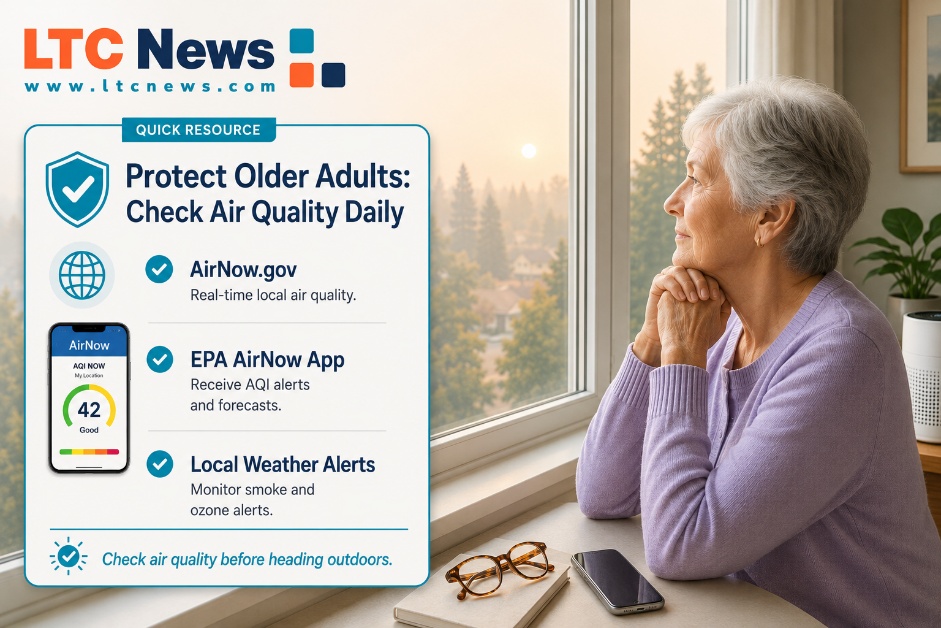
The most reliable resources include:
- AirNow.gov
- EPA AirNow App
- Local National Weather Service forecasts and air quality alerts
Checking the Air Quality Index (AQI) before going outdoors can help you make safer decisions during wildfire season.
Should older adults wear an N95 mask during wildfire smoke?
A properly fitted N95 or KN95 mask offers much better protection than cloth or surgical masks when going outdoors during smoke events. However, some people with advanced COPD or other serious lung diseases may have difficulty wearing these masks for extended periods and should consult their physician about the safest approach.
Can poor air quality affect healthy older adults?
Yes. Even healthy adults may experience coughing, shortness of breath, headaches, fatigue, chest pain, or dizziness when air quality becomes unhealthy. Older adults are generally more susceptible because of normal age-related changes in lung and heart function.
How can family caregivers protect an older loved one at home?
Simple precautions include:
- Checking the AQI each morning
- Keeping windows and doors closed
- Running a portable air purifier with a true HEPA filter
- Limiting outdoor activities on poor air quality days
- Avoiding indoor activities that create additional pollution, such as burning candles or frying food
- Keeping medications, water, and emergency contacts readily available
What symptoms require immediate medical attention?
Seek emergency medical care if an older adult experiences:
- Chest pain or pressure
- Severe shortness of breath
- Wheezing that doesn't improve
- Bluish lips or fingertips
- Heart palpitations
- Dizziness or fainting
- Sudden confusion or changes in mental status
Why do heat waves make poor air quality even more dangerous?
Extreme heat and air pollution often occur together during the summer. Heat stress and dehydration can worsen the effects of smoke and ozone, placing additional strain on the heart and lungs. Older adults should take extra precautions whenever both a heat advisory and an air quality alert are in effect.
Why is wildfire smoke more dangerous for older adults?
As you age, your lungs and cardiovascular system become less efficient at filtering pollutants and responding to stress. Older adults with heart disease, chronic obstructive pulmonary disease (COPD), asthma, diabetes, chronic kidney disease (CKD), or dementia face an even greater risk of breathing problems, heart complications, confusion, and hospitalization when air quality declines.
Which health conditions increase the risks from wildfire smoke?
Older adults should take extra precautions if they have:
- Chronic obstructive pulmonary disease (COPD) or emphysema
- Asthma
- Coronary artery disease or heart failure
- High blood pressure
- Diabetes
- Chronic kidney disease (CKD)
- Dementia or Alzheimer's disease
- A history of heart attack or stroke
What should long-term care facilities do during poor air quality events?
Facilities should have an air quality response plan that includes:
- Monitoring the local AQI daily
- Keeping windows and exterior doors closed
- Using effective HVAC filtration
- Moving outdoor activities indoors
- Monitoring residents with heart and lung disease more closely
- Ensuring inhalers and emergency medications are readily available
- Training staff to recognize symptoms that require immediate medical attention

Sponsored