Why Clinical Research Matters with Healthy Aging and Long-Term Care
About This Article
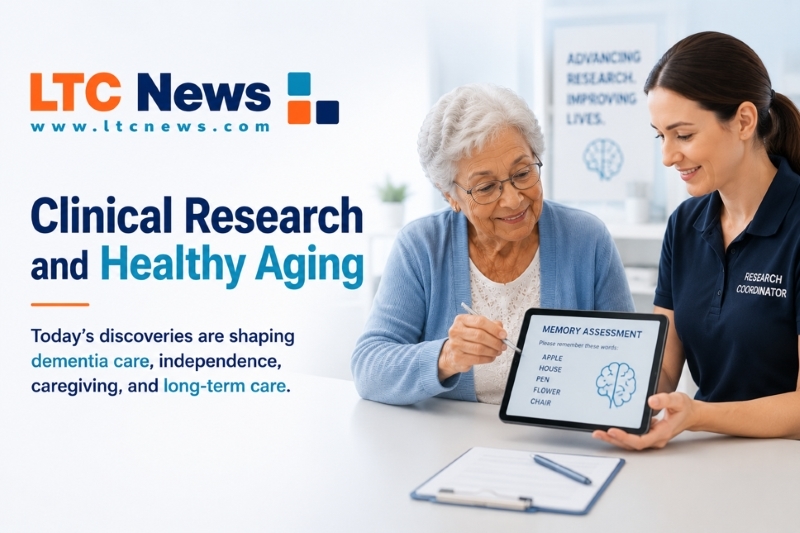
Clinical research drives advances in Alzheimer's treatment, chronic disease management, caregiving, mobility, and long-term care. Today’s studies help improve health, preserve independence, and shape the future of aging for millions of families.

Linda Maxwell
Linda Maxwell is a journalist who writes about aging, health, chronic illness, caregiving, and long-term care issues impacting older adults and their families.
Table of Contents
- How Clinical Research Supports Healthier Aging
- How Research Has Transformed Aging in America
- Top Aging and Health Issues Researchers Are Studying Today
- Why Dementia Research Deserves Special Attention
- Paid Clinical Research Studies
- How Clinical Research Is Helping Caregivers
- Why Older Adults Need to Be Represented in Research
- You're Never Too Old to Participate
- How to Find a Safe and Legitimate Clinical Research Study
- How Clinical Research Helps Families Prepare for Aging
- How Clinical Research Has Improved Alzheimer's Treatment, Heart Disease, and Cancer Care
- Today's Research Shapes Tomorrow's Long-Term Care
You may never see the laboratory where a breakthrough treatment is discovered. Yet one day, that research could help you recover from a stroke, manage chronic pain, slow the progression of Alzheimer's disease, or help a loved one remain independent at home longer.
When you think about aging, you probably think about staying healthy, remaining active, and avoiding becoming a burden on your family. What many people don't realize is that nearly every medical advance that makes those goals possible began with clinical research.
From today's dementia treatments and heart medications to rehabilitation therapies and fall-prevention programs, clinical research has transformed what it means to grow older in America. For adults over age 40, participation in research is not simply about advancing science. It is about helping create better options for yourself, your family, and future generations.
How Clinical Research Supports Healthier Aging
Growing older often brings new health challenges. Many adults find themselves managing multiple chronic conditions at once. Others face concerns about memory changes, balance problems, chronic pain, sleep disorders, arthritis, diabetes, or cardiovascular disease.
"NIA leads a broad scientific effort to understand the nature of aging and to extend healthy, active years of life," said Dr. Richard J. Hodes, Director of the National Institute on Aging (NIA) at the National Institutes of Health.
Aging is the most significant risk factor for the development of many chronic diseases, including cancer, diabetes, and Alzheimer's disease. — Dr. Richard J. Hodes.
Researchers can't determine whether a treatment works by observing patients informally. New therapies must be systematically tested to establish whether they're safe and effective, which patients benefit most, what side effects may occur, and how they compare with existing options.
Clinical studies provide those answers. Without them, physicians have far less reliable information to guide treatment decisions — especially for the complex, layered health issues that accompany aging.
For older adults, the benefits of research are everywhere. Improvements in joint replacement procedures, cancer treatments, heart disease management, hearing technologies, rehabilitation programs, and dementia care all trace back to decades of clinical investigation.
How Research Has Transformed Aging in America
A generation ago, many health conditions that are routinely treated today often resulted in disability or premature death. Advances in cardiovascular medicine, cancer treatment, diabetes management, joint replacement surgery, and stroke care have dramatically increased life expectancy and improved quality of life.
The result is that more Americans are reaching their 80s and 90s than ever before.
That is encouraging news, but it also creates new challenges. Living longer has changed the challenges families face. More Americans now survive heart attacks, strokes, cancer, and other serious illnesses, but many eventually need help managing chronic health conditions, recovering from injuries, coping with memory loss, or maintaining independence at home.
Clinical research continues to shape how those challenges are addressed. Today's studies are helping develop better therapies, safer medications, improved rehabilitation programs, and technologies that support aging in place. For many families, the goal is not simply living longer. It is living better for as long as possible.
The scale of clinical research in America today is enormous. ClinicalTrials.gov — the federal registry managed by the National Library of Medicine — now lists more than 530,000 registered studies spanning all 50 states and 226 countries. They also track studies from 226 countries and territories. Sponsors range from the federal government and major universities to pharmaceutical companies and nonprofit research organizations. The National Institute on Aging alone is currently supporting 466 active clinical trials focused on Alzheimer's disease and related dementias.
Top Aging and Health Issues Researchers Are Studying Today
Americans are living longer than ever before, but longevity does not automatically equal good health. Researchers increasingly focus on improving healthspan, the years of life spent in good health, rather than simply extending lifespan.
Current aging-related research is examining:
- Alzheimer's disease and other dementias.
- Parkinson's disease.
- Fall prevention.
- Chronic pain management.
- Sleep disorders.
- Cardiovascular disease.
- Cancer treatment.
- Diabetes management.
- Hearing loss.
- Mobility and balance issues.
- Mental health and social isolation.
- Family caregiving strategies.
Many of the advances that help older adults remain independent today originated in research programs conducted at hospitals, universities, and specialized medical centers.
Why Dementia Research Deserves Special Attention
Few health concerns create more fear among older adults and their families than dementia. According to the Alzheimer's Association's 2026 Alzheimer's Disease Facts and Figures report, an estimated 7.4 million Americans age 65 and older are living with Alzheimer's disease. The organization projects that the number will rise to nearly 13.8 million by 2060 if effective prevention and treatment strategies are not developed.
Researchers are working to:
- Detect Alzheimer's disease earlier.
- Improve diagnostic accuracy.
- Develop treatments that slow progression.
- Better understand risk factors.
- Improve quality of life.
- Strengthen support systems for family caregivers.
Clinical studies are central to every one of those efforts.
The same urgency applies to long-term care challenges more broadly, including frailty, fall prevention, medication management, rehabilitation, and maintaining independence as health needs change.
Alzheimer's disease is also among the most expensive health conditions in America. Families often provide years of unpaid care before a loved one requires extensive support at home, assisted living, memory care, or a nursing facility. Research aimed at delaying onset, slowing progression, or improving caregiving support could have profound effects on quality of life and healthcare costs for future generations.
Paid Clinical Research Studies
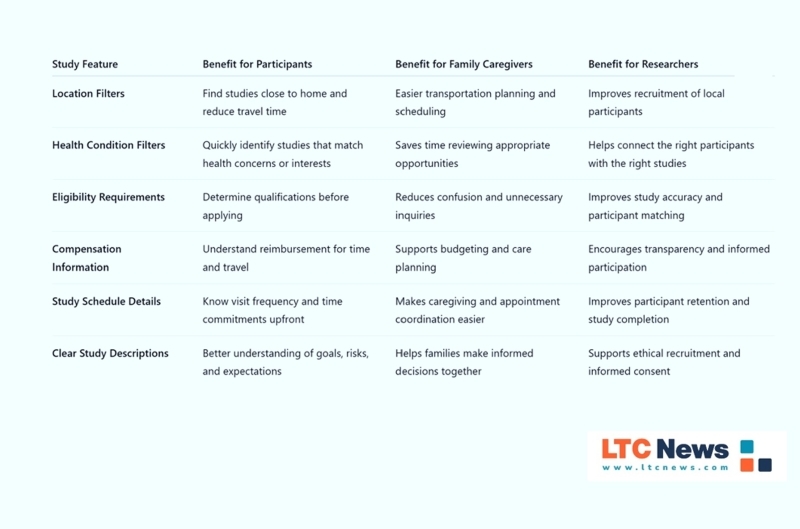
Many research studies come with compensation. You may have basic questions. What studies are open? Where are they located? Who can apply? How many visits are involved? Is compensation available? Platforms that organize paid clinical research studies help make that first review more practical by putting available opportunities into a clearer search format.
Payment can be helpful, especially when time and travel are involved. Still, compensation is only one part of the value. Clear study details matter just as much. A person can look at the topic, location, eligibility, visit expectations, and possible compensation before deciding whether to ask for more information. For caregivers, that saves time. For volunteers, it makes research easier to approach without sorting through scattered listings.
How Clinical Research Is Helping Caregivers
If you are caring for an aging parent, spouse, or other loved one, clinical research affects your life more than you may realize. Many of the tools caregivers rely on today exist because of years of research and testing. That includes memory assessments, fall-prevention programs, physical therapy techniques, assistive technologies, caregiver education programs, and newer treatments for chronic illnesses.
Researchers are also studying ways to reduce caregiver stress, improve communication with people living with dementia, and help older adults remain independent longer. As Americans live longer and family sizes become smaller, the demands on family caregivers continue to grow. As America's population ages, the role of family caregivers will only become more important.
Why Older Adults Need to Be Represented in Research
Research cannot happen without participants, and broad participation matters. When studies include older adults, women, people from diverse racial and ethnic backgrounds, individuals with chronic illnesses, and family caregivers, researchers gain a clearer understanding of how treatments work across the population.
So that our achievements continue we must ensure the research NIA funds and conducts is inclusive of diverse scientists and relevant to all populations, including those historically underrepresented or excluded from research. — Dr. Amy S. Kelley, Deputy Director, National Institute on Aging.
Studies that draw participants from only one segment of society risk producing findings that may not apply broadly. More diverse participation helps ensure that future medical advances reflect the needs of the people most likely to use them.
You're Never Too Old to Participate
One common misconception is that clinical research is primarily for younger adults. In reality, many studies actively seek older participants because researchers need to understand how treatments affect aging bodies and the health challenges that become more common later in life.
Research opportunities range from studies focused on memory and brain health to investigations involving mobility, chronic disease management, rehabilitation, caregiving, healthy aging, and quality of life. Clinical studies have shown that untreated hearing loss may increase dementia risk, regular physical activity can support healthier aging, social isolation may accelerate cognitive decline, and poor sleep can contribute to chronic disease.
Not every study is appropriate for every individual. Participation should always be discussed with healthcare providers. However, older adults play a vital role in helping researchers understand how treatments work in the populations most likely to benefit from them.
Not every study is appropriate for every individual. Participation should always be discussed with healthcare providers.
How to Find a Safe and Legitimate Clinical Research Study
One persistent challenge is visibility. Many people who might qualify for a research study never hear about it.
Before participating, ask:
- What is the purpose of the study?
- What are the risks and potential benefits?
- How much time is required?
- Will travel be necessary?
- Is compensation offered?
- How will personal health information be protected?
- Can participants withdraw at any time?
Legitimate studies should provide informed consent documents, explain privacy protections, and answer participant questions openly.
How Clinical Research Helps Families Prepare for Aging
One of the most valuable benefits of clinical research is that it helps families make informed decisions long before a crisis occurs. Research has identified important links between hearing loss and dementia risk, physical activity and healthy aging, social isolation and cognitive decline, and sleep quality and chronic disease.
Research also continues to improve understanding of the factors that increase the likelihood of needing long-term care. Studies examining frailty, cognitive decline, chronic disease, falls, and social isolation help families recognize risks earlier and take steps to delay or reduce the need for extended care services.
The findings from clinical research often prompt families to take practical steps years before a crisis occurs. Those actions may include:
- Address hearing loss sooner.
- Increase physical activity.
- Improve nutrition.
- Modify a home for safety.
- Develop a caregiving strategy.
- Explore Long-Term Care Insurance options (ideally before retirement).
- Complete legal and financial planning documents.
The earlier families understand potential risks, the more opportunities they have to preserve independence and quality of life.
How Clinical Research Has Improved Alzheimer's Treatment, Heart Disease, and Cancer Care
Many of the medical advances older adults rely on today began as clinical studies years or even decades ago. Research has helped improve survival rates after heart attacks and strokes, increase cancer survival rates through earlier detection and targeted therapies, improve joint replacement procedures, and create fall-prevention programs that help older adults remain independent longer.
The treatments and care approaches available today exist because previous generations volunteered to help researchers find answers.
Today's Research Shapes Tomorrow's Long-Term Care
The treatments, therapies, and caregiving strategies available today did not appear overnight. They were developed through years of research and the willingness of ordinary people to participate in studies designed to answer difficult questions about health and aging.
As Americans live longer and the need for long-term care continues to grow, clinical research will play an increasingly important role in helping people remain independent, improving quality of life, and reducing the burdens placed on family caregivers.
For you and your family, the benefits of today's research may not be fully realized for years. But the work underway now could shape how you age, how you receive care, and how future generations navigate the challenges of growing older.
If you are looking for quality extended care services for an older loved one now, use the resources available on the LTC News Caregiver Directory. You can search from over 80,000 providers, including in-home caregivers. It is the largest database in the nation.
If you are a caregiver or facility manager, claim your free listing on the LTC News Caregiver Directory and/or upgrade the listing to enhance visibility and highlight your staff and services through the LTC News Directory Business Portal.
If your loved one has a Long-Term Care Insurance policy, get expert assistance in processing the insurance claim. LTC News partners with Amada Senior Care to provide free claim support with no cost or obligation — File a Long-Term Care Insurance Claim.
Frequently Asked Questions
How can I find legitimate clinical research studies?
Start by speaking with your healthcare provider. You can also search reputable sources such as ClinicalTrials.gov, major universities, research hospitals, medical centers, and government-sponsored research programs. Always verify that the study provides informed consent and clear contact information.
Why is clinical research important for older adults?
Clinical research helps develop treatments, therapies, medical devices, and care strategies that improve health outcomes for older adults. Many advances in Alzheimer's care, heart disease treatment, cancer therapies, mobility support, and rehabilitation programs exist because people participated in clinical studies.
What health conditions are commonly studied in aging research?
Researchers frequently study Alzheimer's disease, other dementias, Parkinson's disease, heart disease, diabetes, cancer, hearing loss, chronic pain, sleep disorders, fall prevention, mobility challenges, and social isolation. Many studies also examine caregiving and aging-in-place strategies.
Why do researchers need diverse participants?
Research produces stronger results when participants reflect different ages, races, ethnicities, genders, health conditions, and caregiving experiences. Diverse participation helps ensure that future treatments and care strategies work effectively for the populations most likely to use them.
Can seniors participate in clinical research studies?
Yes. Many clinical studies actively seek adults age 65 and older because researchers need to understand how treatments affect aging bodies. Studies often focus on memory, mobility, chronic disease management, caregiving, healthy aging, and quality of life.
Can clinical research help people avoid or delay long-term care needs?
While no study can guarantee future outcomes, research has shown that healthy lifestyle choices, hearing loss treatment, physical activity, social engagement, and chronic disease management may help reduce risks associated with disability, cognitive decline, and loss of independence. These findings help families take proactive steps before a crisis occurs.
Why is dementia research so important?
According to the Alzheimer's Association, millions of Americans are living with Alzheimer's disease, and that number is expected to grow significantly in the coming decades. Dementia research helps improve diagnosis, develop new treatments, support family caregivers, and identify ways to delay or prevent cognitive decline.
How does clinical research help family caregivers?
Research has led to many tools caregivers use today, including memory assessments, fall-prevention programs, rehabilitation therapies, caregiver education programs, assistive technologies, and improved dementia care approaches. Researchers are also studying ways to reduce caregiver stress and improve quality of life for both caregivers and care recipients.
Are clinical research studies safe?
Clinical studies must follow strict ethical and safety standards. Participants receive informed consent documents that explain the purpose of the study, potential risks, possible benefits, privacy protections, and their right to withdraw at any time.
Do clinical research studies pay participants?
Some studies offer compensation for time, travel, parking, or participation-related expenses. Compensation varies by study and should not be the only reason for enrolling. Participants should carefully review all study details before making a decision.
How can clinical research improve healthy aging?
Clinical research helps identify ways to maintain physical health, cognitive function, mobility, and independence as people age. Studies continue to explore new treatments, preventive strategies, and lifestyle interventions that may help older adults enjoy longer, healthier lives.
How does clinical research influence long-term care?
Many modern long-term care practices are based on findings from clinical studies. Research helps improve rehabilitation programs, dementia care strategies, fall prevention, medication management, remote monitoring technology, and aging-in-place solutions that help older adults remain independent longer.

Sponsored