Why Absorption Alone Is Not Enough for Wounds With Moderate to Heavy Drainage

About This Article
Wound dressings must do more than absorb fluid. Learn why fluid retention matters for managing moderate to heavy wound drainage, protecting surrounding skin and reducing the risk of leakage and backflow.

Linda Maxwell
Linda Maxwell is a journalist who writes about aging, health, chronic illness, caregiving, and long-term care issues impacting older adults and their families.
Table of Contents
- Understanding the Difference Between Absorption and Retention
- Why Fluid Retention Matters
- How Dimora MegaSorb™ Manages Wound Drainage
- First, Absorbing Wound Fluid
- Next, Retaining the Absorbed Fluid
- Protecting the Skin Around the Wound
- Additional Layers Support Wound Protection
- Different Dressing Options for Different Wound Locations
- Choosing a Dressing Involves More Than Absorption Capacity
Managing wound drainage involves more than choosing a dressing that absorbs large amounts of fluid. What happens to that fluid after absorption can be just as important for protecting the wound and surrounding skin.
Wound care can be an important part of long-term care, particularly for older adults and people with limited mobility, diabetes or chronic health conditions. Individuals who spend extended periods in bed or use wheelchairs may be at greater risk of pressure injuries and skin breakdown. For those receiving long-term care services at home, in assisted living communities or nursing homes, managing wound drainage and protecting surrounding skin can help reduce complications and support comfort.
Family caregivers and professional care providers should understand the importance of proper dressing selection, regular skin checks and timely medical attention when wounds develop or fail to heal. Effective wound management can also help older adults maintain their quality of life and, when appropriate, continue receiving care in the setting they prefer.
For people dealing with wounds that produce moderate to heavy drainage, selecting the right dressing can make a difference in daily wound care. Although absorption capacity is often a key consideration, the ability to retain fluid also deserves attention.
A dressing may absorb significant amounts of wound exudate, the medical term for fluid released from a wound, but that fluid must also remain contained. Otherwise, moisture may move back toward the wound or reach the dressing's edges.
This distinction is central to the design of the Dimora MegaSorb™ Silicone Foam Dressing range which uses a dual-action system to absorb and retain wound fluid, which is why many healthcare professional consider using it.
Understanding the Difference Between Absorption and Retention
Absorption refers to how much wound fluid a dressing can take in. Retention describes how effectively the dressing holds that fluid once it has been absorbed. Both are important, particularly for wounds that produce substantial drainage.
When a person moves, sits, lies down or changes positions, pressure on a saturated dressing may cause some of the absorbed fluid to shift. Depending on the dressing's design and condition, moisture can move toward the wound-facing surface or escape around the edges.
A dressing with effective fluid retention is designed to limit that movement, helping keep drainage contained between dressing changes.
Why Fluid Retention Matters
Two concerns associated with poor fluid containment are backflow and leakage. Backflow occurs when absorbed moisture moves toward the wound-facing side of the dressing. Leakage happens when fluid reaches or passes beyond the dressing's edges. Either situation can complicate wound management, particularly when drainage is ongoing.
Rather than focusing solely on how much fluid a dressing absorbs, patients and caregivers should also consider how effectively it holds that moisture during normal daily activities.
How Dimora MegaSorb™ Manages Wound Drainage
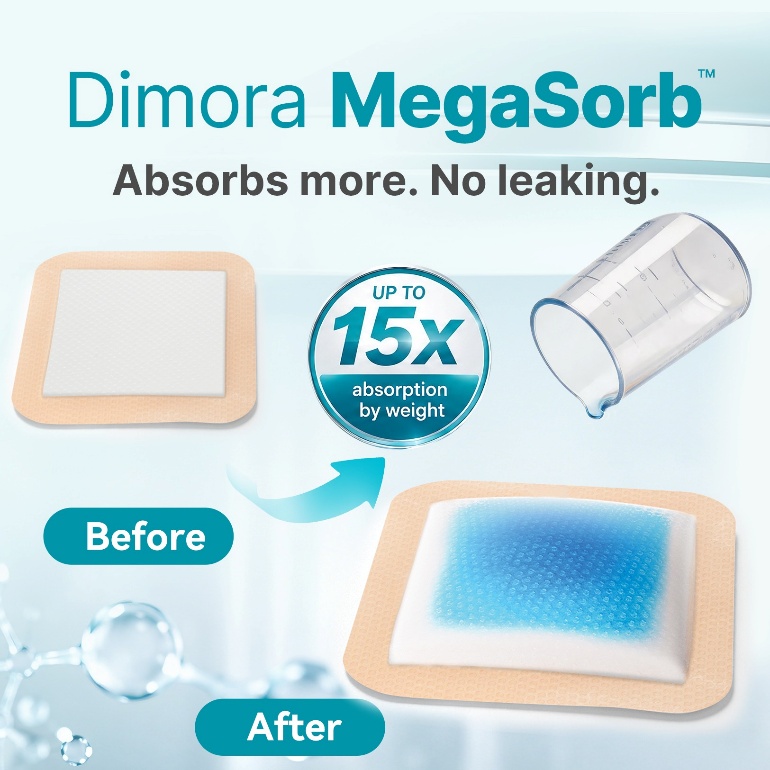
The Dimora MegaSorb™ Silicone Foam Dressing uses a Dual-Action Absorption System designed to manage wound exudate in two stages.
First, Absorbing Wound Fluid
The absorbent foam structure draws drainage away from the wound surface and into the dressing.
According to Dimora, its MegaSorb™ Silicone Foam Dressing can absorb up to 15 times its own weight in wound exudate. This capacity is intended to help manage wounds with moderate to heavy drainage.
Next, Retaining the Absorbed Fluid
Once fluid enters the dressing, the MegaSorb™ system is designed to hold it within the absorbent structure.
This retention feature helps limit fluid movement back toward the wound or outward toward the dressing's edges, potentially reducing leakage during wear. By combining these functions, the system addresses both the initial absorption of wound drainage and its containment afterward.
Protecting the Skin Around the Wound
Managing drainage is not only about the wound itself. The surrounding skin also needs protection.
When excess wound fluid remains in contact with nearby skin for extended periods, it can contribute to maceration. This occurs when prolonged moisture exposure causes the skin to become overly soft, fragile or damaged.
Macerated skin may be more vulnerable to irritation and breakdown, potentially complicating wound healing.
A dressing that absorbs and retains drainage can help reduce unnecessary moisture exposure around the wound.
However, no dressing eliminates the need for regular wound assessment. Patients and caregivers should follow professional instructions for dressing changes and watch for changes in drainage, skin condition or other signs of complications.
Additional Layers Support Wound Protection
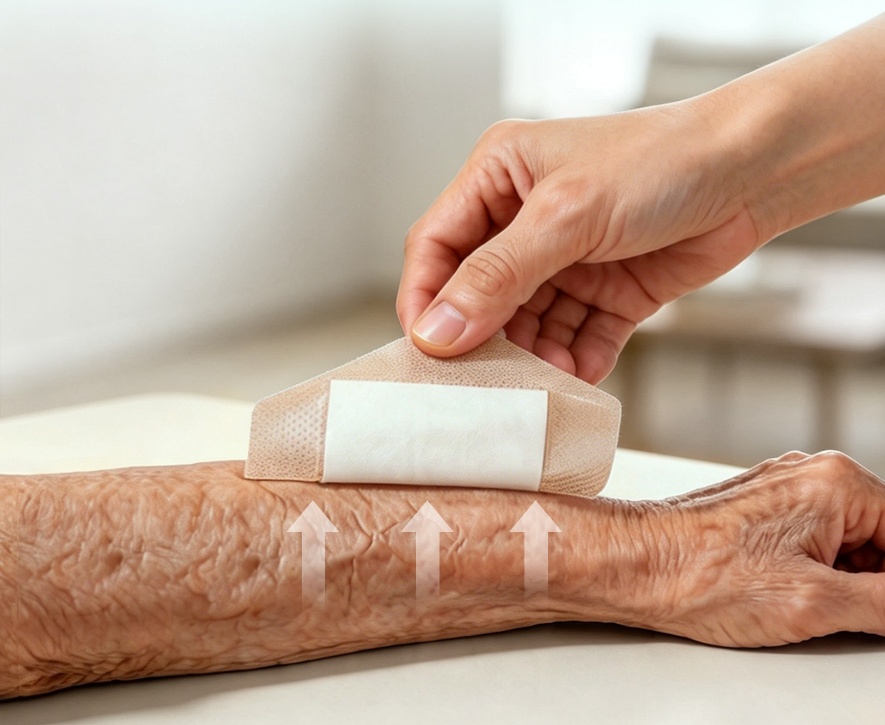
The MegaSorb™ dressing incorporates other materials that support its fluid-management design.
A medical-grade silicone contact layer is intended to help the dressing remain in place while allowing gentler removal during dressing changes. This can be particularly important for people with fragile or sensitive skin.
The dressing also features a waterproof, breathable polyurethane (PU) film outer layer. This layer is designed to help protect against external moisture and contaminants while allowing moisture vapor to escape.
Together, the silicone contact layer, absorbent core and outer film address different aspects of wound care, from fluid management to skin contact and external protection.
Different Dressing Options for Different Wound Locations
Dimora offers several silicone foam dressing formats using its MegaSorb™ fluid-management technology.
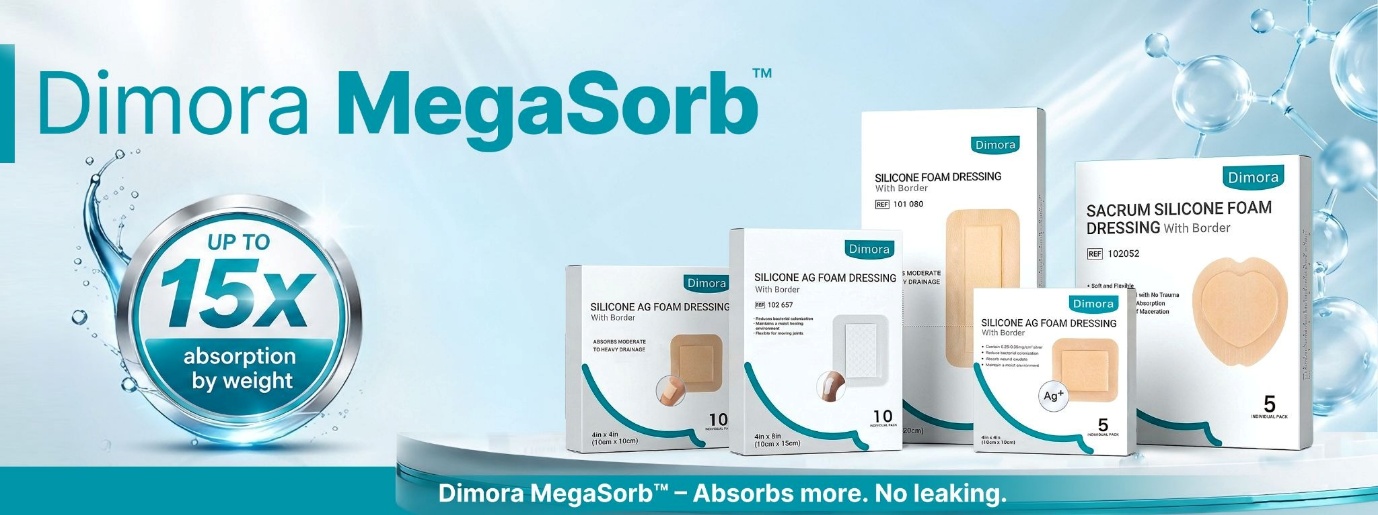
Square Silicone Foam Dressing: A versatile shape intended for use in a range of appropriate wound-care situations.
Sacral Silicone Foam Dressing: Designed to fit the contours of the sacral area, where dressing placement and movement can present additional challenges.
Silver Silicone Foam Dressing: Intended for certain wound-care situations where an antimicrobial dressing may be appropriate. Silver-containing dressings should be used according to product instructions and guidance from a qualified health care professional.
Although the dressings are designed for different applications, the MegaSorb™ range emphasizes the same fluid-management approach: absorbing wound drainage and helping keep it contained.
The appropriate dressing depends on several factors, including the wound's location, size, depth, drainage level and surrounding skin condition.
Choosing a Dressing Involves More Than Absorption Capacity
For wounds with moderate to heavy drainage, the amount of fluid a dressing can absorb is an important consideration, but it does not tell the whole story. Fluid retention, protection of surrounding skin, dressing fit and the ability to manage drainage during everyday movement also matter.
Dimora's MegaSorb™ Silicone Foam Dressing combines a stated absorption capacity of up to 15 times its own weight with a retention system designed to limit leakage and backflow.
The company's approach reflects an important principle of wound management: Effective dressings must do more than absorb fluid. They must also help keep that fluid under control.
Dimora promotes its MegaSorb™ range as part of its mission to "Make Home Care Easy."
For individuals receiving wound care at home, dressing selection and changes should follow the recommendations of a qualified health care professional, particularly when wounds produce substantial drainage or show signs of infection.
LTC News can conduct an independent reviews of products and services and publishes detailed articles based on those evaluations. Contact LTC News for information.

Sponsored