Why a Professional Website Matters for Long-Term Care Providers
About This Article
The growing need for caregivers and long-term care facilities has intensified demand — and competition — among providers. A strong online presence, active social media use, and consistent marketing are increasingly essential for meeting families’ expectations for quality care for their older loved ones.

James Kelly
LTC News staff writer specializing in long-term care and aging.
Table of Contents
- Why a Professional Online Presence Matters
- Answer the Questions Families Ask Before They Call
- Professional Design Can Be Worth the Investment
- Turn Your Experience Into Helpful Content
- Make Services and Costs Easier to Understand
- Understand How Families Pay for Extended Care
- Build Trust Through Credentials and Transparency
- Protect Client Privacy Online
- Don't Ignore Local Search
- Extend Your Reach Through LTC News
- Keep Your Website Current
- Use Your Website to Build Referrals and Relationships
- Help Families Find Additional Resources
- Build a Better Digital Front Door
The demand for longterm care continues to rise as more families seek reliable, highquality support for aging loved ones. Whether they need help at home or are exploring communitybased options, families increasingly expect clear information, transparency, and professionalism from the providers they consider.
From home care agencies and adult day services to assisted living communities, nursing homes and independent caregivers, a professional website can help providers build credibility and reach families searching for support. Understanding how families may pay for extended care — including how LongTerm Care Insurance benefits may help — can also make those first conversations easier.
Families looking for help often begin their search online. Before making a phone call or scheduling a visit, they may want to know what services you provide, where you provide them, your qualifications, and whether your organization can meet their loved one’s needs.
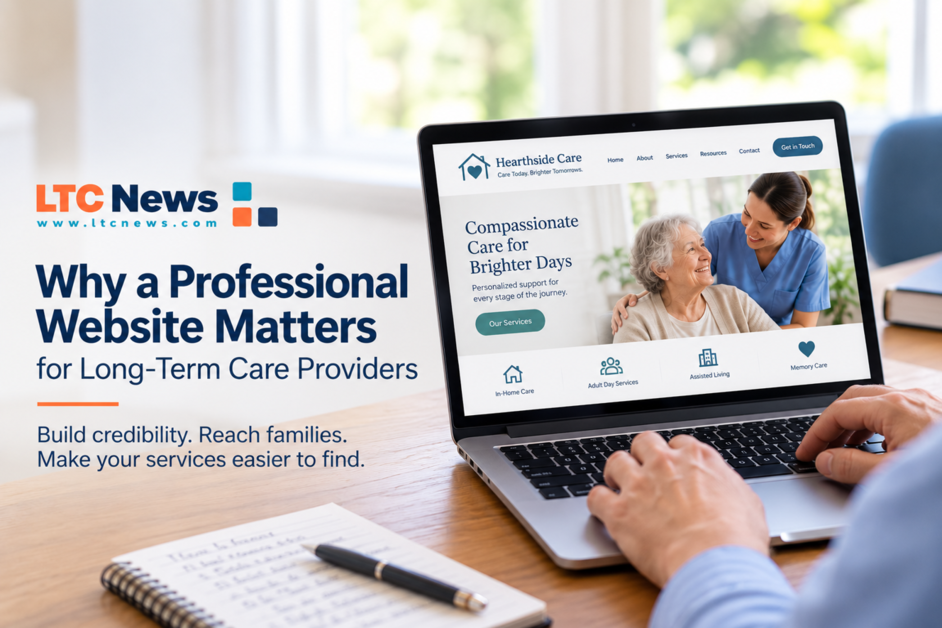
Your website is your digital front door. It should quickly tell families who you are, what you offer, and how to reach you while answering basic questions about services, availability, costs, and payment options.
Why a Professional Online Presence Matters
Families searching for help with an aging parent, spouse, or other loved one are often making decisions under pressure. A parent may have just returned home from the hospital. A spouse may be struggling with mobility. An adult child may realize that Mom or Dad can no longer safely live without additional help.
Others may be planning ahead and comparing adult day programs, assisted living, memory care, or in-home assistance before an immediate need develops.
Your website should make that research easier. A professional online presence also gives you an opportunity to explain what distinguishes your organization. That could include how caregivers are screened and trained, available programs and services, staffing practices, amenities, or the experience and qualifications of an independent provider.
Including a section that explains that your organization understands the LongTerm Care Insurance claims process and can help families secure benefits that pay for your services can be a major advantage. With so many consumers now owning LTC policies, reassuring families that you can guide them through the paperwork and help them access the benefits they’ve earned builds trust and removes a common barrier to starting care.
The goal isn't simply to appear online. Your site should help families determine whether contacting you is the appropriate next step. Without that next step, you lose a customer.
Answer the Questions Families Ask Before They Call
Think about your website from the family's perspective. Visitors shouldn't have to search through multiple pages to determine whether you provide the services they need or operate in their community.
Depending on your organization, useful information may include:
- Services and levels of assistance offered
- Cities, counties, or geographic areas served
- Hours and after-hours availability
- Evening, overnight and weekend options
- Minimum visit or scheduling requirements
- Licensing or certification information, when applicable
- Employee or caregiver screening procedures
- Training and supervision practices
- Insurance and bonding information, when applicable
- Payment methods accepted
- Whether you participate in Medicaid or other applicable programs
- Whether you provide documentation for Long-Term Care Insurance claims
- How families can request an assessment, consultation, or tour
Make your phone number and contact information easy to find. A visitor who has decided to contact you shouldn't have to hunt for a way to do it.
Professional Design Can Be Worth the Investment
Building a basic website has become much easier. Modern website builders offer templates, hosting, domain tools, and other features that let businesses establish an online presence without learning to code.
That doesn't mean professional website expertise has lost its value.
Professional expertise can improve site organization, mobile usability, accessibility, page speed, photography, clear ways for visitors to make contact, and local search visibility — all important considerations when building an effective website.
A designer or digital professional can also look at your site through the eyes of someone who doesn't already know your organization. That's particularly valuable in long-term care, where a visitor may be stressed, unfamiliar with industry terminology, and trying to make an important decision quickly.
Experts also recommend designing your website for easy navigation, especially since most visitors won’t be 20yearolds. They’re more likely to be adult children, spouses or other family members of an older adult, and you can’t assume their comfort with technology matches that of younger users. A clear layout, simple menus and straightforward instructions help ensure families can quickly find the information they need.
For a small independent provider, a do-it-yourself website may be enough to get started. Larger agencies, adult day programs, assisted living communities, and growing organizations may find that professional design and marketing expertise is worth the investment.
Whatever approach you choose, the objective should be the same: make it easy for families to understand what you provide and what they should do next.
Turn Your Experience Into Helpful Content
Providers answer many of the same questions every week. Those questions can become some of the most useful content on your website.
Topics might include what families should expect when services begin, how assistance can support someone living with dementia, what happens during a typical day at an adult day program, when someone might consider assisted living, or how families can prepare for support following a hospital discharge.
Write for the spouse or adult child trying to make a decision, not for another industry professional. Avoid unnecessary jargon. Use short sentences and straightforward explanations. A family searching for help may already feel overwhelmed. Your website should make the process easier to understand.
Make Services and Costs Easier to Understand
Cost is one of the biggest concerns families have when arranging ongoing assistance. Providers do not necessarily need to publish exact rates online, especially when pricing depends on the level of support required. However, your website should explain how pricing generally works.
For example, an organization might explain minimum scheduling requirements, what is included in a base rate, whether pricing changes with additional levels of assistance, or whether different rates apply on evenings, weekends, or holidays.
Transparency can prevent misunderstandings later. Families should also know what services may result in additional charges before they agree to services or residency.
It is also helpful to explain which payment methods your organization accepts, such as private pay, Long-Term Care Insurance benefits, Medicaid or veterans benefits when eligibility and provider requirements are met, and other payment sources.
Understand How Families Pay for Extended Care
Providers don't need to become insurance experts, but understanding the major ways families pay for extended care can make intake conversations easier.
Many families assume Medicare will pay for ongoing help with everyday living. Generally, it does not when personal assistance is the only service needed. Medicare may cover certain skilled nursing, rehabilitation, and home health services when eligibility requirements are met, but Medicare does not pay for ongoing long-term care.
Medicaid can pay for long-term services and supports for people with limited financial and functional eligibility requirements. Programs, covered services, and provider participation vary by state. Not every provider participates in Medicaid, so families should confirm whether a particular agency, program, or community accepts Medicaid payment before assuming services will be covered.
Long-Term Care Insurance is another potential funding source. Depending on the policy and the person's eligibility for benefits, coverage will help pay for services at home, adult day services, assisted living, memory care, or a nursing home.
Other families pay directly from income, savings, and other assets. Understanding these differences helps providers recognize why families ask financial questions and connect them with appropriate resources when they need additional guidance.
Build Trust Through Credentials and Transparency
Families may be deciding whom to trust with a parent, spouse, or another person they love. Your website should give them useful information to help them decide. Include accurate details about your experience, credentials, and organization. If your business is licensed, bonded, or insured, explain that accurately.
Genuine testimonials can also be valuable when used with appropriate permission. Avoid exaggerated claims or guarantees that cannot be substantiated. Specific information is usually more persuasive.
Explain relevant screening, training, supervision, and safety procedures. Families may also want to know how your organization responds when something doesn't go according to plan, such as when a scheduled caregiver becomes unavailable or a resident's needs change.
Practical information builds confidence more effectively than marketing slogans.
Protect Client Privacy Online
Providers should consider privacy when designing their websites. An ordinary contact form should not encourage families to submit extensive medical histories or other sensitive information unless appropriate privacy and security protections are in place.
Keep initial inquiries focused on the information necessary to make contact, such as a person's name, phone number, general location, and type of service requested.
Some providers and organizations are subject to HIPAA, while other federal or state privacy requirements may apply. Businesses collecting sensitive health information online should understand which requirements apply to them and use appropriate safeguards.
Use similar caution with testimonials, photographs, and client stories. Obtain appropriate permission before identifying someone or sharing details about their situation.
Don't Ignore Local Search
Your website isn't always the first thing a family sees when searching for a provider. Search results, map listings, online directories, and reviews may be what a family sees before ever reaching your website.
Make sure your organization's name, phone number, location or service area, hours, and website information are accurate and reasonably consistent across major business listings.
Reviews can also influence first impressions. Monitor public-facing profiles and respond professionally when appropriate, while protecting client and resident privacy.
Local visibility is particularly important for providers whose services are tied to a geographic area. A strong website works best when families can actually find it.
Extend Your Reach Through LTC News
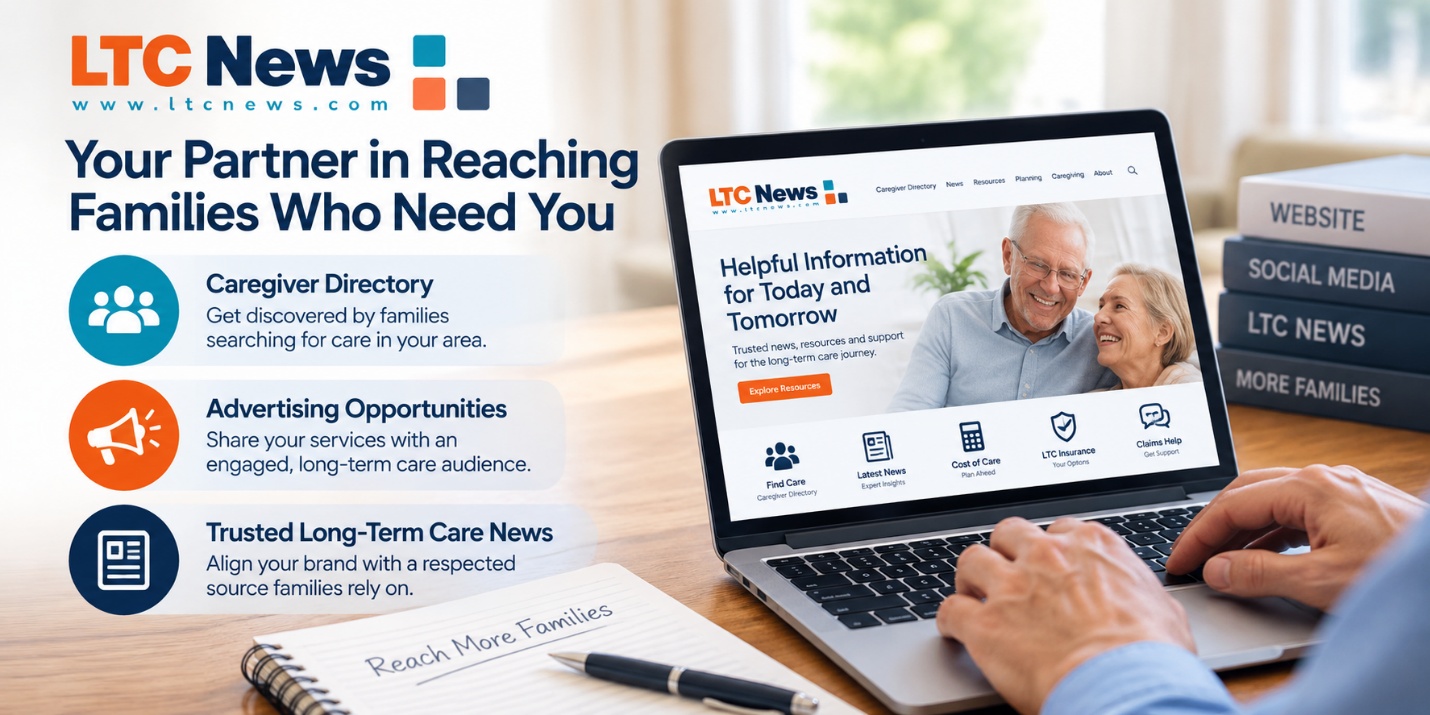
Your website should be the foundation of your digital presence, and social media can help keep your organization visible and connected to the community. But neither requires families to discover you only through your own channels.
LTC News can provide another path. Families visit LTC News looking for information about caregiving, senior living, Long-Term Care Insurance, health, aging, and the financial realities of extended care. Many are researching these subjects because a parent, spouse, or other loved one needs help now or because they are beginning to plan for what may come next.
That makes LTC News a natural place for providers to increase their visibility among people already interested in long-term care topics.
The LTC News Caregiver Directory gives home care agencies, adult day services, assisted living communities, memory care providers, nursing homes, and other organizations an opportunity to be discovered as families search for services in their area. A directory presence can complement your own website by creating another route for prospective clients and their families to find your organization.
A long-term care provider can claim (or create) their free listing in the directory and can upgrade it at a nominal cost. LTC News also offers banner ad opportunities.
Claim your free listing on the LTC News Caregiver Directory and/or upgrade the listing to enhance visibility and highlight your staff and services through the LTC News Directory Business Portal.
The strongest digital strategy doesn't depend on a single channel. Your website gives families a place to learn about your organization. Social media helps you stay visible and share useful information. Providers can use LTC News resources on their social media as they comment on how their organization can help. A presence on LTC News can put your organization in front of families as they educate themselves, compare options, and look for answers.
The strongest digital strategy doesn't depend on a single channel. Your website gives families a place to learn about your organization, your services, and what makes you different. Social media helps you stay visible day-to-day and share useful information that keeps your organization top of mind. Providers can also use LTC News resources on their own social media, offering real value while commenting on how their organization can help. Each channel does its own job, but together they build trust from multiple directions. A presence on LTC News adds another layer to that strategy — it puts your organization in front of families exactly when they're educating themselves, comparing options, and looking for answers. When families find you at that stage, in a place they already trust for information, you're not just another and you're part of the resource they're relying on to make one of the most important decisions for their loved ones." — Nick DeFrank, Vice President, LTC News.
For long-term care providers, being visible where families are already searching for trusted information can help turn awareness into inquiries—and ultimately help more people find the services they need.
Keep Your Website Current
An outdated website can quickly undermine credibility. Review your site regularly. Make sure phone numbers, locations, service areas, hours, and descriptions remain accurate.
Test contact forms and links. Remove outdated staff information. Update services, programs and pricing information when appropriate. Refresh reviews and testimonials periodically. A family should never call because your website says you provide a particular service only to discover that the information has been outdated for months.
Accuracy is part of building trust.
Use Your Website to Build Referrals and Relationships
Launching a website is only the beginning. A simple blog or resource section can give families reasons to return and help people discover your organization through online searches.
Topics might include preparing a home for outside assistance, recognizing when an older parent needs more help, communicating with someone living with dementia, comparing home-based services with assisted living, or planning for support following a hospital discharge.
Email updates can also help maintain relationships with clients, residents' families, referral partners, and others in your community. Keep the information useful, not overly promotional. Satisfied families can become important referral sources. Encourage clients to leave honest reviews when appropriate and make your website easy to share with others searching for similar services.
Pay attention to which pages generate calls and inquiries. If visitors repeatedly read your dementia-related content, consider expanding those resources. If a particular service page generates inquiries, make sure it answers the questions prospective clients frequently ask.
Small improvements can make your website more useful over time.
Help Families Find Additional Resources
No provider can meet every family's needs. Someone may live outside your service area, require a different level of assistance, or need services your organization doesn't provide. Helping that family find reliable information can still leave a positive impression.
Your own website should be the foundation of your online presence, but it doesn't have to work alone. Provider directories can create another path for families actively searching for services. Use LTC News to help market your services to American families: Contact LTC News
You can link to LTC News and other unbiased sites on your website as a source of credible information. Your website designer should make sure that any links open in another tab so they stay linked to your site.
Build a Better Digital Front Door
A successful provider website doesn't need elaborate technology or hundreds of pages. It needs to answer the questions families actually ask.
Explain what you do, where you provide services, who provides them, and how someone can reach you. Be transparent about procedures, costs, and payment options. Share useful information without making promises or offering professional advice outside your expertise.
Most importantly, remember who is visiting your website. Behind many searches is a spouse, daughter, son, or other family member trying to solve a difficult problem. A professional website designer will help you build a clear, credible website that can make it easier for families to understand their options, find appropriate help, and decide whether your organization is right for them.
Frequently Asked Questions
How can LTC News complement a provider's website and social media?
A website explains an organization's services and gives prospective clients a place to make contact, while social media helps providers remain visible and share useful information. LTC News offers another way to reach families who are already researching aging, caregiving, senior living, Long-Term Care Insurance, and extended care. A presence across these channels can help providers reach families at different stages of their search.
Why does a long-term care provider need a professional website?
Families often research providers online before calling, scheduling a tour, or requesting an assessment. A professional website gives home care agencies, adult day services, assisted living communities, nursing homes, and other providers a place to explain their services, qualifications, locations, availability, and payment options while building credibility with prospective clients.
What information should a long-term care provider include on its website?
Families should be able to quickly find the services offered, geographic area served, hours, contact information, licensing or certification details when applicable, screening and training practices, payment options, and instructions for requesting a consultation, assessment, or tour. Providers that work with Long-Term Care Insurance policyholders should also explain what claims documentation they can provide.
What other marketing opportunities does LTC News offer long-term care providers?
In addition to the Caregiver Directory, LTC News offers advertising opportunities that can help organizations reach people interested in long-term care, caregiving, aging, and related topics. Providers can also share relevant LTC News resources through their own social media channels and add useful educational links to their websites.
Can Medicare pay for ongoing long-term care?
Generally, no. Medicare may cover certain skilled nursing, rehabilitation, and home health services when eligibility requirements are met, but it does not pay for ongoing long-term care simply because someone needs help with everyday activities.
Can Long-Term Care Insurance help pay for a provider's services?
Yes, depending on the policy, the insured's eligibility for benefits, and whether the services and provider meet the policy's requirements. Long-Term Care Insurance may help pay for services at home, adult day services, assisted living, memory care, or nursing home services. Providers can help by supplying appropriate invoices and documentation, but policy-specific coverage and claims questions should generally be directed to the insurer, claims administrator, or an appropriately licensed insurance professional.
Why is local search important for long-term care providers?
Families may encounter map listings, directories, reviews, and other search results before reaching a provider's website. Providers should keep their business name, phone number, location or service area, hours, and website information accurate across major online listings. A strong website is most valuable when families can find it.
Should providers explain their prices online?
Providers do not necessarily need to publish exact rates when costs depend on the services or level of assistance required. However, families should understand how pricing generally works, what a base rate includes, whether minimum service requirements apply, and which services or levels of assistance may result in additional charges.
How can the LTC News Caregiver Directory help providers?
The LTC News Caregiver Directory gives home care agencies, adult day services, assisted living communities, memory care providers, nursing homes, and other organizations another way to be discovered by families searching for services in their area. Providers can claim or create a free listing and have options to upgrade their presence for additional visibility.
What's the most important goal of a long-term care provider's digital presence?
Make it easy for families to understand what you provide, determine whether your organization may meet their needs, and know what to do next. A professional website, accurate online listings, useful social media content, and visibility through relevant resources such as LTC News can work together to build awareness and trust.
Is a do-it-yourself website enough for a long-term care provider?
It can be, particularly for a small or independent provider. Modern website builders make it easier to establish a basic online presence without coding. However, professional designers can provide expertise in areas such as organization, accessibility, mobile usability, page speed, photography, and local search visibility. For larger or growing organizations, that expertise may be worth the investment.

Sponsored
