When Long-Term Care Goes Wrong: Warning Signs and Legal Rights
About This Article
Long-term care failures can include neglect, abuse, medication errors, or poor supervision. Warning signs include unexplained injuries, weight loss, and behavioral changes. Families have legal rights and should act quickly to document concerns and protect their loved one.

Anna Marino
Anna Marino is a seasoned writer specializing in topics related to family, aging, and lifestyle in retirement. She shares advice on intergenerational relationships and strategies for enjoying retirement.
Table of Contents
- Weight of the Unspoken
- From Sanctuary to Suspicion
- Reality: Long-Term Care Failures Are More Common Than Many Realize
- Warning Signs You Should Never Ignore
- Your Loved One Has Legal Rights—And They Are Enforceable
- When Care Fails: Legal Options Families Can Consider
- What Compensation Might Look Like
- Why So Many Cases Go Unreported
- What You Should Do Immediately
- Medicare Gap Most Families Don’t Expect
- Why Planning Reduces Risk
- How to Choose Safer Care from the Start
- Look Beyond Appearances
- When to Act
You weren’t expecting the air to feel so heavy. It started with something small—a flicker of hesitation. When you walked into the room, your mother smiled, but the warmth didn’t reach her eyes. It was a practiced expression, a mask for someone who used to be your North Star.
Then you saw it. A dark, plum-colored bruise was blooming against the parchment-thin skin of her forearm.
"Mom, what happened?"
She looked at the mark, then back at you, her voice trailing off into a hollow whisper. "I... I don't know. I must have bumped something." But she wouldn't look you in the eye.
Weight of the Unspoken
A week later, the signs started screaming. Her favorite floral blouse hung loose, the fabric swallowing a frame that was shrinking faster than "old age" could explain. The meals you were promised that she was enjoying now felt like fiction. But the moment that broke you was the silence. You asked a simple question about her morning, and she froze. She looked toward the door, then back at her lap, her hands trembling. It wasn't the forgetfulness of age; it was the calculated caution of someone who was afraid.
You find yourself sitting in your car in the parking lot, the engine idling, replaying the highlight reel of the last six months:
- The Tour: The smell of fresh lilies and the polished marble floors.
- The Promises: "We treat our residents like family."
- The Relief: That first night you actually slept, believing she was finally safe.
Now, that relief has soured into a cold, hard knot in your stomach. You’re haunted by the question no daughter ever wants to voice: Is she fading away, or is she being failed?
I've heard these stories way too often; you probably have as well. When long-term care fails, families face urgent decisions. Knowing what to do is a priority.
From Sanctuary to Suspicion
When long-term care fails, it doesn't always happen with a bang. It happens in the skipped bandages, the cold trays of food, and the eyes that no longer meet yours. For millions of us, this is the moment the world shifts. The long-term care facility you chose as a sanctuary has become a source of gut-wrenching dread.
What you do in the next forty-eight hours matters more than the last six months. You are no longer just a visitor; you are her only advocate. That instinct screaming in your chest? It isn’t "paranoia," and it isn't "stress." It’s the truth.
If something feels wrong, it usually is. Here is how to navigate the transition from doubt to daughter-in-action, and the legal rights you need to reclaim her safety.
Reality: Long-Term Care Failures Are More Common Than Many Realize
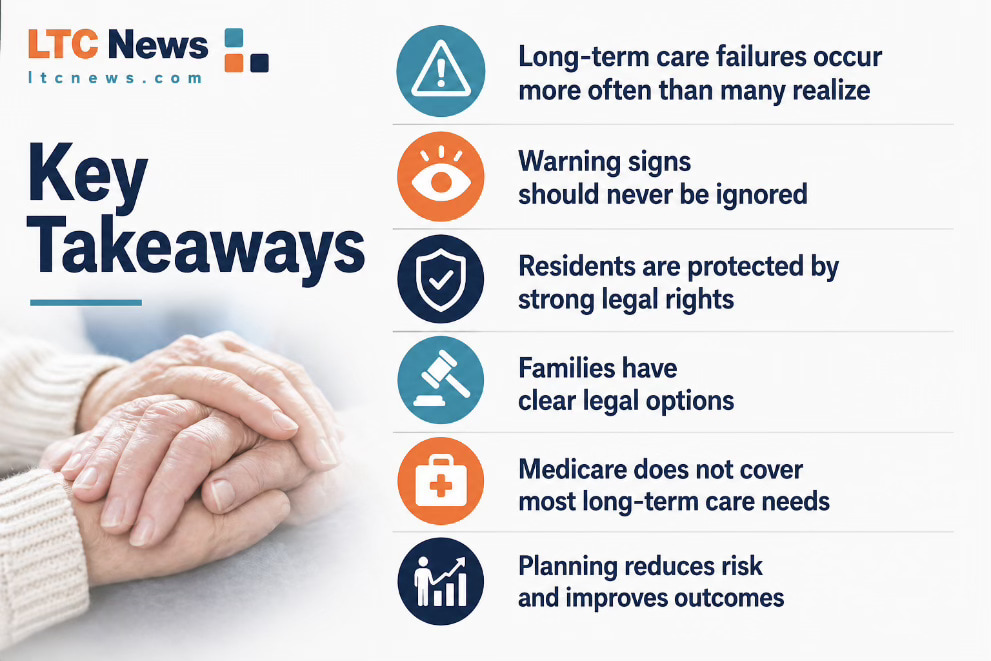
Long-term care is essential for millions of older adults, but the system faces growing pressure from staffing shortages, rising demand, and an aging population. According to the Centers for Disease Control and Prevention, about 1 in 10 older adults living at home experience abuse, neglect, or exploitation. Experts say this figure likely underestimates the true scope due to underreporting.
In institutional settings, the risk may be even higher due to underreporting. Data from the Centers for Medicare & Medicaid Services shows that in 2023, U.S. nursing homes received 94,499 health citations, including more than 7,600 related to abuse, neglect, or exploitation.
Globally, the World Health Organization reports that 1 in 6 people age 60 and older experienced some form of abuse in the past year. Experts believe many cases are never reported, making vigilance by families critical.
Warning Signs You Should Never Ignore
These warning signs often appear gradually, but together, they can signal serious breakdowns in care.
Watch for:
- Unexplained bruises, fractures, or injuries
- Rapid weight loss, dehydration, or malnutrition
- Advanced bedsores (Stage 3 or 4)
- Missed medications or incorrect dosing
- Sudden emotional withdrawal, fear, or anxiety
- Repeated falls or injuries
- Staff who avoid questions or discourage visits
If you see these signs, do not assume they are part of normal aging. Investigate immediately.
Your Loved One Has Legal Rights—And They Are Enforceable
Federal law provides clear protections. The Nursing Home Reform Act guarantees residents the right to:
- Be treated with dignity and respect
- Be free from abuse, neglect, and exploitation
- Receive appropriate medical care
- Participate in care planning
- Maintain privacy
- File complaints without retaliation
These protections apply to facilities that receive federal funding, which includes most nursing homes in the United States. Many states expand these protections further, including penalties and additional legal remedies when facilities fail to meet their obligations.
When these rights are violated, it is not just poor care—it may be negligence or abuse under the law.
When Care Fails: Legal Options Families Can Consider
If harm occurs, families have several legal paths depending on the circumstances.
- Negligence or Medical Malpractice
The most common claims involve:
- Untreated pressure ulcers
- Medication errors
- Falls caused by a lack of supervision
- Elder Abuse Claims
These include:
- Physical or emotional abuse
- Sexual abuse
- Financial exploitation
- Wrongful Death
If neglect leads to death, families may pursue compensation for:
- Medical expenses
- Funeral costs
- Loss of companionship
- Breach of Contract
If a facility fails to deliver promised services, such as staffing levels or therapies, legal action may be possible.
What Compensation Might Look Like
While every case is unique, available data offers useful benchmarks.
- Nursing home neglect settlements average about $251,000
- Assisted living cases average about $288,000
- Severe harm or wrongful death cases often exceed $400,000
- Jury verdicts in extreme cases can surpass $1 million
These numbers are not just financial; they reflect the severity of harm and the accountability placed on care providers when standards are not met.
Recoverable damages may include:
- Medical expenses
- Pain and suffering
- Emotional distress
- Relocation costs
- Funeral expenses
- Punitive damages in cases of egregious conduct
When a family comes to us after a loved one has been harmed in a care facility, the first thing we do is listen very carefully to their experience, because every case is different, and the details matter. Our job is to cut through the complexity and help families understand exactly what happened, who is responsible, and what their options are. No family should have to navigate this alone.” — Jason Wesoky, trial lawyer at Ogborn Mihm LLP.
Why So Many Cases Go Unreported
One of the most troubling realities is how often abuse and neglect go unnoticed or unreported. Research suggests that for every reported case of elder abuse, as many as 24 cases go unreported.
Several factors contribute to this:
- Cognitive impairment, including dementia and Alzheimer’s disease
- Fear of retaliation or reduced quality of care
- Families unsure what acceptable care looks like
- Facilities discouraging complaints or minimizing incidents
This silence allows poor conditions to persist and puts more residents at risk.
What You Should Do Immediately
If you suspect your loved one has been harmed, Wesoky says time is critical. He says that evidence can disappear quickly. Surveillance footage may be overwritten. Staff recollections can change. Medical conditions can worsen.
Take these steps immediately:
- Document everything
- Take photos of injuries and conditions. Keep a detailed, dated log of observations and conversations.
- Request full medical records
- You have a legal right to access them. These records are essential for understanding what occurred.
- Report concerns promptly
- Contact your state’s Long-Term Care Ombudsman and, if necessary, Adult Protective Services.
- Do not sign facility documents
- Avoid signing waivers or settlement agreements without legal advice.
- Seek independent medical evaluation
- A third-party physician can help confirm whether injuries are consistent with neglect.
- Consult an experienced attorney early
- Early legal guidance can preserve evidence and strengthen your case.
Laws and timelines vary by state, so speaking with a qualified attorney can help you understand your specific options. Acting quickly is not overreacting—it’s protecting someone who may not be able to protect themselves.
Medicare Gap Most Families Don’t Expect
If you’ve had a loved one who needed long-term care, you already understand a hard truth many families discover too late: Medicare does not cover long-term care. Medicare is designed for short-term medical treatment—not ongoing care needs. Most long-term care is considered custodial care, which is exactly the type Medicare does not cover.
Medicare covers short-term skilled nursing care, but only under strict conditions:
- A qualifying hospital stay is required
- Care must be medically necessary
- Coverage is limited to up to 100 days, with full coverage only for the first 20 days
After that, benefits are reduced or end entirely.
Medicare does not cover:
- Help with daily activities like bathing or dressing
- Long-term supervision for dementia
- Extended stays in assisted living or memory care
This creates a significant financial gap. Long-term care costs can reach tens of thousands to over $100,000 annually, depending on location and level of care.
Without planning, families may be forced to:
- Pay out of pocket
- Liquidate assets
- Rely on unpaid caregiving
- Spend down savings to qualify for Medicaid
Learn more: What You Need to Know About Medicaid and Long-Term Care
Many families are caught off guard—believing coverage exists when it doesn’t. Without Long-Term Care Insurance, the cost of extended care services will either come from income and assets, or family members will step in to become caregivers. Quality long-term care services can be costly.
Why Planning Reduces Risk
Most long-term care decisions are made under pressure, not with the benefit of pre-planning. A hospitalization, fall, or sudden cognitive decline can force families into immediate decisions, often selecting the first available option rather than the best one.
Most families believe they will have time to plan. Many don’t. And when time runs out, choices become limited. At the same time, caregiving demands are increasing. Today, 63 million Americans provide unpaid care, a 45% increase since 2015.
Without preparation, families often face:
- Limited care choices due to cost constraints
- Emotional decision-making during crises
- Caregiver burnout
- Reduced oversight of care quality
Since the role of being a caregiver for an older family member is emotionally and physically challenging, many families must transfer a loved one to a long-term care facility like assisted living, memory care,e or a nursing home.
Planning allows you to remain in control when you need extended care. For many families, Long-Term Care Insurance provides the peace of mind and access to quality care options, not only protecting assets but also ensuring better quality care. Most people obtain an LTC policy between the ages of 47 and 67.
Learn More: LTC News Long-Term Care Insurance Learning Center
Even the best caregivers and long-term care facilities can make mistakes. That’s why you should stay actively involved—monitoring care, asking questions, and making sure your loved one is treated safely and professionally.
How to Choose Safer Care from the Start
Choosing a care provider requires more than a tour and a brochure. The biggest differences in care quality are rarely visible during a scheduled tour—they show up in daily routines, staffing consistency, and responsiveness when something goes wrong.
To reduce risk:
Look Beyond Appearances
- Review options with the LTC News Caregiver Directory and narrow down the most promising
- Visit multiple times, including evenings and weekends
- Observe staff interaction with residents
- Watch response times to call lights
Ask About Staffing
- What is the staff-to-resident ratio?
- Is licensed nursing staff available 24/7?
- What is the staff turnover rate?
High turnover and low staffing are major warning signs.
Review Inspection History
- Check state inspection reports
- Look for repeat violations
- Pay attention to patterns involving neglect or safety
Evaluate Communication
- Are staff transparent and responsive?
- Are families encouraged to participate in care decisions?
Stay Involved After Placement
- Visit regularly and at different times
- Build relationships with caregivers
- Monitor changes in condition
When to Act
If something feels wrong, trust that instinct. Ask questions. Show up more often. Document everything. Speak up—even if it feels uncomfortable. Because in many cases, your presence is the difference between neglect going unnoticed and care improving.
You’re not just advocating for your loved one, you may be protecting others who don’t have someone watching over them. That responsibility, while heavy, may be one of the most important roles you will ever take on. The earlier you act when something is wrong, the more options you have—and the more protection you can provide.
Frequently Asked Questions
What is considered nursing home negligence?
Negligence occurs when a facility fails to meet accepted care standards, resulting in harm such as falls, bedsores, or medication errors.
How do you prove elder abuse in a care facility?
Evidence includes medical records, photographs, expert testimony, and documentation linking harm to inadequate care.
How long do you have to file a claim?
It varies by state, typically between one and three years.
What should you do first if you suspect abuse?
Document evidence, seek medical care, report concerns, and consult an experienced attorney immediately.
Can you sue a nursing home for neglect?
Yes. Families can pursue claims for negligence, abuse, wrongful death, or breach of contract.


Sponsored