Telehealth After 50: Benefits, Costs, Medicare Coverage, and How to Choose a Provider

About This Article
Virtual medical appointments can make health care easier for adults over 50, early retirees, and family caregivers. Learn what telehealth can treat, how Medicare and private insurance cover it, and where to compare providers and costs.

Anna Marino
Anna Marino is a seasoned writer specializing in topics related to family, aging, and lifestyle in retirement. She shares advice on intergenerational relationships and strategies for enjoying retirement.
Table of Contents
- Why Telehealth Matters More After Age 50
- Early Retirement Before Medicare: How Telehealth May Help
- What Can Telehealth Treat?
- When an In-Person Visit Is Necessary
- How to Compare Telehealth Providers and Patient Reviews
- Major Companies Offering Virtual Medical Care
- Does Medicare Cover Telehealth in 2026 and 2027?
- How Telehealth Helps Family Caregivers and People Receiving Long-Term Care
- Five Questions to Ask Before Booking a Virtual Appointment
- Telehealth Offers Another Way to Stay Connected to Medical Care
A routine doctor’s appointment can take up most of your day. There’s the drive, the waiting room, and, for many older adults, the challenge of finding someone who can help with transportation. You’ve probably felt this yourself, or experienced it while taking an older family member to their appointments.
Telehealth offers another option. Many medical appointments can now happen by video or phone, letting patients speak with a physician or other licensed health care professional without leaving home. Even top specialists can be seen virtually.
For adults over 50, the benefits go beyond convenience. Virtual visits may make it easier to manage chronic conditions, review medications, and keep up with follow-up care. They can also help family caregivers coordinate appointments for aging parents.
Early retirees may find telehealth particularly useful as they navigate health insurance coverage before becoming eligible for Medicare at age 65. But not every medical concern can be addressed remotely, and virtual care isn't always less expensive. Understanding what telehealth can offer, how much it costs, and which providers are available can help you decide when an online appointment makes sense.
Why Telehealth Matters More After Age 50
By their 50s and 60s, many adults are managing more than one health concern. Others balance their own medical appointments with the needs of aging parents, spouses, or other family members. A 58-year-old managing high blood pressure may not need to travel to a doctor's office every time a physician wants to review home readings or discuss a medication adjustment. A 72-year-old recovering from hospitalization might benefit from a virtual follow-up to review discharge instructions and ensure medications are taken correctly.
For you, caring for an 85yearold parent, a video appointment can make it easier for family members in different locations to join the conversation, if your parent agrees. Often, the older adult will want someone with them during appointments to help them remember what was discussed and even ask questions they might not ask themselves. The convenience it adds for everyone involved is hard to overstate.
These are situations where telehealth can make a meaningful difference. Benefits can include less travel, easier access to certain specialists, more convenient follow-up appointments, and opportunities for family caregivers to participate in medical decisions.
Virtual appointments may also help people with mobility limitations, arthritis, vision problems, or difficulty driving keep up with necessary care. When getting to the doctor's office is difficult, having a virtual option may make patients less likely to postpone an appointment.
Early Retirement Before Medicare: How Telehealth May Help
Retiring before age 65 creates a health insurance challenge for many Americans. Most people become eligible for Medicare at age 65. Someone retiring at 55, 60, or 62 generally needs another source of health coverage until Medicare begins, unless eligible earlier because of disability or another qualifying condition.
Coverage options may include an Affordable Care Act (ACA) Marketplace plan, COBRA continuation coverage, a spouse's employer-sponsored plan, or another qualifying health insurance arrangement. Each has different premiums, deductibles, provider networks, and out-of-pocket expenses.
Telehealth may help early retirees manage some routine medical costs. For example, a 61-year-old with a high-deductible health plan might compare the cost of a virtual appointment for a minor illness with the cost of an urgent care visit.
A direct-pay telehealth consultation could be less expensive, especially if the patient doesn't need testing or additional treatment. However, the advertised appointment fee may not include laboratory tests, prescriptions, follow-up consultations, or referrals for in-person care. Some services also charge recurring membership fees.
Another important consideration is how a direct-pay appointment affects health insurance expenses. Payments to providers outside an insurance plan generally do not count toward the plan's deductible or annual out-of-pocket maximum unless the plan specifically allows them.
Before paying separately for virtual care, early retirees should check whether their existing health plan includes telehealth appointments with participating providers. Consumers purchasing individual health insurance can explore coverage options through HealthCare.gov or their state's official Marketplace.
Telehealth can help manage certain medical expenses, but it does not replace comprehensive health insurance. A relatively inexpensive virtual consultation offers little financial protection against hospitalization, surgery, or other major medical expenses.
What Can Telehealth Treat?
Some medical appointments are well suited to a video call. Others aren't. Telehealth is often useful when a physician needs to review symptoms, discuss test results, monitor an established condition, or determine whether additional care is necessary.
Common uses include:
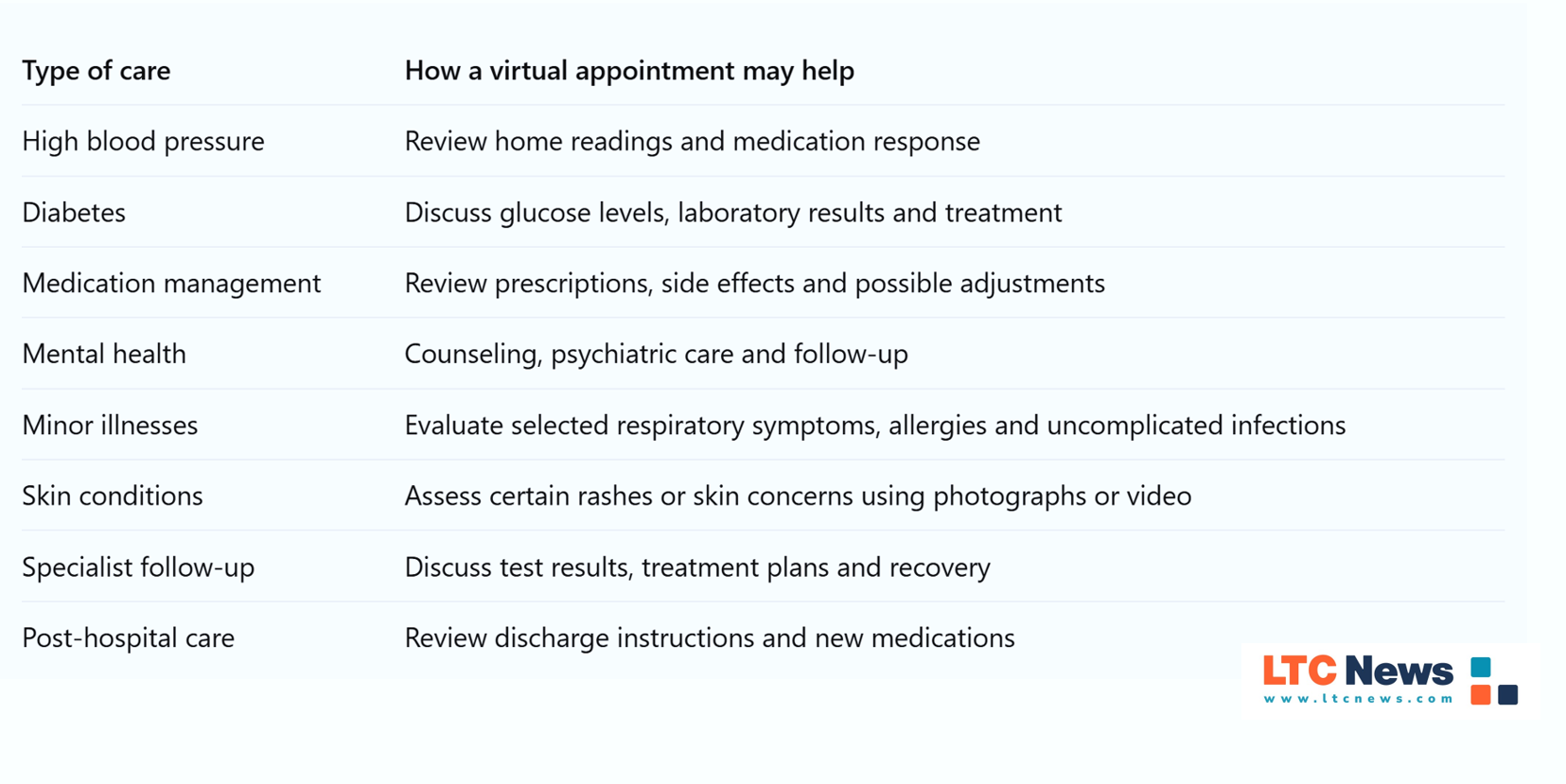
A virtual healthcare provider may recommend treatment, prescribe medication when appropriate, or determine that an in-person examination is necessary. If you have chronic conditions, telehealth may be particularly useful between regular office appointments. However, a service designed for occasional minor illnesses may not be equipped to manage complex medical conditions or coordinate care among several specialists.
When an In-Person Visit Is Necessary
A doctor cannot perform a complete physical examination through an ordinary video call. Blood tests, imaging, many diagnostic procedures, vaccinations, and hands-on treatments still require in-person care. Yet, some lab work can be done locally with the doctor's orders and reviewed during a video call. A virtual appointment may help determine the next step, but it should not delay needed medical attention.
Call 911 for possible emergencies, including symptoms of a heart attack or stroke, severe breathing difficulty, uncontrolled bleeding, or sudden loss of consciousness. Sudden confusion, serious falls, rapidly worsening symptoms, or major changes in an older adult's condition may also require urgent in-person evaluation.
Someone who falls and hits their head while taking blood thinners should get prompt medical assessment, even if symptoms seem mild at first.
How to Compare Telehealth Providers and Patient Reviews
The growing number of online medical services gives consumers more choices, but finding the right provider can be confusing. Some companies provide virtual medical appointments directly. Others offer subscription-based primary care or connect patients with participating physicians.
Comparison and review websites serve a different purpose. They help consumers research providers, examine advertised prices and read patient experiences before choosing a service.
Several resources are available:
RatedByPatients is one of the most comprehensive resources available. It lets you compare telehealth providers, check medication prices, and read patient reviews. It’s a simple way to research online care options and compare advertised costs before you schedule an appointment.
There are other services you can review:
- Healthgrades: Offers physician profiles and patient ratings to help you research doctors and specialists.
- Zocdoc: Lets you search for providers and schedule virtual or inperson appointments.
- Sesame: Allows direct booking for selfpay medical services so you can compare consultation prices.
- Solv: Helps you find urgent care centers and book sameday visits.
- Vitals: Provides physician profiles and patient reviews so you can look up doctor information and read feedback from other patients.
These websites are not identical. RatedByPatients focuses on comparing online medical services, while Healthgrades and Vitals primarily provide physician information and reviews. Zocdoc emphasizes finding providers and scheduling appointments, while Sesame also allows consumers to purchase certain medical services directly.
Ratings can help, especially when multiple patients describe similar experiences. However, reviews may not be independently verified, and an excellent rating does not mean a provider is right for a particular medical condition.
For older adults with multiple health conditions, a physician's qualifications, experience, insurance participation, and ability to coordinate care may matter more than a numerical rating.
Major Companies Offering Virtual Medical Care
Consumers can also research telehealth providers directly. Several national companies offer virtual medical services, although appointment availability, insurance arrangements, and eligibility vary by location.
- Teladoc Health - General medical care, mental health services and selected chronic condition programs
- MDLIVE - Virtual urgent care, behavioral health and other eligible services
- Amwell - Virtual care services and technology through participating health plans and medical organizations
- Amazon One Medical - On-demand virtual care and primary care, with in-person options in participating markets
- Doctor On Demand - Virtual medical and behavioral health services
- PlushCare - Virtual primary care, chronic condition management and other medical services
Not every company offers the same type of care. Some provide appointments directly to consumers. Others make certain services available primarily through employers, health plans, or participating medical organizations. Insurance acceptance and Medicare participation also vary.
Before choosing a company, check whether its doctors and staff are licensed to treat patients in your state, whether the service addresses your medical needs, and what you will be charged. If your regular primary care practice offers telehealth, that may be a good place to start. Your physician already knows your medical history, medications, and ongoing treatment needs.
Does Medicare Cover Telehealth in 2026 and 2027?
Yes. Medicare covers many virtual medical appointments, and federal legislation has extended several important telehealth provisions through December 31, 2027. Under current rules, Medicare beneficiaries can receive many covered telehealth services from home, regardless of whether they live in a rural or urban area.
Eligible services include certain physician visits, mental health treatment, cognitive assessments, caregiver training, and other medical services.
Some appointments may also be conducted by telephone without video, subject to Medicare requirements. The official Medicare telehealth coverage page explains which services may qualify.
- Original Medicare
Medicare Part B generally covers eligible telehealth services much like comparable in-person appointments. After meeting the Part B deductible, beneficiaries typically pay 20% of the Medicare-approved amount. A Medicare Supplement (Medigap) policy may cover some of those costs, depending on the policy. Patients should confirm that the clinician accepts Medicare and that the specific virtual service is covered.
- Medicare Advantage
Medicare Advantage plans must cover services included under Original Medicare and may offer additional virtual care benefits. However, network restrictions, copayments, and other plan requirements can differ. A company offering nationwide telehealth may not be in a particular Medicare Advantage plan's network.
- What Happens After 2027?
The current extension runs through December 31, 2027, for many Medicare telehealth provisions. Some mental health telehealth protections are permanent, while other expanded benefits would require additional federal action to continue beyond that date. For now, eligible beneficiaries can continue using covered virtual services under the extended rules.
Medication Reviews and Chronic Conditions: An Important Benefit for Older Adults
Medication management is one area where a virtual appointment can be especially convenient. Many older adults take prescriptions from several physicians, sometimes along with vitamins, supplements, and over-the-counter medications. Keeping track of everything can become difficult, particularly after a hospitalization or medication change.
During a virtual appointment, patients can gather their medication containers and review them with a physician or pharmacist. Reviewing this information may help identify duplicate prescriptions, possible interactions, incorrect doses, or medications that could be contributing to dizziness, fatigue, or confusion. Some medications also carry greater risks as people age, including certain sedatives and drugs with anticholinergic effects.
A doctor or physician assistant may recommend changing a medication, adjusting a dose, or reviewing whether a particular drug is still necessary. Patients should not stop or change prescribed medications without appropriate medical guidance.
Some Medicare Part D beneficiaries may also qualify for medication therapy management services through their prescription drug plans. For people managing several chronic conditions, medication reviews can help prevent complications and maintain independence.
How Telehealth Helps Family Caregivers and People Receiving Long-Term Care
For families caring for an aging parent or spouse, or with a loved one living in a long-term care facility, getting someone to a medical appointment can be difficult. Someone with Parkinson's disease, arthritis, mobility limitations, or cognitive impairment may need help getting dressed, leaving home, and traveling to a medical office. A family caregiver may have to take time away from work or arrange transportation and additional help.
Telehealth can reduce some of those demands. For example, an adult daughter caring for her father at home might participate in a video appointment to discuss medication side effects, changes in mobility, or follow-up instructions after hospitalization. With appropriate permission, family members living elsewhere may also join appointments and help coordinate treatment.
Virtual care can support certain rehabilitation needs, help monitor chronic conditions, and provide caregiver education when clinically appropriate. But telehealth can’t replace the handson assistance many people need as they age. Those services still come from caregivers in the home or from trained staff in longterm care settings such as assisted living or nursing homes.
NOTE: If your loved one needs long-term care services, the LTC News Caregiver Directory can help you find home care agencies, assisted living communities, memory care providers, and other extended care services.You can research average costs of long-term care services by using theLTC News Cost of Care Calculator. The comprehensive data lets you compare current and projected long-term care costs in your area. The LTC News Caregiver Directory can help locate home care agencies, assisted living communities, memory care providers, and other extended care services.
When used alongside appropriate medical treatment and caregiving support, telehealth can make it easier for some older adults to receive care while remaining at home.
Five Questions to Ask Before Booking a Virtual Appointment
Before choosing a telehealth service, take a few minutes to check the details.
1. Does the provider accept my insurance? Confirm whether the clinician and specific service are covered under your health plan or Medicare arrangement.
2. What will the appointment actually cost? Ask about consultation charges, membership fees, prescriptions, testing, and follow-up appointments.
3. Is the healthcare provider qualified to treat my condition? Verify credentials and state licensure, particularly when seeking treatment for an ongoing medical problem. Can they order tests and lab work?
4. Will my regular doctor receive information about the visit? This is especially important when prescriptions are changed, or several physicians are involved in treatment.
5. What happens if I need additional care? Find out how the provider handles worsening symptoms, in-person referrals, and medical emergencies.
Before the appointment, gather your medication list, recent test results, and any home measurements relevant to your condition. If a family member will participate, arrange the necessary permission ahead of time.
Telehealth Offers Another Way to Stay Connected to Medical Care
For adults over 50, virtual medical appointments can make routine health care more manageable. Early retirees may find telehealth helpful when comparing medical expenses before Medicare eligibility. Older adults with chronic conditions may appreciate the convenience of follow-up appointments from home, while family caregivers can participate in medical discussions without always traveling to the same location.
Comparison websites can help consumers research providers, but choosing the right service involves more than finding the lowest advertised price. A qualified healthcare provider, appropriate treatment, insurance coverage, and access to follow-up care all matter.
Telehealth will not eliminate the need for office visits, diagnostic testing, or hands-on medical treatment. For many people, though, it offers a practical way to stay connected with health care professionals while reducing unnecessary travel and making appointments easier to manage.
Frequently Asked Questions
What are the biggest benefits of telehealth for adults over 50?
Telehealth can make it easier to manage chronic conditions, review medications, discuss test results and receive follow-up care without traveling to a doctor's office. It can be especially helpful for older adults with mobility challenges and family caregivers who assist with medical appointments.
Can telehealth replace in-person medical care or long-term care services?
No. Telehealth can support routine medical care, medication management and certain follow-up appointments, but physical examinations, diagnostic procedures and hands-on treatments often require in-person visits. It also cannot replace assistance with bathing, dressing, mobility or supervision needed because of dementia or other conditions.
Does Medicare cover telehealth visits in 2027?
Yes. Many expanded Medicare telehealth provisions remain in effect through December 31, 2027. Original Medicare generally covers eligible virtual appointments under Part B, subject to applicable deductibles and coinsurance. Medicare Advantage plans may offer additional benefits, but coverage and provider networks vary.
Are telehealth appointments less expensive than office visits?
Sometimes. Virtual consultations may cost less than in-person appointments, particularly for patients paying out of pocket. However, prescription costs, laboratory testing, follow-up visits and membership fees can increase the total expense. Check your insurance benefits and the provider's full pricing before scheduling.
Can early retirees use telehealth before becoming eligible for Medicare?
Yes. Adults who retire before age 65 may access telehealth through private insurance, ACA Marketplace plans, COBRA coverage or direct-pay services. Virtual visits may reduce some routine medical expenses, but they do not replace comprehensive health insurance.
How can I compare telehealth providers and patient reviews?
Websites such as RatedByPatients, Healthgrades and Zocdoc offer different ways to research providers, read reviews and compare available services. Check clinician credentials, state licensing, insurance participation and costs rather than relying solely on patient ratings.

Sponsored