Supporting Families Through Memory Loss: A Practical Guide for Canadian Families
About This Article
Discover compassionate, practical ways to support loved ones facing memory loss. Learn communication tips, safety strategies, long-term care services, and family caregiver resources for families in Canada.

Jacob Thomas
Jacob Thomas writes on health, wellness, and retirement topics, including aging, caregiving, insurance, and long-term care.
Table of Contents
As of February 27, 2026, over 771,939 Canadians are living with dementia, a number growing by more than 414 people every day. This guide provides families with essential communication techniques, safety strategies, and financial resources to navigate the complexities of memory loss with dignity and confidence.
Imagine sitting at the kitchen table with your grandmother, the same person who taught you to bake butter tarts, now struggling to recall your name. Memory loss doesn't just affect the individual—it ripples through entire families, reshaping routines, relationships, and hopes for the future.
Yet within this challenging journey lies an opportunity to respond with compassion, knowledge, and practical support that honors both the person and their loved ones.
While every family's experience is unique, you don't have to navigate this path alone. Many households find strength in connecting with memory care services that offer personalized strategies, respite options, and expert guidance tailored to evolving needs. These resources help bridge the gap between uncertainty and confident, compassionate care.
We'll walk through thoughtful, actionable ways to support families facing memory loss—from everyday communication techniques to long-term planning considerations. Whether you're a spouse, adult child, or close friend, these insights are designed to empower you with clarity and hope, one step at a time.

Dementia - Progressive Changes
Some forgetfulness can be a normal part of aging. However, dementia involves progressive changes that interfere with daily life — such as difficulty managing finances, confusion about time or place, language problems, or changes in judgment and personality.
It’s also important to note that not all memory problems are dementia. Certain conditions — including vitamin B12 deficiency, thyroid disorders, medication side effects, depression, or infections — can cause reversible cognitive symptoms. A medical evaluation is always the first step.
Once a loved one starts to have a decline in their memory, supporting them through memory loss requires both heart and strategy. The most effective approaches blend empathy with practical adjustments that respect the person’s dignity while easing daily challenges.
Create a Calm and Predictable Environment
Memory loss can make the world feel confusing and overwhelming. Simple environmental tweaks help reduce anxiety and support independence:
- Consistency is Key: Keep frequently used items like glasses, keys, and phones in consistent, visible locations.
- Visual Cues: Use clear labels with words or pictures on cupboards and drawers.
- Reduce Overload: Minimize background noise during conversations or meals to help focus.
- Safety First: Ensure pathways are clear of clutter to prevent falls. Focus on one room at a time, starting with the bathroom, install grab bars and remove loose rugs.
Master Compassionate Communication Techniques
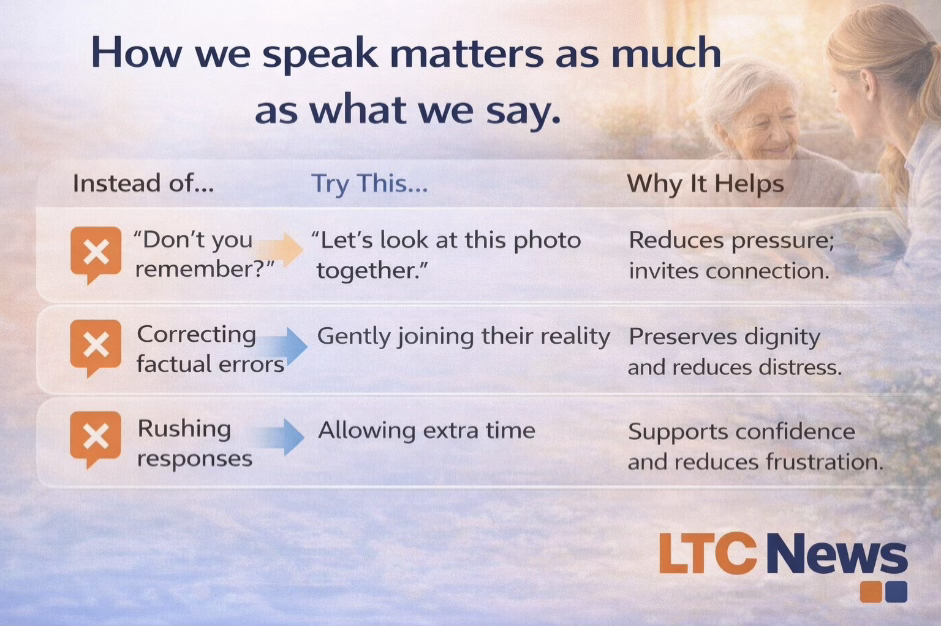
How we speak matters as much as what we say. As memory changes, communication styles must adapt to prevent frustration and preserve the connection.
Build a Flexible Daily Routine
Structure provides comfort, but rigidity can create stress. A balanced routine for memory care at home should prioritize the person's "best" times of day for difficult tasks.
- Morning: Gentle movement or a short walk, followed by a familiar breakfast.
- Afternoon: Quiet activities like listening to music, folding laundry, or sorting photos.
- Evening: Calming rituals such as herbal tea or soft lighting to reduce "sundowning" agitation.
Exploring Structured Support and Financial Relief
As needs evolve, many families benefit from external support. In Canada, the financial and emotional toll on caregivers is significant. Canada offers a mix of public and private resources.
Recognize the Financial Landscape
According to the latest 2026 data, the cost of specialized memory care in Canada typically ranges from $3,644 to over $6,456 CAD per month in private residences. In provinces like Ontario and British Columbia, costs in major urban centers can even exceed $7,500 CAD.
To help offset these costs, the Canada Revenue Agency (CRA) has confirmed the Canada Caregiver Credit for 2026. Eligible caregivers can claim up to $2,616 in non-refundable tax relief for supporting a spouse or dependent with a mental or physical impairment.
To qualify for the 2026 credit, the following conditions must be met:
- Dependence: The person must depend on you for support because of an impairment in physical or mental functions.
- Relationship: The individual must be your spouse/partner, or a child, grandchild, parent, grandparent, sibling, aunt, uncle, niece, or nephew who lived in Canada at any time in the year.
- Income Thresholds: The credit is reduced if the dependent's net income exceeds certain levels. For 2026, the "other infirm dependents" credit starts to reduce once the dependent’s net income exceeds approximately $20,601 CAD.
Note: If the person you are caring for already has an approved Form T2201, Disability Tax Credit Certificate on file with the CRA, you generally do not need a separate doctor's note for the caregiver credit.
Evaluating Memory Care Options
When home care is no longer sustainable, specialized programs can offer stimulation for the individual and respite for the family. As needs evolve, many families benefit from external support.
When evaluating facilities, look for:
- Specialized Training: Staff should have specific certifications in dementia care (such as U-First! training).
- Person-Centered Care: Look for a high ratio of caregivers to participants and activities that match your loved one’s previous hobbies.
- Safety Features: Secure outdoor spaces and GPS-integrated monitoring systems.
What’s Next: Practical Tools and Preparation
Once you've established foundational support, the next phase is about refinement and accessing the right tools at the right time.
- Leverage Technology Thoughtfully
Modern tools can enhance safety and connection without replacing the human touch.
- GPS-enabled Watches: Helps locate a loved one who may wander, providing peace of mind during walks.
- Voice-Activated Assistants: Can play familiar music or offer gentle medication reminders.
- Automatic Medication Dispensers: Reduces dosing errors and takes the "policing" role away from the caregiver.
- Plan Ahead with Compassion
Future planning is not about giving up hope; it’s about creating space for choice.
Key documents (terminology varies by province):
- Power of Attorney (for property and personal care)
- Representation Agreement (in British Columbia)
- Advance Care Directive
- Updated wills and beneficiary designations
Provincial Public Guardian and Trustee offices can provide guidance when no legal documents are in place.
A “Go-Box” with medications, copies of documents, and comfort items can reduce stress during emergency hospital visits.
Ask your loved one open-ended questions like, "What matters most to you right now?" or "What traditions do you want to make sure we keep doing?" This keeps the focus on values rather than just medical logistics.
Recognize When to Adjust
Memory loss is progressive. If you notice an increased frequency of falls, difficulty with personal hygiene, or if you—the caregiver—are experiencing "burnout" health issues, it is time to reassess the level of support.
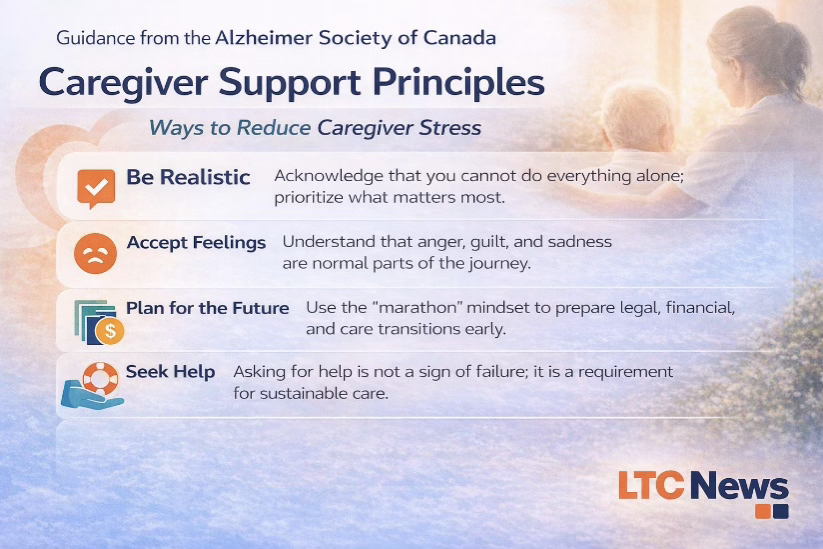
The Alzheimer Society, Canada, says that caregiving for someone with memory loss is a marathon, not a sprint. Being a caregiver for someone with dementia is very stressful. Caregiver stress is a normal part of dementia caregiving. Professional care can ease some of this stress.
"Fatigue is one of the major things that I see. People reaching the end of the rope in terms of their patience. Some of this is related to fatigue, because if you're constantly tired from being up all night with the person with Alzheimer's disease, how can you possibly be patient with them even though that's what they need?" – Dr. Julie Chandler, a physician in Yarmouth, Nova Scotia.
Call emergency services if you observe:
- Sudden confusion or delirium
- Severe agitation or aggression
- Wandering in unsafe conditions
- Signs of elder abuse
Sudden cognitive changes may signal infections, dehydration, stroke, or medication reactions.
Walking the Path Together
Supporting a family through memory loss is rarely about grand gestures — it’s the quiet, consistent choices that matter most.
A patient pause. A familiar song. Sitting together in silence.
While you care for a loved one today, it’s also wise to reflect on your own future care planning. Dementia and other chronic conditions can affect anyone.
Long-Term Care Insurance is available in Canada, though offerings vary and medical underwriting applies. Coverage must typically be secured before you experience a significant decline in health.
Planning ahead protects not only your future care options — but your family’s stability as well. Seek professional guidance to find policies and make other financial plans to address the impact of aging and declining health.
National Dementia and Caregiver Resources
- Alzheimer Society of Canada
Education, support groups, provincial chapters, dementia information
https://alzheimer.ca
Find your provincial Alzheimer Society:
https://alzheimer.ca/en/help-information/find-your-areas-alzheimer-society
- Public Health Agency of Canada – Dementia in Canada
National statistics and federal strategy - https://www.canada.ca/en/public-health/services/diseases/dementia.html
- Canadian Institute for Health Information (CIHI)
Long-term care data, home care statistics - https://www.cihi.ca
- Provincial Home Care & Long-Term Care
Ontario – Home and Community Care Support Services
British Columbia – Home & Community Care
https://www2.gov.bc.ca/gov/content/health/accessing-health-care/home-community-care
Alberta – Alberta Health Services Home Care
https://www.albertahealthservices.ca/cc/page15488.aspx
- Legal Planning & Capacity
Canadian Bar Association – Finding a Lawyer
https://cba.org/public/find-a-lawyer/
- Crisis & Safety
Call 911 – Emergency services
Canadian Centre for Elder Law
https://www.tru.ca/law/research/canadian-centre-for-elder-law.html
Government of Canada – Elder Abuse Resources
https://www.canada.ca/en/public-health/services/health-promotion/aging-seniors/elder-abuse.html
- Planning for Long-Term Care
Canadian Life and Health Insurance Association (CLHIA)
Overview of Long-Term Care Insurance in Canada - https://www.clhia.ca