Stroke Far from Home: How to Navigate Medical Transport, Recovery and Long-Term Care Decisions

About This Article
If your parent suffers a stroke while traveling or living far from family, medical air transport may help bring them closer to specialized care and support. Understanding when air ambulance services are appropriate, what they cost, what Medicare covers, and how stroke recovery can affect long-term care needs can help you make informed decisions during a cris

Beth Rush
Beth Rush writes about health and wellness to help readers learn how to make healthier lifestyle choices.
Table of Contents
- Understanding Stroke: Why Every Minute Matters
- Three Main Types of Strokes
- Recognizing Stroke Symptoms
- How Stroke Can Affect Daily Life
- Why Older Adults Face Greater Risk
- Why Immediate Stroke Care Matters
- Stroke Often Leads to Long-Term Care Needs
- What Is Medical Air Transport?
- When Medical Air Transport Makes Sense After a Stroke
- Importance of Post-Stroke Care
- Cost of an Air Ambulance Flight
- Indicators That You Should Wait
- When Medical Air Transport May NOT Be the Right Choice
- What Medicare Covers for Air Ambulance
- What International Air Transport Costs and Whether Medicare Helps
- How to Arrange Medical Air Transport
- Well-Known Medical Flight and Air Ambulance Providers
- Stroke Recovery: What to Expect
- Long-Term Care After a Stroke: Understanding Your Options
- Real Cost of Long-Term Care After a Stroke
- Long-Term Care Insurance: The Tool Most Families Overlooked
- Comparing Long-Term Care Providers After a Stroke
- Being Prepared for Aging
You never expect the phone call. You know these types of calls could happen. A parent has suffered a stroke while visiting family, spending the winter in another state, traveling abroad, or living independently hundreds of miles away. Within moments, your attention shifts from everyday life to emergency medical decisions, hospital updates, transportation arrangements, and concerns about the future.
While doctors focus on stabilizing your loved one, families often face a second challenge: how to bring a parent closer to home, specialized rehabilitation services, and the support of family caregivers.
Medical air transport can be one solution. But it is expensive, complex to arrange, and not always the right choice. Understanding how stroke affects the body, when air transportation is appropriate, what it costs, and how recovery may lead to ongoing care needs can help you navigate an overwhelming situation with greater confidence.
Understanding Stroke: Why Every Minute Matters
A stroke occurs when blood flow to part of the brain is interrupted or when a blood vessel in the brain ruptures. Without oxygen-rich blood, brain cells begin to die within minutes.
The brain controls virtually every function in the body. It regulates movement, speech, memory, vision, balance, emotions, swallowing, judgment, and personality. When a stroke damages a specific area of the brain, the abilities controlled by that region can be affected permanently.
The American Stroke Association notes that stroke is one of the leading causes of serious long-term disability in the United States. While strokes can occur at any age, risk increases significantly as people grow older.
For some individuals, recovery is relatively quick. For others, lasting disabilities may require months or years of rehabilitation and assistance with daily living.
Stroke doesn't discriminate by age, but the odds shift dramatically as we get older. And recovery is never guaranteed. Some patients regain most of their function within weeks. Others spend years relearning how to walk, speak, or care for themselves — and some never fully recover independence.
"Recovering from a stroke varies from person to person. The rate of recovery is generally greatest in the weeks and months after a stroke. However, there is evidence that performance can improve even 12 to 18 months after a stroke." — Dr. Felix Chukwudelunzu, M.D., neurologist, Mayo Clinic Health System, Eau Claire, Wisconsin.
Three Main Types of Strokes
Not all strokes are the same.
Ischemic Stroke: Approximately 87 percent of all strokes are ischemic. These occur when a blood clot blocks blood flow to part of the brain. Common risk factors include high blood pressure, high cholesterol, diabetes, smoking, obesity, heart disease, and atrial fibrillation (AFib).
Rapid treatment may help restore blood flow and minimize brain damage.
Hemorrhagic Stroke: A hemorrhagic stroke occurs when a weakened blood vessel ruptures and bleeds into or around the brain. These strokes are often associated with uncontrolled hypertension, brain aneurysms, blood vessel abnormalities, and head injuries. Hemorrhagic strokes frequently require emergency neurosurgical care and intensive monitoring.
Transient Ischemic Attack (TIA): A transient ischemic attack, often called a mini-stroke, causes temporary stroke-like symptoms that may disappear within minutes or hours. A TIA is a serious warning sign indicating a heightened risk of a future major stroke and requires immediate medical evaluation.
It can take around two weeks to recover from an ischemic stroke, while an intracerebral hemorrhage and SAH can take six to eight weeks. The recovery timeline varies for each person.
Recognizing Stroke Symptoms
If you are around when it happens, your quick action saves brain function. The American Stroke Association recommends the F.A.S.T. acronym:
F — Face drooping A — Arm weakness S — Speech difficulty T — Time to call 911
Other warning signs include sudden confusion, vision changes, severe headache, dizziness, loss of balance, and difficulty walking. Never wait to see if symptoms improve. Every minute counts.
How Stroke Can Affect Daily Life
The effects of a stroke depend largely on which area of the brain is damaged and how extensive the injury is. A stroke may affect movement, causing weakness or paralysis on one side of the body. It can impair speech and language comprehension. Memory and cognitive function may decline. Partial vision loss, balance problems, swallowing difficulties, and emotional changes are also common.
Many survivors experience multiple challenges simultaneously. For older adults, these impairments can threaten the independence they have spent a lifetime building.
"When we speak about recovery we're really talking about how the nervous system adapts to the brain missing a part of functioning tissue. We've done all we could in the acute period, but the damage is done and it's irreversible." —Steven Zeiler, M.D., Ph.D., neurologist and stroke researcher, Johns Hopkins Medicine.
Why Older Adults Face Greater Risk
Stroke risk roughly doubles every decade after age 55. As Americans live longer, stroke has become one of the most common serious medical events affecting retirement-age adults.
Age-related conditions that increase stroke risk include high blood pressure, diabetes, heart disease, AFib, elevated cholesterol, physical inactivity, and a history of smoking. Even healthy older adults can experience a stroke without warning.
"In terms of the modifiable risk factors, what we'd be looking for is high blood pressure — is probably the most significant, then we look for high cholesterol, smoking, diabetes, obesity, sedentary lifestyle, amongst others." —Dr. James Klaas, M.D., neurologist, Mayo Clinic.
Dr. Felix Chukwudelunzu, M.D., neurologist, Mayo Clinic Health System reinforces that stroke risk increases with age.
"If you're above the age of 65, you're more likely to have a stroke than someone in their 20s or 30s, for example." — Dr. Felix Chukwudelunzu, M.D.
Why Immediate Stroke Care Matters
For ischemic strokes, clot-busting medications or mechanical clot-removal procedures can significantly improve outcomes when administered quickly. Hemorrhagic strokes often require specialized interventions to stop bleeding and relieve pressure on the brain.
Treatment at a certified stroke center can significantly influence recovery. Once physicians stabilize the patient, families often begin discussing rehabilitation options and whether transferring closer to home would improve long-term recovery and caregiver support.
Stroke Often Leads to Long-Term Care Needs
One of the most significant realities families face after a stroke is the potential loss of independence. A stroke survivor may struggle with Activities of Daily Living (ADLs), including bathing, dressing, toileting, transferring in and out of a bed or chair, maintaining continence, and eating.
According to federal research, approximately 56 percent of Americans turning age 65 will eventually require long-term services and supports that meet the federal definition of long-term care — help with two of six ADLs or supervision due to cognitive impairment.
Stroke is one of the leading reasons people need those services. Depending on severity, ongoing care after a stroke may include home care, adult day services, assisted living, memory care, skilled nursing care, or rehabilitation facilities.
The financial burden of that care can be substantial. If your parent has not planned ahead, it can quickly become a burden for your family as well. That is why understanding both the immediate transportation question and the longer-term planning question matters.
What Is Medical Air Transport?
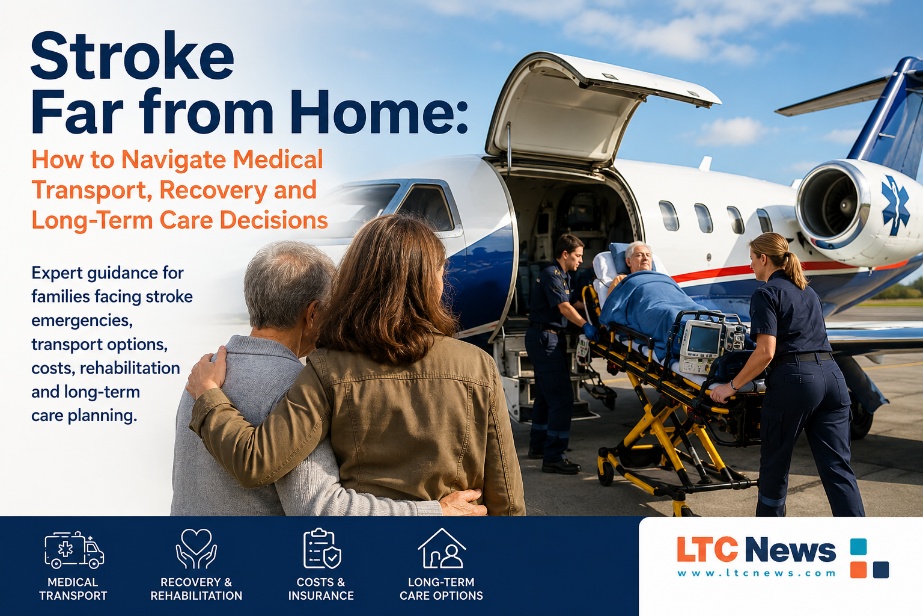
Medical air transport, also known as an air ambulance, uses specially equipped aircraft to transport patients safely over long distances.
Unlike commercial airlines, medical transport aircraft can provide continuous patient monitoring, cardiac monitoring, oxygen therapy, IV medications, critical care equipment, specialized medical personnel, and stretcher accommodations. Many aircraft function as airborne intensive care units.
Medical air transport may be arranged between hospitals, rehabilitation centers, nursing facilities, or international locations.
There are two primary types.
Fixed-Wing Air Ambulance: Fixed-wing aircraft are used for longer distances, typically 150 miles or more. They are faster, more fuel-efficient over distance, and better suited for intercontinental transport. A nurse, paramedic, or physician typically accompanies the patient.
Helicopter Air Ambulance: Helicopters are generally used for shorter emergencies where speed is critical, and airports are not readily accessible. A helicopter can land closer to the scene of a medical emergency and transport to a trauma or stroke center rapidly.
For stroke patients being transferred between hospitals or facilities — rather than during an acute emergency — fixed-wing aircraft are the more common choice when air transport is warranted.
When Medical Air Transport Makes Sense After a Stroke
Families may consider medical air transport when:
- Specialized stroke rehabilitation services are unavailable at the current facility
- A patient wishes to recover closer to family caregivers
- A comprehensive stroke center offers advanced treatment unavailable locally
- A stroke occurred while traveling or living abroad
Importance of Post-Stroke Care
When your parent has a stroke far from home, the primary goal is to bring them to a hospital for emergency care. Finding the nearest stroke treatment center is critical to understanding what kind of stroke they had and what they need for their recovery.
Getting to a hospital within three hours of the first symptoms of an ischemic stroke can warrant a tissue plasminogen activator, which can increase the chances of recovery. For a hemorrhagic stroke, it’s more likely that they will need endovascular procedures or surgery to repair the blood vessels.
Focus on getting your loved one that initial care to avoid immediate post-stroke complications. If their region lacks specialized stroke care and long-term care, consider booking an air ambulance. It can be a safe way of transporting them to an area with more specialized facilities. You can also bring them closer so they are under your care.
"There's a mantra in stroke neurology that time is brain: 1.9 million neurons are lost every minute of a stroke, so the longer we delay treating a stroke the more neurons we lose." — Dr. Olajide Williams, M.D., M.S., Professor of Neurology and Vice Dean of Community Health, Columbia University Vagelos College of Physicians and Surgeons; Vice Chair, Department of Neurology; clinical neurologist, Columbia University Irving Medical Center.
Cost of an Air Ambulance Flight
While some providers may charge for air ambulance flights on a per-hour basis, others may charge per mile. The average cost per mile is $19,800 when flying under 100 miles domestically, but it can reach $34,650 when traveling internationally.
The final cost varies widely based on distance, aircraft type, and the patient's medical needs. Some may also add a base fee to help fund the medical staffing. Most companies can provide a direct quote so that you know what to expect.
Indicators That You Should Wait
An air ambulance is well-equipped to transport your family member from one area to another. However, it’s important to assess their overall health and well-being before scheduling a flight and boarding immediately.
Flying can create stress and anxiety, which can affect an individual’s blood pressure and increase the risk of stroke. The altitudes can also increase the risk of blood clots in the arm or leg, which can make a person immobile.
For someone with a history of having a stroke or any underlying cardiovascular conditions, it is imperative to avoid the risk of having another stroke. Seek a medical professional’s advice on whether your parent is fit for air transport any time soon.
When Medical Air Transport May NOT Be the Right Choice
Air transport is not appropriate in every situation, and the cost can be staggering without insurance coverage. Medical air transport may not make sense when:
- The patient is medically stable and can tolerate a long ground transport
- The destination facility cannot improve on the care already being provided
- Medicare or private insurance will not cover the transport
- The cost would create significant financial hardship without a clear medical benefit
Before making any decisions, consult directly with the attending physicians and the receiving facility about whether the transfer improves the patient's medical prognosis. Decisions made under emotional duress can carry large financial consequences.
What Medicare Covers for Air Ambulance
Medicare Part B covers air ambulance transportation when it is medically necessary — meaning the patient requires immediate and rapid transport that cannot be provided safely by a ground ambulance.
Specifically, Medicare may cover air transport when ground ambulance cannot reach the patient, or when the distance or obstacles involved in reaching the nearest appropriate facility make ground transport inadequate.
After meeting the 2026 Part B deductible of $283, Medicare typically covers 80 percent of the Medicare-approved amount for air ambulance services. The beneficiary is responsible for the remaining 20 percent coinsurance.
Learn: Medicare 2026 Part B Deductibles
Medicare pays only for transport to the nearest appropriate medical facility capable of treating the patient's condition. If a family chooses to transport a parent to a more distant hospital or to a facility in their home city rather than the closest appropriate one, Medicare will pay only the amount it would have covered for transport to the closer location. The family pays the difference.
Medical necessity must be documented. The patient's condition must require immediate and rapid air transport that a ground ambulance cannot provide. For non-emergency transfers, including many hospital-to-hospital or facility-to-facility transfers for stroke patients, Medicare coverage is not guaranteed and requires physician documentation.
In rural areas, Medicare automatically meets the medical necessity requirement if a doctor or other medical professional determines that air transport is necessary due to time or geographic factors.
The No Surprises Act, enacted to protect patients against unexpected out-of-network bills, does extend protections to air ambulance services. However, given the gap between what providers charge and what Medicare approves, out-of-pocket exposure can still be significant.
If the air ambulance provider does not accept Medicare assignment, beneficiaries may be subject to balance billing — the difference between the provider's full charges and what Medicare pays. That gap can run into tens of thousands of dollars.
Medicare Advantage plans cover emergency ambulance services but may structure cost-sharing differently, with copayments per trip that vary by plan. Some Advantage plans also offer additional non-emergency transportation benefits not available under Original Medicare.
If you or a parent has a Medigap (Medicare Supplement) policy, it may cover some or all of the 20 percent coinsurance left by Medicare Part B. Check the specific plan details before assuming coverage.
What International Air Transport Costs and Whether Medicare Helps
For stroke patients who experience a medical event outside the United States, costs rise substantially, and Medicare generally does not apply. Medicare does not cover medical care outside the United States, except under limited circumstances. International medical air transport can cost $50,000 to over $150,000, depending on the origin country, aircraft needed, fuel costs, and the level of in-flight care required.
Some Medigap plans offer limited foreign travel emergency coverage — typically 80 percent of covered costs after a $250 deductible, up to a lifetime maximum of $50,000. That cap is quickly exhausted by international air transport.
Travel insurance purchased before the trip is often the most reliable coverage option for international emergencies. Policies vary widely; some include medical evacuation benefits specifically. Families traveling internationally with older parents should review coverage options before departure — not after a crisis.
Medical evacuation membership programs also exist. These organizations charge an annual membership fee and coordinate air transport at no additional cost when medically necessary. They can be worth considering for frequent travelers or snowbirds.
How to Arrange Medical Air Transport
If a physician has determined that air transport is medically appropriate, the following steps apply. Get the treating physician's documented recommendation. The attending physician should document why air transport is medically necessary and why ground transport is inadequate.
This documentation supports Medicare or insurance coverage. Contact your insurance provider before arranging transport. Confirm coverage requirements, in-network providers, and whether prior authorization is needed.
Request quotes from multiple air ambulance providers. Costs vary significantly. Some independent coordinators can help compare options. Confirm the receiving facility is prepared to accept the patient. The destination hospital, rehabilitation center, or care facility must confirm that it can receive the patient and that appropriate resources are in place before transport is arranged.
Understand what is — and is not — included in the quoted price. Ground transport at origin and destination, medical personnel fees, and equipment charges are sometimes itemized separately.
Well-Known Medical Flight and Air Ambulance Providers
Seeking medical air transport services can soothe worries about moving your parent closer to home and help ensure they receive the proper care they need after a stroke. However, it is best to seek guidance from a reputable air ambulance service to understand whether they’re in a stable condition for air travel.
AirCARE1 is one of several well-known medical air ambulance companies that specializes in long-range, nonemergency medical transport. It was established in 2004 to ensure safety and holistic care while flying.
AirCARE1 has a fleet of executive-quality and fixed-wing Learjet planes that are medically configured with ICU equipment and comfortable interiors, so patients can receive quality care when time is precious.
Other companies, both national and regional, that are available are:
- Air Evac Lifeteam
- Air Methods
- Boston MedFlight
- Global Medical Response (GMR)
- Life Flight Network
- Med-Trans Corporation
- PHI Air Medical
- REVA Air Ambulance
- Superior Air Med / Superior Aviation
Stroke Recovery: What to Expect

The path to recovery after a stroke depends heavily on the area of the brain affected, the severity of the stroke, the patient's age and overall health, and the speed and quality of treatment received.
According to the American Stroke Association, early rehabilitation should begin within 24 to 48 hours post-stroke when medically appropriate to improve long-term outcomes. After the acute hospitalization phase, many stroke survivors move to an inpatient rehabilitation facility (IRF), a skilled nursing facility (SNF), or return home with in-home care and outpatient rehabilitation.
The first three months after a stroke often bring the most noticeable functional gains. This period is sometimes called the "golden window" when the brain is most responsive to rehabilitation. Progress may include improved movement in affected limbs, better speech clarity, enhanced memory, and greater independence with daily tasks.
"There is a critical period of neuroplasticity, which is the brain's ability to create new connections where there has been damage from a stroke. The early period after a stroke is crucial for helping the brain to establish those connections again." — Dr. Elissa Charbonneau, D.O., M.S., Chief Medical Officer, Encompass Health; American Stroke Association volunteer.
Recovery does not stop at three months, but the pace typically slows. Continued occupational therapy, physical therapy, speech therapy, and cognitive rehabilitation may benefit patients for months or years beyond the initial event.
Rehabilitation goals typically address mobility and balance, speech and language, swallowing, cognitive function, emotional health, and safe return to daily activities.
It is important to understand that recovery is not linear. Setbacks, infections, falls, or secondary strokes can interrupt progress. Depression is common among stroke survivors and should be addressed as part of comprehensive care planning.
Long-Term Care After a Stroke: Understanding Your Options
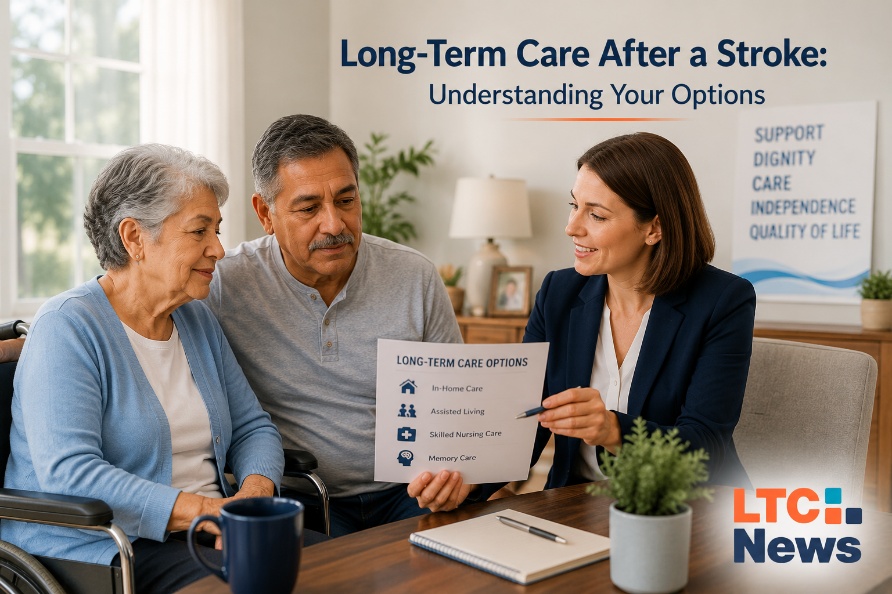
Depending on the extent of disability, a stroke survivor may need ongoing assistance for months, years, or the rest of their life. The right care can help improve the quality of life for the care recipient.
Home Care: Many stroke survivors return home with support from family members and paid caregivers. Home care aides can assist with bathing, dressing, meals, medication reminders, and mobility.
The advantage is familiarity and comfort. The challenge is that home care requires coordination, reliable caregiver availability, and, for more complex medical needs, a home environment that can be safely modified.
Adult Day Care Services: Adult day programs provide structured daytime activities, socialization, health monitoring, and caregiver respite in a community setting. They can be a valuable bridge for survivors who can live at home but benefit from supervised daily engagement.
Assisted Living: Assisted living communities provide housing combined with personal care services for seniors who need help with ADLs but do not require 24-hour skilled nursing care. After a moderate stroke, assisted living may be an appropriate long-term setting.
Memory Care: If the stroke caused or accelerated cognitive decline, memory care communities provide specialized programming and a secure environment for residents who cannot safely live independently.
Skilled Nursing and Rehabilitation Facilities: For stroke survivors with significant medical needs or cognitive supervision, skilled nursing facilities (SNFs) provide round-the-clock nursing care combined with rehabilitation services. Medicare Part A covers short-term SNF care following a qualifying hospital stay, but long-term SNF residency is not covered by Medicare and can cost thousands of dollars per month.
To find care providers and compare costs by care type in your area, the LTC News Caregiver Directory is a free resource built specifically for families navigating this search. It includes thousands of providers across care categories nationwide.
Real Cost of Long-Term Care After a Stroke
The financial burden of long-term care following a stroke can be significant — often far greater than families expect. Costs vary considerably by geographic region, care setting and level of services needed.
To explore current cost data in your area, the LTC News Cost of Long-Term Care Services Calculator provides localized cost information by care type.
Medicare does not cover custodial long-term care, assistance with bathing, dressing, toileting or other ADLs when no skilled medical need is present. That distinction catches many families off guard. Medicare will also not cover skilled services beyond 100 days.
When the rehabilitation phase ends and Medicare coverage stops, families must pay privately, use Medicaid if they have limited financial resources, or have Long-Term Care Insurance.
Medicaid may cover nursing home care for individuals with very limited income and assets, but qualifying often requires spending down savings or not having financial resources first. That is not a plan — it is a last resort.
Long-Term Care Insurance: The Tool Most Families Overlooked
Long-Term Care Insurance exists precisely for situations like the one stroke survivors and their families face. A well-designed LTC Insurance policy can cover home care, assisted living, memory care and nursing home care — allowing a family to choose the setting and provider that works best rather than being constrained by what they can afford to pay out of pocket.
Policies pay a monthly or daily benefit toward covered care costs, typically with an elimination period (similar to a deductible) after which benefits begin. Coverage options vary widely by benefit amount, duration, inflation protection and elimination period.
👉 LTC News Long-Term Care Insurance Learning Center
The right time to plan for Long-Term Care Insurance is before you need it. Premiums are significantly lower for people in their 40s and 50s than for those who wait until their 60s or 70s. More importantly, coverage requires reasonably good health — individuals already experiencing a significant health event like a stroke are unlikely to qualify.
Learn More: Speak with an experienced Long-Term Care Insurance specialist to determine which insurance company might be best based on yoru age and health.
If a parent has already experienced a stroke without a policy in place, the family will need to explore other funding strategies. But for adults still in relatively good health who have not yet faced a health crisis, the stroke of a loved one is often the moment that makes the importance of planning impossible to ignore.
An independent LTC Insurance specialist can help you compare policies from multiple carriers and identify the right coverage for your needs and budget. The LTC News Long-Term Care Insurance Learning Center offers additional guidance on understanding and comparing Long-Term Care Insurance options.
Comparing Long-Term Care Providers After a Stroke
Choosing the right post-stroke care facility or home care provider is one of the most consequential decisions a family makes. Consider the following when evaluating options.
For inpatient rehabilitation or skilled nursing facilities, ask about the volume of stroke patients treated annually. Facilities with higher stroke volumes often have more experienced staff and better-defined care protocols.
For home care agencies, confirm that care coordinators can match aides with specific post-stroke needs including mobility assistance, speech support and cognitive care.
For assisted living communities, ask whether the community can accommodate increasing care needs over time or whether a resident would need to transfer to a higher level of care if their condition changes.
For all settings, review state inspection reports, staffing ratios and the facility's approach to rehabilitation continuation after the Medicare-covered window closes.
Use the LTC News Caregiver Directory to find and compare providers in your area with verified ratings and contact information.
Being Prepared for Aging
A stroke is one of the most significant health events you can face as you grow older — but it is far from the only one. Long-term care needs can arise from a wide range of circumstances: a fall that limits mobility, a dementia diagnosis that gradually erodes independence, the slow progression of chronic conditions like heart disease or diabetes, or simply the physical frailty that can accompany advanced age.
No one can predict which of these will touch their life or the life of someone they love. What you can control is whether you are prepared when it happens. The families who navigate these moments with the least disruption — financially, emotionally and practically — are almost always the ones who planned before a crisis forced their hand.
The time to think seriously about Long-Term Care Insurance, legal documents, and care preferences is not after a stroke or a fall or a diagnosis. It is now, while you are healthy enough to qualify for coverage, clear-headed enough to make good decisions, and early enough that planning is still a choice rather than a necessity.
Frequently Asked Questions
What are the main types of stroke?
There are three primary types of stroke:
- Ischemic stroke: Caused by a blockage in a blood vessel supplying the brain.
- Hemorrhagic stroke: Caused by bleeding in or around the brain.
- Transient ischemic attack (TIA): Often called a mini-stroke, a temporary blockage that serves as a warning sign of a future stroke.
How does a stroke affect daily life?
A stroke may impact:
- Mobility and balance
- Speech and communication
- Memory and thinking
- Vision
- Swallowing
- Emotional health
- Independence
Many survivors need help with everyday activities such as bathing, dressing, eating, or managing medications.
What is the difference between an air ambulance and a medical escort flight?
An air ambulance is a medically equipped aircraft staffed by healthcare professionals and designed to transport patients who need medical monitoring during travel.
A medical escort flight involves a nurse or medical professional accompanying a medically stable patient on a commercial airline.
How much does medical air transport cost?
Costs vary based on distance, staffing, equipment, aircraft type, and destination. Domestic transports can cost tens of thousands of dollars, while international transports may exceed $100,000. Families should request detailed quotes and understand exactly what services are included.
What are the warning signs of a stroke?
The American Stroke Association recommends remembering F.A.S.T.:
- F — Face drooping
- A — Arm weakness
- S — Speech difficulty
- T — Time to call 911
Other symptoms can include sudden confusion, vision changes, dizziness, severe headache, loss of balance, and difficulty walking.
Who is most at risk for a stroke?
Stroke risk increases with age, particularly after age 55. Other major risk factors include:
- High blood pressure
- Diabetes
- Heart disease
- Atrial fibrillation (AFib)
- High cholesterol
- Smoking
- Obesity
- Physical inactivity
Even healthy older adults can experience a stroke unexpectedly.
When might medical air transport be needed after a stroke?
Medical air transport may be appropriate when a patient requires specialized care unavailable locally, needs to be transferred to a major stroke center, or would benefit from recovering closer to family caregivers and support systems.
What is a stroke?
A stroke occurs when blood flow to part of the brain is interrupted or when a blood vessel in the brain ruptures. Without oxygen-rich blood, brain cells begin to die within minutes. Because the brain controls movement, speech, memory, vision, balance, emotions, and judgment, a stroke can affect many aspects of daily life.
Can Long-Term Care Insurance help after a stroke?
Yes. Long-Term Care Insurance is designed to help pay for qualified long-term care services when someone needs assistance with activities of daily living or supervision due to cognitive impairment. Benefits may help cover home care, assisted living, memory care, adult day care, and nursing home care.
Can someone fully recover from a stroke?
Some stroke survivors recover most of their function, while others experience permanent disabilities. Recovery depends on the severity of the stroke, the area of the brain affected, how quickly treatment was received, and the quality of rehabilitation afterward. Improvements may continue for months or even years.
Why is immediate treatment so important?
Stroke specialists often say, "Time is brain." Every minute a stroke goes untreated, brain cells die. Rapid treatment can improve survival, reduce disability, and increase the likelihood of recovery.
Does Medicare pay for long-term care after a stroke?
Generally, no. Medicare may cover short-term rehabilitation and skilled care when eligibility requirements are met. However, Medicare does not pay for ongoing custodial care, such as help with bathing, dressing, or supervision due to cognitive impairment.
What rehabilitation services are commonly needed after a stroke?
Stroke rehabilitation often includes:
- Physical therapy
- Occupational therapy
- Speech-language therapy
- Cognitive rehabilitation
- Swallowing therapy
- Nursing support
- Emotional and mental health counseling
The goal is to help survivors regain as much independence as possible.
What long-term care options are available after a stroke?
Depending on recovery and disability levels, options may include:
- Home care
- Adult day care services
- Assisted living
- Memory care
- Skilled nursing care
- Rehabilitation facilities
The right choice depends on medical needs, safety concerns, family support, and financial resources.
What is the most important lesson families learn after a stroke?
Many families discover that recovery is not just a medical issue—it is also a caregiving, financial, housing, and long-term care planning issue. Planning before a health crisis occurs provides more options, greater flexibility, and often better outcomes for both the person needing care and the family providing support.
Does Medicare cover air ambulance transportation?
Medicare Part B may cover air ambulance transportation when it is medically necessary and ground transportation is not appropriate. Coverage requirements are specific, and medical necessity must be documented. Families should always verify coverage before transport is arranged.
How can I find quality care providers after a stroke?
The LTC News Caregiver Directory allows families to search and compare home care agencies, adult day care centers, assisted living communities, memory care facilities, rehabilitation providers, and nursing homes by ZIP code. Asking detailed questions about stroke experience, staffing, rehabilitation services, and transportation options can help identify the best fit.

Sponsored