Staff Burnout in Long-Term Care: What It Can Mean for Your Loved One's Quality of Care
About This Article
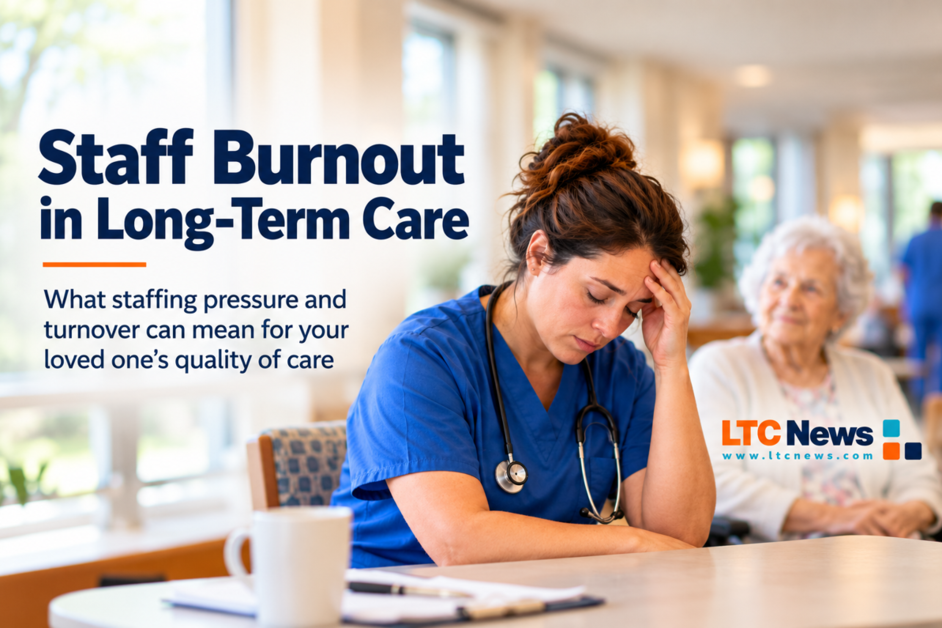
Staff burnout hits longterm care hard, where chronic workplace stress can drive turnover, missed care, and lapses in continuity. Studies of nursing staff link burnout to medication errors, falls, infections, adverse events and lower patient satisfaction.

Beth Rush
Beth Rush writes about health and wellness to help readers learn how to make healthier lifestyle choices.
Table of Contents
- Burnout Is More Than Having a Bad Day
- What Research Says About Burnout and Quality of Care
- Why Continuity of Care Matters
- Nursing Home Turnover Remains High
- Federal Minimum Staffing Rule Was Repealed
- Consistent Caregivers More Likely to Notice Small Changes
- What Families Can Watch For
- Check Staffing and Turnover Before Choosing a Nursing Home
- Assisted Living and Home Care Require a Different Approach
- What to Do When You're Concerned About Care
- America's Growing Need for Care Makes the Workforce Important
- Look at the Quality of Care, Not Just Whether Staff Seem Busy
If someone you love depends on nurses or aides every day, the people providing that care matter as much as the building or the brochure. Nurses, nursing assistants, home care aides, and other long-term care professionals may help people bathe, dress, eat, take medications, move safely, and manage chronic health conditions. Some care for people living with dementia or significant physical disabilities.
When workloads become difficult to manage for extended periods, burnout can become a concern. For families, the key question is whether staffing pressures, turnover, or workplace conditions are starting to affect the consistency and quality of a loved one's care.
Burnout Is More Than Having a Bad Day
Burnout isn't simply a nurse or nurse's aide feeling tired after a difficult shift. It is generally associated with prolonged workplace stress and can involve emotional exhaustion, detachment from work, and a reduced sense of accomplishment.
The pressures vary depending on where care is provided. A nursing home employee may be responsible for several residents with substantial medical and personal care needs. An assisted living or memory care employee may spend much of a shift helping residents who need repeated assistance or supervision. A home care aide may provide one-on-one assistance while also managing schedules and travel between clients.
Your nurses may appear like they are somewhere else, even when they are right next to your loved one. If they seem checked out or careless, they may have compassion fatigue, which can reduce how much attention they can give patients. Mitigating burnout is vital for keeping long-term nursing and healthcare staff inspired and committed to helping everyone.
Administrators, patients, and family have a chance to remind facility staff to engage in these practices to improve their mental health and be more present with patients:
- Reinforce professional and private support systems
- Engage in regular self-care practices, such as exercise and quality sleep
- Have a thriving personal life outside of work
- Pursue professional development to deepen passion for the career
- Advocate for a better working environment
Workload, staffing, scheduling, management support, and other workplace conditions can all contribute to burnout.
What Research Says About Burnout and Quality of Care
A large systematic review and meta-analysis published in JAMA Network Open examined 85 studies involving 288,581 nurses in 32 countries. The research covered nurses across healthcare settings rather than long-term care alone, but its findings offer important context for understanding the relationship between burnout, safety and quality.
Researchers found that nurse burnout was associated with poorer safety culture and more frequent medication errors, patient falls, hospital-acquired infections, adverse events, and missed nursing care. Burnout was also associated with lower patient satisfaction and lower nurse-assessed quality of care.
Emotionally and physically drained staff could be more prone to errors like administering the wrong medication because they failed to review a patient’s entire records, or forgetting to follow a safety protocol, such as putting on gloves, for an injection. These seemingly simple accidents could have larger health and safety ramifications, compromising a facility’s safety climate and lowering resident satisfaction.
The findings weren't universal. Burnout was not associated with the frequency of pressure ulcers, patient complaints, or patient abuse. Researchers also found no association with standardized mortality rates.
Another important limitation is that 81 of the 85 studies were cross-sectional, while only four were longitudinal. The findings show associations but don't establish that burnout directly caused the poorer outcomes.
👉 Read the JAMA Network Open study.
Why Continuity of Care Matters
Long-term care is different from many short encounters with the healthcare system. The same caregivers may see someone day after day and learn what is normal for that person. They may know how your loved one usually walks, eats, or communicates. They may recognize someone's typical mood or level of alertness. They may also become familiar with personal preferences that aren't obvious from a medical chart or care plan.
That familiarity can make subtle changes easier to recognize. The Centers for Medicare & Medicaid Services (CMS) says lower nursing staff turnover is commonly associated with improved quality of care because longer-tenured employees tend to be more familiar with facility procedures and residents and may be better able to recognize changes in a resident's condition.
Total Nursing Staff Turnover is also one of the measures used in the Skilled Nursing Facility (SNF) Value-Based Purchasing Program.
Nursing Home Turnover Remains High
Turnover isn't the same thing as burnout. Employees leave jobs for many reasons, including pay, scheduling, family responsibilities, career opportunities, and working conditions. Burnout can be one factor affecting workforce retention.
The Medicare Payment Advisory Commission (MedPAC) reported in March 2026 that the median 12-month nursing staff turnover rate among skilled nursing facilities was 46 percent in 2024, the most recent year cited in its report. One-quarter of facilities had turnover exceeding 56 percent.
MedPAC cautioned that a change in the methodology used to calculate turnover means the 2024 figure isn't directly comparable with earlier years. Research involving 13,826 U.S. nursing homes also found that periods of greater nursing staff turnover within the same facility were associated with lower quality of care based on health inspection citations and resident assessments.
The researchers reported that, after controlling for administrator turnover and overall staffing levels, greater nursing staff turnover was associated with additional health inspection citations. The study also found associations between nursing staff turnover and declines in assessment- and claims-based quality measures.
Federal Minimum Staffing Rule Was Repealed
Families researching nursing homes should also know about an important policy change. In 2024, the Centers for Medicare & Medicaid Services (CMS) adopted national minimum staffing requirements that were scheduled to begin phasing in during 2026. They would have required a registered nurse on site 24 hours a day, seven days a week, plus minimum hours of nursing care per resident each day.
Congress later prohibited CMS from implementing, administering, or enforcing those standards through Sept. 30, 2034. CMS then formally repealed them in a rule published in December 2025, which took effect Feb. 2, 2026.
Nursing homes still have staffing requirements. Under longstanding federal rules, a nursing home must have a registered nurse on site at least eight consecutive hours a day, seven days a week, and licensed nurse coverage around the clock. States may set stricter standards. But there is no national minimum for how many hours of nursing care each resident receives.
That makes your own research more important. Review a facility's staffing hours and turnover on Medicare's Care Compare, and ask how the facility determines how many staff it needs.
Consistent Caregivers More Likely to Notice Small Changes
One benefit of consistent caregivers is that they may notice something that looks minor but represents an important change. An older adult may suddenly eat less than usual. Someone who normally walks confidently may begin appearing unsteady.
A person living with dementia may become noticeably more confused, withdrawn, or agitated. Other changes might involve:
- Mobility or balance
- Appetite or weight
- Cognition or behavior
- Continence
- Skin condition
- Pain
- Sleep
- Medication response
- Ability to perform activities of daily living
These changes don't necessarily indicate a medical emergency, but some warrant further evaluation. When employees are stretched thin, they may have less time for the observation, conversation, and follow-up that help caregivers recognize changes from someone's normal condition.
Research on missed care, or care left undone, is especially relevant here. The JAMA Network Open meta-analysis found an association between nurse burnout and missed nursing care.
What Families Can Watch For
Families shouldn't try to diagnose burnout in an individual caregiver. Instead, watch the care your loved one receives and look for patterns. One rushed evening isn't enough to judge a provider. Repeated problems deserve more attention.
Possible concerns include call lights or requests for assistance that routinely go unanswered for long periods, frequent changes in the people providing care, recurring communication problems, or employees who consistently appear unable to spend enough time completing necessary care.
You might also notice that staff don't seem familiar with the care plan or your loved one's normal routines, activities are frequently canceled because employees aren't available, or concerns about medications, hygiene, nutrition, or changes in condition aren't being followed up.
Those issues don't prove that burnout is responsible. They are reasons to ask questions.
Check Staffing and Turnover Before Choosing a Nursing Home
Families evaluating a Medicare- or Medicaid-certified nursing home can review staffing information through Medicare's Care Compare. CMS publishes nursing staffing hours per resident per day, along with nurse staff turnover and administrator turnover. Staffing information is also incorporated into the federal Five-Star Quality Rating System.
Staffing statistics shouldn't be the only factor in choosing a nursing home. Visit the facility when possible. Don't just tour the building. Watch how staff members speak with residents and whether residents appear comfortable asking them for help.
Ask how the facility handles call-offs and vacancies. Ask about turnover and whether agency or temporary employees are regularly used. Find out who families contact when they have a concern.
👉Review Medicare's Nursing Home Staffing Information
Assisted Living and Home Care Require a Different Approach
Care Compare is useful for Medicare- and Medicaid-certified nursing homes, but families shouldn't expect to find the same federal comparison system for every type of long-term care. Assisted living is primarily regulated at the state level. Families considering assisted living or memory care should check the appropriate state licensing agency for inspection reports, complaints, enforcement actions, and other publicly available information.
For home care, consistency can matter most. Ask how often the same caregiver will visit, how frequently aides typically change, and what happens when the regular caregiver calls off. Families should also ask how the agency supervises caregivers and handles concerns about care.
What to Do When You're Concerned About Care
Start with the specific problem. If your mother waited an unusually long time for assistance, say when it happened and what she needed. If medication instructions appear inconsistent, ask for clarification. If you've noticed a change in appetite, mobility, cognition, or behavior that doesn't seem to be getting attention, bring that specific change to the appropriate staff member.
Depending on the setting and seriousness of the issue, that might mean speaking with a nurse, supervisor, care manager, director of nursing, or administrator.
Keep notes if the same problem continues. Dates, times, and specific examples are more useful than saying the facility seems understaffed.
Residents of nursing homes, assisted living facilities, and other residential care settings also have access to state Long-Term Care Ombudsman programs. Ombudsmen help residents and families address concerns involving health, safety, welfare, and resident rights.
👉Long-Term Care Ombudsman Program
NOTE: If your loved one is in immediate danger or experiencing a medical emergency, call 911. Report suspected abuse or serious neglect promptly to the appropriate state authorities.
America's Growing Need for Care Makes the Workforce Important
The long-term care workforce matters because the need for care isn't going away. Federal research estimates that 56 percent of Americans turning age 65 will develop a disability serious enough to require long-term services and supports, although the amount and type of care needed varies considerably from person to person.
Professional caregivers are only part of the picture, as 63 million American adults provided ongoing care to an adult or child with a medical condition or disability in 2025, nearly one in four U.S. adults. With so many families depending on paid and unpaid caregivers, a stable long-term care workforce matters.
Look at the Quality of Care, Not Just Whether Staff Seem Busy
Long-term care can be demanding work. A busy caregiver isn't necessarily a burned-out caregiver, and an employee having a difficult day doesn't mean a facility provides poor care. Most care professionals enter the field because they want to help people. They also work with residents and clients who may have substantial physical, medical, and cognitive needs.
Families can help protect a loved one's well-being by focusing on what they can actually evaluate: Is care consistent? Do staff know the person's needs? Are changes in health or behavior noticed and communicated? Are questions answered? Are problems corrected when they're reported?
When choosing care, research several providers rather than relying on a single rating or recommendation.
HINT: You can search for quality caregivers and long-term care facilities by using the LTC News Caregiver Directory. The directory has over 80,000 providers nationwide.
Visit providers and ask many questions, including about their staff turnover. If your loved one has Long-Term Care Insurance, be sure to tell the admissions director. You can often move up the waiting list when the facility or home care agency knows someone has an LTC policy.
Get Help: LTC News partners with Amada Senior Care to provide free claim support with no cost or obligation — File a Long-Term Care Insurance Claim.
The larger issue isn't whether an individual nurse or aide looks stressed. It's whether the people responsible for someone's care have the staffing, time, training, and support necessary to do their jobs well. For a loved one who depends on others every day, that can make a meaningful difference in the consistency and quality of their care.
Frequently Asked Questions
Why does staff turnover matter in a nursing home?
Consistent caregivers have more opportunities to learn a resident's routines, preferences, and normal physical and cognitive condition. That familiarity may help them notice changes in appetite, mobility, behavior, or health. High turnover can make that continuity more difficult.
How can I evaluate staffing at an assisted living community or home care agency?
Assisted living is primarily regulated by states, so check the appropriate state licensing agency for available inspection reports, complaints, and enforcement information. For home care, ask how often your loved one will receive the same caregiver, how the agency handles call-offs, how frequently caregivers typically change, and how workers are supervised.
How can I tell if burnout is affecting my loved one's care?
Don't try to diagnose burnout in an individual caregiver. Instead, watch for patterns in the care your loved one receives. Repeatedly unanswered requests for assistance, frequent staff changes, poor communication, unfamiliarity with the care plan, or health changes that aren't followed up may warrant questions.
What is staff burnout in long-term care?
Burnout can develop when nurses, nursing assistants, home care aides, and other care professionals experience prolonged workplace stress. It may involve emotional exhaustion, detachment from work, and a reduced sense of accomplishment. Staffing levels, workloads, scheduling, and workplace support can all play a role.
What should I do if I'm concerned about my loved one's care?
Start with specific examples. Document what happened, when it occurred, and how your loved one was affected. Depending on the situation, speak with the nurse, supervisor, care manager, director of nursing, or administrator. Long-Term Care Ombudsman programs can also help residents and families address concerns about care, safety, and resident rights.
If your loved one is in immediate danger or experiencing a medical emergency, call 911. Report suspected abuse or serious neglect promptly to the appropriate state authorities.
What should families ask when choosing a long-term care provider?
Ask about staff turnover, caregiver consistency, vacancies, use of temporary or agency staff, supervision, call-off procedures, and how health changes are communicated to families. For nursing homes, compare federal staffing and turnover data. For assisted living and home care, review applicable state information and ask providers directly about their staffing practices.
Does a busy or tired caregiver mean a facility provides poor care?
No. Long-term care can be demanding, and one rushed interaction or difficult day doesn't establish that a caregiver is burned out or that a provider offers poor care. Look for recurring patterns involving staffing, communication, responsiveness, and consistency.
Can staff burnout affect the quality of long-term care?
Research has found associations between nurse burnout and medication errors, falls, hospital-acquired infections, missed nursing care, adverse events, and lower patient satisfaction. However, most of the research is observational and does not prove that burnout directly causes these problems. Other factors, including staffing, training, supervision, and a person's health needs, can also affect care quality.
Are there federal minimum staffing levels for nursing homes?
The federal minimum staffing standards adopted in 2024 and scheduled to begin phasing in during 2026 were repealed. Nursing homes still must comply with existing federal staffing requirements and any additional requirements imposed by their state. Families should review actual staffing and turnover information when comparing facilities.
How can I check staffing and turnover at a nursing home?
Medicare's Care Compare provides staffing information for Medicare- and Medicaid-certified nursing homes, including nursing staff hours per resident per day and turnover information. Families should also visit facilities when possible, observe interactions between residents and staff, and ask how vacancies and employee call-offs are handled.

Sponsored