Records That Can Make or Break a Nursing Home Negligence Case
About This Article
A bad outcome alone doesn’t establish negligence in a longterm care facility. What often matters more is the documentation. When charts contain gaps, missing notes or unclear timelines, an unexplained injury can become far more difficult for a facility to defend.

Jacob Thomas
Jacob Thomas writes on health, wellness, and retirement topics, including aging, caregiving, insurance, and long-term care.
Table of Contents
- How Big Is the Long-Term Care Negligence Problem?
- Negligence Goes Beyond Falls
- Abuse, Neglect and Negligence Are Not the Same Thing
- Care Plan Becomes Critical Evidence
- Where Records Can Hurt a Facility's Defense
- Staffing Records Deserve Attention, Too
- Nursing Homes Aren't the Only Long-Term Care Setting With Risk
- Late Entries and the Honest Bad Record
- An Incident Report Is Not Automatically Protected
- Privilege Rules Change Across State Lines
- Survey Findings Are Already Part of the Record
- Choosing Quality Care Still Requires Due Diligence
Your mother has fallen twice this year. Maybe she lives in a nursing home now. Maybe she's still at home with an aide who comes in each morning. Either way, you've handed part of her safety to people you barely know, and you hope they're paying attention when you can't. Most of the time, they are. But if something goes wrong in the middle of the night, the story of what happened won't come from her. It will come from the paperwork.
A resident with a documented history of two falls is found on the floor at 3:40 a.m. with a hip fracture. The care plan says "fall precautions" and nothing else. The last fall risk reassessment is four months old. The nurse's late entry describing the event is timestamped two days after the incident.
Maybe nobody at the facility did anything wrong that night. But when attorneys, experts, or a jury eventually review the file, the unanswered questions in the record can become almost as important as the fall itself.
Long-term care negligence cases often come down to records. A plaintiff's attorney will look for the point where the documentation stopped matching the resident's condition. That gap can support an argument that the facility recognized, or should have recognized, a risk but failed to respond appropriately.
For providers, good documentation cannot make up for poor care. But when appropriate care was provided, a complete and timely record can show what staff assessed, what they did, and who they notified.
How Big Is the Long-Term Care Negligence Problem?
Not every fall, pressure injury, medication error, hospitalization, or death in a nursing home is evidence of negligence. Older adults receiving long-term care often have multiple chronic illnesses, frailty, cognitive impairment, and mobility limitations. Serious health problems can occur even when physicians, nurses, therapists, and care teams provide appropriate care.
Still, preventable harm in institutional long-term care is a significant patient-safety concern. A landmark 2014 study from the U.S. Department of Health and Human Services Office of Inspector General (OIG) found that 22 percent of Medicare beneficiaries experienced an adverse event during a short-term skilled nursing facility stay following a hospitalization. Another 11 percent experienced temporary harm.
Physician reviewers determined that 59 percent of those adverse and temporary-harm events were clearly or likely preventable. They attributed much of the preventable harm to substandard treatment, inadequate monitoring, and failures or delays in providing necessary care.
The study examined 653 Medicare beneficiaries who entered skilled nursing facilities for post-acute care after hospitalization and had SNF stays of 35 days or less. Its findings should not be interpreted as representing every nursing home resident or every type of long-term care setting.
It also does not mean that 33 percent of nursing home residents experience negligence. An adverse event is a patient-safety finding, not a legal determination that a provider was negligent. A negligence case asks different questions: What did the facility know? What should it reasonably have done? What did staff actually do? And did a failure in care cause or contribute to the resident's injury?
A resident can fall despite reasonable precautions. A pressure injury can develop despite appropriate care. An older adult can become dehydrated, develop pneumonia, or experience a sudden medical decline even when staff responds appropriately.
Records help distinguish an unfortunate outcome from one that may have been preventable.
Negligence Goes Beyond Falls
Falls are among the easiest nursing home cases to understand, but allegations of negligence can involve almost every part of a resident's care. They can include falls and inadequate supervision, pressure injuries, medication errors, dehydration or malnutrition, delayed medical treatment, infections, unsafe transfers, elopement or wandering, and failures to recognize a change in condition or follow physician orders.
Abuse and neglect can also result in litigation, although those terms are not interchangeable with negligence. Each type of case leaves a different trail.
A pressure injury case may involve skin assessments, repositioning records, and wound documentation. A malnutrition claim may turn on weight changes, meal intake and dietitian notes. A medication case can center on physician orders, medication administration records, and pharmacy reviews.
When a resident's health deteriorates, the timeline may come down to vital signs, nursing notes, and exactly when a physician or family member was notified. The records show not only what happened after an injury. They can show what staff knew before it happened.
Abuse, Neglect and Negligence Are Not the Same Thing
The terms abuse, neglect, and negligence are sometimes used as though they mean the same thing. They don't.
Negligence generally involves a failure to provide the level of care required under the circumstances, even though nobody intended to harm the resident. Abuse involves intentional acts or other prohibited conduct. Neglect generally involves a failure to provide necessary care, goods, or services.
Federal oversight data show that abuse is a real concern, although abuse deficiencies are only one part of the larger nursing home quality picture. A Government Accountability Office review found that abuse deficiencies cited in nursing homes increased from 430 in 2013 to 875 in 2017. GAO described these deficiencies as relatively rare but found that the largest increase occurred among severe cases.
In a representative sample of deficiency narratives from 2016 and 2017, GAO found that physical and mental or verbal abuse occurred most frequently, followed by sexual abuse. Staff members were more often identified as perpetrators in the cited cases.
👉 GAO — Nursing Homes: Improved Oversight Needed to Better Protect Residents from Abuse
Those cases are different from a negligence allegation involving an unanswered call light, a missed medication, or a failure to reassess a resident after a fall. Both can raise serious questions about staffing, supervision, and management, but they are not the same legal or clinical issue.
Care Plan Becomes Critical Evidence
Federal nursing home regulations require facilities to develop and implement a comprehensive, person-centered care plan addressing a resident's identified medical, nursing, mental, and psychosocial needs. The interdisciplinary team must review and revise the plan after required resident assessments.
👉42 CFR §483.21 — Comprehensive Person-Centered Care Planning
In litigation, that care plan can become one of the most important pieces of evidence because it is the facility's own record of the risks it identified and the interventions it planned. The problem is often not the initial care plan. It is what happens afterward.
A resident goes on a new anticoagulant, starts refusing meals, suffers another fall, or returns from the hospital with a significant change in condition. If the assessments and care plan no longer reflect the resident's actual needs, the facility should expect questions about why.
That is especially true after a significant change in condition, which can trigger reassessment requirements under federal nursing home regulations.
Where Records Can Hurt a Facility's Defense
Joseph F. Leeson III, managing attorney of Leeson & Leeson, a Pennsylvania personal injury firm with offices statewide, tells LTC News that he has never taken a case to trial on the theory that a nursing home is bad because a resident fell. His practice includes nursing home negligence, medical malpractice and wrongful death litigation.
Residents fall. Leeson says juries understand that.
The cases that move are the ones where I can show three call lights that took 40 minutes, a fall assessment that was never redone after the second fall, and a nurse's note written after the family called. That is not a bad night. That is a pattern, and the facility's own records are what prove it." — Joseph F. Leeson III is the managing attorney of Leeson & Leeson, a personal injury firm.
Medication administration records are another pressure point. A MAR with blank boxes, initials that cannot be matched to someone working the shift, or a PRN medication given without a documented reason and follow-up can create questions about whether the chart accurately reflects the care provided.
Leeson said pharmacist consultant reviews, and how the facility responded to them, are among the first things he requests.
Staffing Records Deserve Attention, Too
Nursing homes participating in Medicare and Medicaid electronically report direct-care staffing information to the Centers for Medicare & Medicaid Services through the Payroll-Based Journal system. The information includes employees as well as agency and contract staff and is based on payroll and other auditable data. CMS publicly reports staffing information and uses it as part of the Nursing Home Care Compare Five-Star Quality Rating System.
Those records can be compared with daily assignment sheets, resident census information, and other evidence showing what was happening when an incident occurred. If an assignment sheet shows one aide covering 22 residents and call-light records document prolonged response times, a plaintiff's attorney has evidence that could support an argument involving inadequate staffing or supervision.
That does not prove the facility was understaffed. Resident acuity, staffing mix, the shift involved, applicable requirements, and the circumstances surrounding the incident all matter.
Family communication records can matter for the same reason. A documented call about a new bruise, change in condition, or revised plan can show that staff identified the issue and communicated it. An undocumented conversation leaves everyone trying to reconstruct what happened months or years later.
Nursing Homes Aren't the Only Long-Term Care Setting With Risk
Negligence and neglect are not limited to nursing homes. Similar problems can occur in assisted living, memory care, other residential settings, and in-home care. But comparing those settings based only on citations or publicly reported incidents can be misleading.
Medicare- and Medicaid-certified nursing homes operate under extensive federal requirements governing resident assessment, care planning, quality of care, resident rights, and other aspects of facility operations. They undergo government surveys, and CMS makes substantial amounts of inspection, staffing, and quality information public.
Assisted living is primarily regulated by the states. Licensing requirements, staffing rules, inspections, and reporting systems can differ significantly from one state to another. That makes direct comparisons difficult.
A GAO review of Medicaid assisted living services illustrates the problem. Of the 48 states providing the services that GAO examined, 26 state Medicaid agencies could not report the number of critical incidents occurring in assisted living facilities.
States also differed in what they counted as a critical incident. Seven did not identify medication errors as critical incidents, and three did not include unexpected or unexplained deaths. Thirty-four states made critical-incident information available to the public in some form, while 14 did not.
👉GAO — Medicaid Assisted Living Services: Improved Federal Oversight of Beneficiary Health and Welfare Is Needed
Those findings do not establish that assisted living is safer or less safe than nursing home care. They show why comparing the number of reported incidents between the two settings can produce a misleading picture.
For families, facility-specific questions may be more useful. Does the provider have enough trained staff for the residents it accepts? How quickly does it respond when someone's condition changes? Are medications administered and monitored properly? Are falls, wounds, and unexplained weight changes investigated? Are physicians and families notified promptly? When staff identifies a new problem, does the resident's care plan change with it?
Families can use many of these same records when evaluating care. Care plans, medication lists, weight changes, fall histories, inspection reports, and documented changes in condition can help a family understand whether a loved one's needs are being recognized and addressed.
Late Entries and the Honest Bad Record
The instinct after an incident is to make the record look better. It is the worst instinct in the building.
A chart with an honest, timely account of a bad outcome is defensible. I can work with a nurse who wrote at 3:50 a.m. that the resident was found on the floor, that vitals were taken, that the physician and family were called, and that she does not know how it happened." — Joseph F. Leeson III.
Leeson says he cannot defend a late entry.
The minute I see a note written 36 hours after the event, especially one that adds detail nobody recorded at the time, the jury stops believing everything else in that chart. Even the parts that are true." — Joseph F. Leeson III.
Leeson says that most facility policies allow late entries when they are labeled as such, dated with the actual time of writing, and limited to what the writer recalls. What draws fire, according to Leeson, is an undated addendum, an edit history the facility did not expect anyone to pull, or an incident report more detailed than the progress note from the same night.
Electronic health record audit trails can also become part of discovery in litigation, making the timing of additions and edits important.
An Incident Report Is Not Automatically Protected
Incident reports deserve another caution: Facilities should not assume that calling a document "quality assurance," "peer review," or an "incident report" automatically shields it from discovery.
The rules differ considerably by state. Pennsylvania's Peer Review Protection Act protects the proceedings and records of qualifying committees engaged in peer review. The statutory definition of peer review includes certain reviews involving nursing homes and convalescent homes.
Pennsylvania appellate decisions have also made clear that the analysis depends on what the committee was doing and whether the statutory requirements for peer review were met, rather than simply the name placed on a committee or document.
In Reginelli v. Boggs (2018), the Pennsylvania Supreme Court rejected a peer-review privilege claim when the review at issue did not meet the law's requirements. Three years later, in Leadbitter v. Keystone Anesthesia Consultants, the court held that a hospital committee performing a genuine peer-review function, such as a credentialing committee, can be protected even if "peer review" is not in its name. What matters is what the committee does, not what it is called. That distinction can become important after a resident injury.
Information or records that are otherwise available from an original source do not necessarily become protected merely because they later become part of a peer-review process. The clinical record therefore needs to document what happened and what care was provided without relying on a later quality review to fill in the blanks.
Pennsylvania's Medical Care Availability and Reduction of Error Act, or MCARE, creates additional protections for qualifying patient-safety information. But nursing homes should not assume that MCARE's general patient-safety framework applies to them in exactly the same way it applies to acute-care hospitals.
Pennsylvania's Act 52 of 2007 expanded MCARE requirements involving health care-associated infections to nursing homes. Nursing homes are required to report qualifying infection data to the Pennsylvania Department of Health and Patient Safety Authority. The Patient Safety Authority says nursing-home reporting under Act 52 began in June 2009.
That is not the same as saying that every nursing home incident report is protected under MCARE. Whatever the state's privilege rules, the resident's clinical record should accurately document the resident's condition and the care provided when it happens. An internal incident report or later quality review should not be used to fill holes in the medical record.
Privilege Rules Change Across State Lines
Long-term care organizations operating in more than one state face another problem: Peer-review and quality-assurance protections are not uniform.
Illinois, for example, has a law specifically covering long-term care peer review and quality assessment and assurance. The law provides confidentiality and discovery protections for proceedings and records of qualifying committees. But it also contains an important limitation: Information, documents, or records otherwise available from their original sources do not become immune from discovery simply because they were presented to a peer-review or quality-assurance committee.
👉 Illinois Long-term Care Peer Review and Quality Assessment and Assurance Protection Act
Florida takes a different approach. Florida law requires nursing homes to maintain internal risk-management and quality-assurance programs that review resident care practices, quality indicators, incident reports, deficiencies, and grievances. State law also makes certain long-term care incident reports and risk-management and quality-assurance committee records confidential.
Florida law illustrates another important distinction: A record can be confidential for one purpose without necessarily being protected from every form of discovery or court process. The state's nursing home statutes include specific provisions governing incident reports, adverse incidents, and quality-assurance activities, so the treatment of a particular document depends on the provision involved and the circumstances.
👉 Florida Statutes §400.119 — Confidentiality of Records and Meetings
👉Florida Statutes §400.147 — Internal Risk Management and Quality Assurance Program
The larger point for a multistate provider is that a document protected in one state may be treated differently in another. Even within the same state, confidentiality, discoverability, and admissibility are not always the same legal question. A national operator can standardize how staff document resident care. It should be much more cautious about standardizing assumptions about legal privilege.
Survey Findings Are Already Part of the Record
CMS inspection and deficiency information is publicly available through Medicare's Care Compare and CMS data. As of 2026, CMS publicly reports nursing home health citations from the previous three years. Its Five-Star health inspection methodology uses the two most recent standard survey cycles, along with complaint and infection-control deficiencies from the most recent three years.
That gives attorneys, families, and the public access to a facility's regulatory history. A previous deficiency involving accidents, supervision, or quality of care may draw attention when a later resident injury involves a similar issue. Whether that earlier citation is admissible or proves anything in a particular lawsuit is a separate legal question.
Facilities should also document what happened after a deficiency was identified: the plan of correction, staff education, follow-up audits, and other steps taken to address the problem. A citation shows that a problem was identified at a particular point in time. The records that follow can show what the facility did about it.
"The facilities that do well in these cases are not the ones that never get cited," Leeson said.
They are the ones whose records show that when something went wrong, someone noticed, someone wrote it down, and someone fixed it. That is the whole case." — Joseph F. Leeson III.
Choosing Quality Care Still Requires Due Diligence
Bad things can happen in long-term care. Sometimes an injury or poor outcome is unavoidable. Sometimes mistakes are made. And, as documented cases and government findings show, there are situations in which neglect, abuse, or negligent care causes preventable harm.
But those cases should not obscure an important point: Most people who work in long-term care are there to provide needed care and support to older adults and others who can no longer live independently without help. Nursing homes, assisted living communities, memory care facilities, adult day centers, and home care agencies employ caregivers and health professionals who face the daily responsibility of keeping vulnerable people safe, comfortable, and as independent as possible.
Families should expect quality care, but they should also do their homework before choosing a provider. Start by making sure the provider offers the appropriate level of care for your loved one's needs. Ask about staffing and turnover, training, supervision, medication management, fall prevention, and how changes in a resident's condition are handled. Ask how and when families are notified about an injury, illness, or significant change. For a facility, review inspection and licensing information and visit in person when possible. Talk with staff, observe how residents are treated, and don't be afraid to ask difficult questions.
The LTC News Caregiver Directory can be a starting point. Families can search more than 80,000 long-term care providers nationwide, including nursing homes, assisted living and memory care communities, home care providers, adult day care, rehabilitation and other services.
NOTE: Long-term care providers can claim and update their listing in the LTC News Caregiver Directory - Learn more: LTC News Directory Business Portal.
A directory listing, attractive website, or good first impression should never replace your own due diligence. Compare providers, check available government and state records, understand what services are included, ask about costs, and visit or interview more than one provider when circumstances allow.
Once care begins, stay involved. Know the care plan. Pay attention to unexplained changes in weight, mobility, behavior, medications, skin condition, or overall health. Keep communicating with the people providing the care, and ask questions when something doesn't seem right.
Long-term care depends on trust between providers, care recipients, and families. Good providers should welcome informed questions and engaged families. The goal isn't to assume something will go wrong. It's to choose carefully, stay involved, and give your loved one the best opportunity to receive safe, respectful, and quality care.
Frequently Asked Questions
What is the difference between nursing home abuse, neglect and negligence?
They are not interchangeable terms. Abuse generally involves intentional acts or other prohibited conduct. Neglect generally involves a failure to provide necessary care, goods, or services. Negligence generally involves a failure to provide the level of care required under the circumstances, even when there was no intention to harm the resident.
What should families do after a loved one begins receiving long-term care?
Stay involved. Understand the care plan and maintain communication with caregivers and health professionals. Pay attention to unexplained changes in weight, mobility, behavior, medications, skin condition, or overall health. If something doesn't seem right, ask questions and make sure significant changes are being recognized and addressed.
Why is a resident's care plan so important?
The care plan documents the resident's identified needs, risks, and planned interventions. If a resident's condition changes but assessments and the care plan no longer reflect those needs, questions can arise about whether the facility recognized the change and responded appropriately.
Are assisted living and memory care facilities less likely to have negligence or neglect problems than nursing homes?
Available reporting does not support that conclusion. Nursing homes are subject to extensive federal requirements and public reporting, while assisted living is primarily regulated by individual states. Differences in reporting and oversight make direct comparisons difficult. Fewer publicly reported incidents do not necessarily mean fewer problems.
What should families look for when choosing a long-term care provider?
Look beyond an attractive building or website. Ask about staffing and turnover, employee training, supervision, medication management, fall prevention, communication with families, and how the provider responds when someone's condition changes. Review available inspection and licensing information, visit facilities when possible, and compare multiple providers.
The LTC News Caregiver Directory can be a starting point for identifying nursing homes, assisted living and memory care communities, home care providers, adult day care, and other long-term care services.
Does a bad outcome in a nursing home mean the facility was negligent?
No. Falls, pressure injuries, infections, hospitalizations, and other health problems can occur even when appropriate care is provided. Negligence generally involves a failure to provide the level of care reasonably required under the circumstances. Medical records can help establish what the facility knew, what staff did, and whether a failure in care contributed to an injury.
Are nursing home incident reports protected from lawsuits?
Not automatically. Whether an incident report, peer-review record, or quality-assurance document is confidential or protected from discovery depends on the applicable state law, how the record was created, and how it was used. Moving information into a quality-assurance or peer-review process does not necessarily make information from an original source undiscoverable.
Is every preventable nursing home injury considered negligence?
No. A finding that an adverse event may have been preventable is not the same as a legal finding of negligence. Determining negligence generally requires examining the circumstances, the care that should reasonably have been provided, and whether a failure in that care caused or contributed to the resident's injury.
What records are important in a nursing home negligence case?
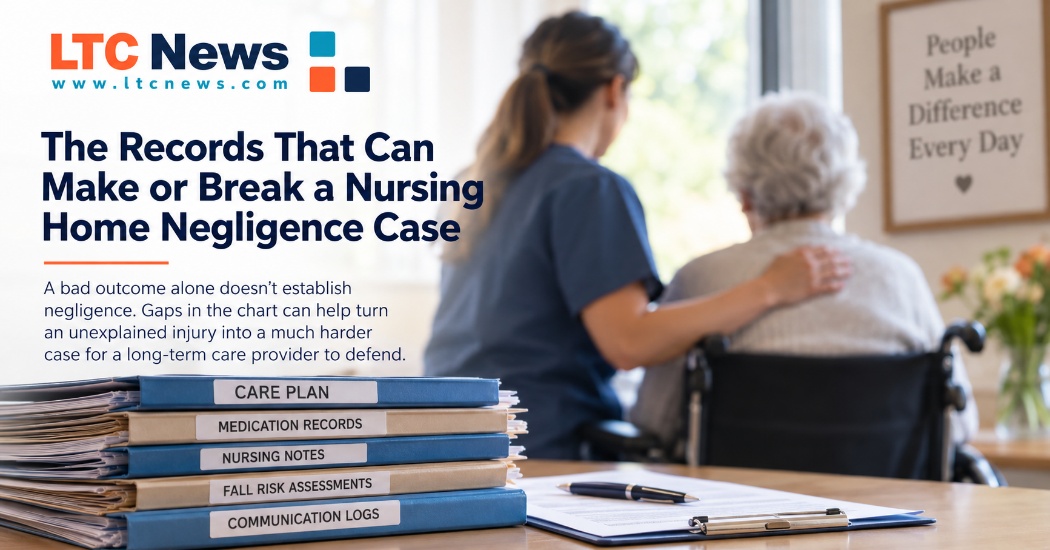
Depending on the circumstances, important records can include the resident's care plan, nursing notes, fall-risk assessments, medication administration records, wound and skin assessments, weight and nutrition records, physician orders, staffing records, and documentation of communication with physicians and family members. The timing and completeness of those records can also be important.


Sponsored