Peripheral Neuropathy After an Accident: When Nerve Damage Leads to Long-Term Care
About This Article
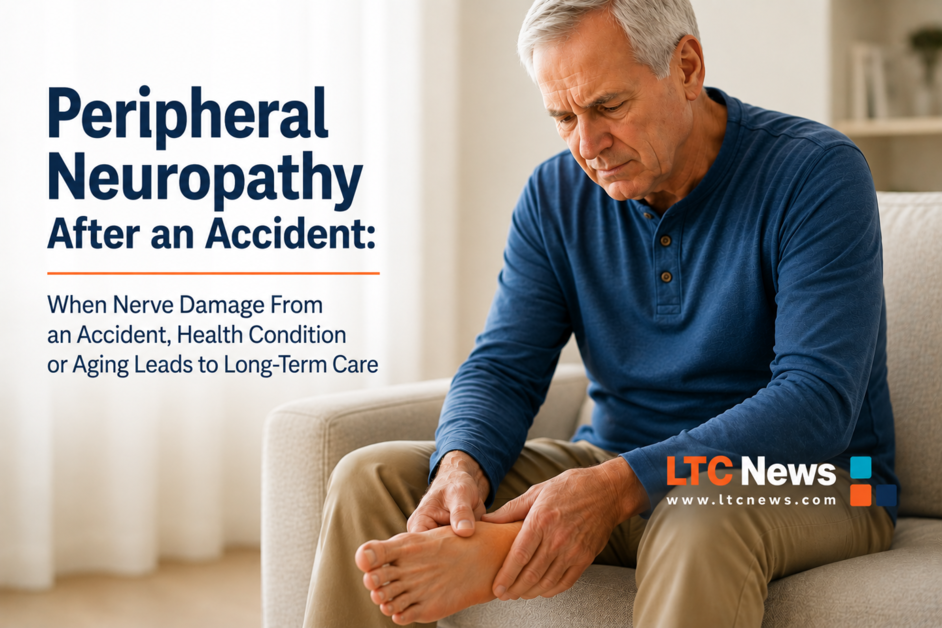
Peripheral neuropathy is nerve damage that can cause pain, numbness, weakness, and balance problems. While diabetes is the leading cause, neuropathy can also result from other illnesses, medications, vitamin deficiencies, or injuries, even those stemming from accidents.

Jacob Thomas
Jacob Thomas writes on health, wellness, and retirement topics, including aging, caregiving, insurance, and long-term care.
You probably associate long-term care planning with a slow decline in your 70s or 80s. Peripheral neuropathy does not respect that timeline. It can develop from a disease you have managed for years, from age-related changes in your nervous system, or from an accident. All three can be disabling enough to change how much help you need to stay independent. What differs is not the symptoms, which can look nearly identical, but how easily the cause can be established, and that difference matters most when the cause is an accident.
Families planning for longterm care often sort conditions into familiar buckets: degenerative, manageable, or likely to require help at home. But nerve damage from a car crash doesn’t fit neatly into any of them. Its progression is unpredictable, its impact often underestimated, and its consequences can quietly accumulate, leaving many people seeking support only after their independence has already been reshaped.
Peripheral neuropathy after a collision or other accident is common, under-diagnosed, and unusually difficult to document.
What Peripheral Neuropathy Is
Your peripheral nervous system carries signals between your brain and spinal cord and the rest of your body. Damage to those nerves produces a recognizable, frustrating set of symptoms: burning or shooting pain, numbness, tingling, weakness, and loss of coordination, often starting in the hands and feet.
The National Institute of Neurological Disorders and Stroke (NINDS) identifies more than 100 types of peripheral neuropathy, each with its own characteristic set of symptoms, pattern of development, and prognosis, with impaired function depending on whether the damaged nerves are motor, sensory, or autonomic. Sensory fiber damage produces pain and numbness. Motor fiber damage produces weakness. Autonomic involvement can affect blood pressure, digestion, and bladder control, a version of the condition families rarely anticipates.
Many Causes of Neuropathy
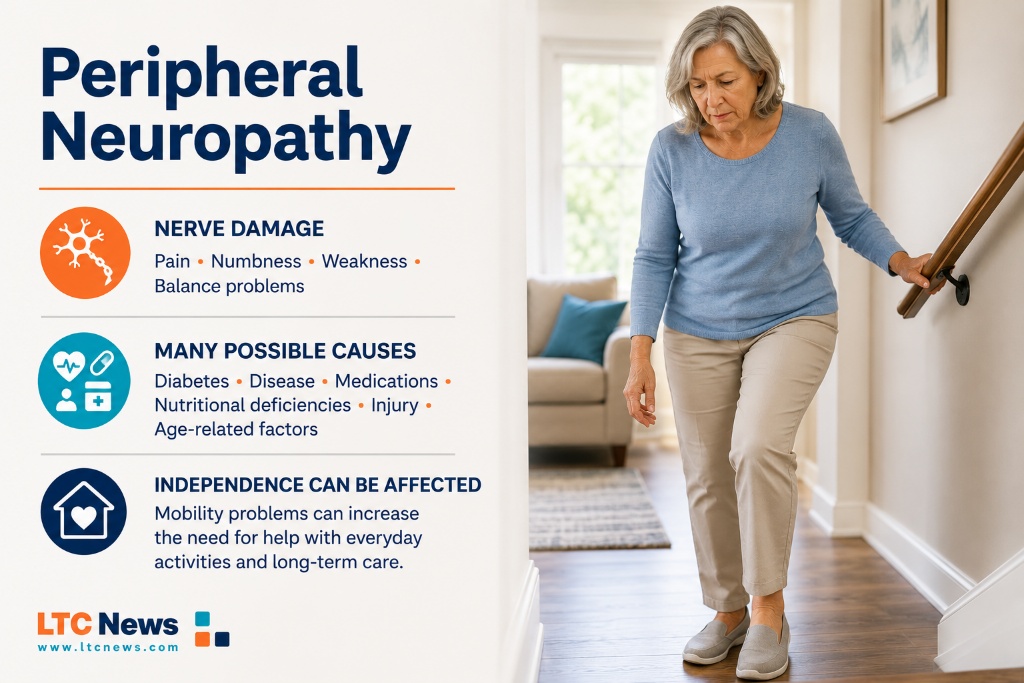
Neuropathy is not a single condition with a single cause, and most cases have nothing to do with an accident.
- Diabetes and metabolic disease. Diabetes is the most common cause of neuropathy in the United States. According to the National Institute of Diabetes and Digestive and Kidney Diseases (NIDDK), up to one-half of people with diabetes develop peripheral neuropathy, caused over time by high blood glucose and high blood fat levels damaging nerves and the small blood vessels that nourish them.
- Older age and age-related changes. Peripheral neuropathy becomes more common as people get older. According to the Cleveland Clinic, age is an overarching risk factor for peripheral neuropathy, and the older a person is, the more likely it is to develop. Part of that rise may reflect age-related changes in nerve function, and part reflects that older adults accumulate more health conditions, such as diabetes, kidney disease, and nutritional deficiencies, that can damage nerves. In some people, particularly older adults, no clear cause is ever identified, and the condition is classified as idiopathic.
- Other health conditions. Autoimmune disease, chemotherapy, kidney disease, vitamin B12 deficiency, chronic alcohol use, certain medications, and infections can all damage peripheral nerves, often in people well under 65.
- Traumatic injury. A crash, fall, or workplace accident can damage nerves directly, through fractures, dislocations, or deep tissue injury, or indirectly, when swelling, a hematoma, or scar tissue gradually compresses a nerve that was intact at the scene.
Neuropathy, Aging, and Your Long-Term Care Plan
Whatever the cause, neuropathy can affect the functions that determine whether you can stay in your home. Loss of sensation and proprioception in the feet can impair balance and increase fall risk, potentially making everyday activities such as walking, bathing, and using the stairs more difficult or dangerous. Reduced grip strength and hand sensation can make cooking, dressing, and other daily tasks harder to manage safely.
That is why neuropathy belongs in the same conversation as any other cause of long-term care need. Federal research finds that 56 percent of people turning 65 will need some form of long-term care in their lifetime. Having an accident or chronic illness that causes a disability is a reason for needing long-term care separate from age, and that, on average, eight percent of people between ages 40 and 50 already have a disability that could require long-term care services. For most people, disease and ordinary aging drive the increase. For a smaller group, an accident is the reason it arrives decades early.
It helps to be clear about what neuropathy alone does, and does not, mean for a Long-Term Care Insurance policy. A diagnosis by itself is generally not a benefit trigger. Qualified Long-Term Care Insurance policies generally pay benefits when a person is certified as chronically ill because they are unable to perform at least two of six activities of daily living (ADLs), such as bathing, dressing, eating, toileting, transferring, or continence, without substantial assistance for an expected period of at least 90 days, or because they require substantial supervision due to severe cognitive impairment, subject to the policy's terms and elimination period.
Someone whose neuropathy is mild may never meet that threshold. Someone whose neuropathy progresses to the point of needing regular help with those activities may qualify for benefits, and a claim depends on the functional impact, not the diagnosis.
Peripheral Neuropathy After a Collision or Accident, Why It Is Hard to Prove?
Diabetic and age-related neuropathy typically develop alongside years of medical visits, and the cause is rarely in dispute. Neuropathy that follows an accident is different, because the injury itself can be difficult to see on standard testing, and the timing of when symptoms appear can raise questions about what caused them.
- Nerve damage does not show up on an X-ray. X-rays and CT scans show bone; they do not show nerve damage. Electrodiagnostic studies such as nerve conduction studies and electromyography (EMG) can detect damage to larger nerve fibers, but according to the National Institutes of Health, these tests only evaluate large myelinated fibers and read as normal in patients with isolated small-fiber neuropathy, which is often confirmed instead through a skin biopsy. A normal EMG or nerve conduction study therefore does not necessarily rule out certain forms of peripheral nerve damage, particularly isolated small-fiber neuropathy.
- Timing can raise questions. Neurological symptoms after trauma do not always appear, or get documented, immediately. When symptoms emerge later, a doctor has to consider the timing, the mechanism of injury, exam findings, imaging or electrodiagnostic results, and other possible explanations before determining whether the accident was responsible. That evaluation takes time, and the gap between the date of an accident and the date a nerve-related diagnosis is documented can become a point of dispute in an injury claim.
Matthew A. Rabin, Partner and Managing Attorney of RTRLAW's personal injury litigation division and a former in-house trial attorney for an insurance carrier, tells LTC News that in his experience representing injury claims, insurers and defense attorneys frequently question causation when neurological symptoms are documented weeks or months after a collision, particularly when the patient has diabetes, spinal disease, or another condition that could also explain the symptoms. Rabin says this is one reason attorneys handling these cases tend to push for an early referral for electrodiagnostic testing or a neurology evaluation, so that the medical record reflects a documented progression rather than a gap the other side gets to characterize.
That gap between the accident and when symptoms appeared is medical rather than suspicious; compression injuries genuinely take weeks to declare themselves, which is why attorneys for car crash cases tend to press early for electrodiagnostic referral rather than waiting for symptoms to become undeniable. The record either shows a documented progression or it shows a silence the other side gets to characterize.
- Neuropathic pain can be hard to describe. Symptoms are often described in language that sounds imprecise to people trained to look for objective findings: burning, electrical, crawling, deep. Some injuries are followed by complex regional pain syndrome (CRPS), a condition the Mayo Clinic describes as pain that is out of proportion to the severity of the initial injury. Rabin says that combination, subjective symptoms paired with an injury that is hard to picture, can make these claims harder to evaluate than a broken bone.
- A prior diagnosis can complicate an older claimant's case. Rabin notes that a new symptom in an older client is sometimes attributed by an examining doctor or an insurance adjuster to age or to an existing condition such as diabetes. A pre-existing condition does not rule out a new traumatic injury layered on top of it, but according to Rabin, it can give the other side a starting point to argue the symptoms are unrelated to the accident.
An older adult or someone living with a preexisting health condition does not lose their legal rights simply because they were more vulnerable to injury before an accident. A longstanding principle of personal injury law, often called the “eggshell plaintiff” rule, generally means that a negligent party takes an injured person as they find them. Age, arthritis, degenerative changes, chronic illness, or the effects of an earlier injury do not give someone else a free pass to cause additional harm.
An accident can also aggravate, accelerate, or make a pre-existing condition symptomatic. When that happens, the resulting worsening can be just as legitimate an injury as one suffered by someone who was previously healthy. The important question is generally not whether a medical condition existed before the accident, but what changed because of the accident, including increased pain, reduced mobility, additional treatment, or new limitations in everyday activities.
This does not mean another party is automatically responsible for medical problems that existed before the accident. Rather, damages generally focus on the new injury or additional harm caused by the accident.
Someone who already had arthritis, for example, may have been functioning independently and experiencing manageable symptoms before an accident but face significant pain and mobility problems afterward. The fact that arthritis existed beforehand does not, by itself, erase the consequences of aggravating it.
The principle is especially relevant as people age because chronic conditions and degenerative changes become more common. The law does not require an accident victim to have been young or in perfect health to have a valid injury claim.
Older adults and people with chronic health conditions are entitled to the same protection from another person's negligence as anyone else. Their health before the accident may affect the medical and legal analysis of causation and damages, but it does not take away their right to seek compensation for additional harm caused by the accident.
What an Accident Changes for a Younger Adult
An accident that produces persistent nerve damage in someone's 30s or 40s is not just a medical event. It can be a sudden change in independence at an age when the usual ways long-term care gets paid for are not yet in place. LTC News research finds most people apply for Long-Term Care Insurance between ages 47 and 67, so a younger accident survivor typically does not have a policy already in force.
Medicare eligibility is not automatic before 65, either, though some people under 65 can qualify earlier through Social Security Disability Insurance after a waiting period, and certain conditions carry their own rules. Even where Medicare applies, it is worth remembering that Medicare covers medical care and qualifying short-term skilled or post-acute services; it generally does not pay for ongoing custodial long-term care.
For someone without Long-Term Care Insurance, extended care after a serious accident may ultimately involve a combination of personal resources, family caregiving, disability or other available benefits, compensation from a personal injury claim when another party is liable, and Medicaid for those who meet its eligibility requirements.
If the accident and the resulting need for care can be tied to someone else's fault, a personal injury attorney may be able to pursue compensation to help cover the cost of extended care that would otherwise fall to Long-Term Care Insurance, if a policy exists, or to Medicaid. A significant settlement can also affect eligibility for Medicaid and other means-tested programs. Depending on the person's circumstances and state rules, attorneys may consider tools such as certain special needs trusts or structured settlements when planning for future care needs, and it is worth raising that question with an attorney before a settlement is finalized rather than after.
What to Do in the First Months
Report new or worsening numbness, weakness, burning pain, or balance problems promptly to your doctor. If symptoms persist or start to interfere with everyday activities, ask whether evaluation by a neurologist or additional testing would be appropriate.
If your neuropathy followed an accident, consider consulting a personal injury attorney early, so that questions about long-term care and Medicaid eligibility can be considered alongside the medical claim rather than after a settlement has already been reached.
And revisit your care plan on the assumption that function, not diagnosis, is what determines the support you need. Whether the nerve damage traces back to diabetes, the ordinary course of aging, or an accident, the question that matters is whether you can still manage the stairs.
Finding Extended Care:If you or a loved one need long-term care finding quality care services can be challenging. The LTC News Caregiver Directory allows you to search for caregivers and long-term care facilities where you live. You can find the average cost of long-term care services in any Zip code by using the LTC News Cost of Long-Term Care Services Calculator.
This article is for general informational purposes and is not medical, financial, or legal advice. Speak with a qualified doctor about diagnosis and treatment, and with a licensed attorney about your specific legal situation.
Frequently Asked Questions
Does a neuropathy diagnosis automatically qualify someone for Long-Term Care Insurance benefits?
No. A diagnosis alone generally does not trigger benefits under a qualified Long-Term Care Insurance policy. Benefits are typically based on functional or cognitive impairment. Generally, a person must be certified as chronically ill because they need substantial assistance with at least two of the six activities of daily living for an expected period of at least 90 days, or require substantial supervision because of severe cognitive impairment, subject to the policy's specific terms and elimination period.
Why is documenting symptoms after an accident important?
When neuropathy follows an accident, determining causation may depend heavily on the medical record. New or worsening numbness, weakness, burning pain, balance problems or other neurological symptoms should be reported promptly to a physician. Medical evaluation can help determine whether symptoms are related to traumatic nerve damage, a preexisting condition or another medical cause.
Can nerve damage exist even if an EMG or nerve conduction study is normal?
Yes. Electrodiagnostic testing such as EMG and nerve conduction studies primarily evaluates larger nerve fibers. Certain conditions, including isolated small-fiber neuropathy, can be present even when those tests are normal. Physicians may use other clinical findings and testing, including skin biopsy in appropriate cases, to evaluate suspected small-fiber neuropathy.
Does Medicare pay for long-term care caused by neuropathy or an accident?
Generally, Medicare does not pay for ongoing custodial long-term care. Medicare primarily covers medical care and certain qualifying short-term skilled or post-acute services. Someone who needs extended help with everyday activities may have to rely on Long-Term Care Insurance, personal resources, family caregivers, other available benefits or Medicaid if financially eligible.
What is peripheral neuropathy?
Peripheral neuropathy is damage to nerves outside the brain and spinal cord. It can cause numbness, tingling, burning or shooting pain, weakness, loss of coordination and balance problems. Depending on which nerves are affected, neuropathy can also interfere with blood pressure, digestion, bladder function and other automatic body functions.
What causes peripheral neuropathy?
Diabetes is the most common cause of peripheral neuropathy in the United States, but it is far from the only one. Neuropathy can also be associated with aging, kidney disease, autoimmune disorders, vitamin deficiencies, certain medications, chemotherapy, infections and chronic alcohol use. Physical trauma from a crash, fall or workplace accident can also damage or compress peripheral nerves.
Can neuropathy lead to a need for long-term care?
Yes. Severe neuropathy can affect balance, walking, strength, coordination and the ability to use the hands. As symptoms progress, some people may need help with bathing, dressing, transferring, toileting or other everyday activities. Neuropathy can also increase fall risk and make it more difficult to remain safely independent at home.
Can an accident cause peripheral neuropathy?
Yes. An accident can injure nerves directly or indirectly through fractures, dislocations, swelling, hematomas, scar tissue or compression. Determining whether an accident caused neuropathy can sometimes be difficult, particularly when symptoms are documented weeks or months later, or the injured person has another condition that could also cause nerve damage.
Is someone responsible for all of a person's preexisting medical problems after an accident?
Not necessarily. An injury claim generally focuses on the new injury or additional harm caused by the accident, not medical problems that existed independently beforehand. The important question is often what changed after the accident — such as increased pain, reduced mobility, additional medical treatment, or new limitations in everyday activities.
What ultimately determines how much care someone with neuropathy needs?
Function matters more than the diagnosis itself. Some people live independently with mild neuropathy for years, while others develop balance, mobility or strength problems that require assistance. Whether neuropathy resulted from diabetes, another chronic condition, aging or an accident, the practical long-term care question is how much it affects the person's ability to safely perform everyday activities and remain independent.
Can an older person with a preexisting condition still have a valid injury claim after an accident?
Yes. Being older or having arthritis, diabetes, degenerative changes, neuropathy, or another preexisting health condition does not eliminate a person's legal rights after an accident. A longstanding legal principle commonly known as the “eggshell plaintiff” rule generally recognizes that a negligent party takes an injured person as they find them. An accident that aggravates, accelerates, or makes an existing condition symptomatic can result in compensable additional harm.


Sponsored