OTC Medicines Older Adults Can Usually Use More Safely—and Those That Require Extra Caution
About This Article
Millions of adults over age 50 rely on over-the-counter medicines for pain, allergies, colds, and digestive issues. While many OTC products can be used safely when taken as directed, others may increase the risk of falls, confusion, medication interactions, and hospitalizations.

Linda Maxwell
Linda Maxwell is a journalist who writes about aging, health, chronic illness, caregiving, and long-term care issues impacting older adults and their families.
Table of Contents
- Why Medication Safety Changes as You Age
- Medication Safety Becomes More Important with Aging
- OTC Products Often Considered Lower Risk
- Newer Antihistamines May Be Better Tolerated Than Older Allergy Medicines
- Topical Pain Relievers May Reduce Some Risks
- OTC Medicines That Deserve Extra Caution
- Medication Safety and Cognitive Impairment
- Medication Management Is a Growing Caregiving Responsibility
- Quick Medication Safety Checklist
- When to Speak with a Pharmacist
- Medicare Doesn't Cover Most OTC Medicines
- Protecting Your Health Starts in the Medicine Cabinet
- Disclaimer
We often just pop a pill when we have a headache or when our allergies are bothering us. A medicine that seemed harmless when you were 35 may pose new risks at age 65. Changes in metabolism, chronic health conditions, and the growing use of prescription medications make medication safety increasingly important as you age. Even products sold without a prescription can cause side effects, interact with medications, or worsen existing health conditions.
The good news is that many OTC products remain useful and relatively low risk when used appropriately. Understanding which products are often considered lower-risk options and which deserve a conversation with a pharmacist or healthcare provider can help you make informed decisions for yourself or an older family member and avoid unnecessary complications.
Why Medication Safety Changes as You Age
Your body processes medications differently as you grow older. The liver and kidneys may clear drugs more slowly. Changes in body composition can affect how medications are absorbed and distributed. Older adults are also more likely to take multiple prescription medications, increasing the potential for drug interactions.
According to the U.S. Food and Drug Administration, medication-related problems occur more frequently in older adults because of age-related physiological changes and the higher prevalence of chronic medical conditions.
👉 FDA: 5 Medication Safety Tips for Older Adults
Even OTC products can cause side effects, interact with prescription medications, or worsen existing health issues.
Medication Safety Becomes More Important with Aging
Medication-related complications are a common reason older adults experience falls, emergency room visits, and hospitalizations. As America's population continues to age, families increasingly face decisions involving medication management, caregiving, and long-term care planning.
Approximately 11,400 Americans turn age 65 every day, making medication safety an increasingly important part of healthy aging. For individuals living with chronic health conditions, cognitive decline, or multiple prescriptions, reviewing medications regularly can help reduce risks and improve quality of life.
OTC Products Often Considered Lower Risk
No medication is completely risk-free. However, healthcare professionals generally consider the following products among the lower-risk OTC options for many adults aged 50 and older when used according to label directions and matched to their individual health needs.
- Acetaminophen for Occasional Pain and Fever
Acetaminophen is often recommended as a first-line option for occasional headaches, mild arthritis discomfort, muscle aches and fever.
Unlike nonsteroidal anti-inflammatory drugs (NSAIDs), acetaminophen does not increase the risk of stomach bleeding. For many older adults, it may be a preferred option, particularly for those taking blood thinners or managing high blood pressure.
However, acetaminophen is found in hundreds of products, including many cold and flu remedies.
"Most people don't realize how many products contain the drug, says Diane Calello, MD, executive and medical director of the New Jersey Poison Control Center at Rutgers New Jersey Medical School.
There are more than 600 products on the market that contain acetaminophen.”—Diane Calello, MD
Taking multiple products containing acetaminophen can lead to accidental overdose and serious liver injury. Adults with liver disease or those who consume alcohol regularly should consult a physician before using acetaminophen routinely.
- Saline Nasal Sprays for Congestion and Dryness
Saline nasal sprays contain salt water rather than medication. Because they do not contain decongestants, they generally do not raise blood pressure, increase heart rate or contribute to confusion. They can help relieve nasal dryness and mild congestion associated with allergies, dry indoor air, and minor illnesses.
- Artificial Tears for Dry Eyes
Dry eyes become more common with age and may be worsened by certain medications and health conditions. Artificial tears can help lubricate the eyes and relieve irritation, burning, and discomfort. Most lubricating eye drops are considered low risk when used according to package directions.
Persistent eye pain, sudden vision changes, or signs of infection should be evaluated by an eye care professional.
- Fiber Supplements for Occasional Constipation
Constipation affects many older adults and is often linked to medications, reduced physical activity, and dietary changes. Fiber supplements containing psyllium can support regular bowel function when combined with adequate fluid intake. For many individuals, they offer a gentler option than stimulant laxatives.
Because fiber supplements can affect the absorption of certain medications, they should generally be taken several hours apart from prescription drugs unless otherwise directed by a healthcare professional.
Common medications that may be impacted:
- Blood thinners (e.g., warfarin) — heart drugs and blood thinners are among the most susceptible to fiber interference
- Diabetes medications, especially metformin and sulfonylureas, absorption delays of 2-4 hours are common when these are taken with soluble fiber, which can cause glucose fluctuations
- Thyroid medication (levothyroxine)
- Certain antidepressants (tricyclics like amitriptyline)
- Digoxin (heart medication)
- Some antibiotics like fluoroquinolones (ciprofloxacin), tetracyclines (doxycycline), and penicillins (amoxicillin) are the most commonly flagged.
- Simple Antacids for Occasional Heartburn
Some OTC antacids may provide short-term relief from occasional heartburn. However, frequent heartburn should not be self-treated indefinitely. Persistent symptoms can signal gastroesophageal reflux disease (GERD) or another underlying medical condition requiring evaluation.
If you find yourself or your older loved one relying on antacids regularly, discuss your symptoms with a healthcare provider.
Newer Antihistamines May Be Better Tolerated Than Older Allergy Medicines
Seasonal allergies affect many older adults. Second-generation antihistamines such as loratadine, cetirizine, and fexofenadine typically cause less drowsiness and confusion than older antihistamines such as diphenhydramine.
While these newer allergy medications are often better tolerated, they can still cause side effects or interact with other medications. Individuals with chronic medical conditions should consult a healthcare professional before regular use.
Topical Pain Relievers May Reduce Some Risks
For localized joint and muscle pain, topical products may provide relief while reducing the amount of medication absorbed into the bloodstream.
Products such as lidocaine patches, topical diclofenac gel, and menthol-based creams may be useful options for some adults with arthritis or minor muscle pain.
Because systemic absorption is generally lower than with oral medications, topical treatments may present fewer risks for certain individuals. However, they should still be used according to package directions.
OTC Medicines That Deserve Extra Caution
Some OTC products pose greater risks for older adults because they are more likely to cause side effects, interact with medications, or worsen existing health conditions.
- Sleep Aids
Many OTC sleep products contain diphenhydramine or other sedating antihistamines. The American Geriatrics Society's Beers Criteria identifies these medications as potentially inappropriate for many older adults because they can increase the risk of:
- Confusion
- Memory problems
- Daytime drowsiness
- Urinary retention
- Dizziness
- Falls
These concerns are especially important for individuals living with dementia, mild cognitive impairment (MCI), or balance problems.
Many nighttime products labeled "PM" contain the same ingredients.
- Multi-Symptom Cold and Flu Medicines
Many cold and flu remedies combine multiple medications into a single product. A single dose may contain a pain reliever, antihistamine, cough suppressant, and decongestant.
For older adults, these products can increase the risk of:
- Excessive drowsiness
- Elevated blood pressure
- Confusion
- Medication duplication
- Drug interactions
Always read ingredient labels carefully before taking any multi-symptom medication.
- Decongestants Can Raise Blood Pressure
Many cold, flu, and sinus medications contain decongestants such as pseudoephedrine or phenylephrine.
These ingredients may:
- Raise blood pressure
- Increase heart rate
- Cause nervousness or jitteriness
- Interfere with sleep
- Worsen certain heart conditions
Adults with hypertension, heart disease, arrhythmias, or a history of stroke should speak with a healthcare professional before using decongestants.
- NSAID Pain Relievers
Common NSAIDs include:
- Ibuprofen
- Naproxen
These medications can be effective for pain and inflammation, but may increase the risk of:
- Stomach bleeding
- Intestinal bleeding
- Kidney injury
- Elevated blood pressure
- Cardiovascular complications
The risk increases with age, especially for individuals taking blood thinners or living with kidney disease, heart disease or hypertension.
- Herbal Supplements
Many people assume that products labeled "natural" are automatically safe. The National Center for Complementary and Integrative Health warns that herbal supplements can interact with prescription medications and may cause significant side effects.
Examples include:
- St. John's wort
- Ginkgo biloba
- Ginseng
- Garlic supplements
- Kava
Supplement quality, potency, and ingredient consistency can vary significantly between manufacturers.
Medication Safety and Cognitive Impairment
Medication errors become increasingly common among people living with dementia or mild cognitive impairment. Individuals experiencing memory loss may have difficulty remembering whether a medication has already been taken, reading labels correctly, or recognizing duplicate ingredients across products.
A forgotten dose, an accidental double dose, or the use of multiple products containing the same active ingredient can quickly become dangerous. This concern is particularly important because more than 7.4 million Americans age 65 and older are living with Alzheimer's disease, according to the Alzheimer's Association. Many others live with other forms of dementia or cognitive decline.
Family caregivers should periodically review medicine cabinets and monitor all medications, including prescription drugs, OTC medicines, vitamins and dietary supplements.
Medication Management Is a Growing Caregiving Responsibility
Medication management has become one of the most important responsibilities for both family and professional caregivers. Approximately 63 million Americans provide unpaid care for a loved one. Many help manage medications, schedule appointments, and monitor for side effects.
Keeping an updated medication list and reviewing OTC purchases regularly can help reduce medication errors and improve communication with healthcare providers.
Professional caregivers can also help identify medication concerns and monitor for side effects. The LTC News Caregiver Directory can help families find qualified care providers nationwide.
Quick Medication Safety Checklist
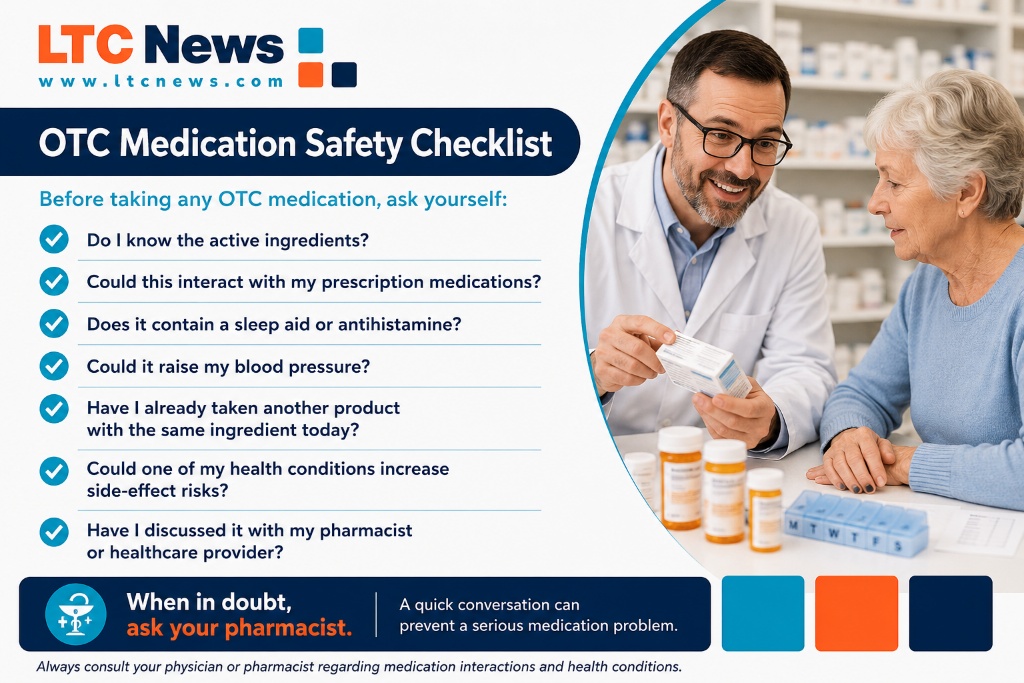
A few minutes spent reviewing labels can help prevent medication mistakes and unnecessary complications.
When to Speak with a Pharmacist
A pharmacist can be one of your most valuable healthcare resources. Many medication-related problems involve products people assumed were completely safe because they were sold without a prescription.
Every OTC medication should be viewed as a real medication with both benefits and risks. Before starting any new OTC medication, consider speaking with a pharmacist if you:
- Take multiple prescription medications
- Have kidney disease
- Have liver disease
- Have high blood pressure
- Use blood thinners
- Live with dementia or MCI
- Take vitamins or supplements regularly
A brief conversation can help identify potential interactions and uncover safer alternatives.
Medicare Doesn't Cover Most OTC Medicines
Medicare generally does not cover most over-the-counter medications. As a result, many older adults purchase and use these products without discussing them with a physician, pharmacist, or healthcare provider. While many OTC medicines can be used safely, using them without understanding potential interactions or side effects may increase health risks.
Protecting Your Health Starts in the Medicine Cabinet
Many OTC medications can play a useful role in managing everyday health concerns as you age. Products such as acetaminophen, saline nasal sprays, artificial tears, fiber supplements and certain topical treatments are often considered lower-risk choices for many adults age 50 and older when used appropriately and matched to their individual health needs.
However, OTC does not mean risk-free. Sleep aids, NSAIDs, multi-symptom cold remedies, decongestants and herbal supplements deserve careful review before use, particularly for older adults managing chronic health conditions or multiple medications.
A medicine cabinet may seem like an unlikely source of danger, yet many medication-related hospitalizations begin with products purchased without a prescription. Spending a few minutes reviewing labels, checking ingredients, and consulting a pharmacist can help protect your health and independence.
For family caregivers, that same review may help an aging loved one avoid a fall, hospitalization, or loss of independence.
Disclaimer
LTC News provides educational and informational content designed to help consumers make informed decisions about aging, caregiving, health, retirement, and long-term care planning. The information in this article is not intended as medical advice and should not be used to diagnose, treat, cure, or prevent any medical condition.
Frequently Asked Questions
How often should older adults review their medications?
Experts generally recommend reviewing all prescription medications, OTC products, vitamins and supplements at least annually and after any hospitalization, significant illness or medication change.
Can OTC medicines cause serious health problems?
Yes. Even medications available without a prescription can contribute to falls, confusion, stomach bleeding, kidney injury, elevated blood pressure, and dangerous drug interactions. Risks increase for older adults managing multiple health conditions or taking several medications.
What is generally considered the first OTC pain reliever many healthcare professionals recommend for older adults?
Acetaminophen is often recommended as a first-line option for occasional pain because it does not carry the same bleeding risks associated with NSAIDs such as ibuprofen and naproxen. However, dosage limits remain important, especially for individuals with liver disease.
Are topical pain relievers safer than oral pain medications?
For some people, topical pain relievers may provide localized relief with less medication entering the bloodstream. However, they still should be used according to label directions and discussed with a healthcare provider if used regularly.
Can herbal supplements interact with prescription medications?
Yes. Supplements such as St. John's wort, ginkgo biloba, ginseng, and garlic supplements can interact with prescription medications and may increase the risk of side effects or reduce medication effectiveness.
Why are OTC sleep aids risky for older adults?
Many OTC sleep products contain diphenhydramine, which can increase confusion, dizziness, urinary retention, daytime drowsiness, and fall risk. These concerns are especially important for people living with dementia or mild cognitive impairment.
Should older adults use ibuprofen or naproxen regularly?
Frequent or long-term NSAID use should be reviewed with a healthcare provider because these medications can increase the risk of stomach bleeding, kidney injury, elevated blood pressure, and cardiovascular complications.
What should caregivers watch for when managing medications?
Caregivers should watch for duplicate medications, missed doses, unexpected side effects, confusion, dizziness and changes in behavior. Regular medication reviews can help identify potential problems before they become emergencies.

Sponsored