Obesity Is Fueling Britain’s Growing Health and Long-Term Care Crisis

About This Article
Obesity is becoming one of the biggest drivers of chronic illness, disability, NHS spending, and long-term care demand as the population ages. Experts increasingly warn that delaying treatment allows preventable health problems to escalate into far more expensive medical and social care needs later in life.

Jacob Thomas
Jacob Thomas writes on health, wellness, and retirement topics, including aging, caregiving, insurance, and long-term care.
Table of Contents
- Obesity Is Driving Rising NHS and Social Care Costs
- How Obesity Accelerates Aging and Care Dependency
- Diabetes Remains One of the Most Expensive Consequences
- Earlier Treatment May Reduce Future Care Needs
- Real-World Treatment Outcomes Continue to Improve
- The NHS Access Gap Could Shape Future Costs
- Britain’s Aging Population Faces a Growing Challenge
You may think obesity is primarily about weight. In reality, it often becomes one of the biggest contributors to frailty, mobility loss, chronic disease, and care dependency later in life.
What begins in your 40s or 50s as rising blood pressure, joint pain, poor sleep, or increasing blood glucose levels can evolve into diabetes complications, cardiovascular disease, stroke risk, mobility impairment, and the need for ongoing support in older age.
Obesity is perhaps the major cause of multiple long-term conditions in the U.K. — Professor Naveed Sattar, Chair of the U.K. Government's Obesity Healthcare Goals and Professor of Cardiometabolic Medicine at the University of Glasgow.
For many families across Britain, the consequences eventually become deeply personal. Adult children often find themselves helping aging parents who struggle with walking, climbing stairs, bathing, dressing, or managing medications after years of obesity-related health decline.
The financial consequences are equally staggering. Obesity now costs the U.K. an estimated £74 billion annually, including billions in NHS treatment, social care support, and lost productivity. Increasingly, researchers and healthcare economists argue that treating obesity earlier may be one of the most effective ways to reduce future long-term care costs while helping people remain independent longer.

Obesity Is Driving Rising NHS and Social Care Costs
According to the U.K. government’s Obesity Healthcare Goals program, obesity costs the U.K. approximately £74 billion annually, with roughly £11 billion falling directly on NHS services. Additional costs are tied to local authority social care budgets, unpaid caregiving, and lost workplace productivity.
The burden extends far beyond weight itself. Obesity significantly increases the risk of:
- Type 2 diabetes
- Cardiovascular disease
- Stroke
- Osteoarthritis
- Sleep apnea
- Certain cancers
- Reduced mobility
- Falls and fractures
Many of these conditions become progressively more serious with age. Over time, they often lead to disability, dependence on caregivers, and the need for increasing levels of support.
Unlike NHS medical care, social care in the U.K. is often means-tested. That means many families eventually face substantial out-of-pocket expenses for home care, care homes, mobility assistance, or residential nursing support.
For aging adults and their families, obesity can therefore create both a healthcare crisis and a financial one.
How Obesity Accelerates Aging and Care Dependency
Obesity is increasingly linked to accelerated biological aging and earlier loss of independence. Research shows excess weight contributes to chronic inflammation, muscle deterioration, reduced mobility, and frailty.
Research confirms that through shared biological mechanisms, obesity exacerbates age-related decline in physical function, leading to frailty and disability. Both obesity and aging are characterized by chronic low-grade inflammation, which reduces muscle quality and diminishes the body's anabolic response to muscle repair.
Our research has shown fundamental differences in the regulation of older men's muscles who are obese. We found many genes associated with a long life are 'switched off' and no longer active. This suggests obesity may accelerate the ageing process in men's muscles, and could contribute to the development of sarcopenia. — Dr. Mark Burton, Research Fellow, University of Southampton, NIHR-supported research, published in the Journal of Cachexia, Sarcopenia and Muscle.
These changes increase the likelihood that older adults will eventually need help with activities of daily living, including:
- Bathing
- Dressing
- Walking
- Meal preparation
- Medication management
- Transfers and mobility
Excess weight also raises the risk of falls, hospitalization, and prolonged recovery after illness or surgery.
Research increasingly links midlife obesity to elevated dementia risk later in life, particularly when obesity contributes to diabetes, hypertension, and cardiovascular disease. Cognitive decline combined with mobility impairment can significantly increase the likelihood of needing ongoing supervision or residential support.
Over time, many people with obesity require increasing levels of assistance through:
- Domiciliary care
- Adapted housing
- Mobility equipment
- Residential care
- Nursing care services
The implications are significant because obesity-related disability often develops gradually over many years, creating sustained demand for support rather than short-term medical intervention alone.
Families often do not recognize the long-term impact until a parent begins struggling with stairs, falls, bathing, or mobility. What started decades earlier as weight gain may eventually evolve into caregiving responsibilities adult children were never financially or emotionally prepared to manage.
Diabetes Remains One of the Most Expensive Consequences
Diabetes is among the largest downstream costs associated with obesity.
Research from the York Health Economics Consortium and Diabetes U.K. found the NHS spends approximately £10.7 billion annually on diabetes care. Roughly 60% of that spending goes toward treating preventable complications rather than routine disease management.
These complications include:
- Stroke
- Kidney failure
- Amputation
- Vision loss
- Heart disease
Researchers project diabetes costs could approach £18 billion annually by 2035 as type 2 diabetes becomes increasingly common among younger adults.
Earlier obesity treatment may help interrupt that trajectory before complications become severe, disabling, and costly.
Earlier Treatment May Reduce Future Care Needs
The strongest economic argument for early obesity intervention centers on prevention. Multiple studies cited in the research show that medically supervised obesity treatment can significantly reduce the likelihood of developing diabetes and cardiovascular disease later in life.
The downstream implications are enormous.
Preventing a stroke, heart attack, or severe diabetic complication may also prevent years of increasing dependence on caregivers, domiciliary support, or residential care placement.
Joint health is another major factor. Osteoarthritis linked to obesity is a leading cause of reduced mobility among older adults and frequently contributes to long-term disability and care dependency.
Researchers modeling obesity treatment for people with knee osteoarthritis found significant potential to delay or prevent joint replacement surgery by reducing excess weight and improving mobility.
Maintaining mobility later in life is closely tied to preserving independence and reducing pressure on both families and local authority support systems.
Real-World Treatment Outcomes Continue to Improve
Researchers also note supervised obesity treatment programs often outperform clinical trial benchmarks because patients receive ongoing monitoring, behavioral support, and medication adjustments.
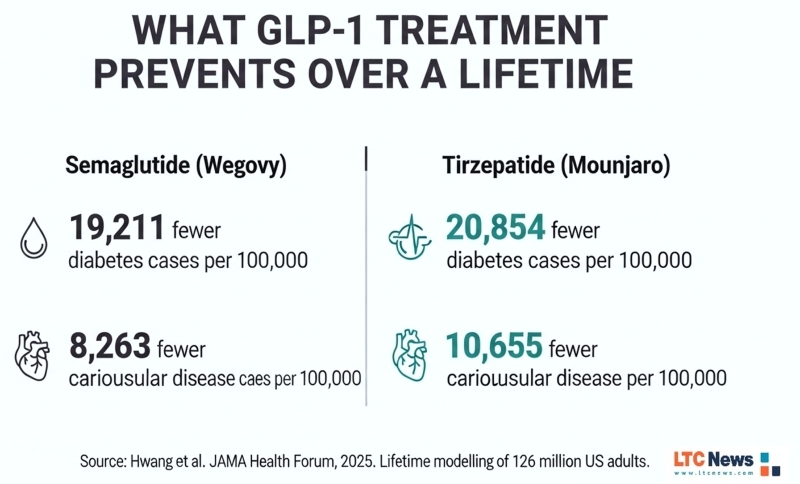
One of the clearest benefits of effective obesity treatment is reducing the risk of type 2 diabetes and cardiovascular disease. A 2025 JAMA Health Forum analysis found tirzepatide and semaglutide could prevent thousands of future diabetes cases per 100,000 people compared with lifestyle changes alone, significantly lowering long-term healthcare and complication costs.
The cardiovascular benefits were also substantial. The SELECT trial, involving more than 17,000 adults with obesity and cardiovascular disease, found Wegovy (semaglutide) reduced major adverse cardiovascular events by 20% compared with placebo. Researchers estimated tirzepatide could prevent more than 10,000 cardiovascular disease cases per 100,000 individuals over a lifetime, with semaglutide preventing more than 8,000.
Published data from one large supervised program involving more than 125,000 participants also showed substantial improvements in:
- Weight reduction
- Blood glucose control
- Cholesterol levels
- Blood pressure markers
These improvements matter because reducing cardiovascular and metabolic risk factors may lower future disability rates and reduce long-term pressure on NHS and social care systems as Britain’s population ages.
At scale, preventing diabetes, heart attacks, strokes, and related complications could significantly reduce future hospitalization, rehabilitation, and long-term care costs while helping more people remain mobile and independent as they age. For eligible patients, supervised Wegovy treatment through Voy includes an online assessment, prescriber review, dose guidance, delivery after approval, and ongoing clinical support.
Still, experts caution that outcomes vary by individual, and treatment suitability must always be medically assessed.
The NHS Access Gap Could Shape Future Costs
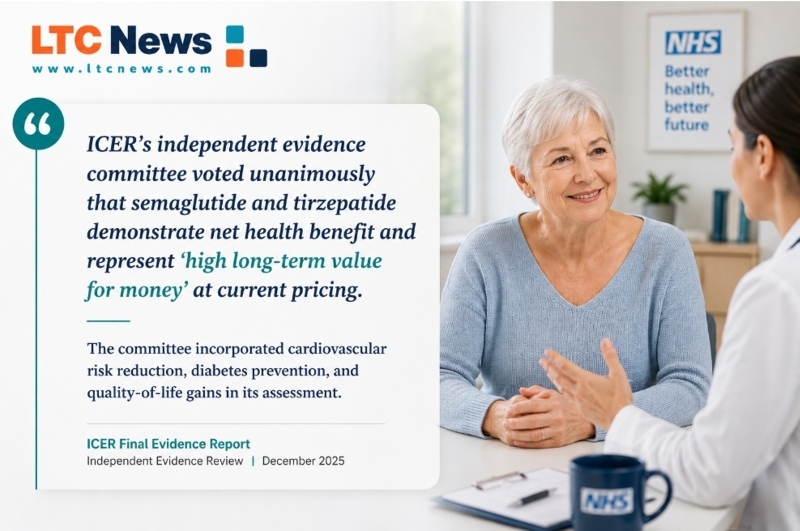
The NHS plans a phased rollout of tirzepatide treatment under NICE guidance, but access remains limited compared with rapidly growing private-sector prescribing.
Health economists increasingly warn that delaying obesity treatment may ultimately increase future healthcare and support costs rather than reduce them.
Every year that untreated obesity progresses, the likelihood rises that patients will eventually require:
- Diabetes management
- Cardiovascular care
- Orthopedic treatment
- Mobility assistance
- Long-term support services
For Britain’s aging population, the issue is no longer simply about weight management. It is increasingly about preserving independence, reducing disability, and limiting the caregiving burden facing both families and public systems.
Britain’s Aging Population Faces a Growing Challenge
The economics of obesity treatment increasingly point toward the same conclusion many families already understand personally: delaying intervention often leads to worsening health, higher costs, and greater dependence later in life.
For the NHS, local authorities, and aging families across the U.K., obesity is becoming one of the defining health and long-term care challenges of the coming decades.
The question many families now face is simple: Would earlier intervention today prevent years of declining health, caregiving stress, and social care dependency later?
Earlier intervention may not only reduce NHS and social care spending. It may help more people remain mobile, independent, and able to age with greater dignity while reducing the caregiving burden placed on families.
Frequently Asked Questions
How much does obesity cost the NHS and the UK economy?
According to the U.K. government’s Obesity Healthcare Goals programme, obesity costs Britain an estimated £74 billion annually.
That includes:
- Roughly £11 billion in direct NHS spending
- Local authority social care costs
- Informal caregiving
- Lost workplace productivity
Researchers warn these costs are expected to rise as obesity-related chronic disease becomes more common across younger age groups.
Why is diabetes such a major concern in obesity-related healthcare costs?
Diabetes is one of the most expensive downstream consequences of obesity.
Research from the York Health Economics Consortium and Diabetes U.K. found the NHS spends approximately £10.7 billion annually on diabetes care, with roughly 60% spent treating preventable complications rather than routine disease management.
These complications can include:
- Stroke
- Kidney failure
- Amputation
- Heart disease
- Vision loss
Many of these conditions also increase the likelihood of long-term disability and care dependency later in life.
Is obesity linked to dementia risk?
Yes. Studies increasingly associate midlife obesity with elevated dementia risk later in life, especially when obesity contributes to conditions such as:
- Type 2 diabetes
- Hypertension
- Cardiovascular disease
Cognitive decline combined with mobility problems can significantly increase the need for supervision, caregiving, or residential support services in older age.
Can earlier obesity treatment reduce future long-term care costs?
Researchers increasingly believe earlier intervention may reduce future healthcare and social care spending by preventing serious complications before they become disabling.
Preventing:
- Heart attacks
- Stroke
- Severe diabetes complications
- Mobility decline
may also reduce future dependence on caregivers, residential care, and local authority support services.
Experts argue obesity treatment should increasingly be viewed as preventive healthcare rather than simply weight management.
Can obesity accelerate the aging process?
Research increasingly suggests obesity may accelerate biological aging.
Excess weight is associated with chronic inflammation, muscle deterioration, frailty, and reduced mobility. U.K. researchers have also found obesity may affect genes associated with muscle aging and sarcopenia, the age-related loss of muscle mass and strength.
These changes can make it more difficult for older adults to remain independent as they age.
Why are experts concerned about delays in NHS obesity treatment access?
The NHS is implementing a phased rollout of newer obesity medications under NICE guidance, but demand currently exceeds access capacity.
Health economists warn delays in treatment may allow preventable conditions to worsen, increasing future costs tied to:
- Diabetes management
- Cardiovascular disease
- Orthopedic care
- Mobility assistance
- Long-term social care support
Many experts now view obesity not only as a public health challenge, but also as one of Britain’s growing aging and long-term care concerns.
Why are supervised obesity treatment programs important?
Researchers note supervised obesity treatment programs often achieve better outcomes than clinical trials alone because patients receive:
- Ongoing monitoring
- Behavioral support
- Medication adjustments
- Clinical oversight
Published data from large supervised programs showed improvements in:
- Weight reduction
- Blood glucose control
- Cholesterol levels
- Blood pressure markers
These improvements may help lower future disability rates and reduce pressure on NHS and social care systems.
How is obesity affecting long-term care demand in Britain?
Obesity is increasingly contributing to chronic illness, reduced mobility, frailty, and disability among older adults in the U.K. Conditions linked to obesity, including type 2 diabetes, cardiovascular disease, stroke, osteoarthritis, and dementia risk factors, often lead to greater dependence on caregivers and long-term support services later in life.
As Britain’s population ages, obesity-related health decline is placing growing pressure on both NHS healthcare services and local authority social care systems.
What are GLP-1 medications such as Wegovy and tirzepatide?
GLP-1 medications are prescription treatments designed to help regulate appetite, blood sugar, and weight.
In obesity treatment, medications such as:
- Wegovy (semaglutide)
- Tirzepatide
have shown significant improvements in weight reduction and cardiometabolic health when combined with medical supervision and lifestyle support.
Some studies suggest these treatments may lower future risks of diabetes and cardiovascular disease, potentially reducing long-term healthcare and care-support costs.
Why does obesity increase the likelihood of needing social care later in life?
Obesity can accelerate physical decline by increasing inflammation, reducing muscle quality, and worsening mobility problems. Over time, many people struggle with activities of daily living such as:
- Bathing
- Dressing
- Walking
- Meal preparation
- Medication management
These challenges may eventually require domiciliary care, mobility assistance, adapted housing, or residential nursing support.
Unlike NHS healthcare, many forms of social care in the U.K. are means-tested, meaning families can face substantial out-of-pocket costs later in life.
How can families prepare for obesity-related aging and care challenges?
Experts recommend families address obesity-related health risks earlier rather than waiting for mobility loss or chronic disease complications to emerge.
Important steps may include:
- Regular GP assessments
- Weight management support
- Diabetes screening
- Cardiovascular risk monitoring
- Exercise and mobility programs
- Nutritional counseling
- Early discussions about future care needs
Earlier intervention may help preserve independence, reduce caregiving stress, and improve quality of life later in life.

Sponsored