New Lab Advances Detect Cancer and Brain Injury Earlier—What It Means for You

About This Article
Advanced lab tests using monoclonal antibodies are helping doctors detect cancer and brain injury earlier than ever before. Understanding how these tools work can help you make better decisions about your health, independence, and long-term care planning.

Linda Maxwell
Linda Maxwell is a journalist who writes about aging, health, chronic illness, caregiving, and long-term care issues impacting older adults and their families.
A small change in your body can begin long before you feel anything is wrong. A protein shifts. Cells behave differently. The damage begins quietly. By the time symptoms appear, the condition may already be advanced.
That’s why today’s medical testing is increasingly focused on finding disease earlier—sometimes at the molecular level. These tools are reshaping how doctors identify and diagnose conditions like cancer and brain injury, giving you more time to act, protect your independence, and plan for what comes next.
What Are S100 Proteins—and Why Do They Matter?
Within healthy cells, S100 proteins act as signaling molecules and are commonly found in tissues such as the brain, heart, and skin. When disease develops—such as skin cancer or inflammatory conditions—both the location and the levels of these proteins can change, providing important clues for diagnosis.
S100 proteins are part of your body’s internal signaling system. They help regulate how cells respond to stress, repair damage, and communicate with one another—especially in the brain, skin, and nervous system.
When disease develops, these proteins don’t just increase or decrease. They often appear in places they shouldn’t or behave in ways that signal something is wrong.
- In melanoma, S100 proteins help identify cancerous cells within tissue
- In brain injuries, a specific protein called S100B can enter the bloodstream after damage to brain cells
- In neurological conditions, abnormal S100 activity may reflect early changes in brain health
The successful clinical use of monoclonal antibodies is one of the most significant advances in cancer treatment today. Antibody-based therapies provide desirable attractive specificity, multiple mechanisms of action, and desirable safety profiles. — UT Health Houston.
Because these changes can be measured, S100 proteins serve as biomarkers—early warning signals that help doctors detect and monitor disease. According to the National Institutes of Health, S100 proteins are widely used in clinical diagnostics and research tied to cancer and neurological disorders.

How Monoclonal Antibodies Help Detect Disease
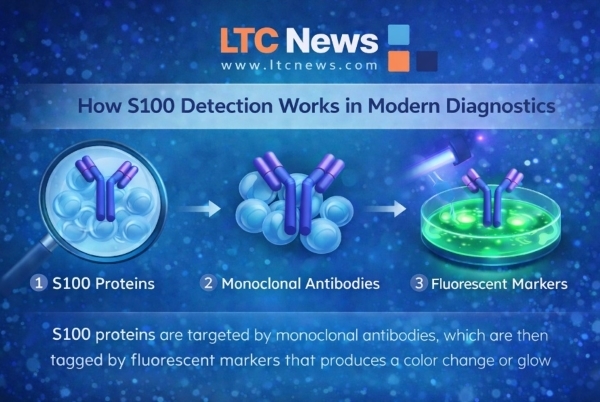
Finding a specific protein inside the body is not simple. Blood and tissue samples contain thousands of different molecules, many of which are structurally similar. To ensure researchers can easily detect these proteins, they use a specialized tool called the anti-S100 antibody.
Monoclonal antibodies solve that problem. They bring precision to a process that was once far less exact. Today, they are widely used in both clinical medicine and advanced research.
These advanced diagnostic tools are engineered to bind to a single, specific target—like a key designed for one lock. That precision allows doctors to isolate and identify proteins linked to disease with a high degree of accuracy.
This approach helps:
- Detect disease earlier, sometimes before symptoms appear
- Confirm diagnoses with greater confidence
- Monitor how a condition is progressing or responding to treatment
In cancer care, this precision can help determine whether a tumor is present and what type it is. In neurological cases, it can help identify whether symptoms are linked to injury, inflammation, or disease progression. That level of detail can shape treatment decisions and, in some cases, long-term care planning.
Biomarkers like S100 proteins are becoming increasingly important in detecting disease earlier and guiding treatment decisions, particularly in cancer and neurological conditions.

Seeing Disease at the Cellular Level
Doctors often need more than a lab result—they need to see where disease is happening. That’s where immunohistochemistry comes in. This technique allows specialists to examine tissue in detail and identify exactly where abnormal proteins are located.
The process involves:
- Examining a small biopsy sample in a lab
- Applying a targeted antibody to the tissue
- The antibody binds to the specific protein if it is present
- A visible color change highlights abnormal areas under a microscope
Instead of guessing, doctors can see the disease pattern directly.
Why This Matters
In melanoma, for example, S100 protein patterns help confirm the diagnosis and distinguish cancerous cells from normal tissue. This level of clarity is critical when determining treatment options and urgency.
The American Academy of Dermatology emphasizes that early detection remains one of the most important factors in improving melanoma outcomes.
You have a 99% survival rate over a five-year span if it’s detected early. — Stephanie Kauffman, president and COO of the Melanoma Research Alliance.
Measuring Protein Levels in Blood and Tissue
Location matters—but so does quantity. The amount of a protein in your blood or tissue can reveal how severe a condition is or how it is changing over time. Two key methods help doctors measure these levels:
Western Blot
Used primarily in research and specialized diagnostics, this method separates proteins by size and confirms the presence of specific markers associated with disease.
ELISA (Enzyme-Linked Immunosorbent Assay)
This widely used clinical test measures proteins in blood or fluid samples with high sensitivity. It can detect even very small changes in protein levels, making it especially useful in monitoring conditions like brain injury.
When brain cells are damaged, proteins such as S100B can enter the bloodstream. Tracking these levels helps doctors assess injury and monitor recovery alongside imaging and clinical evaluation.
Clinical Reality
No single test provides all the answers. These tools are part of a broader diagnostic picture that includes scans, physical exams, and medical history.
Why This Matters as You Age
The risk of many serious conditions increases with age—and so does the importance of catching them early. Advanced diagnostic tools are now playing a key role in:
- Identifying cancers earlier, when treatment is more effective
- Evaluating brain injuries from falls, which are a leading cause of disability in older adults
- Monitoring neurological changes that can affect memory and independence
For example, after a fall, these tests may help doctors determine whether a brain injury occurred—even if symptoms are subtle at first. The Centers for Disease Control and Prevention reports that falls are a leading cause of traumatic brain injury among older adults, often resulting in long-term complications, including loss of independence.
Earlier identification can lead to earlier treatment, which may:
- Slow disease progression
- Improve recovery
- Help you remain independent longer
Connection to Long-Term Care Planning
A diagnosis doesn’t just change your medical chart—it can change how you live day to day. Most people will need long-term services at some point in their lives: more longevity, higher risk.
You may eventually need:
- Assistance with basic activities like bathing or dressing
- In-home care to remain safely independent
- Supervision due to memory or cognitive issues
- Facility-based care if needs become more complex
Many families assume health insurance or Medicare will cover these costs. In reality, they only pay for short-term skilled care. If you have Long-Term Care Insurance, it provides guaranteed, tax-free benefits that can help pay for care at home or in a facility. However, you must have coverage in place before you start having substantial chronic health issues.
While medical advances can help serve as early warnings, greater longevity means a higher risk of needing help with daily life activities.
What You Should Do Now
You don’t need to understand every detail of lab testing—but you should understand what it means for your future.
Consider:
- Are you keeping up with routine screenings?
- Do you know how you would pay for extended care if needed?
- Are you prepared for a long life?
- Have you discussed a long-term plan with your family?
- Did you add Long-Term Care Insurance to your retirement plan?
Key Takeaways
- S100 proteins act as early wanring signals for disease.
- Monoclonal antibodies allow highly precise detection.
- Advanced testing supports earlier diagnosis and better outcomes.
- These tools work alongside, not instead of, other medical evaluations.
- Planning for long-term care is essential as health risks increase with age.
Medical Disclaimer
This content is for informational purposes only and should not be considered medical advice. Always consult with a qualified healthcare provider regarding any medical concerns or diagnostic testing.
Frequently Asked Questions
Can a blood test detect brain injury?
Certain biomarkers, like S100B, can support diagnosis, especially after a fall or trauma. However, imaging tests like CT scans and clinical evaluations are still required.
What is an S100 protein test used for?
It helps detect and monitor conditions such as melanoma and brain injury by identifying abnormal protein activity in tissue or blood.
Are these tests used routinely?
Some tests, such as ELISA-based blood tests, are used in clinical settings, while others are more commonly used in specialized care or research environments.
Does Medicare cover long-term care after a diagnosis?
No. Medicare only covers short-term skilled care. Long-term care—such as help with daily living—is typically paid out-of-pocket or through Long-Term Care Insurance.
What is S100B, and why is it important?
S100B is a specific protein often released into the bloodstream after brain injury. Measuring its levels can help doctors assess potential damage and monitor recovery.
Why is early detection important as you age?
Early detection can lead to faster treatment, better outcomes, and a greater chance of maintaining independence, reducing the likelihood of needing long-term care.

Sponsored