Love Relationships After 50: Situationships on the Rise

About This Article
As a society, we're enjoying greater longevity than ever before. Many individuals over 50 find themselves seeking companionships; however, a less committed type of relationship is growing in popularity.

Anna Marino
Anna Marino is a seasoned writer specializing in topics related to family, aging, and lifestyle in retirement. She shares advice on intergenerational relationships and strategies for enjoying retirement.
Table of Contents
- What is a Situationship?
- Future of Love for Older Adults?
- Why Situationships Appeal to Over-50s?
- Financial Considerations
- Finding Balance
- Situationships, Families, and the Complexities of Aging
- Uncertain Future for Adult Children
- Navigating Caregiving Responsibilities
- Love's Unexpected Turn
- Role of Communication
- A Tightrope Walk
- Frequently Asked Questions About Situationships After 50
Many adults over 50 are embracing a new relationship dynamic: the situationship. If you're over 50, you may have noticed that the dating landscape has shifted significantly. Gone are the days of traditional courtship rituals. Many adults over 50 have been there and done that; why repeat it?
However, just because you find yourself single and older doesn't mean you want to give up on life. Many older adults are finding themselves in flexible, undefined relationships that prioritize connection over commitment.
Situationships offer a refreshing alternative to conventional dating, allowing individuals to explore companionship without the pressures of labels or long-term expectations. As the dating scene evolves, so too does our understanding of what it means to form meaningful connections in the second half of life.
What is a Situationship?
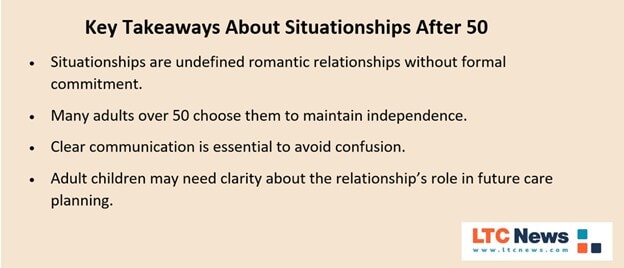
Unlike a committed relationship with clear expectations of exclusivity and long-term goals, a situationship exists in a gray area. Partners enjoy intimacy and companionship but without the pressure of labels or commitment.
A recent study by the Pew Research Center revealed that 38% of adults aged 50 and over are dating or in a committed relationship. However, experts suggest a significant portion of these relationships might fall under the situationship umbrella.
Future of Love for Older Adults?
The rise of situationships reflects a changing societal view of love and intimacy later in life.
For many over-50s, situationships offer a fulfilling and enriching way to connect without sacrificing their independence.
The bottom line is that not everyone knows where they stand with their romantic partner. Susan Albers, PsyD, a psychologist for Cleveland Clinic, says there are fewer obligations with a situationship.

Situationships contain the love and romance of a traditional relationship. Where they differ is that they do not contain traditional labels such as boyfriend, girlfriend. They have less obligations and are often not a committed relationship.
Dr. Albers said other signs of a "situationship" can include inconsistent communication, minimal future planning, and lack of growth. This means your relationship status will stay the same.
She said "situationships" can be a fun, low-pressure way to date while still remaining single.
However, they don't work for everyone. As she explains, our brains tend to love clarity and consistency.
And without that, you may feel anxious or confused.
If you find yourself in a situationship, you can take a pause and ask yourself, 'Is this meeting my needs and creating joy? Or is it causing anxiety and confusion?' Clear and open communication about your boundaries and expectations can help both parties to be on the same page.
Why Situationships Appeal to Over-50s?
Many adults over 50 have already experienced marriage, divorce, or loss. Situationships offer a way to enjoy companionship and intimacy without the complexities of a full-blown relationship.
This type of relationship has many benefits but can also come with challenges. Situationships can provide emotional support, social connection, and physical intimacy. However, challenges include uncertainty about the future, potential emotional investment without reciprocity, and the possibility of getting hurt.
Whatever type of relationship you have, you can improve it. Numerous resources, such as blogs and guides, offer practical tips for effective couples therapy sessions and for making them more productive. Many couples also turn to a marriage course to learn practical communication skills and strengthen their relationships outside of therapy sessions. Even older couples can improve their relationship, whether in a traditional marriage or a "situationship."
Financial Considerations
Financial independence is often a priority for older adults entering situationships. Experts say that open communication about finances is crucial. Each partner should be able to pay for their own dinner. A natural balance in sharing expenses should develop. While a disparity in resources doesn't mean the relationship can't work, financial dependence can alter the dynamic.
Discuss separate finances versus commingling funds, and expectations regarding shared expenses.
Finding Balance
Brittany Christopoulos is a writer and journalist who has written about situationships. Clear communication is crucial in navigating this type of relationship successfully. Discuss expectations and understand what type of relationship you have.
Here's what basically happens in a situationship: You're in a friends-with-benefits situation, you hook up fairly regularly, yet you find yourselves still doing the same things that normal couples do. You could be staying the night a few times a week, going to buy groceries together, and going to dinner with just the two of you.
She writes that it may sound similar to an almost-relationship, but there's a significant difference: there is never a "what are we" conversation. Things either progress naturally or remain as they are; there is no middle ground.
However, this type of relationship could be ideal for many older adults, especially if both parents are financially independent.
Situationships, Families, and the Complexities of Aging
Do you care what the family thinks? Would adult children get in the way of you enjoying a situationship? While you can enjoy a situationship for today, what happens when health or aging problems develop in the future?
While situationships offer a carefree dynamic for older adults, challenges arise when considering adult children and the realities of aging. Some people just don't care; however, for others, this could become an obstacle for the relationship. Adult children may worry about finances, inheritance, or whether a new partner truly has their parent’s best interests at heart.
Those concerns can create tension, especially if a casual relationship begins to play a larger role in daily life. As health needs, caregiving decisions, or living arrangements come into play later in life, what starts as a simple, no-strings relationship can quickly become more complicated than either person expected.
Uncertain Future for Adult Children
The lack of commitment in a situationship can leave adult children feeling apprehensive, especially as the parent gets older. Imagine needing long-term care. Will your situationship partner be there for the long haul, or will the relationship fizzle out when faced with the demands of caregiving? This ambiguity creates anxiety for adult children who might be responsible for their parents' well-being.
There are dating sites where ads include "have Long-Term Care Insurance." While this helps eliminate the problem, many people ignore the realities of aging and its impact on any type of relationship, especially one with less commitment. Who would have thought acquiring Long-Term Care Insurance could make you a better catch?
Navigating Caregiving Responsibilities
In a committed relationship, a partner would naturally be involved in caregiving decisions. In a situationship, the lines are blurred. Adult children might struggle to involve the situationship partner, be unsure of their commitment level, create tension, and complicate care planning.
In some circumstances, adult children are unaware of the situation and assume it is a more traditional, committed relationship because no one has ever defined it. That misunderstanding can create confusion if a health crisis occurs and decisions about extended care must be made quickly.
For that reason, it can be wise to have an honest conversation early about expectations if health needs arise. Who would be responsible for arranging care at home, researching assisted living, or hiring professional caregivers? Would the situationship partner want to be involved in daily support, or would that role fall primarily to family members or paid care providers? Clarifying those questions in advance helps avoid misunderstandings and ensures that everyone understands their role if long-term care needs eventually become part of the picture.
Love's Unexpected Turn
However, situationships can surprise everyone. A health crisis can sometimes solidify a bond. The situationship partner, initially hesitant, might step up and provide unwavering support and care.
Over time, even a less committed relationship may create a strong bond that creates traditional love. Love, compassion, and a sense of responsibility can blossom, leading to a deeper and more committed relationship during a challenging time.
As a result, the situationship partner steps up and helps as they can based on the other person's needs. However, as with traditional relationships, the role of caregiver is physically and emotionally demanding, and their role may become more supporting and loving.
Role of Communication
The key to navigating these complexities lies in open communication. Adult children should discuss their concerns with their parents who are involved in a situationship. Parents, in turn, need to be upfront with their situationship partner about their expectations and potential future needs. All parties can navigate these uncertainties with greater clarity and understanding by fostering honest conversations.
Experts in aging and caregiving consistently emphasize that early, honest conversations about care expectations help families avoid conflict and confusion later, especially when health needs emerge unexpectedly.
Caregiving decisions work best when families communicate early and openly about expectations, preferences, and responsibilities before a crisis occurs.” — Carol Levine, Director of the Families and Health Care Project, United Hospital Fund.
A Tightrope Walk
Ultimately, situationships present a tightrope walk for families navigating aging. While they offer companionship in the present, the lack of commitment can create significant challenges for everyone, including adult children when facing long-term care realities.
Love can, however, emerge unexpectedly, leading to a deeper bond forged in the face of adversity. Clear communication remains the essential tool for navigating these situations and ensuring the best possible outcome for everyone involved.
Frequently Asked Questions About Situationships After 50
What is a situationship in dating?
A situationship is a romantic or intimate relationship that lacks clearly defined expectations or long-term commitment. The people involved may spend time together and share emotional or physical intimacy, but they have not labeled the relationship or agreed on future plans.
For adults over 50, situationships often appeal because they provide companionship while allowing each person to maintain independence and established lifestyles.
Why are situationships becoming more common after age 50?
Many adults over 50 have already experienced marriage, divorce, or widowhood and may not want to repeat traditional relationship structures. Flexible relationships allow them to enjoy companionship without combining finances, households, or long-term obligations.
In addition, longer life expectancy and changing social attitudes mean dating later in life is increasingly common and socially accepted.
Are situationships healthy for older adults?
They can be healthy if both partners share the same expectations and communicate openly about boundaries and goals. Problems often arise when one partner wants commitment while the other prefers to keep things casual.
Experts note that clear communication and emotional honesty are essential for any relationship structure, especially when expectations are undefined.
What are the risks of situationships for adults over 50?
While situationships can be enjoyable, they can create complications later in life, particularly involving:
- Family dynamics with adult children
- Financial boundaries and estate planning
- Healthcare decisions and caregiving roles
- Unclear expectations about exclusivity or commitment
Without clear discussions, these issues can create confusion if health needs or major life decisions arise.
How should adult children approach a parent’s situationship?
Adult children should approach the topic respectfully and avoid assumptions. The most productive conversations focus on:
- Understanding the nature of the relationship
- Discussing future care expectations
- Clarifying financial boundaries and estate plans
- Ensuring the parent’s independence and well-being
Open conversations can prevent misunderstandings and protect family relationships.
Should couples in a situationship discuss long-term care planning?
Yes. Even casual relationships may intersect with health decisions as people age. Discussing potential caregiving roles, healthcare decisions, and financial responsibilities can help avoid confusion later.
For example, partners may want to clarify:
- Who would help coordinate care if health declines
- Whether the partner would be involved in medical decisions
- How adult children would be included in planning
These discussions help ensure everyone understands their role if long-term care needs arise.
Can a situationship turn into a committed relationship later?
Yes. Some situationships naturally evolve into long-term partnerships as emotional bonds grow. Others remain casual or eventually end when one partner wants a different type of relationship.
The key factor is whether both people want the same outcome and communicate their expectations honestly.
Is dating and intimacy normal after age 50?
Absolutely. Research shows many older adults remain interested in companionship, romance, and intimacy well into later life. Social attitudes have also shifted, making dating after 50 far more accepted than in previous generations.
Healthy relationships at any age can support emotional well-being, reduce loneliness, and improve quality of life.

Sponsored