How to Prevent Bedsores at Home: A Family Caregiver's Guide

About This Article
Bedsores are a big concern for older adults, whether being cared for at home or in a long-term care facility. Regular repositioning, proper skin care, and supportive equipment can help protect your loved one from painful and potentially serious pressure injuries.

Linda Maxwell
Linda Maxwell is a journalist who writes about aging, health, chronic illness, caregiving, and long-term care issues impacting older adults and their families.
Table of Contents
- What Are Bedsores and What Do They Look Like?
- Who Is Most at Risk of Developing Bedsores?
- How Often Should You Reposition Someone to Prevent Bedsores?
- Protect Your Loved One's Skin
- Nutrition and Hydration Help Prevent Bedsores
- When Should You Seek Medical Help for Bedsores?
- Check on Loved Ones in Long-Term Care Facilities
- Protect Your Own Health as a Family Caregiver
- Does Medicare Cover Care for Bedsores?
If your aging parent or spouse spends much of the day in bed or sitting in a chair, a seemingly minor change in their skin could signal a serious health problem. Ignoring the issue can lead to medical complications and reduce their quality of life.
Bedsores, also known as pressure injuries or pressure sores, can develop when someone has difficulty moving or changing positions independently. They can be painful, slow to heal, and can lead to serious infections.
Pressure injuries most often affect older adults who are sedentary or living with dementia, as well as residents of nursing homes, hospital patients, and people with disabilities, including those with spinal cord injuries, said Patrick J. Flynn, MD, a board-certified general surgeon and wound care specialist who serves as medical director of Cape Cod Healthcare's Wound Care Centers in Hyannis and Bourne.
Although bedsores often develop gradually, they can appear within just a few hours. Many bedsores are preventable. Knowing what to look for, how to protect vulnerable areas of the body and when to seek professional help can make caregiving at home safer for both you and your loved one.
Always follow your loved one's care team's recommendations, as prevention and treatment needs vary.
What Are Bedsores and What Do They Look Like?
A pressure injury occurs when sustained or intense pressure damages the skin or underlying tissue. Shear, which occurs when skin and deeper tissue move in different directions, can make the damage worse.
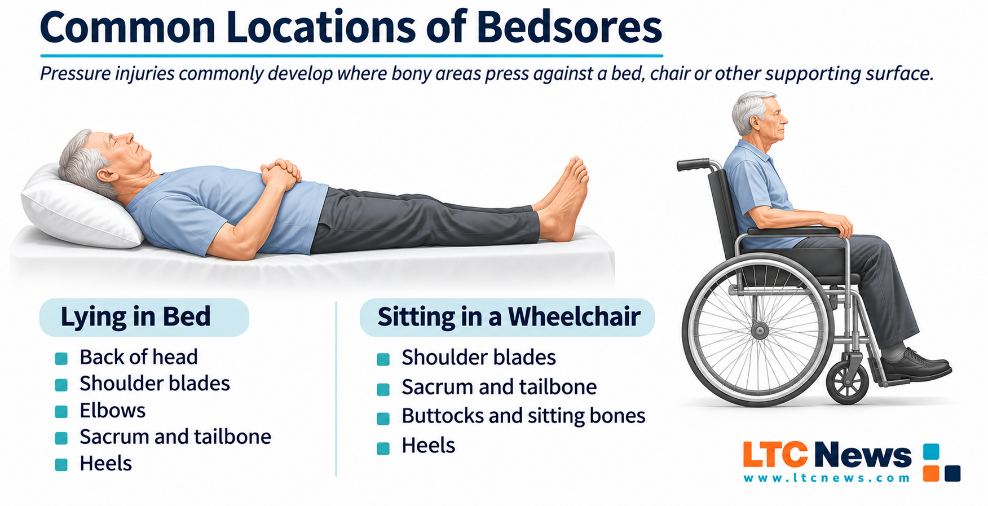
Bedsores commonly develop over bony areas, including the heels, hips, tailbone, elbows, shoulder blades, and back of the head. They can also develop beneath medical devices, such as oxygen tubing, braces and splints.
Early warning signs include:
- Redness or discoloration that doesn't fade after pressure is relieved
- Skin that feels warmer or cooler than surrounding areas
- Tenderness, swelling or changes in skin firmness
- Blisters or broken skin
On darker skin, affected areas may appear purple, blue, or darker than surrounding skin. Changes in temperature, texture and tenderness are also important warning signs.
Who Is Most at Risk of Developing Bedsores?
Anyone with limited mobility has an increased risk of developing pressure injuries. Those particularly vulnerable include:
- Older adults with fragile skin
- People who spend extended periods in bed or a wheelchair
- Individuals recovering from surgery or serious illness
- People with diabetes, poor circulation or reduced sensation
- Individuals experiencing malnutrition, dehydration or incontinence
Some pressure injuries develop despite appropriate care, particularly among people with advanced frailty, serious illness, or impaired circulation. A pressure injury does not automatically mean a caregiver has done something wrong.
Some pressure injuries develop despite appropriate care, particularly among people with advanced frailty, serious illness, or impaired circulation, according to Dr. Jeffrey M. Levine, a clinical professor of geriatrics and palliative medicine at the Icahn School of Medicine at Mount Sinai.
Pressure injury prevention remains an essential responsibility of healthcare professionals. Yet even well-delivered prevention cannot guarantee that tissue breakdown will not occur, particularly in the sickest and most vulnerable patients. The bottom line is that a pressure injury is not by itself proof of inadequate care." — Dr. Jeffrey M. Levine.
How Often Should You Reposition Someone to Prevent Bedsores?
The National Library of Medicine's MedlinePlus recommends changing positions in bed about every two hours and shifting weight in a wheelchair about every 15 minutes. However, no single schedule works for everyone.
Ask your loved one's nurse or care team for a repositioning schedule based on their mobility, skin condition, overall health, and pressure-relieving equipment. Avoid dragging your loved one across a bed or chair, which can damage fragile skin. With proper training, use a draw sheet or appropriate lifting equipment to help reposition them safely.
Specialized mattresses, wheelchair cushions, and pressure-relieving pillows and positioning aids can help distribute weight and protect vulnerable areas. Ask your loved one's care team to recommend equipment appropriate for their needs.
When recommended by the care team, pillows placed beneath the lower legs can keep the heels completely off the mattress. Pillows can also prevent knees and ankles from pressing against each other. Avoid donut-shaped cushions, which can concentrate pressure and interfere with circulation.
When medically appropriate, keep the head of the bed at 30 degrees or lower to reduce sliding and shear, as recommended by the International Pressure Injury Guideline. Some medical conditions require greater elevation, so follow your loved one's care team's instructions. When seated, their feet should be supported. Pressure-relieving equipment does not replace regular repositioning.
Protect Your Loved One's Skin
Check your loved one's skin daily, paying particular attention to bony areas and skin beneath medical devices when accessible.
The following practices can help protect fragile skin:
- Use gentle, pH-balanced cleansers and pat the skin dry.
- Change incontinence products promptly.
- Use moisture barrier creams as recommended.
- Moisturize dry skin.
- Avoid massaging skin over bony areas.
MedlinePlus provides additional guidance on skin care and pressure injury prevention.
Nutrition and Hydration Help Prevent Bedsores
Adequate protein, calories, vitamins, and minerals help maintain healthy skin and support wound healing. Encourage regular fluid intake unless your loved one has medically prescribed fluid restrictions. Speak with their doctor or a registered dietitian if they have difficulty eating, a poor appetite or unexplained weight loss.
When Should You Seek Medical Help for Bedsores?
Contact your loved one's doctor or home health nurse promptly if you notice persistent discoloration, blisters or broken skin. Seek urgent medical attention if a wound becomes deeper or larger, develops an unpleasant odor or pus, or shows signs of infection, including spreading redness, warmth, increasing pain or fever.
New confusion, rapid breathing, or a sudden deterioration in health, particularly when an infection is suspected, may signal sepsis, a life-threatening medical emergency. Call 911.
Check on Loved Ones in Long-Term Care Facilities
Bedsores can also develop in assisted living facilities, memory care communities and nursing homes, even when professional care is provided. If your loved one has limited mobility, ask the staff about their repositioning schedule, skin assessments, pressure-relieving equipment, and nutritional needs.
During visits, watch for changes in skin color, complaints of pain or discomfort, and signs that your loved one has remained in the same position for extended periods. If you notice a potential pressure injury, bring it to the care team's attention promptly. Ask how it will be assessed, treated, and monitored.
If your concerns remain unresolved, contact your state's Long-Term Care Ombudsman Program, which advocates for residents and helps resolve complaints about care.
Protect Your Own Health as a Family Caregiver
Frequent repositioning, bathing, toileting, and transferring a loved one can be physically demanding, particularly if you are an older caregiver yourself.
Never attempt a transfer that exceeds your physical abilities. Professional in-home caregivers can assist with personal care and repositioning, while skilled nurses and wound care specialists can assess and treat pressure injuries.
Respite care can also give you time to rest and attend to your own health. The federal Eldercare Locator connects families with local caregiver support services. The LTC News Caregiver Directory has over 80,000 caregivers and long-term care facilities you can search by ZIP code to find respite care.
As your loved one's mobility declines, you may need professional help to keep them safe and comfortable without jeopardizing your own health.
Does Medicare Cover Care for Bedsores?
Medicare covers qualifying skilled care but does not cover ongoing custodial long-term care when that is the only care you need. If your loved one is homebound and meets other eligibility requirements, Medicare's home health benefit may cover part-time or intermittent skilled nursing visits, including wound care for pressure sores. A health care provider must order the services, and a Medicare-certified home health agency must provide them.
Original Medicare's skilled nursing facility coverage generally requires a medically necessary inpatient hospital stay of at least three consecutive days. Coverage is available for up to 100 days per benefit period, with daily coinsurance beginning on day 21. After day 100, you are responsible for all costs unless you have other coverage. Certain exceptions to the hospital stay requirement apply.
Medicaid provides long-term care benefits for individuals who meet state-specific financial and functional eligibility requirements. Long-Term Care Insurance can provide tax-free benefits for qualifying care at home or in a facility, including on-going skilled care, helping families arrange professional assistance without placing the entire caregiving responsibility on a spouse or adult child.
Learn More: How Does Long-Term Care Insurance Work?
As more Americans age, an increasing number of families find themselves caring for an older parent who never made a plan for long-term care. Too often, a spouse, daughter, son, or other loved one becomes the default caregiver with little preparation for the demands that role can bring. If you find yourself in that position, be realistic about your ability to provide the care your loved one needs and seek professional help when necessary to improve their safety, comfort, and quality of life.
If they own a Long-Term Care Insurance policy, make sure those benefits are being used as intended to help pay for care and ease the burden on family members. Most importantly, let the experience serve as a reminder to think about your own future. Planning for long-term care before a health crisis occurs can help protect your independence, preserve family relationships, and ensure better choices when care is eventually needed.
Frequently Asked Questions
Can Long-Term Care Insurance pay for caregivers who help prevent bedsores?
Yes. Comprehensive Long-Term Care Insurance covers qualifying personal care services, including assistance with bathing, toileting, transfers, and repositioning, once the policyholder meets the policy's benefit eligibility requirements and other applicable provisions.
Does Medicare cover a pressure-relieving mattress?
Medicare Part B may cover medically necessary pressure-relieving mattresses and mattress overlays as durable medical equipment when coverage requirements are met. Certain products require prior authorization from Medicare.
How often should a bedridden person be repositioned?
About every two hours is a common recommendation, but individual needs vary. Your loved one's care team should establish an appropriate repositioning schedule.
Can bedsores heal completely?
Yes. Early-stage pressure injuries (stages 1 and 2) can often heal with proper care. More advanced injuries (stages 3 and 4) involve deeper tissue damage, may take considerably longer to heal and can require specialized wound care. Some severe wounds may not heal completely.
Are bedsores a sign of nursing home neglect?
Not necessarily. Some pressure injuries develop despite appropriate care. However, inadequate repositioning, poor skin care, delayed treatment, or failure to follow an established care plan may indicate neglect and warrant further investigation.
How fast can a bedsore develop?
Bedsores can develop within hours in someone who cannot move independently. Poor circulation, fragile skin and serious illness can increase the risk.

Sponsored