How Seniors Can Safely Sell Unused Jewelry to Pay for Care, Bills, or Retirement Needs
About This Article
Many seniors have valuable jewelry tucked away in drawers or jewelry boxes. Selling unused pieces can help pay for caregiving, medical bills, or retirement expenses—if you take the right precautions.

Anna Marino
Anna Marino is a seasoned writer specializing in topics related to family, aging, and lifestyle in retirement. She shares advice on intergenerational relationships and strategies for enjoying retirement.
Table of Contents
- Why Many Seniors Consider Selling Jewelry
- Start With the Emotional Side
- Understand What Jewelry Is Actually Worth
- Decide What to Sell and What to Keep
- Your Options for Selling Jewelry
- Protect Yourself from Scams or Lowball Offers
- Understand Possible Tax Implications
- Selling Jewelry Can Help Support Long-Term Care
- Make the Process Manageable
- Focus on What You’re Gaining
- Turning Old Treasures into New Security
You open the drawer and see it immediately, that velvet jewelry box you haven’t touched in years. Inside are rings from another chapter of life, tangled necklaces, and single earrings that lost their partners long ago. Some pieces belonged to you. Others may have come from parents or relatives. They carry memories, but they may also hold real financial value.
For many adults over 50, selling unused jewelry can become a practical way to turn forgotten assets into financial support. The money might help pay for in-home care, medical expenses, home modifications, or provide extra breathing room in retirement.
The key is doing it carefully.
Before you sell anything, you should understand what it’s worth, how the selling process works, and how to protect yourself from low offers or scams.
Why Many Seniors Consider Selling Jewelry
Retirement often brings a shift in priorities. Items that once symbolized milestones may sit unused while other needs become more important.
Selling jewelry can provide funds for:
- Everyday bills during retirement
- Vacations
- Gifts for family
- Charity
- In-home caregiving
- Medical treatments or therapy
- Home safety upgrades for aging in place
- Assisted living expenses
- Emergency savings
Many families discover that small personal assets can make a meaningful difference.
Many seniors are surprised to discover that small assets, such as unused jewelry, can provide meaningful financial support. When handled thoughtfully, these decisions can provide peace of mind without sacrificing the memories attached to the items.
Professional appraisers say that understanding the real value of personal items can prevent costly mistakes. Antiques expert Dr. Lori Verderame, a nationally known appraiser and television personality, encourages people to learn as much as possible about items before selling them.
One of the best things to do when selling a vintage piece or antique object is to know as much as you can about your object. — Dr. Lori Verderame.
For families facing rising care costs, every resource matters.
Start With the Emotional Side
Jewelry rarely represents just metal and gemstones. It often marks major life moments:
- Wedding rings
- Anniversary gifts
- Family heirlooms
- Graduation or retirement pieces
- Jewelry passed down through generations
That emotional connection can make selling difficult. A helpful approach is to sort jewelry into three groups:
- Items you still wear
- Pieces you want to keep for sentimental value
- Items you are comfortable selling
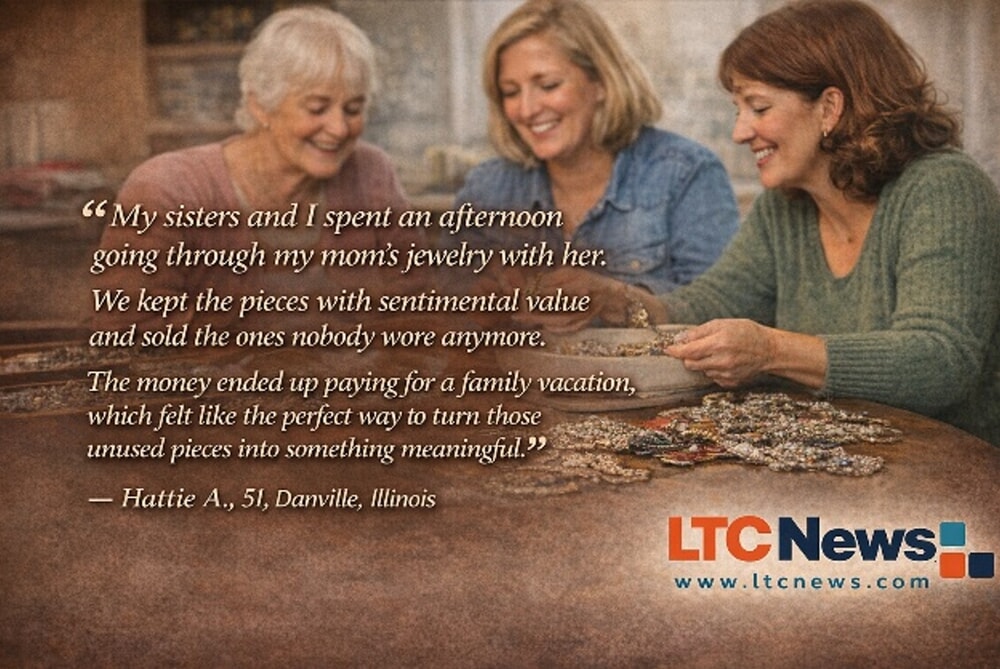
In many families, it helps to include adult children or caregivers in the conversation. What looks like an unused item to one person may hold deep emotional meaning to another. On the other hand, something you assumed no one wanted might become a treasured heirloom for a grandchild.
Offering pieces to family members first can prevent regret later.
Share your thoughts and experiences about aging, caregiving, health, retirement, and long-term care with LTC News —Contact LTC News.
Understand What Jewelry Is Actually Worth
One of the biggest surprises for sellers is this: Emotional value and market value are very different things. The price of jewelry depends mainly on five factors:
- The weight and purity of the metal (gold, silver, platinum)
- The quality and type of gemstones
- The craftsmanship
- The rarity
- And the condition and age
One of the biggest surprises for many sellers is the gap between emotional value and market value. Jewelry that carries deep personal meaning may not command the same price in the resale market.
One of the most common questions I get as an appraiser is why resale values are so different from what people expect. Differences in the definition of value are almost always at the heart of this misunderstanding. — Neil Beaty, a professional jewelry appraiser with the American Gem Registry.
Jewelry buyers typically determine value based on several factors:
- Metal content and purity (gold, silver, platinum)
- Weight of the metal
- Gemstone quality (size, clarity, color, cut)
- Craftsmanship or designer brand
- Condition and rarity
A simple gold chain may be worth more than a decorative costume piece. Likewise, a plain platinum band may have significant metal value even without gemstones.
Before selling anything, you should consider getting:
- A professional appraisal
- Estimates from multiple buyers
- A valuation from a certified jeweler
Even a basic understanding of value can help you avoid accepting a price far below what your jewelry may be worth.
Decide What to Sell and What to Keep
You do not have to sell everything. Many seniors choose to keep pieces with strong family meaning while selling items they no longer use.
Common pieces people choose to sell include:
- Broken jewelry
- Single earrings
- Outdated styles
- Multiple similar pieces
- Jewelry that is no longer worn
Starting with these items often makes the process easier emotionally.
It also helps you gradually understand the selling process before making decisions about higher-value pieces.
Your Options for Selling Jewelry
There are several ways to sell jewelry, and each option has advantages and drawbacks.
Local Jewelers
Local jewelry stores may buy gold and estate jewelry.
Pros
- Immediate payment
- In-person evaluation
Cons
- Offers can vary significantly
Pawn Shops
Pawn shops offer quick cash but usually pay less.
Pros
- Fast transactions
Cons
- Often, the lowest offers
Estate Jewelry Buyers or Auction Houses
These may work well for valuable or collectible pieces.
Pros
- Better exposure for rare items
Cons
- Fees and longer timelines
Online Marketplaces
For those comfortable with technology, some seniors choose to sell it online via The Alloy App, which allows items to reach a broader audience without needing to visit multiple buyers. Selling online can reach more buyers and sometimes produce higher offers. The key advantage of online selling is visibility. More eyes often mean better offers.
Whichever route you choose, the rule stays the same: compare options before accepting the first price.
Pros
- Larger audience
- Potentially stronger prices
Cons
- Requires photographs, listings, and patience
Some online selling platforms connect sellers with multiple buyers, allowing you to compare offers without visiting multiple stores.
Protect Yourself from Scams or Lowball Offers
Unfortunately, the jewelry market can attract dishonest buyers.
Before selling, take precautions.
Protect yourself by:
- Getting multiple offers
- Researching buyers and reading reviews
- Avoiding pressure to sell immediately
- Keeping documentation and receipts
- Photographing items before selling
If you sell online:
- Use secure payment platforms
- Ship items with insurance and tracking
- Keep copies of communications
If an offer feels rushed or suspicious, it is wise to walk away.
Understand Possible Tax Implications
In many cases, selling personal jewelry does not create significant tax consequences, especially if the item sells for less than its original purchase price.
However, high-value pieces or collections may have tax implications.
You may want to speak with:
- A financial advisor
- A tax professional
- An estate planner
These professionals can explain how the proceeds may affect your finances or estate planning.
Selling Jewelry Can Help Support Long-Term Care
For many families, the biggest expenses later in life involve extended care needs. With Long-Term Care Insurance, you will be responsible for paying for these expenses yourself, unless you qualify for Medicaid due to limited financial resources.
These long-term care services may include:
- Help with bathing or dressing
- Home health aides
- Assisted living
- Memory care
- Nursing home care
Looking for long-term care services for a loved one? Use the LTC News Caregiver Directory.
You can explore extended care costs in your area using the LTC News Cost of Care Calculator.
Selling unused assets, including jewelry, can help cover early care costs or bridge financial gaps.
Make the Process Manageable
Sorting through decades of belongings can feel overwhelming.
Instead of tackling everything at once:
- Start with one drawer
- Work through one jewelry box
- Spend one afternoon at a time
Caregivers can help with research, pricing, and online listings. However, allowing older adults to participate in the process preserves independence and dignity. Some families even turn the process into an opportunity to share stories and memories connected to different pieces.
Focus on What You’re Gaining
It is easy to focus on what you are letting go of. But many people find the process empowering.
Selling unused jewelry can provide:
- Financial flexibility
- Less clutter
- Peace of mind
- Support for independence
In some families, the proceeds help a loved one remain safely at home longer. In others, they help reduce financial stress during retirement. Those benefits often outweigh the loss of items that were rarely worn.
Frequently Asked Questions
What is the safest way to sell jewelry online?
The safest approach is to use reputable marketplaces or established jewelry buyers with verified reviews and clear policies. Always document items with photos, use insured shipping, and keep records of all communications and receipts. Secure payment methods and buyer protections can also reduce risk.
Should I offer jewelry to family members before selling it?
Many families choose to ask children or grandchildren if they want heirloom jewelry before selling it. This can preserve sentimental pieces while allowing other items to be sold. Once family members choose what they want, it often becomes easier to part with the remaining items.
Do I have to pay taxes when selling personal jewelry?
In many cases, people do not owe taxes if the jewelry sells for less than its original purchase price. However, high-value pieces or collections may have tax implications. A tax professional can help determine whether reporting the sale is necessary.
Where can seniors sell old jewelry for the best price?
Common options include local jewelers, estate jewelry buyers, auction houses, and online marketplaces. Each option has advantages depending on the type and value of the jewelry. Comparing several offers can help you receive a fair price.
Turning Old Treasures into New Security
Your memories are not stored in gold or gemstones. They live in your experiences, your family, and the life you built. If selling a piece of jewelry helps pay for caregiving, medical support, or simply greater financial comfort, it does not diminish those memories. It transforms unused belongings into something valuable today.
Before making a decision, take your time, learn the value of what you have, and explore your options.
Can selling jewelry help pay for long-term care expenses?
Selling unused jewelry may help cover smaller expenses such as home modifications, caregiving support, or medical bills. However, long-term care costs can be significant, so jewelry sales are usually just one part of a broader financial plan. Many families explore savings, home equity, or Long-Term Care Insurance to help cover extended care needs.
How can I tell if my jewelry is real gold or platinum?
Authentic precious metals usually contain small markings called hallmarks that indicate purity, such as 10K, 14K, 18K, or 24K for gold and PT or PLAT for platinum. However, hallmarks alone are not always proof of authenticity. A jeweler or professional appraiser can test the metal and confirm whether the piece is genuine.
How can seniors avoid scams when selling jewelry?
Research buyers before selling and check online reviews or business credentials. Avoid anyone pressuring you to sell immediately or refusing to explain how they calculated the price. Reputable buyers should provide written documentation and clear payment terms.
What types of jewelry usually sell for the most money?
Jewelry made with precious metals such as gold, platinum, and silver tends to hold value because of its metal content. Diamonds, gemstones, and pieces from recognized designers may also command higher resale prices. Even broken jewelry may still have value based on its metal weight.
How much do jewelers typically pay for old gold jewelry?
Most buyers pay based on the current market value of the gold content, often called the melt value. The offer is usually a percentage of that value rather than the original retail price. Getting quotes from multiple buyers can help ensure you receive a competitive offer.
How do I know if my old jewelry is valuable?
The value of old jewelry depends on the metal content, weight, gemstone quality, craftsmanship, and condition. Gold, platinum, and diamonds typically hold the most resale value, while costume jewelry may have limited worth. Getting estimates from multiple buyers or a professional appraisal can help you understand its market value.
Is it better to sell jewelry to a jeweler or a pawn shop?
Some families are forced to sell off jewelry to pay for a parent's long-term care because there was no plan in place, like Long-Term Care Insurance. Jewelers often specialize in evaluating precious metals and gemstones, which may result in more accurate offers for valuable pieces. Pawn shops may provide faster transactions but often focus on quick resale and may offer lower prices. Comparing offers from multiple buyers can help ensure you receive a fair value.
Should I get jewelry appraised before selling it?
For valuable pieces, an appraisal can help you understand what the item may be worth before accepting an offer. While not always required, an appraisal can help prevent selling a piece for significantly less than its potential value. For everyday gold jewelry, some sellers simply compare offers from several buyers.


Sponsored