How Much Should You Volunteer After Retirement? Research Points to a Surprising Sweet Spot
About This Article
How much volunteering is enough after retirement? Research suggests that just two hours a week may support brain health, social connections, and healthy aging. Discover why giving your time to others may benefit you, too.

Beth Rush
Beth Rush writes about health and wellness to help readers learn how to make healthier lifestyle choices.
Table of Contents
- Volunteering Is More Common Than You Might Think
- Why Volunteering May Be Good for Your Health
- Staying Connected With Other People
- Keeping Your Brain Active
- Could Volunteering Help You Age More Slowly?
- How Many Hours of Volunteering Make a Difference?
- Finding a New Sense of Purpose After Retirement
- Where Can Older Adults Volunteer?
- AmeriCorps Seniors
- Volunteering Doesn't Solve Every Problem
- Finding Volunteer Work That Fits Your Life
- Sometimes a Little Time Means a Lot
For years, your days may have revolved around work, raising children, getting everyone where they needed to be, and squeezing in a little time for yourself.
You packed lunches before sunrise. You answered emails from the car line. You remembered dentist appointments, permission slips, birthday gifts, and which child needed new shoes. Later, maybe you drove your mother to her doctor visits or sat with your father in the hospital waiting room.
You were needed. Constantly.
Then one morning, the alarm doesn’t go off because you didn’t set it. The house is quiet. The calendar on the refrigerator has more white space than you’ve seen in 40 years. At first, it feels like a gift. You linger over coffee. You read the whole newspaper, albeit on your tablet. You finally tackle that closet and get it cleaned out and organized.
But after a few weeks or a few months, something else creeps in. A question you may not say out loud: Who am I now that no one needs me the way they used to?
You are not alone in feeling that way. Many women spend so long caring for everyone else that they lose track of what fills their own cup. Retirement doesn’t erase the part of you that wants to help, teach, nurture, or lead. It simply frees that part of you to choose where it goes next. For many retirees, volunteering is where they find it again.
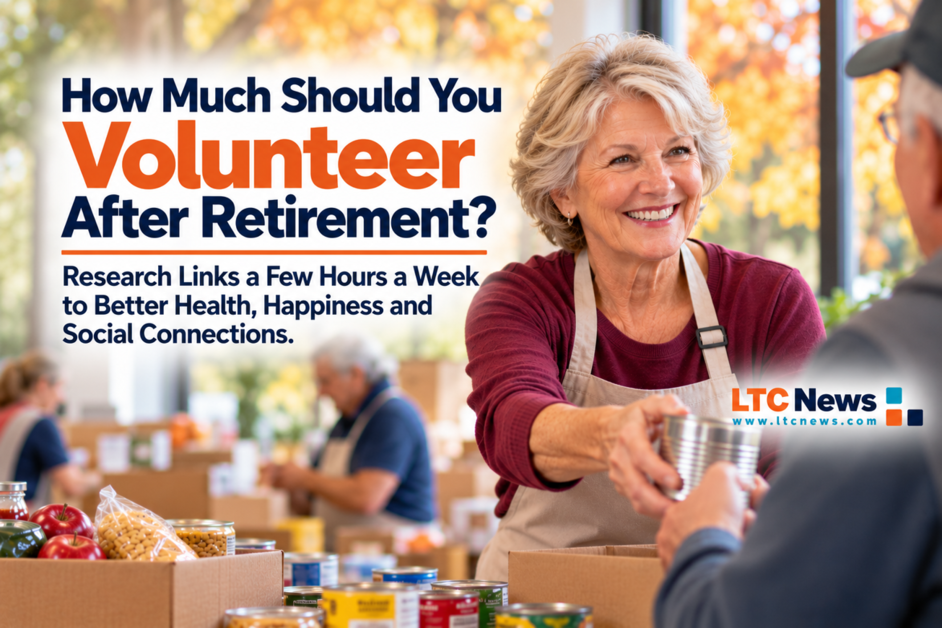
Maybe it's reading to children at a local school, helping at a food pantry, or spending a few hours keeping an older neighbor company. What begins as a way to help someone else can become something you look forward to each week. It may also offer health benefits.
Research suggests volunteering is linked to stronger social connections, better cognitive function, and, in some measures, slower biological aging. But how much time do you need to give?
One benchmark researchers have examined is about two hours a week, or roughly 100 hours annually. Some studies have found benefits associated with smaller commitments, while others suggest additional advantages among people who volunteer more often. There isn't a magic number. The important thing is finding an activity you enjoy that fits comfortably into your life.
Volunteering Is More Common Than You Might Think
Volunteering doesn't necessarily mean joining a charity or signing up for a weekly shift. Some people tutor children, help at church, visit patients in hospitals, prepare meals, or help at animal shelters. Others drive neighbors to appointments, pick up groceries, or check on someone who lives alone.
Researchers generally distinguish between two types of volunteering and helping:
- Formal volunteering involves giving unpaid time through an organization, such as a hospital, school, food bank or nonprofit.
- Informal helping involves assisting friends, neighbors or others outside an organized volunteer program.
Both can make a difference. According to the U.S. Census Bureau and AmeriCorps, 28.3% of Americans age 16 and older volunteered through an organization between September 2022 and September 2023. That's up from 23.2% in 2021, a 22.1 percentage-point increase over two years. More than half of Americans also reported helping or exchanging favors with neighbors during the 2022–2023 survey period.
Researchers often focus on formal volunteering when examining health benefits because participation and hours are easier to measure.
Why Volunteering May Be Good for Your Health
Helping others can feel rewarding on its own. But volunteering may also provide what older adults sometimes lose after retirement: regular social contact, opportunities to learn, and reasons to stay active. Jamilyn Murphy-Hughes, LCSW, associate vice president of Community Services at Northern Light Acadia Hospital says volunteering offers far more than a chance to meet new people. It can help you build new skills, reduce stress, and even support cognitive health as you age.
Increased socialization, increased physical activity, being around those with shared interests – all of this leads to lower stress levels, improved cognition, improved sense of wellbeing, better physical health and an overall general improvement in mood.”—Jamilyn Murphy-Hughes, LCSW.
Staying Connected With Other People
Think about how many conversations happen during an ordinary workday. You might chat with a co-worker, share lunch with someone, or exchange a few words with people you see regularly. After retirement, those everyday interactions can disappear. Even people with close families and longtime friends may find themselves spending more time alone than they expected.
Volunteering offers another way to meet people. A regular shift at a library, hospital or community organization brings familiar faces into your week. You may meet people with similar interests or develop friendships with other volunteers. And for someone who lives alone, having a place to go where people know your name can mean a great deal.
AmeriCorps Seniors reports that 88% of volunteers who initially felt a lack of companionship said they felt less isolated after volunteering. That doesn't mean volunteering will eliminate loneliness for everyone. But it can create opportunities for the kind of regular human contact that makes daily life more enjoyable.
Keeping Your Brain Active
Volunteering often involves more mental activity than people realize. You might learn a new computer system, remember names, organize supplies, explain something to a child, or figure out how to solve an unexpected problem. Those activities give your brain a workout.
In 2023, researchers at UC Davis examined volunteering habits among 2,476 older adults whose average age was 74. They found that volunteers performed better on tests of memory and executive function, which includes the ability to plan, concentrate, and manage tasks. People who volunteered several times a week had the highest executive function scores.
The UC Davis research suggests volunteering may be one way to support cognitive health as people age. However, the findings do not prove that volunteering prevents Alzheimer's disease or other forms of dementia. Healthier people may also be more likely to volunteer.
Still, finding activities that keep you learning, interacting with others, and using your skills can be a worthwhile part of retirement.
Could Volunteering Help You Age More Slowly?
Researchers are also studying whether volunteering is associated with biological aging. Your chronological age is how many years you've lived. Biological aging refers to changes in the body that occur over time.
Scientists can estimate aspects of biological aging by examining chemical changes associated with DNA, using measurements called epigenetic clocks.
A 2024 study from Washington University in St. Louis examined volunteering and biological aging among older adults using data from the national Health and Retirement Study. Researchers found that people who volunteered tended to have slower epigenetic age acceleration than nonvolunteers. Cal Halvorsen, an associate professor at the Brown School and Washington University, said the impact of a moderate level of volunteering was especially noticeable among retirees who volunteered moderate amounts of time.
It’s quite possible that the act of volunteering provided a sense of social and meaningful interaction, and physical activity, that those who were still working were already receiving." — Dr. Cal Halvorsen.
It's an interesting finding, but it doesn't prove that volunteering slows the aging process. Other differences in health, activity, and lifestyle may help explain the results.
How Many Hours of Volunteering Make a Difference?
If you're wondering whether an hour or two a week is worth the effort, the research offers some encouragement. A 2023 study published in the International Journal of Nursing Sciences examined information from 2,862 participants in the U.S. Health and Retirement Study.
Researchers compared people who didn't volunteer with those who volunteered fewer than 100 hours annually and those who volunteered at least 100 hours. In one period examined, both volunteer groups showed increases in moderate physical activity. The group volunteering at least 100 hours also showed increased participation in mentally stimulating activities compared with nonvolunteers.
Across the study, volunteering was associated with changes in activities that may support cognitive health. The published research suggests that volunteering may encourage older adults to stay mentally and physically engaged. Washington University's biological aging study examined different levels of participation.
Among retirees, volunteering between 50 and 199 hours annually, roughly one to four hours weekly, was significantly associated with slower epigenetic age acceleration. Volunteering more than 200 hours annually was associated with the greatest reduction overall. But more hours aren't necessarily better for every person.
The studies examined different health outcomes, and neither established a specific amount of volunteering that guarantees better health. If you're just getting started, one or two hours a week may be enough to establish a routine without making a major commitment. You can always do more if you find something you love.
Finding a New Sense of Purpose After Retirement
For some people, leaving work is an easy adjustment. They have hobbies, travel plans, grandchildren to visit, and plenty of things they've been waiting to do. Others discover they miss being needed.
Your sense of purpose can grow clearer after retirement and feel more personal and more closely tied to your values. It may not be the job itself they miss, but the satisfaction of solving a problem, helping someone or knowing they made a difference. Volunteering can bring some of that satisfaction back.
A retired teacher might enjoy helping children learn to read. Someone who worked in accounting could help a nonprofit manage its records. A person who loves gardening might volunteer at a community garden. And there's no reason to limit yourself to what you did for a living. Retirement can be an opportunity to try something entirely different. The reward might be a new friendship, a skill you never expected to learn or the smile on someone's face when you arrive.
Where Can Older Adults Volunteer?
You don't have to look far to find organizations that could use help. Libraries, schools, hospitals, food banks, animal shelters, and community centers often depend on volunteers. Some programs are designed specifically for older adults.
AmeriCorps Seniors
AmeriCorps Seniors connects adults age 55 and older with volunteer opportunities across the United States. Its three major programs offer different ways to participate:
- Foster Grandparent Program: Volunteers tutor, mentor, and support children and young people who need additional assistance.
- Senior Companion Program: Volunteers provide companionship and practical assistance to older adults and others who need support.
- RSVP: Volunteers help local organizations with activities such as food distribution, educational programs, community projects, and disaster assistance.
Some eligible Foster Grandparent and Senior Companion volunteers may receive a modest, tax-free stipend. The amount of time required depends on the program and assignment. RSVP offers opportunities for people who prefer more flexible schedules.
You can also search for volunteer positions through Idealist, which combined with VolunteerMatch in 2025. Many organizations now offer remote opportunities for people who prefer to help from home.
Volunteering Doesn't Solve Every Problem
Researchers at the University of Rochester studied whether volunteering could help reduce loneliness among older adults. The study, called Helping Older People Engage (HOPE), included 291 adults age 60 and older who reported feeling lonely. The study involved 291 adults age 60 and older who reported loneliness.
Participants were randomly assigned to either an AmeriCorps Seniors volunteering program or a self-guided activity that involved reflecting on and writing about their lives. Both programs were designed to last 12 months. Participation turned out to be difficult. Only 9% of those assigned to volunteering completed the minimum expected amount of service, and 30% never began volunteering.
Researchers found that loneliness decreased and quality of life improved in both groups. However, neither approach performed significantly better than the other, and participants generally continued to experience clinically significant loneliness.
The University of Rochester findings suggest that simply referring someone to a volunteer program may not be enough. For a person who has become very isolated, getting started can be difficult. Transportation, health problems, anxiety about meeting new people, or other challenges may stand in the way.
Sometimes the first step is much smaller, such as attending a community event with a friend or joining a group activity before taking on a regular commitment.
Finding Volunteer Work That Fits Your Life
The best volunteer opportunity is one you enjoy, not something you feel obligated to do. Before signing up, think about what interests you and how much time and energy you realistically want to give.
A few things can help:
- Start small. Try an hour or two a week before agreeing to a larger commitment.
- Choose something you enjoy. If you love animals, consider a shelter. If you enjoy children, ask about tutoring or mentoring.
- Look for opportunities to meet people. If making friends is part of your goal, choose activities that involve working with others.
- Consider your physical abilities. Some assignments require standing or lifting, while others can be done sitting down or from home.
- Ask about flexibility. Find out whether you can change shifts, take time off, or help only occasionally.
- Know when to step back. If volunteering becomes stressful or exhausting, it's fine to reduce your hours or try something else.
Family responsibilities also matter. If you're caring for a spouse, parent, or another loved one, you may already have more than enough on your plate. There's no reason to feel guilty about not volunteering. Helping a family member is already a meaningful contribution, even if it isn't counted as formal volunteer service. If your schedule allows, you can always explore an opportunity that works for you.
Sometimes a Little Time Means a Lot
Retirement gives you the chance to decide what matters most and how you want to spend your days. For some people, volunteering becomes an important part of that next chapter. It brings new friendships, something to look forward to, and the satisfaction of helping someone else.
Research suggests there may be health benefits, but you don't need to track every hour to make the experience worthwhile. Maybe you help at a food pantry twice a month. Maybe you read to children every Tuesday or make a weekly call to someone who doesn't get many visitors.
You may discover that those few hours become some of your favorite moments of the week. And chances are, the people you're helping will look forward to them just as much as you do.
Frequently Asked Questions
Is two hours of volunteering a week enough?
Two hours a week adds up to approximately 104 hours annually, close to the 100-hour benchmark examined in some studies. Research suggests that this level of participation may be associated with physical, cognitive, and social benefits. However, there is no established minimum number of hours needed to benefit from volunteering.
What if I have limited mobility or health problems?
Many organizations offer opportunities that don't require strenuous activity. Depending on the organization, volunteers may make telephone calls, help with scheduling, tutor online, or provide companionship remotely. Ask about accessibility and accommodations before accepting an assignment.
Can volunteering help prevent dementia?
Research has found associations between volunteering and better performance on certain cognitive tests. However, volunteering has not been proven to prevent Alzheimer's disease or other forms of dementia. Staying mentally and socially engaged is one part of healthy aging.
Where can I find volunteer opportunities near me?
Start with local libraries, hospitals, schools, food banks, community centers, and religious organizations. You can also explore AmeriCorps Seniors or search for local and remote opportunities through Idealist.
Does volunteering help people live longer?
Some observational studies have linked volunteering with better health and lower mortality risk. However, these findings do not prove that volunteering causes people to live longer. Overall health, lifestyle, and social circumstances may influence the results.
Can I volunteer while caring for a family member?
Yes, if you have the time and energy. However, family caregiving can be demanding, and volunteering shouldn't interfere with your health or responsibilities. Occasional or remote opportunities may be easier to manage.


Sponsored