How Money Management Apps Turn Everyday Spending into Retirement Power
About This Article
Money management apps help you track spending, build retirement readiness, and uncover hidden financial risks. Discover how these apps transform scattered financial data into clear insights. Learn which personal finance application works best for beginners and whether money-saving apps are safe to use for daily tracking.

Jacob Thomas
Jacob Thomas writes on health, wellness, and retirement topics, including aging, caregiving, insurance, and long-term care.
Table of Contents
- Why Most People Lose Track of Their Money
- What a Money Management App Actually Does
- Choosing the Right App if You Are Just Getting Started
- Are Money Management Apps Safe to Use?
- How These Apps Strengthen Retirement Planning
- Easy to Lose Track of Your Money - Take Control
- The Overlooked Risk: Long-Term Care Costs
- Why Awareness Changes Outcomes
- Small Tools, Big Impact
You probably have a sense of where your money should be going each month. But if you are like most adults over 45, the reality looks different when you actually open your bank statement.
Subscriptions you forgot about. Small purchases that quietly add up. Bills that arrive just often enough to stay off your radar. And long-term financial risks you assume you will “deal with later.”
A money management app changes that. It turns scattered financial data into something you can actually understand and control. These apps help you turn every dollar into usable information—information that can strengthen your retirement plan or expose weaknesses before they become financial emergencies.
You look at money apps for two reasons—to see where your money is going and as a personal net-worth tracker. — Eric Croak, president of Croak Capital, quoted in the Extra Mile.
He adds that the best apps help users align budgeting and investing goals by tailoring the experience to specific financial targets.
Why Most People Lose Track of Their Money
Traditional money tracking rarely works for most people, including busy adults planning for retirement. Saving receipts, promising to review bank statements every week, and updating spreadsheets by hand all sound manageable in theory.
In reality, these systems demand constant attention—and that attention disappears quickly when you are balancing work, aging parents, family responsibilities, and your own health.
The result is partial awareness. You may know your mortgage, utilities, and insurance costs. Everything else blends together. That makes it nearly impossible to understand whether your current spending supports your long-term retirement goals.
Without clarity, small inefficiencies compound. And major risks—like future health care and long-term care expenses—remain invisible.
What a Money Management App Actually Does
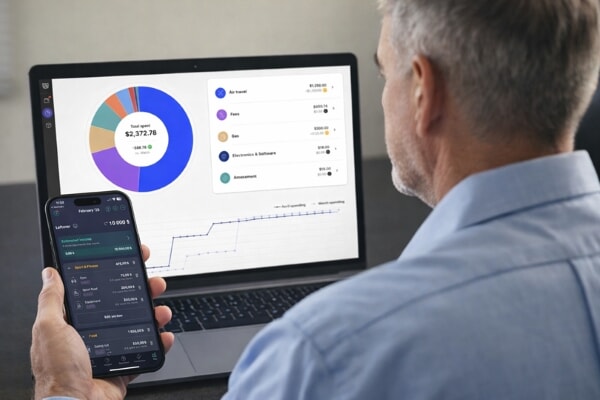
Think of a money management app as a real-time financial dashboard. Once connected, it automatically pulls transactions from your checking account, savings, credit cards, and other financial accounts. No manual entry. No delays.
Every transaction is categorized—groceries, dining out, transportation, insurance, and entertainment. Over time, the app learns your habits and improves accuracy. You can see exactly where your money goes, not where you think it goes.
That visibility is powerful. Instead of guessing whether you can afford higher retirement contributions or additional insurance coverage, you are working with real numbers.
Choosing the Right App if You Are Just Getting Started
For beginners, simplicity matters more than advanced features.
Look for:
- Automatic transaction imports
- Clear charts and visual summaries
- Customizable categories
- A free or low-cost version
When you see that 30 or 40 percent of discretionary income is going to areas you barely value, financial decisions become easier. Visual data hits harder than abstract advice.
The goal is not perfection. It is awareness.
Are Money Management Apps Safe to Use?
Security is a valid concern, especially when you are linking financial accounts.
Reputable money management apps use bank-level encryption and read-only access. That means they can view transactions but cannot move money. Two-factor authentication adds another layer of protection.
Ironically, one of the biggest financial risks is not monitoring accounts at all. Fraud, billing errors, and unauthorized charges often go unnoticed for months without regular oversight.
Before downloading, review the app’s privacy policy and security standards. Transparency matters.
How These Apps Strengthen Retirement Planning
Once you use a money management app consistently, patterns emerge.
You notice:
- Subscriptions you no longer use
- Spending categories that quietly balloon
- Seasonal expenses you underestimated
- Opportunities to redirect money toward savings
Tax-deductible expenses, like Long-Term Care Insurance for some people, can often be grouped.
Many apps allow you to set category limits and receive alerts when you approach them. This real-time feedback helps prevent overspending before it becomes a habit.
For retirement planning, this data becomes invaluable. It helps you determine whether you are living within sustainable limits and whether your current savings strategy aligns with your future goals.
Easy to Lose Track of Your Money - Take Control
Think about all the things you have automatic payments set up for, including things like streaming services and other conveniences. Traditional money tracking rarely works for most people, including busy adults planning for retirement. Saving receipts, promising to review bank statements every week, and updating spreadsheets by hand all sound manageable in theory.
In reality, these systems demand constant attention—and that attention disappears quickly when you are balancing work, aging parents, family responsibilities, and your own health.
You, like many people, are surprised by how much money quietly leaves your bank account each month through subscriptions you no longer use or barely remember signing up for. Streaming services, mobile apps, software memberships, subscription boxes, and automatic renewals can add up quickly. Programs and services designed to review recurring charges can help identify these expenses, giving you a clearer picture of where your money is going. By highlighting forgotten or duplicate subscriptions, these tools can make it easier to eliminate unnecessary spending and redirect those dollars toward savings, retirement goals, or other priorities.
Subscription management services can also provide ongoing monitoring, alerting you when a free trial is about to convert into a paid plan or when a subscription price increases. For older adults and families managing household budgets, this added visibility can help reduce financial waste and improve cash flow.
Regularly reviewing recurring expenses is a simple but effective financial habit that can help you stay organized, avoid surprises, and maintain greater control over your overall financial well-being.
Some of the better-known subscription tracking and management services include:
- Subpilot — Subscription management service that helps users identify recurring charges, monitor active subscriptions, track renewals, and simplify the process of canceling unwanted services. It can provide greater visibility into monthly spending and help reduce unnecessary expenses that may otherwise go unnoticed.
- Rocket Money — One of the most popular services. It identifies recurring subscriptions, tracks spending, and can help negotiate certain bills.
- Trim by OneMain Financial — Helps identify subscriptions and offers bill negotiation services for eligible users.
- Quicken Simplifi — Budgeting software that automatically tracks recurring expenses and subscriptions.
- YNAB (You Need A Budget) — While primarily a budgeting platform, it helps users monitor recurring charges and subscription spending.
The Overlooked Risk: Long-Term Care Costs
Here is where most retirement plans quietly break. You may be tracking daily expenses, saving diligently, and investing wisely. But if you have not accounted for long-term care costs, your plan has a major blind spot.
Extended care—whether in-home care, assisted living, or a nursing facility—is expensive and rising in cost every year. Medicare and health insurance only cover short-term skilled care. They do not pay for ongoing assistance with daily activities.
Without preparation, long-term care expenses can:
- Drain retirement savings
- Force the sale of assets at the wrong time
- Shift financial and caregiving burdens onto family
- Permanently alter a surviving spouse’s lifestyle
A money management app cannot solve this risk by itself. But it can reveal whether your current spending leaves room for proactive planning, including adding Long-Term Care Insurance or other funding strategies.
Why Awareness Changes Outcomes
The real power of a money management app is not automation. It is awareness. When you understand exactly where your money goes, you can make intentional decisions. You can redirect spending, increase savings, and plan for risks before they turn into crises.
You cannot protect what you do not see. And most people cannot see their full financial picture without automated tracking pulling everything together.
Small Tools, Big Impact
A money management app will not make you wealthy overnight. But it gives you control—and control is essential for successful retirement planning.
Start simple. Connect your main accounts. Check in a few times a week. Within a month, you will have clear data showing how your financial life actually works. That clarity makes it easier to plan for retirement realistically, address long-term care risks proactively, and protect the future you are working toward. The earlier you see the full picture, the more options you keep.